The hidden reasons behind McLaren's dramatic improvements in Suzuka
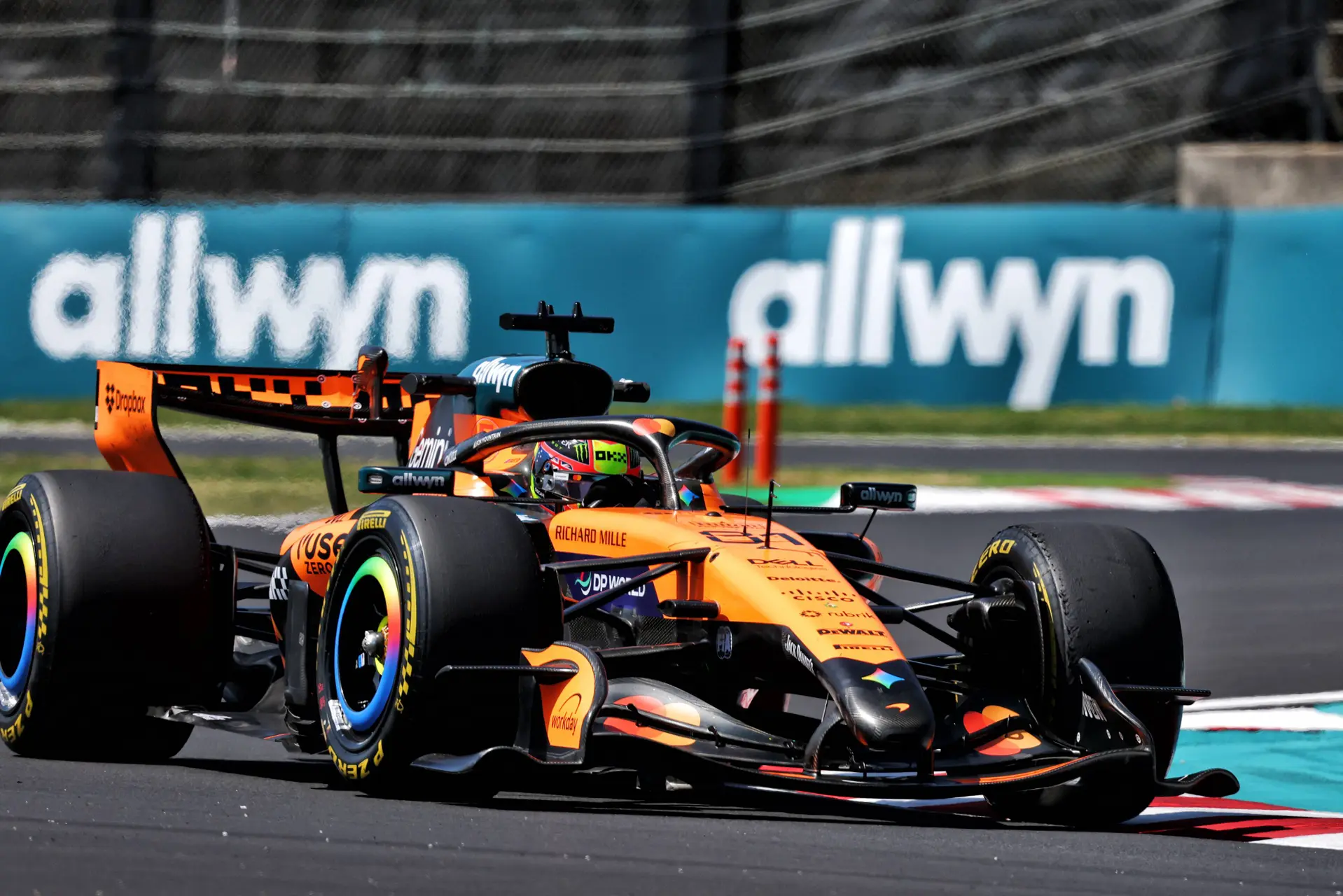
Photo: Race Pictures

Francesco is a technical analyst at GPblog, specializing in the technical side of Formula 1. Through illustrations and analysis, he makes complex components and developments accessible to a wide audience.
McLaren took a big step forward in Suzuka, thanks to two elements: a better understanding of Mercedes’ PU and the track’s new tarmac.
The third weekend of the season offered a very exciting race, thanks to a bad start from both Mercedes and the entry of the safety car on lap 22 due to Bearman’s big crash, which shuffled things around.
Despite all the variables and uncertainties, Mercedes’ Kimi Antonelli managed to win again, completing a phenomenal second stint, but McLaren was clearly the big surprise of the weekend.
After failing to start the Chinese Grand Prix with both cars due to issues with the cars’ batteries, Piastri managed to lead the race at Suzuka during the first stint, demonstrating a very solid pace and keeping George Russell behind.
The Australian driver eventually finished the race in second place, but the great result for the Woking-based team confirms that they made progress from an engine point of view, but were also helped by one key track’s aspect this weekend.
ADVERTISEMENT
Let’s try to analyse which factor played such a big difference in their performance.
A difficult start of the weekend for Lando Norris
The beginning of the 2026 F1 season has been everything but easy for McLaren, which dominated the past two seasons, winning two Constructors’ Championships.
On the eve of the Japanese Grand Prix, in fact, the Papaya team had only scored 28 points, due to several issues with the power unit which forced Norris and Piastri to withdraw from the Chinese Grand Prix even before the start.
ADVERTISEMENT
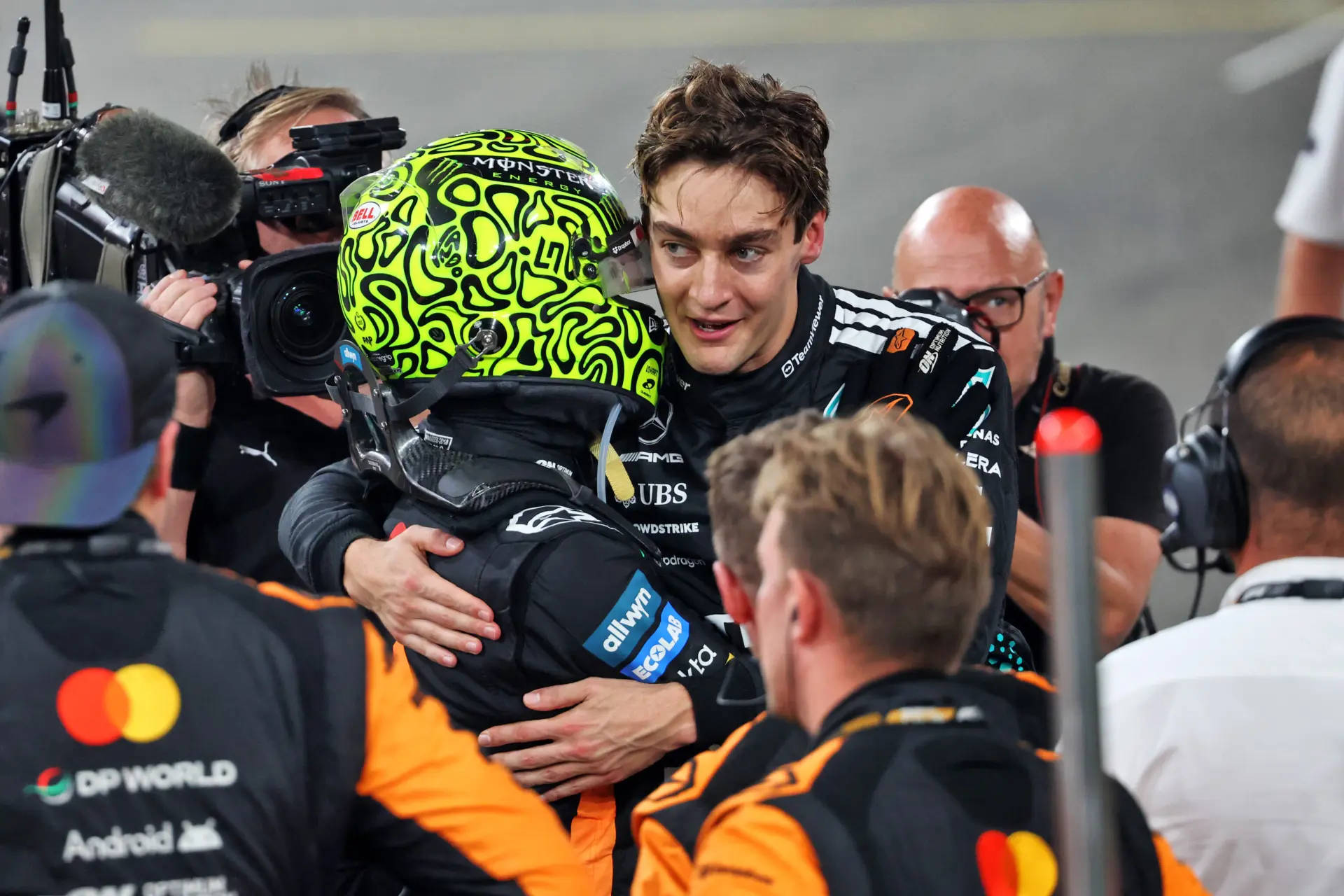
This scenario seemed to repeat on Friday as well in Japan, at least on one side of the garage: Norris completed a very limited amount of laps between FP1 and FP2 due to a series of mechanical and hydraulic issues to his power unit, which forced the team to fit the third battery on his car, the last unit allowed by the regulations before taking a penalty.

Lando Norris sitting in the garage during FP1 - Photo: Race Pictures
On the other side of the garage, the sessions went very smoothly instead: Piastri managed to complete a lot of laps and even topped the second practice session, proving that the set-up was very strong as well as the energy deployment strategy.
The MCL40, in fact, was extremely strong along the start-finish straight, where Piastri was using most of the electrical energy, as well as through the slow speed corners of the circuit, including the hairpin in the second sector and the Triangle chicane in the last one.
The car showed a really soft mechanical behaviour through the chicane, where Piastri could jump on the kerbs without unsettling the car.
ADVERTISEMENT

Oscar Piastri during FP2 at the Japanese Grand Prix - Image: Race Pictures
Moreover, the Australian also had phenomenal traction out of the last corner, proof that positive steps were also made on the software that controls energy deployment to deploy energy less aggressively and have a better stability on the rear end out of slow corners.
All these aspects combined, allowed him to set the quickest time in FP2, less than a tenth ahead of Antonelli in P2.
The pace shown in the race pace simulations, however, indicated that Mercedes was still on another level compared to the Woking team, as they were lapping almost a second quicker on average than Piastri himself.
ADVERTISEMENT
A strong qualifying thanks to a better understanding of the Mercedes' PU
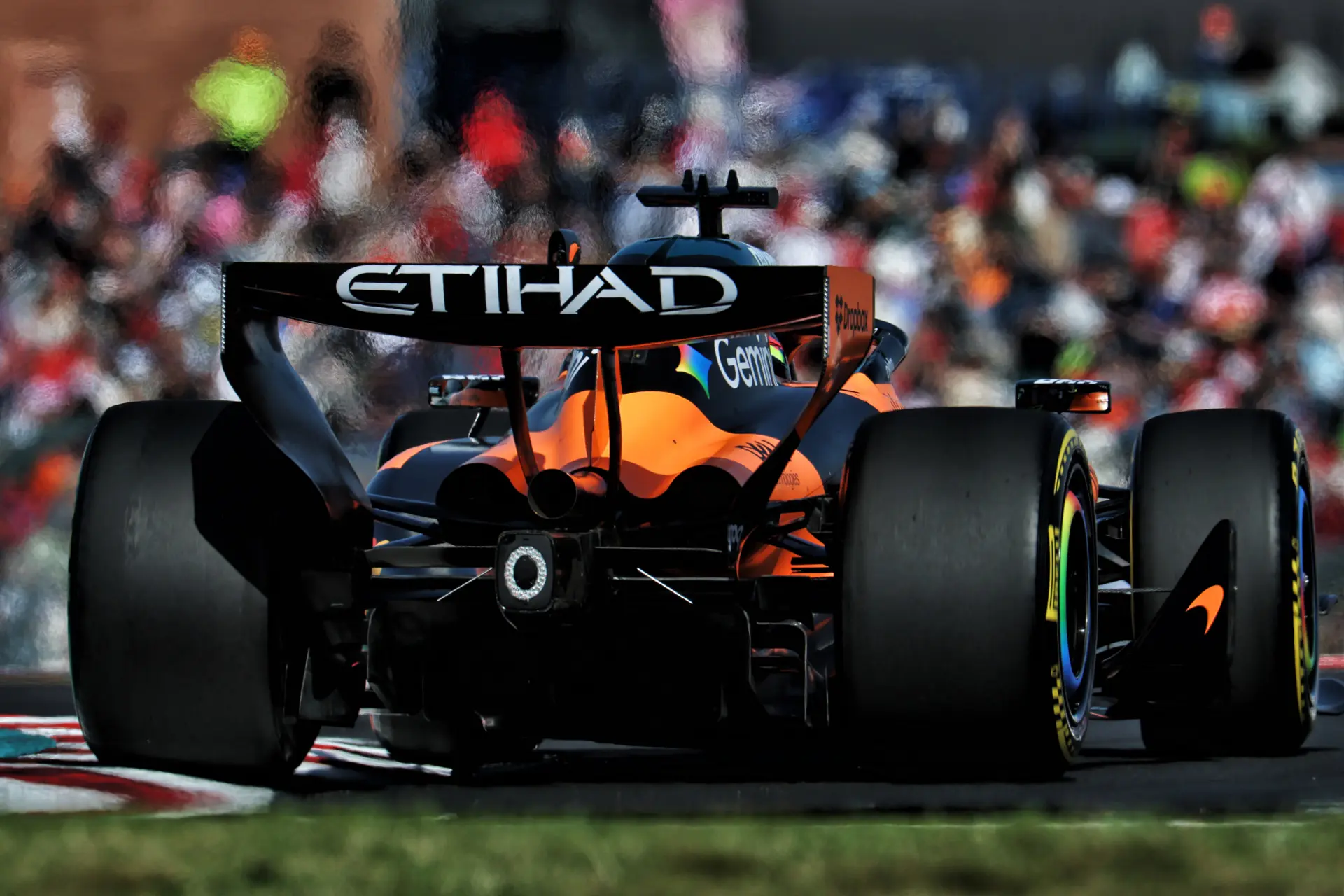
The good progress and performance were also carried into Saturday’s qualifying, where Piastri managed to take full advantage of the additional power from the Mercedes engine and improve by almost 3 tenths between Q2 and Q3, eventually qualifying in P3 for Sunday’s race.
During qualifying, the MCL40 demonstrated very strong performance, especially in the second sector, where the engine makes a big difference. The Australian, however, struggled a lot in the first sector compared to Mercedes and Ferrari, highlighting the lack of downforce and stability the MCL40 still has compared to the other two top teams.
During the usual interview after the qualifying, Piastri described as follows the reason for McLaren's progress: “We had a really good understanding of what we wanted from the power unit and how we had to kind of dial it in for the qualifying grip level.”

Oscar Piastri after qualifying at the Japanese Grand Prix - Photo: Race Pictures
ADVERTISEMENT
Despite the big step forward from the engine perspective, there was still an element that massively worried McLaren’s engineers: the tyre management during the race.
It’s not a secret that the MCL40 is still a bit overweight and this element, combined with the lack of downforce compared to Ferrari and Mercedes, could quickly translate into higher tyre degradation on high fuels, especially on such a stressing layout for tyres. However, one crucial element came into play in Sunday's race: the asphalt.
The Suzuka Circuit, in fact, had been subjected to a resurfacing before the last two editions: prior to the 2025 race, the organisers resurfaced the first sector, while during the last few months the rest of the circuit was resurfaced up to turn 17 (the last chicane).
This element already had an impact on tyre degradation during last year’s Japanese Grand Prix: the new tarmac offered a high grip but lower tyre degradation, an aspect that allowed Verstappen to keep the two McLarens behind and win the race.
ADVERTISEMENT
This element became even more evident during this year’s edition: also thanks to the lighter and smaller cars, which generate less downforce and thus less stress on tyres, tyre degradation was never an issue during Sunday’s race, as drivers could push throughout the whole stint without having to worry about the tyre drop that usually occurs as the laps on a certain set increase.
But how did this element help McLaren? As we pointed out before, the MCL40’s chassis is not at Mercedes and Ferrari’s level yet and this has a negative impact on tyres, especially on tracks where tyre wear is high (as it happened in Australia and Shanghai).
With such a smooth surface, however, tyre degradation was effectively removed from the equation, drivers could push as if they were in qualifying and the additional grip provided by the new asphalt helped McLaren have a very similar pace to Ferrari in the race.

Oscar Piastri taking the lead of the race in Japan - Photo: Race Pictures
After a great start, all these factors allowed Piastri to keep Russell behind and even open a small gap to the Mercedes’ driver during the first stint on the medium, making people think that victory could be within reach if he had a similar pace also on the hard tyres.
ADVERTISEMENT
The safety car eventually changed the scenario, but the Australian managed to keep Leclerc’s Ferrari out of overtaking range also during the second stint on the hard compound, proof that the pace was very good.
Andrea Stella commented on the team’s progress during last weekend as follows: “We think that the step forward has to do definitely with the exploitation of the engine. And we realized that there were certainly a lot of opportunities. We have worked on these opportunities together with colleagues at HPP.”

Andrea Stella during press conference - Photo: Race Pictures
“From a chassis point of view, we haven't brought much upgrades at all in these first three races. But I think there's been a bit of improvement in terms of understanding how you want to set up the car, ride heights, and some other aspects about balance and tyre preparation.”
For the Woking-based team, upgrades will now be fundamental: already in 2023 and 2024 they were able to turn the season around after they introduced upgrades and this season the package that will debut in Miami will be even more important.
ADVERTISEMENT
McLaren, in fact, can already count on the best engine on the grid and, if they manage to improve the chassis’ performance, they could become a real threat to Mercedes for the rest of the season.
Read also

Don’t miss GPblog in Google
Mark us as a preferred source and our articles will appear more often at the top of Top Stories.
Add as a preferred / source on GoogleRead more about:
latest news

Bahrain Grand Prix
Overview
... ...
Practice 1
...
Practice 2
...
... ...
Practice 3
...
Qualification
...
... ...
Race
...
... ...
Practice 1
...
Practice 2
...
... ...
Practice 3
...
Qualification
...
... ...
Race
...
Times are in your local timezone
Rumors
Popular on GPBlog

1
FIA reaches verdict on Hamilton following Bortoleto impeding incident in FP2
1866 times read

2
Hamilton gives first indication of Ferrari’s true pace after Bahrain GP FP2
1238 times read
3
Verstappen sends warning to Mercedes in race simulations as Ferrari waits
1135 times read
4
Hamilton to face stewards after FP2 incident: ‘What the f**k is this guy doing?’
660 times read
F1-stand 2026
Season
| Pos. | Driver | Team | Points |
|---|---|---|---|
1 | MercedesMER | 302 | |
2 | MercedesMER | 236 | |
3 | FerrariFER | 199 | |
4 | McLarenMCL | 186 | |
5 | FerrariFER | 179 | |
6 | Red Bull RacingRBR | 163 | |
7 | McLarenMCL | 120 | |
8 | Red Bull RacingRBR | 86 | |
9 | Racing BullsRCB | 59 | |
10 | AlpineALP | 41 |
Loading