FIA changes 2027 F1 rules as teams face major aerodynamic rethink
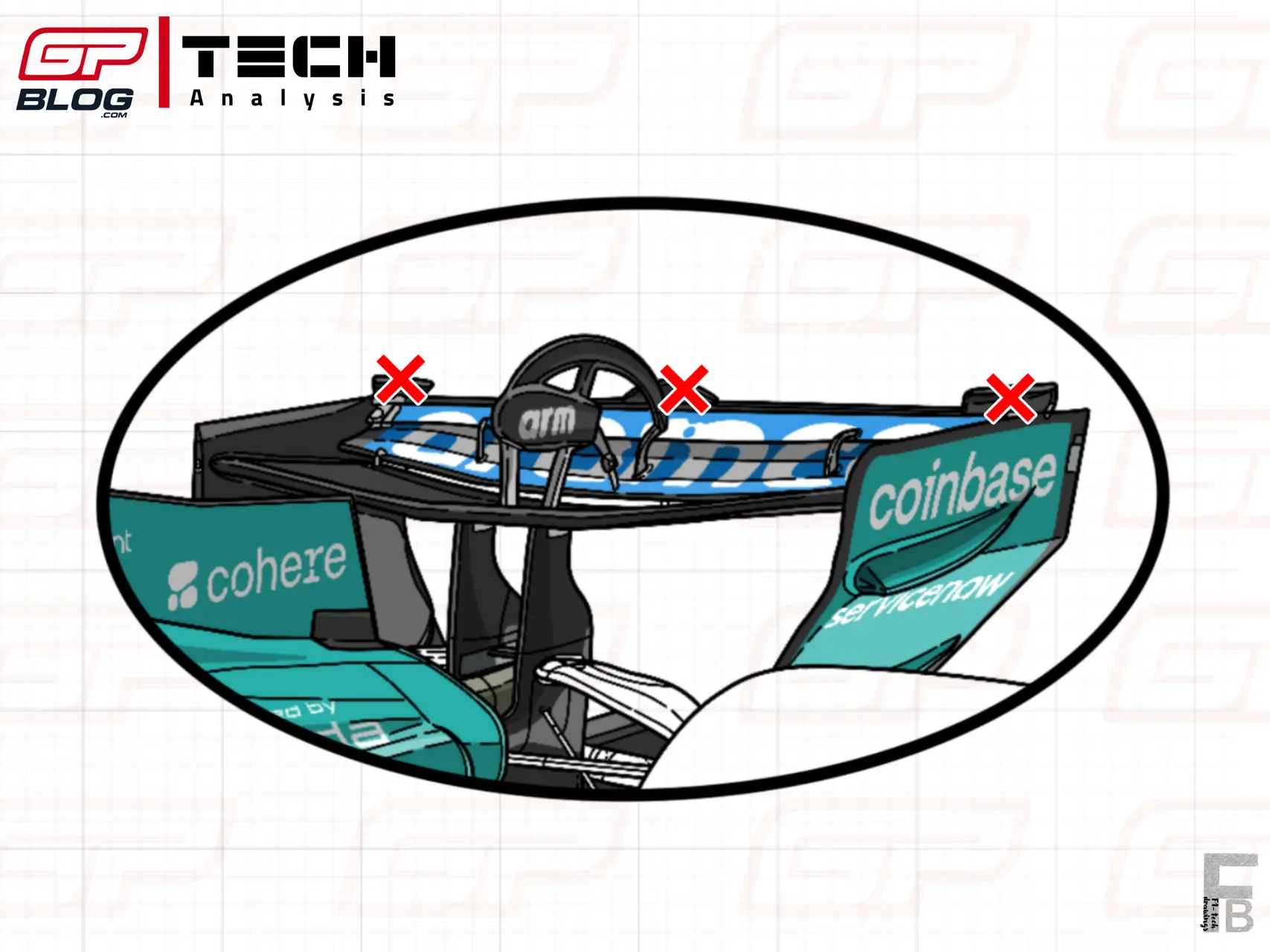
Ban of the flaps on the rear wing for the 2027 F1 season - Image: Francesco Bianchi
12:00, 11 Aug
5 Comments

Francesco is a technical analyst at GPblog, specializing in the technical side of Formula 1. Through illustrations and analysis, he makes complex components and developments accessible to a wide audience.
The FIA has introduced minor modifications to the 2027 cars which could nevertheless have a major impact on performance.
Although only 11 races have been completed under the new regulations, the teams have already shown how quickly they can adapt to the new systems and cars, maintaining a sustained pace of development.
This has not only led to a clear improvement in performance, also thanks to a better understanding of the power units, but above all to the introduction of ingenious solutions exploiting grey areas in the regulations to increase downforce.
For this reason, the FIA has decided to make several changes to next season's cars to reduce the amount of downforce generated, avoid excessive drag on the straights and promote closer racing. While these modifications do not represent a true revolution, they will force the teams to make substantial changes in two crucial areas: the floor and the rear wing.

ADVERTISEMENT
FIA targets two crucial areas of the floor
Starting with the floor modifications, the governing body has decided to intervene in two crucial areas: the "tea tray", also referred to as the "bib", and the vortex generators located at the floor inlet.
Regarding the tea tray, its leading edge has been moved back by a full 300 mm for next season. This modification will have a significant impact on the ride height of the cars, which will be able to run with a lower front ride height, resulting in a much more pronounced rake angle. This would generate greater suction in this area, improving airflow towards the floor.
In an interview published by the Aston Martin F1 Team on its website, legendary designer Adrian Newey explained the changes to this area of the floor as follows: "On the chassis side, the changes are fewer but still significant. The biggest is to what's often called the 'bib' or 'tea tray' at the front of the floor. The leading edge has been moved by about 300 millimetres, which allows you to run the front of the car lower. That brings a different set of aerodynamic characteristics."
The British designer's words clearly demonstrate how teams will attempt to exploit the changes in this area to regain some of the downforce that the cars will lose as a result of the new rules.
ADVERTISEMENT

Fewer vortex generators will change airflow underneath the car
An additional modification will be introduced in this area for 2027. The FIA has decided to reduce the number of vortex generators located at the floor inlet from five to three elements, as shown in the drawing below.
As seen during the first half of the season, teams have paid close attention to the development of these elements, showcasing highly complex micro-aerodynamic designs specifically intended to generate as many vortices as possible and increase the low-pressure area underneath the car.

Floor inlet design for the upcoming 2027 season - Image: Francesco Bianchi
ADVERTISEMENT
However, to limit these performance gains, the FIA has decided to eliminate the two outermost elements, resulting in a substantial change in the distribution of airflow directed towards the diffuser.
"The key one for us is that front-of-floor change. It gives everyone a different aero challenge to solve," Newey stressed.
Smaller rear wings to reduce downforce and drag
Another very important change will concern the rear wing. Specifically, to reduce the amount of downforce and drag generated, thereby improving efficiency, the rear wing will become smaller.
According to the measurements issued by the FIA, the lower limit of the reference volume – corresponding to the leading edge of the main profile – will be raised from 725 mm to 745 mm, while the upper limit will remain at 880 mm. This will result in a reduction in the height of the rear wing and, in particular, the main plane.
ADVERTISEMENT
In the drawing below, the dashed yellow line represents the indicative position of the main profile's leading edge under the new regulations, highlighting how the height of the main plane decreases.

Design of 2027 F1 car's rear wing - Image: Francesco Bianchi
This change has a dual effect. On the one hand, it leads to a reduction in the downforce produced by the rear wing. At the same time, however, it improves the profile's efficiency thanks to the smaller area exposed to the airflow on the straights.
Furthermore, starting next season, aerodynamic appendages will be banned, including those positioned on the trailing edge of the rear wing, such as those recently introduced by Aston Martin for the Hungarian Grand Prix and shown below, as well as those placed on the DRS actuator, as used by Red Bull and Williams.

Ban of the flaps on the rear wing for the 2027 F1 season - Image: Francesco Bianchi
ADVERTISEMENT
These micro-aerodynamic devices, adopted mainly on high-downforce circuits, are designed to slightly increase downforce and clean up the airflow around the actuator, albeit at the expense of increased drag and turbulence.
Ferrari-inspired FTM system will also disappear
Finally, starting next season, the FTM system introduced by Ferrari during the Bahrain tests – and subsequently adopted by all the other teams during the first half of the championship – will also be abolished.
Although this element partially blocks the exhaust gas outlet and reduces power unit performance, it is an effective device for channelling hot air and generating downforce, working in synergy with the rear wing and diffuser.
However, following the controversies and discussions that emerged among the teams, the FIA decided to outlaw the invention to avoid further complications ahead of next season.
ADVERTISEMENT
It will be interesting to see how these regulatory changes influence the strategic choices made by the various teams and whether anyone can turn them to their advantage, potentially opening up new development avenues much like those seen this season.
Read also






Don’t miss GPblog in Google
Mark us as a preferred source and our articles will appear more often at the top of Top Stories.
Add as a preferred / source on GoogleRead more about:
latest news





Azerbaijan Grand Prix
Overview
Thursday 24.09.26
Practice 1
08:30 AM
Practice 2
12:00 PM
Friday 25.09.26
Practice 3
08:30 AM
Qualification
12:00 PM
Saturday 26.09.26
Race
11:00 AM
Thursday 24.09.26
Practice 1
Thu 08:30 AM
Practice 2
Thu 12:00 PM
Friday 25.09.26
Practice 3
Fri 08:30 AM
Qualification
Fri 12:00 PM
Saturday 26.09.26
Race
Sat 11:00 AM
Times are in your local timezone
Rumors
Popular on GPBlog

1
F1 Today | Russell takes monster Baku pole as Horner makes bold Ferrari admission
4166 times read

2
Azerbaijan GP starting grid gets fresh twist after FIA hands down penalties
2538 times read

3
FIA deliver double grid penalty blow after Azerbaijan GP qualifying
2255 times read

4
Alonso’s dry humour returns in Baku: ‘Because of that we are not on pole’
1265 times read
F1-stand 2026
Season
| Pos. | Driver | Team | Points |
|---|---|---|---|
1 | MercedesMER | 292 | |
2 | MercedesMER | 211 | |
3 | FerrariFER | 191 | |
4 | McLarenMCL | 186 | |
5 | FerrariFER | 167 | |
6 | Red Bull RacingRBR | 145 | |
7 | McLarenMCL | 120 | |
8 | Red Bull RacingRBR | 71 | |
9 | Racing BullsRCB | 59 | |
10 | AlpineALP | 41 |
Loading