Inside Aston Martin's B-spec AMR26 that finally unlocked Alonso's pace
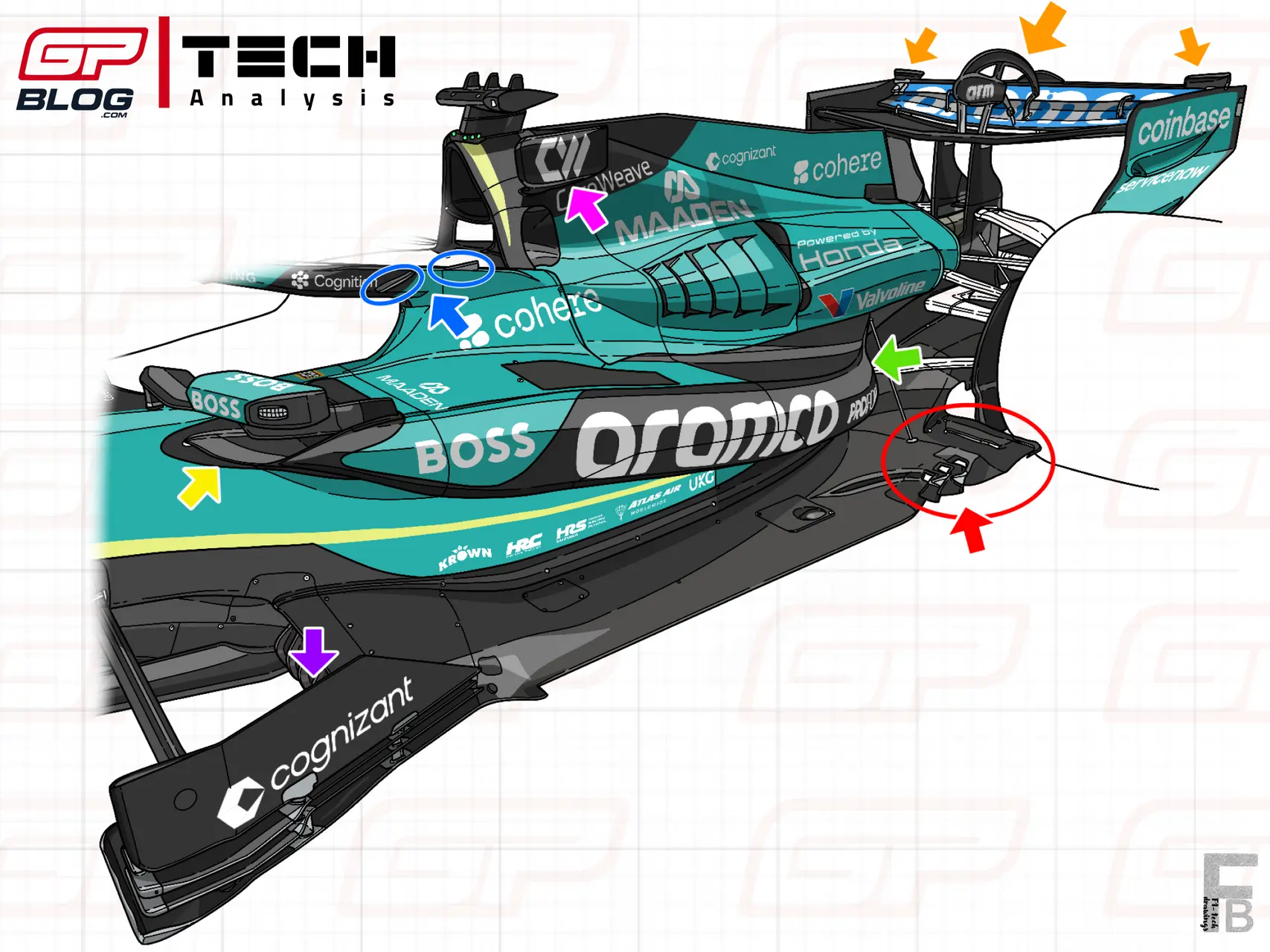
AMR26 "B" version introduced at the Hungarian Grand Prix - Image: Francesco Bianchi

Francesco is a technical analyst at GPblog, specializing in the technical side of Formula 1. Through illustrations and analysis, he makes complex components and developments accessible to a wide audience.
The new package introduced by Aston Martin for the Hungarian Grand Prix brought a clear step forward compared to previous races, allowing Alonso to reach Q2 for the first time this season.
After a very difficult start to the season, with 0 points scored in the first half of the year and no chance of competing with the other midfield teams, Aston Martin arrived in Hungary with a "B" version of its car.
It featured massive upgrades both aerodynamically and through newly redesigned components aimed at shedding weight, bringing the AMR26 closer to the minimum weight limit set by the regulations.
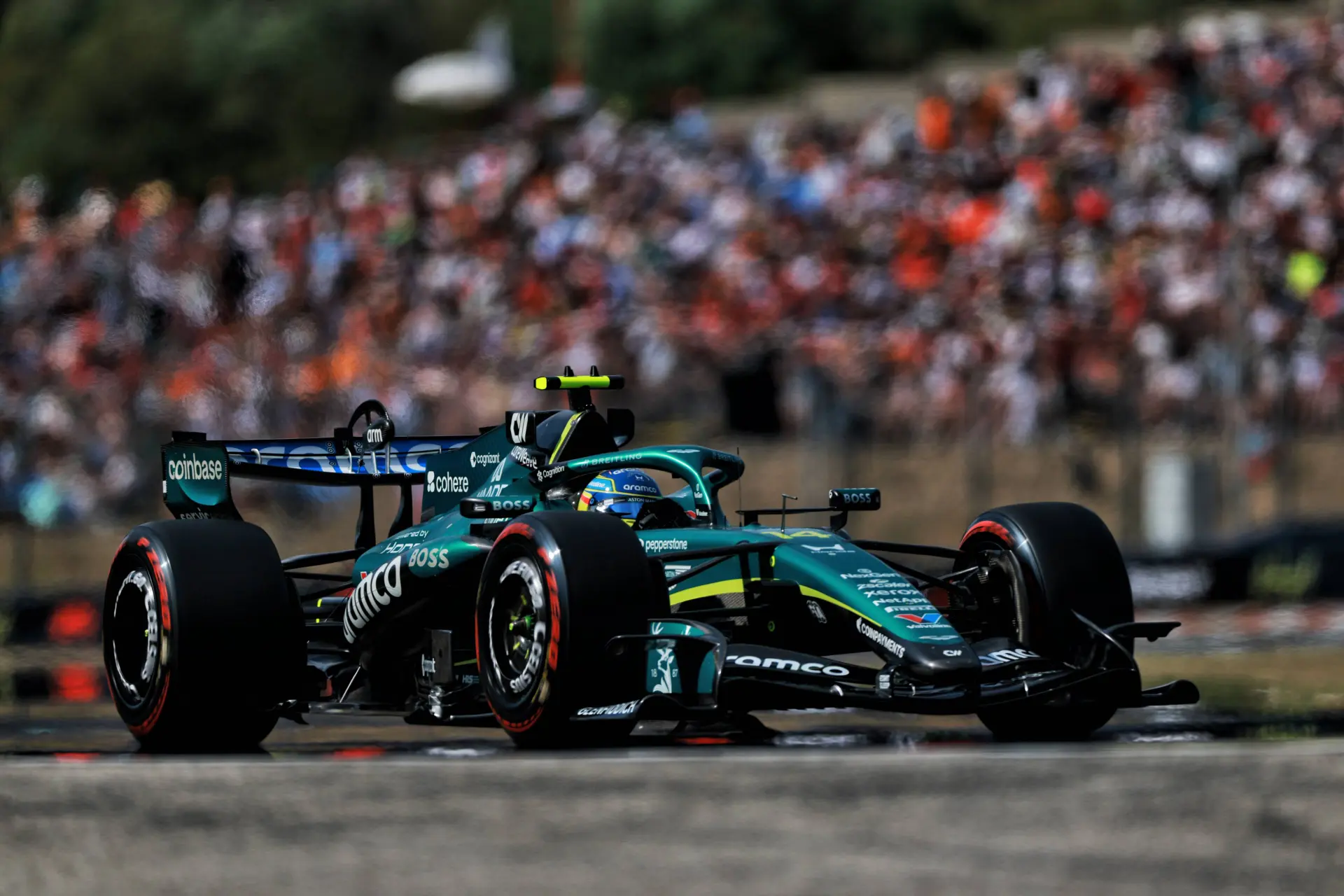
A completely redesigned AMR26 arrives in Hungary
ADVERTISEMENT
The new car, which is significantly lighter and improved in terms of downforce compared to the specification used by Stroll and Alonso up to the Belgian Grand Prix, enabled Alonso to secure his first Q2 appearance of the year, finishing just over 2.5 seconds behind pole-sitter Lando Norris.
This marks a significant step forward from previous races, where Aston Martin drivers consistently occupied the back row of the grid. Further aerodynamic upgrades are expected in the Netherlands, along with the official debut of the new Honda engine featuring ADUO, which should provide an additional step forward to help Alonso and Stroll consistently fight for points.

Photo: Race Pictures
Aside from major engine limitations, which cause severe vibrations and make the car very slow both on the straights and during battery deployment, the first car designed by Newey also suffered from strong instability in all phases of cornering.
ADVERTISEMENT
These issues were caused by a lack of downforce and, above all, the excessive weight of the car due to the fragility of the chassis and front nose.
Where Aston Martin found its aerodynamic gains
Following a series of careful analysis and evaluations conducted at the Silverstone factory, the team approved the package for Hungary, which included deep revisions across all external areas of the car as well as a massive weight reduction of the chassis and nose.
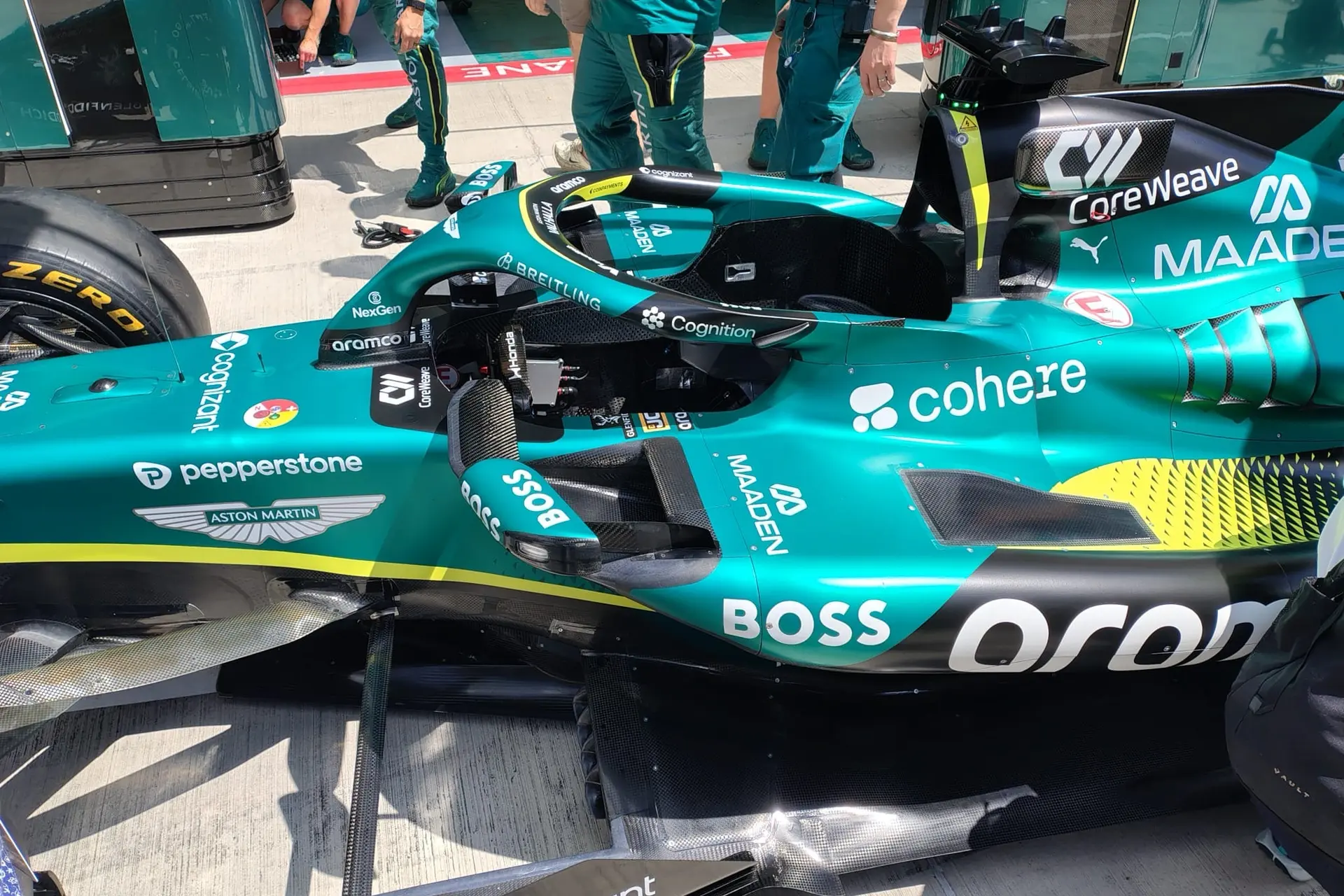
Looking at the drawing below, several new features are visible from the side view regarding both the floor and the shape of the sidepods.
ADVERTISEMENT
Starting from the forward section, the bargeboard has a completely different shape and height compared to the previous version: the new spec consists of 3 horizontal elements and a single vertical element placed above them, but with a significantly reduced height compared to the solutions adopted by all main competitors (purple arrow).
This solution serves to manage the turbulence generated by the front wheels and prevent it from being sucked under the floor, which would disrupt the airflow beneath the car.
Additionally, regarding the floor itself, it has been completely redesigned in the section ahead of the rear wheels (red circle and arrow)—a crucial area not only for managing rear-wheel turbulence but also for forcing air into the "mouse hole" and increasing airflow directed toward the diffuser.

AMR26 "B" version introduced at the Hungarian Grand Prix - Image: Francesco Bianchi
Furthermore, the sidepod itself features a very different shape right from the cooling inlets (yellow arrow): they have been redesigned to be wider and narrower than before, positioned at a slightly higher height. This allows air to be channeled into the vast undercut beneath the sidepod, creating an additional channel to feed the diffuser.
ADVERTISEMENT
The rear section of the sidepod was also modified (green arrow), now presenting a different curvature angle to better connect with the engine cover and smooth the airflow transition toward the rear wing.
In addition, the aerodynamic supports on the sides of the halo were modified: the large vertical winglet previously present was replaced by two small winglets positioned right on the shoulders of the halo (blue circles and arrows) to generate a series of small vortices that energize airflow toward the engine cover.
Beyond completely redesigning the rear portion of the engine cover—adding an extra cooling outlet alongside the main opening—a flow diverter with a much more elaborate shape than the version used through Spa-Francorchamps is also present (pink arrow). This element helps reduce turbulence and clean up airflow toward the rear wing.

Photo: GPblog
On that note, the rear wing was also redesigned in several details: as highlighted by the orange arrows, the Straight-line Mode (SM) actuator now features an additional curved support attached to the top flap, and a series of winglets appeared on the trailing edge of the top flap to slightly increase generated downforce, a popular solution across teams on a high-downforce circuit like Budapest.
ADVERTISEMENT
Added to these solutions are a new front wing, a new nose, and newly redesigned front brake ducts aimed at improving cooling management and airflow inside the wheel rim, alongside further modifications to the diffuser.
These solutions were fitted to both cars starting from FP1, as the team's objective was to gather as much information as possible and understand how to make this new spec work, allowing them to map out a setup direction for the weekend.
Why Alonso believes there is much more performance to unlock
The team used Friday's two sessions to better understand the new car's behaviour before making targeted setup changes ahead of qualifying. This gave Alonso a much better car in the corners and, crucially, in tyre management, thanks to the significantly reduced weight and increased downforce. These updates enabled him to reach Q2 during qualifying for the first time this season.
ADVERTISEMENT
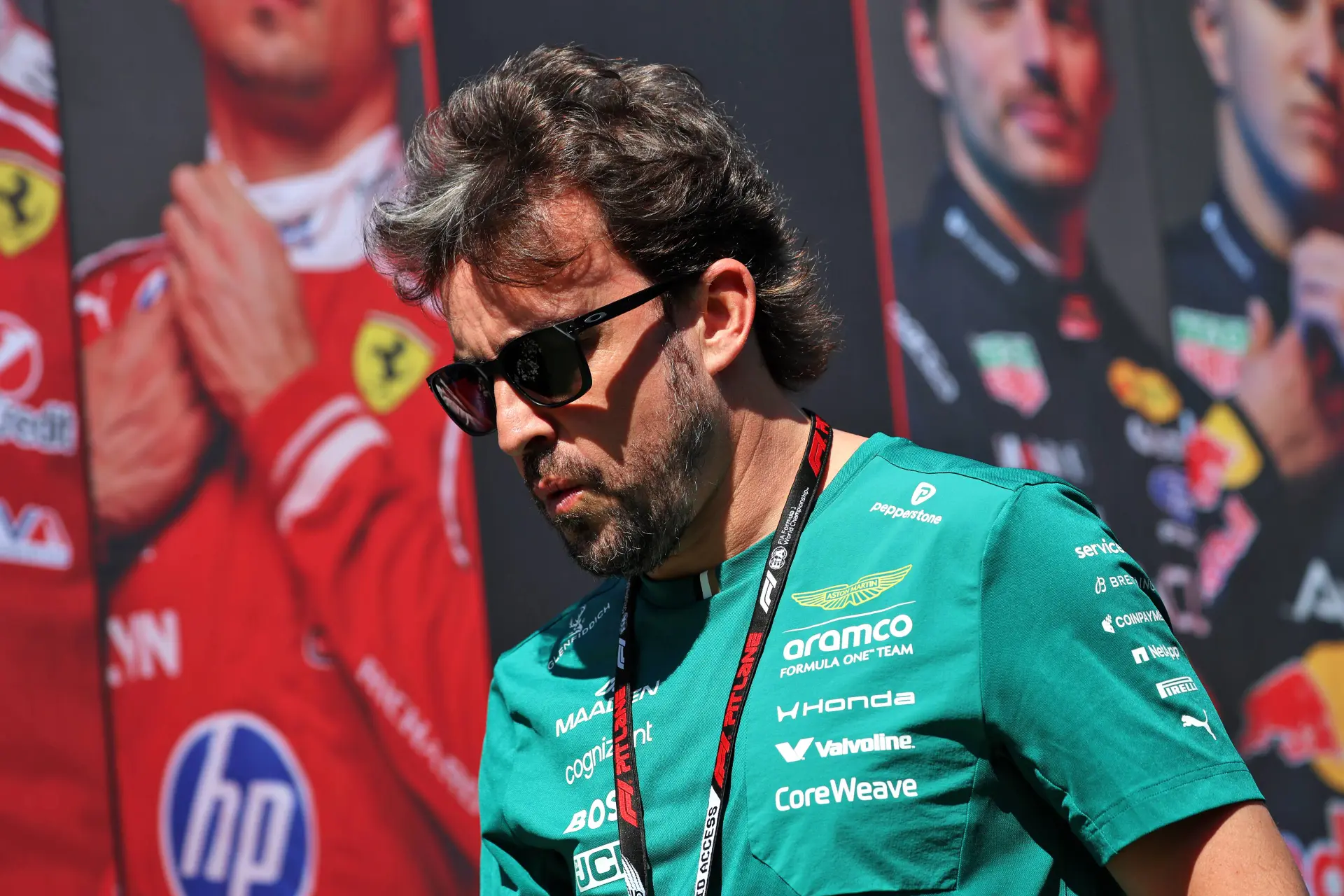
"Yeah, definitely [happy]. I think when you bring nearly a new car, it is important to have the correlation right and you deliver what you expect to deliver. So even if it's what we expected, I think it was important to have it and not have a nasty surprise," the former two-time world champion began to GPblog, among others, after the session.
According to the Spaniard, there is still a lot to gain from this new package. "We're still not on top of the package. Now in qualifying, we again relearned something on the balance of the car."
"So if we had another session, I think we would change the setup again and go with a different setup."
"So I think it's still early days. I think there is more potential to unlock in the car, but it's normal when you have such a big package. And unfortunately, we lost one car yesterday on the free practice as well, so we're still down on experience on these parts."
ADVERTISEMENT
The real progress for both team and car came during Sunday's race, where Stroll and Alonso managed to finish ahead of both Williams, both Haas cars, and even Franco Colapinto's Alpine. That is a clear sign of improvement in tyre management, especially on a track so demanding on rear tires and under such high temperatures.
This performance certainly represents a positive step in the right direction. However, as Alonso highlighted, further updates will be needed to truly fight with the midfield teams, and it will take at least a couple of races to fully understand this package and allow the engineers to find an optimal setup.
Nonetheless, last weekend's performance in Hungary represents Aston Martin's first real step forward. The team seems poised to become the surprise of the second half of the season, with points finishes no longer far out of reach.
Read also
ADVERTISEMENT
Don’t miss GPblog in Google
Mark us as a preferred source and our articles will appear more often at the top of Top Stories.
Add as a preferred / source on Google