The hidden cost of F1’s geopolitical calendar disruption

Photo: Race Pictures
12:00, 10 Aug
0 Comments

Ben Hunt is an award-winning motorsport journalist with over two decades of experience in Formula 1 and international media. As a former editor-in-chief and bestselling author, he delivers in-depth analysis and strategic insight from the highest level of the sport.
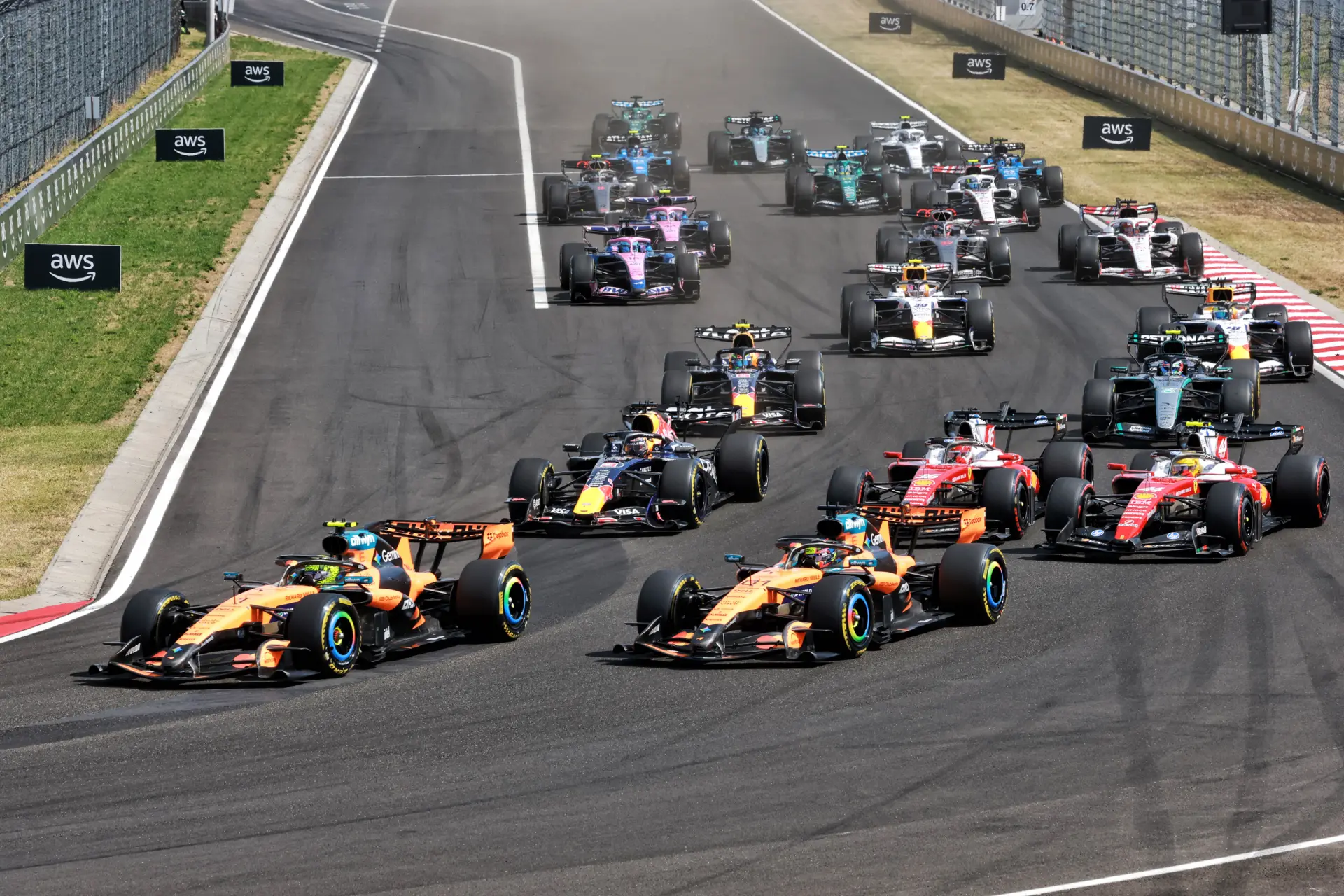
Liberty Media’s second-quarter results show Formula 1 revenue of $764 million, down $462 million, or 38%, from $1.226 billion in the corresponding period of 2025. The principal reason was the calendar with five races in the second quarter, against nine a year earlier.
F1 records much of its season-based revenue and certain costs as races are held. With four fewer events in the period, there was less race-promotion income, fewer opportunities to recognise media-rights and sponsorship revenue, and a lower proportion of the annual financial distribution to teams.
Primary F1 revenue, covering race promotion, media rights and sponsorship, fell 40% year on year, from $1.032 billion to $622 million. Formula 1 operating income dropped from $293 million to $73 million, while adjusted OIBDA declined from $361 million to $139 million.
The team figure is particularly revealing. Liberty reported $316 million in team payments in Q2, compared with $513 million in the same quarter last year: a $197 million difference. Across the first half of the year, payments were $500 million, versus $627 million in 2025, a decline of $127 million.
It would be inaccurate to treat that first-half gap as a permanent $127 million loss to the grid. The revenue-sharing model is tied to the season and the timing of race recognition, while the number and location of remaining events can still change. Liberty’s figures were based on an assumed 22-race 2026 calendar at quarter end. Bahrain was subsequently rescheduled for Malaysia, taking the expected total to 23 races—still one fewer than the 24 held in 2025.
F1 records much of its season-based revenue and certain costs as races are held. With four fewer events in the period, there was less race-promotion income, fewer opportunities to recognise media-rights and sponsorship revenue, and a lower proportion of the annual financial distribution to teams.
Primary F1 revenue, covering race promotion, media rights and sponsorship, fell 40% year on year, from $1.032 billion to $622 million. Formula 1 operating income dropped from $293 million to $73 million, while adjusted OIBDA declined from $361 million to $139 million.
The team figure is particularly revealing. Liberty reported $316 million in team payments in Q2, compared with $513 million in the same quarter last year: a $197 million difference. Across the first half of the year, payments were $500 million, versus $627 million in 2025, a decline of $127 million.
It would be inaccurate to treat that first-half gap as a permanent $127 million loss to the grid. The revenue-sharing model is tied to the season and the timing of race recognition, while the number and location of remaining events can still change. Liberty’s figures were based on an assumed 22-race 2026 calendar at quarter end. Bahrain was subsequently rescheduled for Malaysia, taking the expected total to 23 races—still one fewer than the 24 held in 2025.
Counting the Cost of Cancelled Races
But the figures expose an overlooked consequence of geopolitical disruption. When a Grand Prix is postponed, relocated or removed, the impact is not confined to a blank space in the schedule. It affects promoter fees, hospitality, broadcast and sponsorship recognition, and ultimately the revenue that flows through F1’s commercial structure.
The Middle East disruption created that problem. Bahrain and Saudi Arabia did not take place in their planned slots, leaving the second quarter with four fewer rounds than in 2025. Malaysia’s addition demonstrates F1’s ability to adapt, but a substitute race does not erase the quarterly effect. It may also deliver a different promoter fee, hospitality profile and operational cost base from the event it replaces.
For teams, the timing issue can affect cash-flow planning and development schedules for every competitor. The cost cap regulates much of what teams can spend on performance, but it does not make a disrupted payment timetable irrelevant.
The decline should not automatically be read as weakening demand. Liberty cited growth in audiences, attendance and digital engagement, supporting the view that the Q2 fall was calendar-driven.
Nevertheless, the numbers are a reminder of Formula 1’s exposure. A global calendar is one of the sport’s greatest commercial strengths. In 2026, it has also shown how swiftly global events can hit the balance sheet. The lost races were a geopolitical story first; Liberty’s Q2 results show they became a financial one as well, and underlines the importance of finding alternative venues.
The Middle East disruption created that problem. Bahrain and Saudi Arabia did not take place in their planned slots, leaving the second quarter with four fewer rounds than in 2025. Malaysia’s addition demonstrates F1’s ability to adapt, but a substitute race does not erase the quarterly effect. It may also deliver a different promoter fee, hospitality profile and operational cost base from the event it replaces.
For teams, the timing issue can affect cash-flow planning and development schedules for every competitor. The cost cap regulates much of what teams can spend on performance, but it does not make a disrupted payment timetable irrelevant.
The decline should not automatically be read as weakening demand. Liberty cited growth in audiences, attendance and digital engagement, supporting the view that the Q2 fall was calendar-driven.
Nevertheless, the numbers are a reminder of Formula 1’s exposure. A global calendar is one of the sport’s greatest commercial strengths. In 2026, it has also shown how swiftly global events can hit the balance sheet. The lost races were a geopolitical story first; Liberty’s Q2 results show they became a financial one as well, and underlines the importance of finding alternative venues.
Don’t miss GPblog in Google
Mark us as a preferred source and our articles will appear more often at the top of Top Stories.
Add as a preferred / source on GoogleRead more about:
latest news



Azerbaijan Grand Prix
Overview
Thursday 24.09.26
Practice 1
08:30 AM
Practice 2
12:00 PM
Friday 25.09.26
Practice 3
08:30 AM
Qualification
12:00 PM
Saturday 26.09.26
Race
11:00 AM
Thursday 24.09.26
Practice 1
Thu 08:30 AM
Practice 2
Thu 12:00 PM
Friday 25.09.26
Practice 3
Fri 08:30 AM
Qualification
Fri 12:00 PM
Saturday 26.09.26
Race
Sat 11:00 AM
Times are in your local timezone
Popular on GPBlog

1
Hamilton learns stewards’ verdict after ‘dangerous’ Azerbaijan FP2 incident with Lawson
5563 times read

2
Audi reaches final decision over its 2027 F1 driver line-up
1655 times read
3
Verstappen receives the confirmation he wanted from Red Bull in Baku
1140 times read

4
Cadillac hires former Red Bull key figure, but Alpine blocks the move for now
1138 times read
F1-stand 2026
Season
| Pos. | Driver | Team | Points |
|---|---|---|---|
1 | MercedesMER | 292 | |
2 | MercedesMER | 211 | |
3 | FerrariFER | 191 | |
4 | McLarenMCL | 186 | |
5 | FerrariFER | 167 | |
6 | Red Bull RacingRBR | 145 | |
7 | McLarenMCL | 120 | |
8 | Red Bull RacingRBR | 71 | |
9 | Racing BullsRCB | 59 | |
10 | AlpineALP | 41 |
Loading