Newey backs 'more mature' Aston Martin to seize F1 2027 opportunity
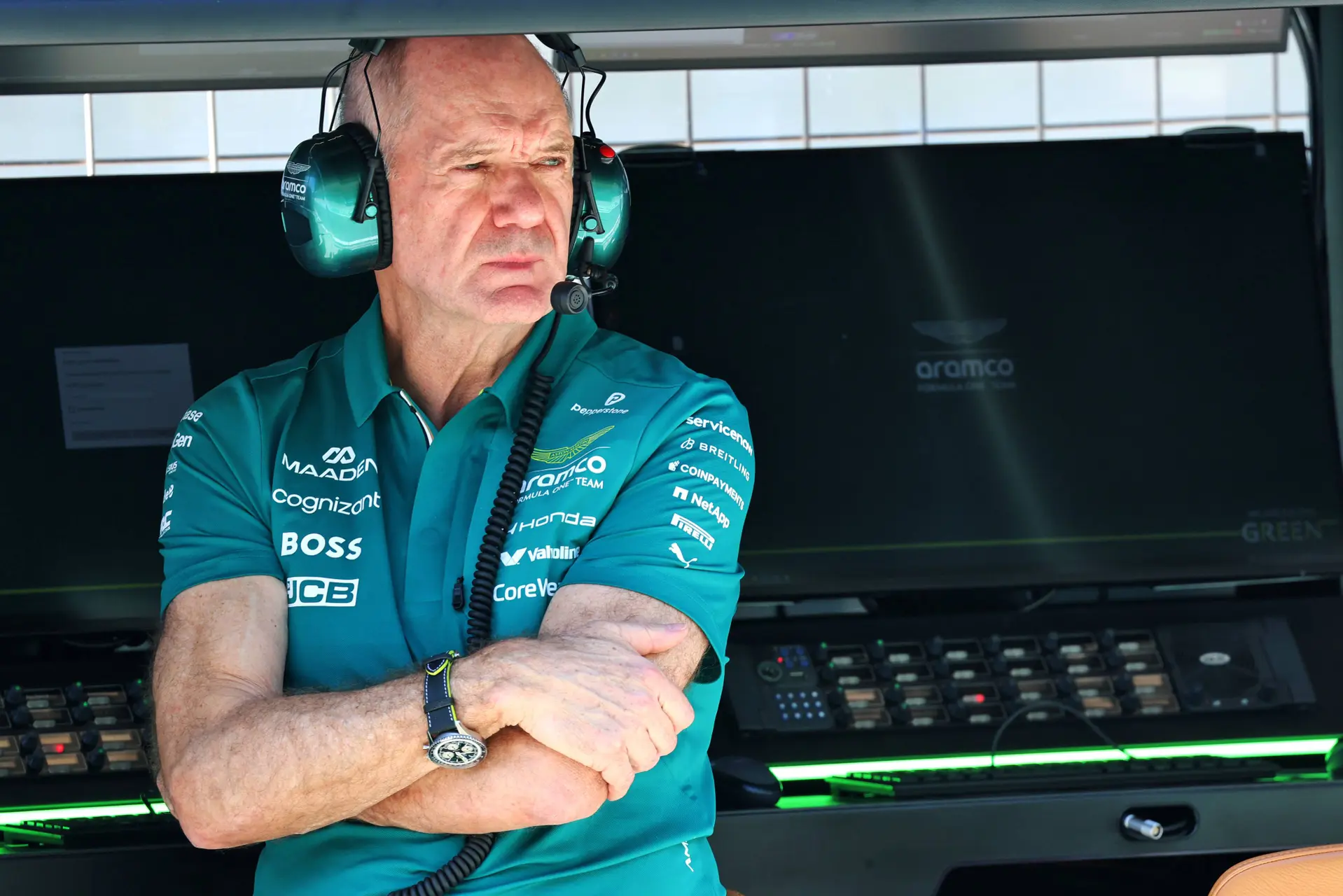
Photo: Race Pictures
17:01, 03 Aug
3 Comments

Henry Eccles is a freelance Formula 1 journalist for GPblog, covering breaking news, live race blogs, and features across the F1 calendar. Since joining in 2026, he has produced high-volume reporting on the sport’s biggest stories, alongside feature pieces including analysis and historical content.
Aston Martin team principal Adrian Newey has said the team are in "a much better place" to capitalise on the 2027 F1 regulation changes than they were in the build up to what has been a torrid 2026 season so far. The legendary designer revealed the team are also in the early stages of making "big architectural decisions" on their 2027 car.
For the overwhelming majority of the current campaign, it has been hard to see a light at the end of the tunnel for Aston Martin, ever since they arrived to the 2026 season opener in Melbourne with severe engine vibration issues that prevented drivers Fernando Alonso and Lance Stroll from finishing a number of races.
Other power unit and chassis concerns on the AMR26 have also compounded to see the British team at the very back of the grid, even behind newcomers Cadillac, for most of the season - a major disappointment given the arrival of Newey in 2025, an engine partnership with Honda, and a £200 state-of-the-art Silverstone facility.
At the most recent race, however, at the Hungarian GP, Aston's first major upgrade package of the season arrived, seemingly leapfrogging them ahead of Cadillac and Williams in the pecking order. Other than Alonso's rather fortunate P10 finish earlier in the season in Monaco, Aston's P13 and P14 in Budapest is the most encouraging sign yet that they can turn things around - with a much needed power unit upgrade also scheduled for F1's return at Zandvoort.
Looking further ahead, though, designer-turned-boss Newey has said work has already begun on Aston Martin's AMR27, expressing optimism that the team's tough start to life under the post-2026 generation of regulations will ultimately make them stronger.
ADVERTISEMENT

Aston hoping to avoid 2026 mistakes in AMR27's development

Photo: Race Pictures
Speaking recently on Aston Martin's website, Newey confirmed the team are in the early stages of developing the AMR27, with the "key aim" of avoiding the same pressure and time constraints experienced last year. The 67-year-old has explained "serious work" on the current car did not get underway until April 2025, leaving Aston several months behind their rivals.
"Yes, we're in the early research stages," the former Red Bull designer said. "Right now, it's about the big architectural decisions: where we position the engine in the wheelbase, how we position the chassis, and the fundamental choices that affect very long lead‑time items.
ADVERTISEMENT
"We're looking at front and rear suspension concepts, gearbox shape – all the things that heavily influence the aerodynamics. A key aim is to release the '27 car to production much earlier in the process, so we're not putting everyone under the same pressure we've had this year. That should allow us to optimise weight, stiffness and detail far more effectively."
Newey: Aston Martin 'more mature' for 2027 F1 regulations

Photo: Race Pictures
Next year, further tweaks to the controversial F1 2026 regulations - which have so far featured a near 50/50 split between electrical power and internal combustion - are to be introduced. In 2027, a 58/42 split in favour of internal combustion will be implemented, as well as a five percent fuel flow increase.
Asked for his take on the new formula, Newey said: "The most obvious changes are on the power unit side: five per cent extra fuel, some adjustments to energy storage and deployment, and some finer tweaks."
ADVERTISEMENT
"On the chassis side, the changes are fewer but still significant. The biggest is to what's often called the 'bib' or 'tea tray' at the front of the floor. The leading edge has been moved by about 300 millimetres, which allows you to run the front of the car lower. That brings a different set of aerodynamic characteristics.
"There's also a slightly shallower rear wing to reduce downforce, some changes to the front of the floor – the 'bear claws' or 'fingers' reducing from five to three – and the removal of various tricks teams have been using around the exhaust and rear wing."
Highlighting the 'tea tray' as a "key" change for Aston Martin, Newey explained why he is optimistic the Silverstone team can bounce back in 2027, insisting they are a "much more mature" organisation now than they were six months ago. Newey said: "The key one for us is that front‑of‑floor change. It gives everyone a different aero challenge to solve.
Because we've effectively been forced to grow up quickly as a team over the last 12 months, we're in a much better place to capitalise on the regulation changes than we would have been a year ago. We're a much more mature organisation now, and that leaves me very optimistic about what's to come."
ADVERTISEMENT
Read also
Don’t miss GPblog in Google
Mark us as a preferred source and our articles will appear more often at the top of Top Stories.
Add as a preferred / source on GoogleRead more about:
latest news



Azerbaijan Grand Prix
Overview
Thursday 24.09.26
Practice 1
08:30 AM
Practice 2
12:00 PM
Friday 25.09.26
Practice 3
08:30 AM
Qualification
12:00 PM
Saturday 26.09.26
Race
11:00 AM
Thursday 24.09.26
Practice 1
Thu 08:30 AM
Practice 2
Thu 12:00 PM
Friday 25.09.26
Practice 3
Fri 08:30 AM
Qualification
Fri 12:00 PM
Saturday 26.09.26
Race
Sat 11:00 AM
Times are in your local timezone
Popular on GPBlog
1
McLaren makes decision on Norris' participation in the 24 Hours of Le Mans
3747 times read
2
Herta considers return to US as F1 dream slips further away
1727 times read
3
Azerbaijan GP schedule: why the race is a day earlier
1045 times read

4
F1 Today | Hamilton takes to social media to react to Ferrari rumors
904 times read
F1-stand 2026
Season
| Pos. | Driver | Team | Points |
|---|---|---|---|
1 | MercedesMER | 292 | |
2 | MercedesMER | 211 | |
3 | FerrariFER | 191 | |
4 | McLarenMCL | 186 | |
5 | FerrariFER | 167 | |
6 | Red Bull RacingRBR | 145 | |
7 | McLarenMCL | 120 | |
8 | Red Bull RacingRBR | 71 | |
9 | Racing BullsRCB | 59 | |
10 | AlpineALP | 41 |
Loading