
Francesco is a technical analyst at GPblog, specializing in the technical side of Formula 1. Through illustrations and analysis, he makes complex components and developments accessible to a wide audience.
Mercedes demonstrated a clear superiority in qualifying, which then became smaller during the race, where also Ferrari managed to play a big role.
The first race of the year featured a chaotic few laps, with a tight battle between Leclerc and Russell, who swapped positions frequently, largely influenced by their energy management strategies.
But after the first Virtual Safety car, the real cars’ qualities started to emerge, as graining started to appear on the front left tyre, forcing drivers to also think about tyre management.
From this point of view, Ferrari and Mercedes both looked really strong, proof of a great chassis and mechanical set-up. So, where does the 0.8-second gap seen in qualifying come from?
ADVERTISEMENT
A 'unique' level of power for the two W17s in qualifying
After deliberately underperforming during the two weeks of testing in Bahrain, Mercedes revealed their true potential in the first qualifying session of the year in Melbourne.
Already since FP3, it appeared clear that Mercedes had an advantage over competitors, including the other Mercedes-powered cars, especially from the energy management point of view.
On the straights, in fact, two different phenomena occur: derating, where the MGU-K reduces power deployment, and super-clipping, where the system uses engine energy to recharge the battery, contribute to these effects.
These two phenomena produce a big decrease in the top speed on a long straight, even when the driver is at full throttle, as after a while the battery is empty and the system starts using some of the energy generated by the ICE to recharge the battery.
ADVERTISEMENT

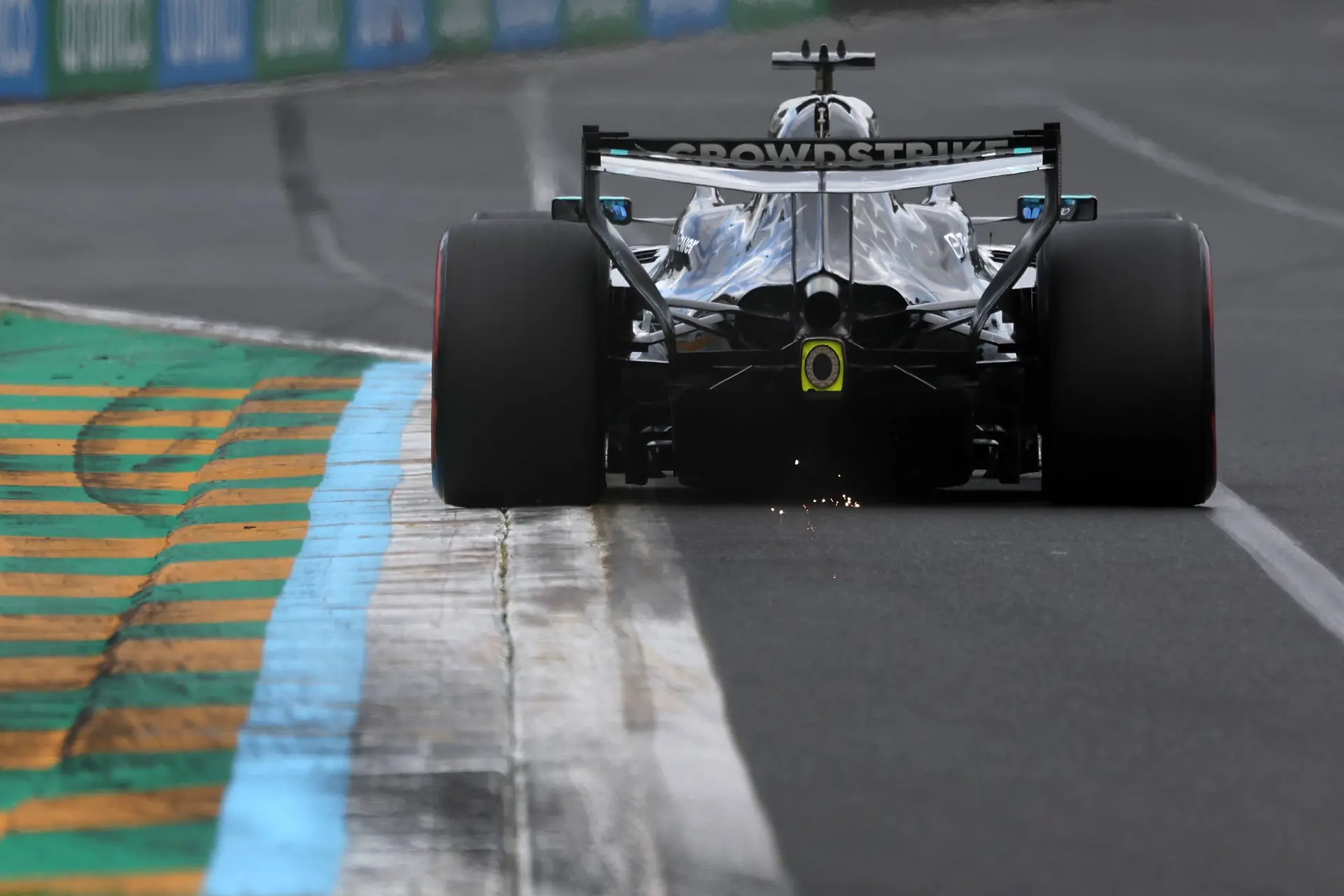
Russell during the Australian Grand Prix - Photo: Race Pictures
This is exactly where Mercedes’ advantage lay: while other cars were losing up to 50 km/h on the straight as the derating and super-clipping effects happened, the two W17s were losing way less top speed, thanks to a more powerful ICE. This allowed them to maintain a strong top speed while efficiently recharging the battery.
From a performance point of view, this translated into a big advantage over competitors: this superiority allowed Russell and Antonelli to dominate on the straights, gaining a massive amount of time in those sections
. This allowed them to easily lock out the front row, with a gap of about 7 tenths to Hadjar in 3rd, a huge distance in modern F1.
ADVERTISEMENT
The performance seen in qualifying, also highlighted another strength of the car: the great chassis and aero-mechanical balance, the W17, in fact, performed excellently in both low and high-speed corners, demonstrating a stable platform that generates both downforce and mechanical grip.
This was particularly evident for Antonelli, who managed to get into qualifying and get up to P2 without having enough time to choose the right set-up, after his crash in FP3.
This superiority also emerged during Sunday’s race, in particular on lower fuel load: during the first fifteen laps, Leclerc managed to stay in the lead, managing the battery and keeping a good pace on high fuel load.

Leclerc fighting Russell during the first few laps of the race - Photo: Race Pictures
However, as soon as the two Mercedes’ drivers pitted and fitted the hard tyres on, they showed a very strong pace, despite also accusing some graining on the front tyre in the final stages of the race.
ADVERTISEMENT
The gap that emerged in qualifying, however, was way smaller on Sunday and that was because, due to also the tyre management factor, the pure performance expressed on the straights didn’t matter as much, also because of the higher load of fuel on the car. Ferrari, however, was much closer in the race than in qualifying.
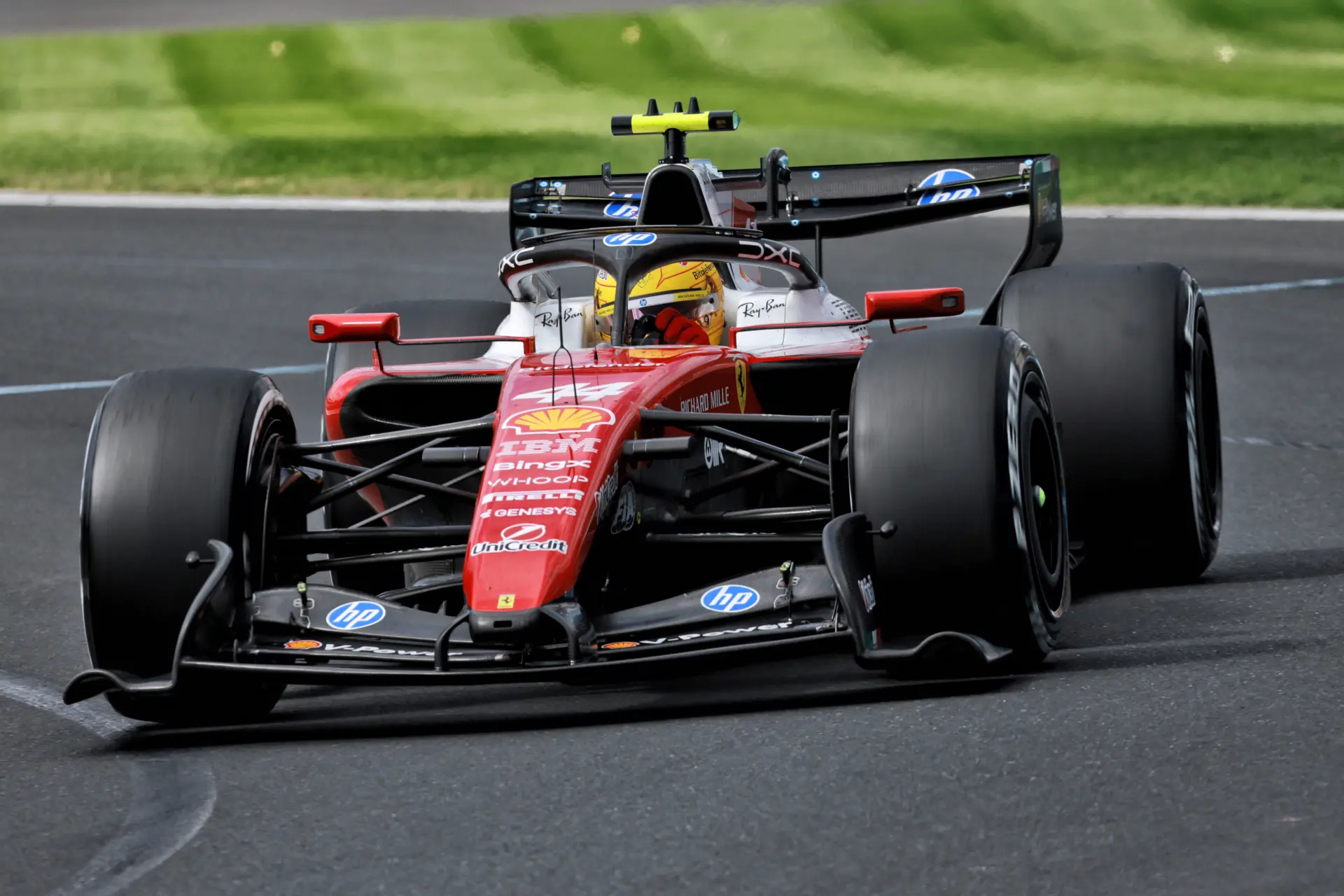
The SF-26 seems to have a strong mechanical foundation, which makes the car fast in slow speed corners and good on tyres, as both Leclerc and Hamilton demonstrated during their first stint on the medium tyres on Sunday’s Grand Prix.

George Russell during qualifying for the Australian Grand Prix - Image: GPblog
To effectively challenge Mercedes, the Scuderia still needs more power from the energy system over the single lap, as well as a bit more of performance in the race, where they still lacked 1/1.5 tenths per lap to manage to be on Russell and Antonelli’s level during the second stint on the hard tyres.
However, the gap seems manageable and can possibly be closed with a series of updates. Another important aspect is that Melbourne wasn’t probably the best circuit for this new generation of cars to debut on: the great length of the straights and the fact that around 70% of the laps is on full-throttle inevitably prises those engines which are able to recharge the battery quicker and express a higher top speed on the straights, as it’s the case for Mercedes.
ADVERTISEMENT

What to expect from next weekend?
The next race in Shanghai will provide a clear hierarchy among top teams, as it’s a completely different track: with more technical sections and sequences of both high-speed and slow speed corners, it’ll be easier for drivers to recharge the battery and then use all the energy on the long straight in the last sector, maybe without facing such evident super-clipping effect as it happened in Melbourne.
The Shanghai International Circuit, however, also puts a high stress on tyres and this could favour Ferrari to close the gap to Mercedes, as also the energy deployment is less impactful in qualifying.
It’ll be enormously interesting to see how the new cars will behave on a more conventional layout, where also the Sprint format will have a big impact on the evolution of the weekend.
ADVERTISEMENT
Don’t miss GPblog in Google
Mark us as a preferred source and our articles will appear more often at the top of Top Stories.
Add as a preferred / source on Google