F1 Tech | The key takeaways from day one of the Australian Grand Prix
Comparison between McLaren's rear wing versions tested in Melbourne - Image: Race pictures
Updated:
1 Comments

Francesco is a technical analyst at GPblog, specializing in the technical side of Formula 1. Through illustrations and analysis, he makes complex components and developments accessible to a wide audience.
The first two practice sessions of the 2026 Australian Grand Prix in Melbourne highlighted a very strong performance from Mercedes and McLaren, with Ferrari and Red Bull Racing not far behind.
On the first day of practice, the expected hierarchies among the top teams were confirmed, with Mercedes and McLaren leading, while Ferrari and Red Bull were approximately three-tenths of a second behind.
McLaren struggled with some issues with the gearbox in FP1, but managed to solve them for second practice, while Red Bull also encountered minor issues during FP2 on Verstappen’s car.
Despite the small issues, it’s the Brackley-based team that scare their opponents. Neither Russell nor Antonelli topped the practice sessions, but both showed a phenomenal race pace simulation in FP2.
This demonstrated the W17's strength, both mechanically and aerodynamically. They should be the favorites for tomorrow's qualifying, but the setup changes and engine mode adjustments overnight will have a significant impact on the fight for pole position.
ADVERTISEMENT
Mercedes and McLaren with updates
Mercedes showed a very different performance between FP1 and FP2: during first practice, in fact, they adopted very conservative engine modes, avoiding to show their real potential also for reliability reasons.
This resulted in Russell and Antonelli finishing the session in P7 and P8 respectively, around a second slower than Leclerc in P1.
However, during second practice the scenario completely switched, as the engineers decided to use higher engine modes and the results were immediately visible: both Russell and Antonelli set very competitive lap times on the hard compound at the start of the session, before finishing second and third on softs.
ADVERTISEMENT

George Russell in Melbourne - Photo: Race Pictures
During these few laps, the W17 demonstrated to be very stable from the mechanical point of view, showing a very good traction, and with a good level of downforce, as both drivers were gaining most of the lap time in the last sector, the most technical one.
Beyond the great performance, it was the race pace simulation done in the last half an hour of the session that really shocked rivals: Russell and Antonelli set very strong lap times, showing very little degradation and a constant pace, proof of a very strong mechanical balance.
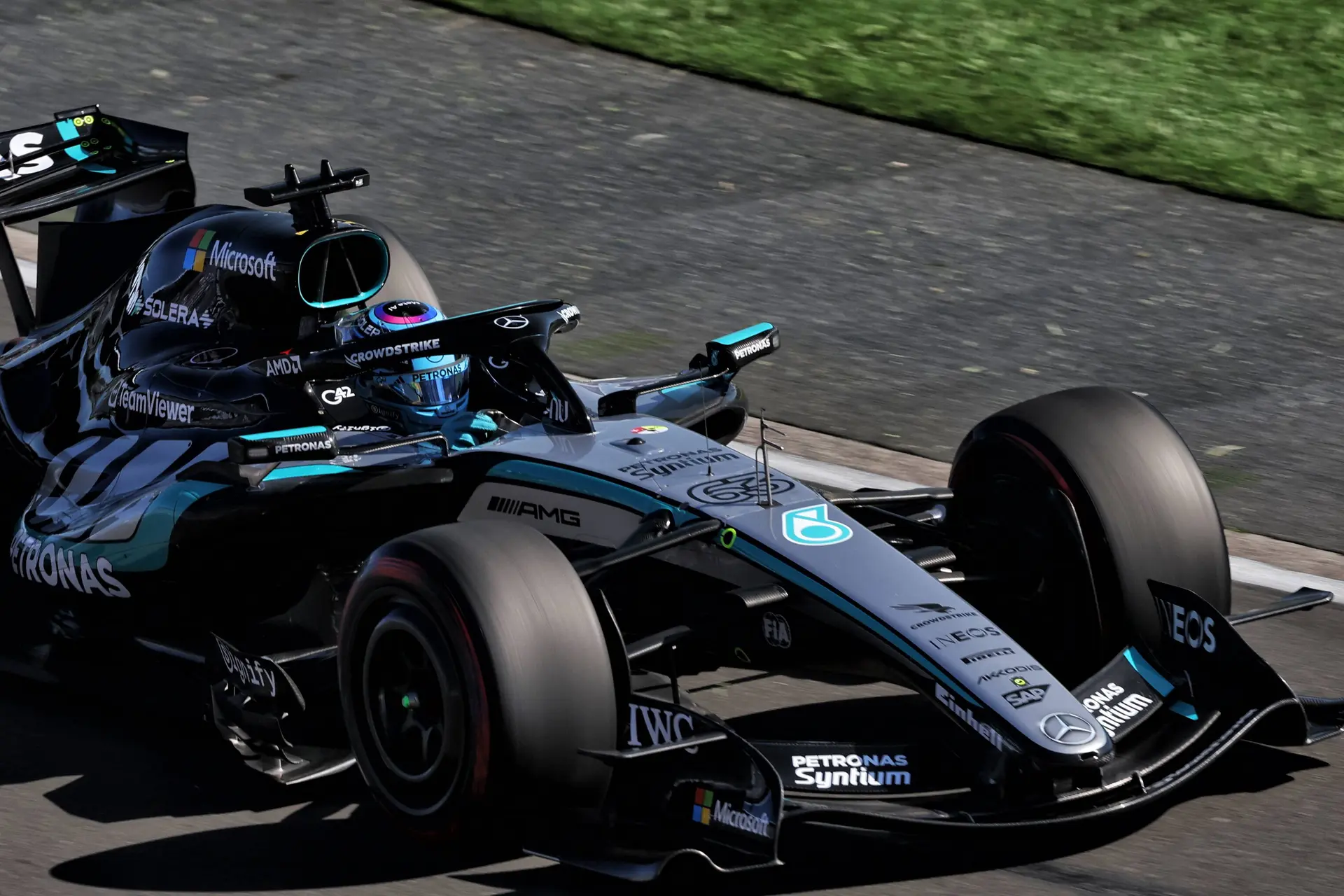
The Brackley-based team also debuted a very small update on their front wing: as shown in the picture below, a diveplane appeared on the top part of the endplate, following a solution already tested in Bahrain.
ADVERTISEMENT
This little component yet plays a very strong part in performance, as it contributes to generating vortices that then seal off the floor edge, increasing the downforce generated by the floor itself.

Mercedes new front wing endplate adopted in Melbourne - Image: GPblog
From this point of view, if they don’t have any troubles with the engine and they correctly develop the set-up during the night (two very important aspects!), they should be the favorites to lock out the front row during Saturday’s qualifying, even if a lot will also depend on other top teams' progression.
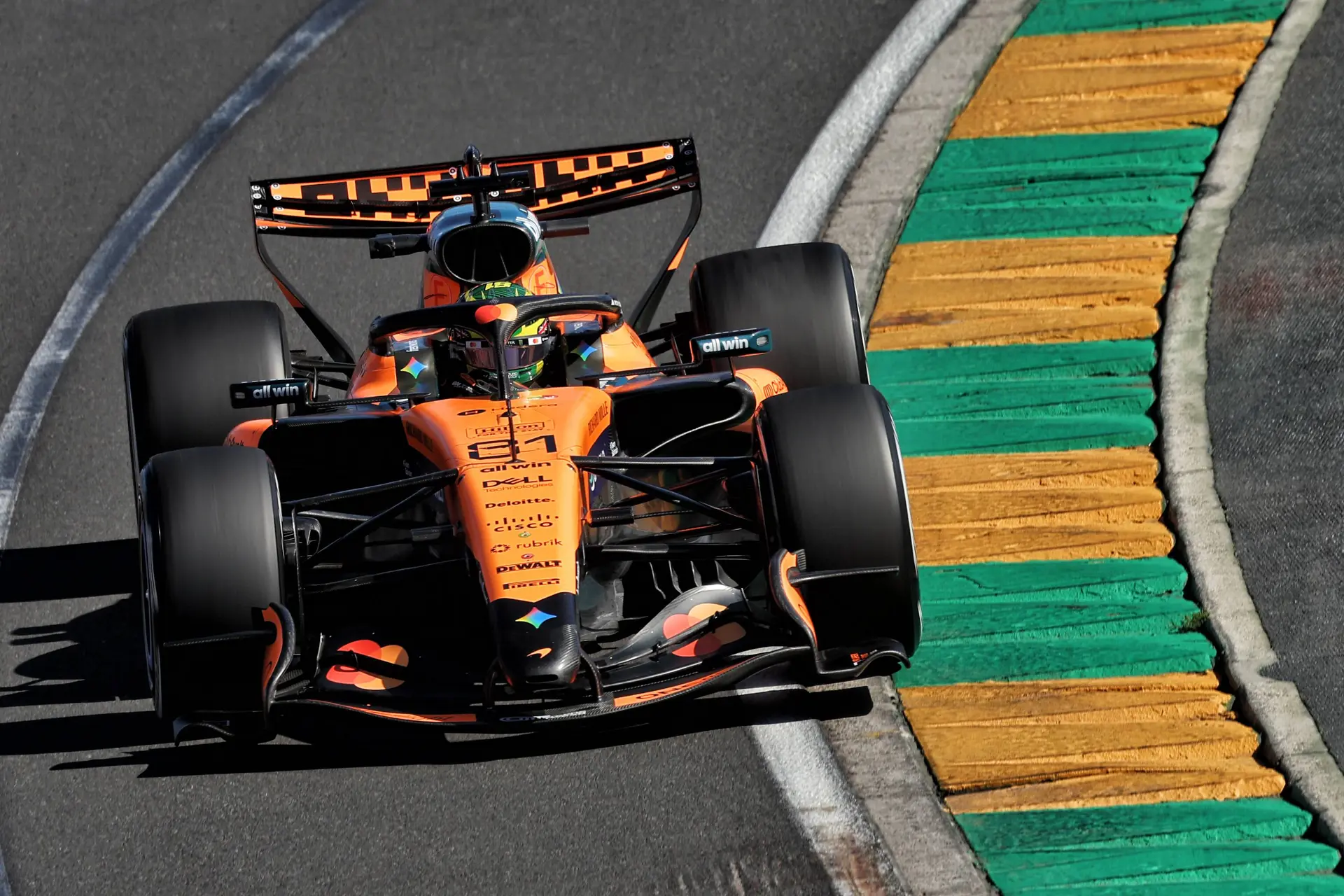
Moving on to McLaren, they had a very similar day to Mercedes: during first practice they massively struggled, as both Norris and Piastri faced issues and had to stay in the garage for the majority of the time.
During FP2, however, as they also used higher PU modes, their real value began to emerge: Piastri managed to set the fastest time, showing a very strong performance in traction phase, the result of a very careful driving style especially in major braking phases, where he was doing a lot of lift and cost to recharge the battery and have as much energy for traction as possible.
ADVERTISEMENT
Beyond the great performance expressed during the fastest lap, he didn’t complete a significant race pace simulation and thus it’s hard to judge McLaren’s real gap to Mercedes on high fuel.
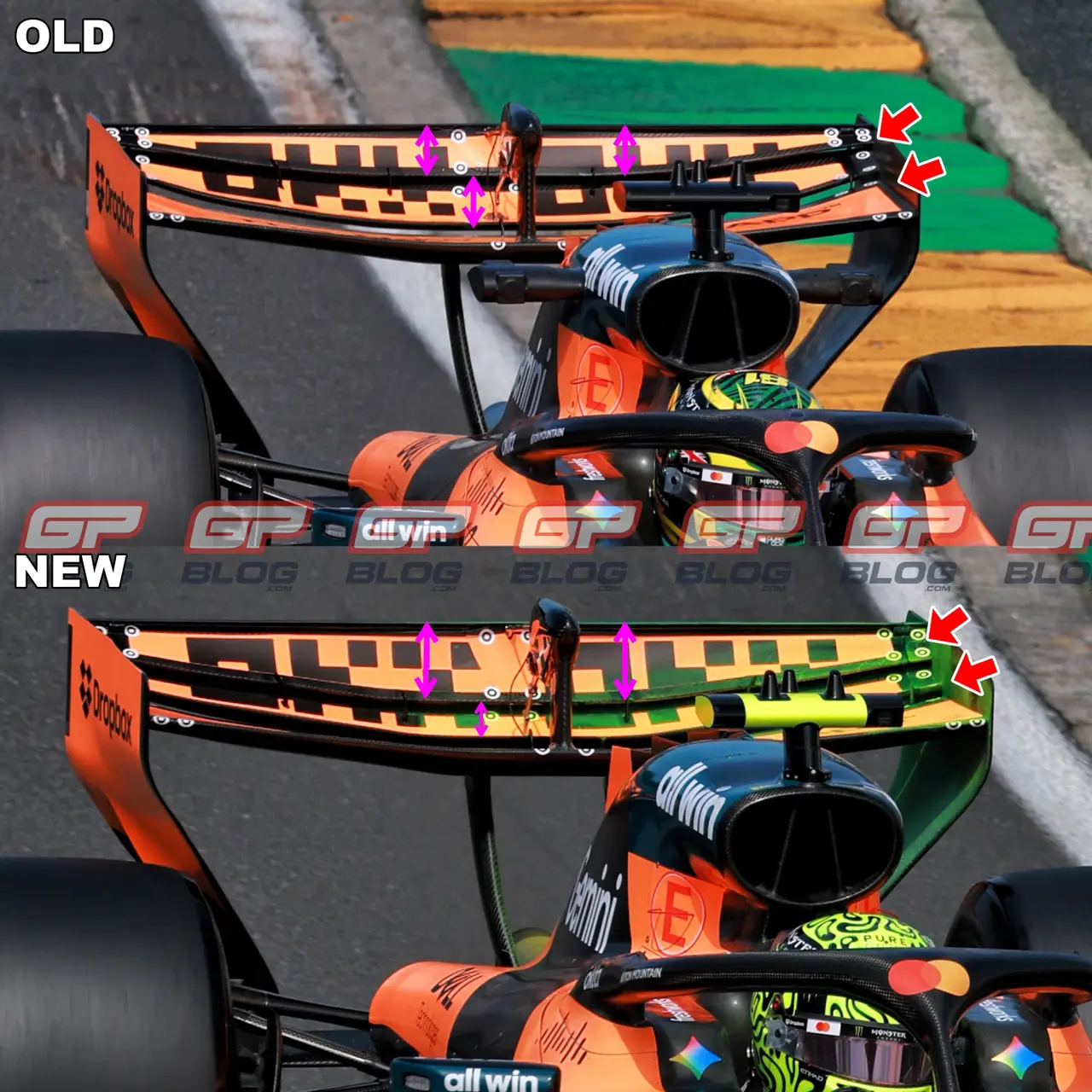
McLaren also brought some updates to their car on the first day of practice: as shown in the picture below, they introduced a completely different rear wing, which was tested by Norris in FP1 (during the few laps he did), before being adopted by both drivers on FP2.

Comparison between McLaren's rear wing versions tested in Melbourne - Photo: Race Pictures
The new solution showed a different design of the top two flaps of the rear wing: the top flap shows a much longer chord both at the wing tip and in the middle portion, while the second flap has a shorter chord and overlaps, for a small portion, to the top flap above.
The old version, in fact, shows a small gap between the flaps, where air can go through and reduce the drag generated in those sections where the active mode is activated.
ADVERTISEMENT
The new version is designed to generate more downforce through all corners, as the larger flaps provide better airflow and stability, particularly in high-speed sections.
For the Woking team the focus should be on finding a good set-up and hoping to not have further issues from the mechanical and engine point of view.
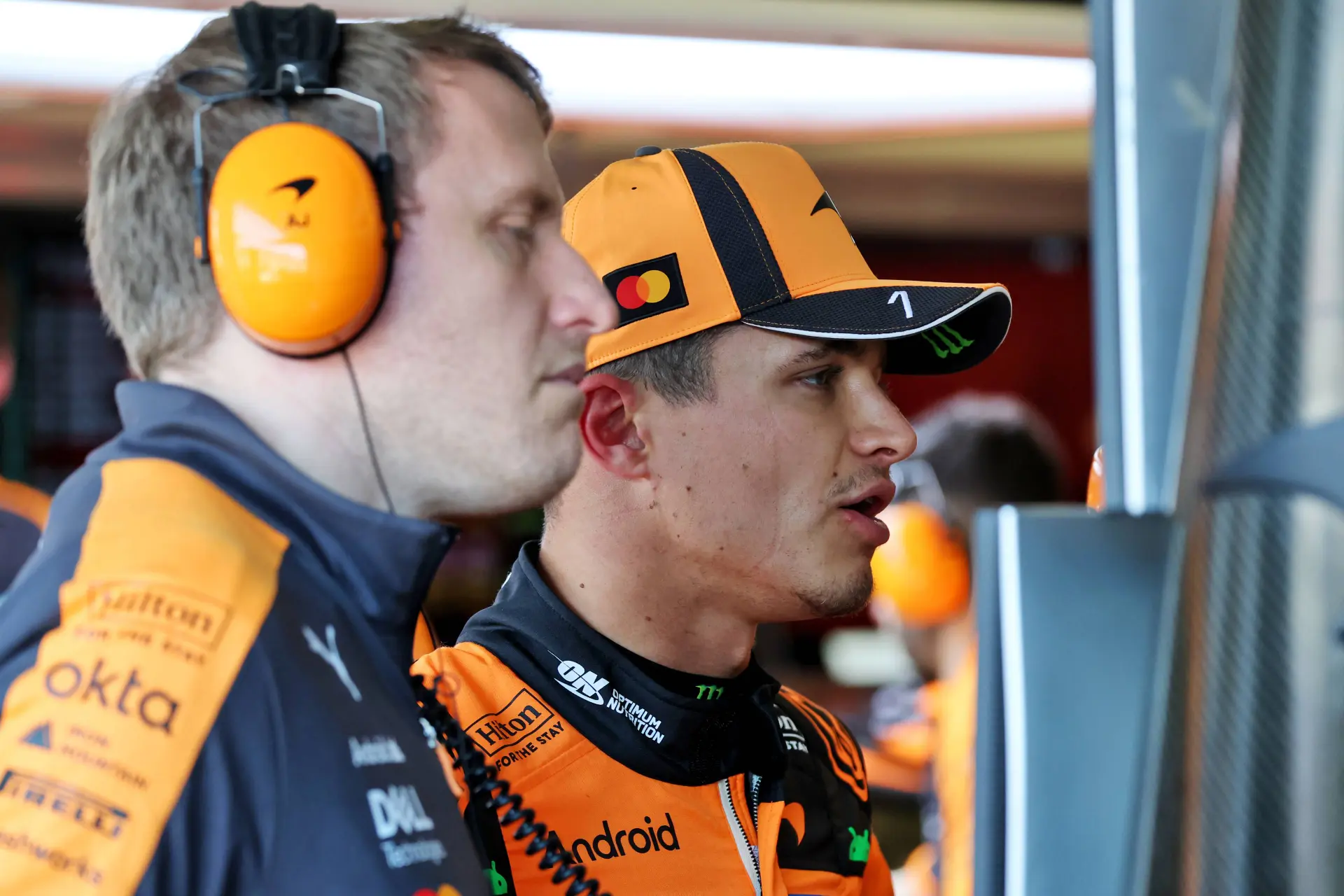
Ferrari and Red Bull Racing had a difficult FP2
Last but not least, Ferrari and Red Bull had a very positive day as well: both teams performed extraordinarily well in first practice, showing a very competitive pace and a good balance.
ADVERTISEMENT
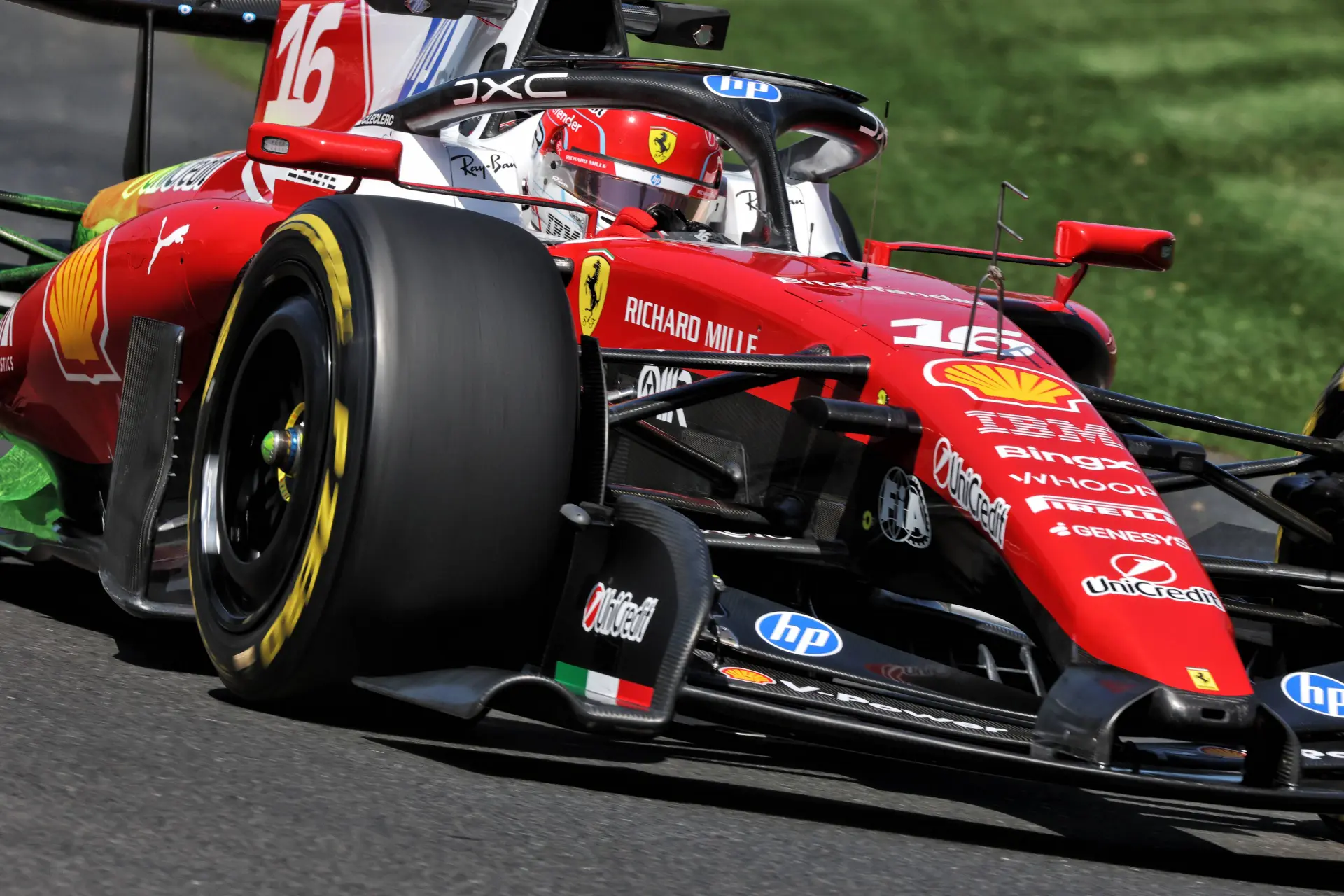
However, the scenario got a bit less ideal in the afternoon session: on Ferrari’s side, the SF-26 demonstrated very balanced and a bit more neutral (in terms of balance between front and rear axle) in FP1, with both Leclerc and Hamilton hugely benefiting from it.
In the afternoon, they tried different set-ups and were unable to match McLaren and Mercedes’ laptimes.

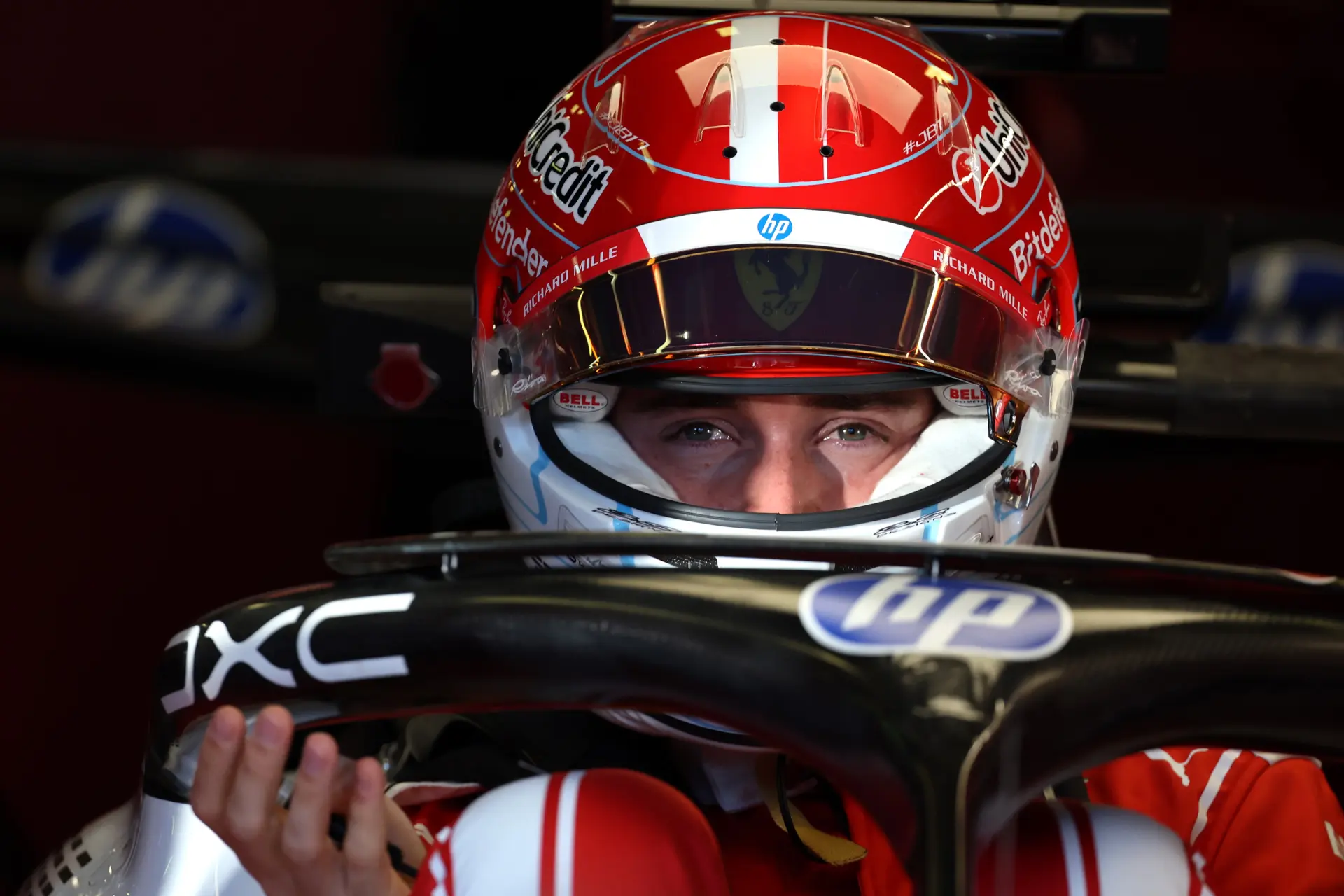
Leclerc during first practice in Melbourne - Photo: Race Pictures
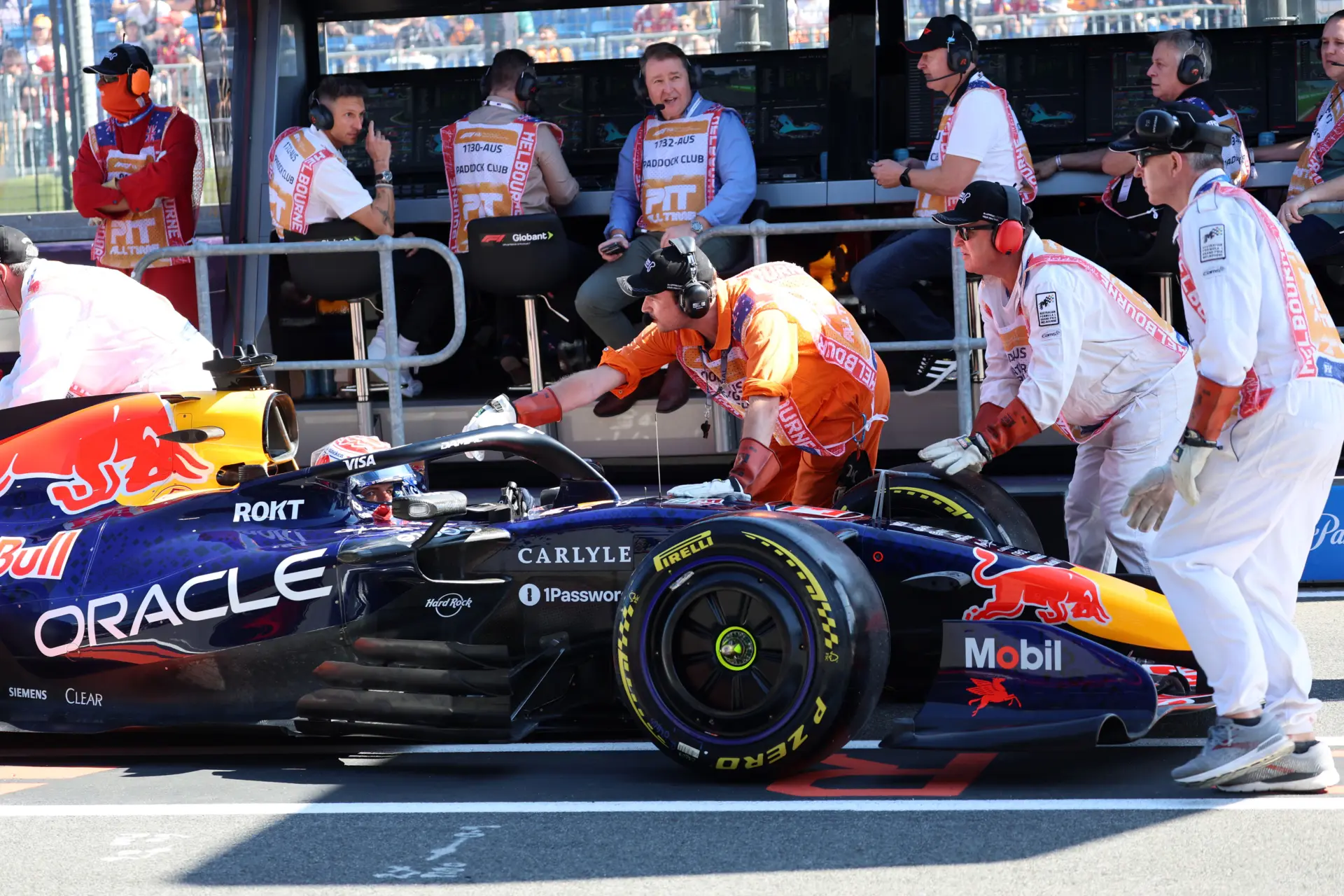
The same this is also valid for Red Bull Racing: after showing a well balanced RB22 in FP1, they had some engine issues at the beginning of the FP2, which stopped Verstappen for a few laps, even if he still managed to complete some runs on the soft and eventually set the 6th quickest time of the day, around 6 tenths behind Piastri in first place.
Neither of these two teams completed any long run, so it’ll be interesting to understand their actual speed compared to Mercedes on Sunday.
ADVERTISEMENT
In conclusion, it was a very enjoyable first day of action in Melbourne, with all four top teams that seemed very close to each other and ready to fight for pole position. A lot will depend on the teams’ ability to find the right setup and engine mode, recharging the battery in strategic places and utilizing it on the straights.
Read also

Don’t miss GPblog in Google
Mark us as a preferred source and our articles will appear more often at the top of Top Stories.
Add as a preferred / source on Google