F1 Tech | Mercedes set to dominate in Australia after sandbagging during testing
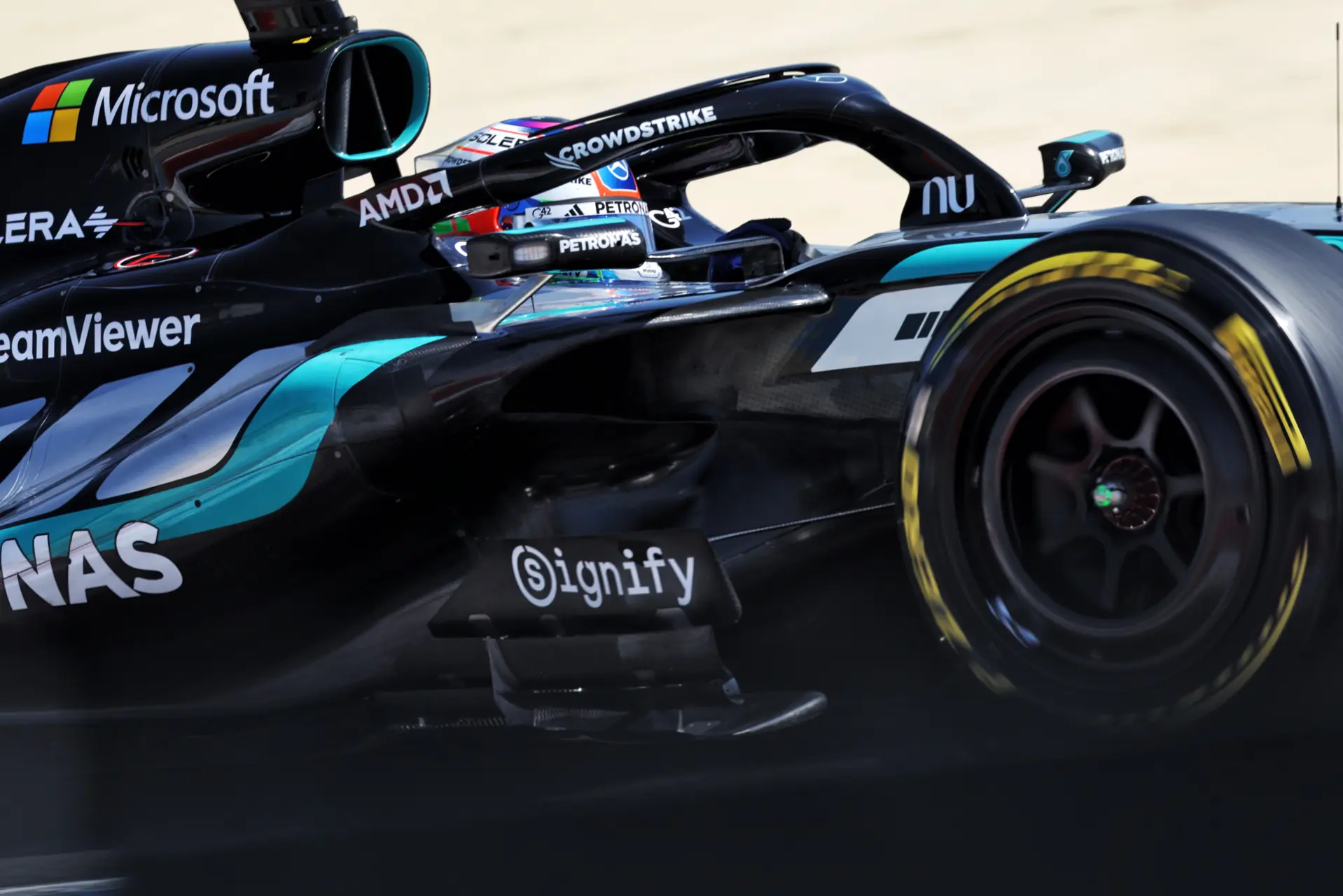
Photo: Race Pictures

Francesco is a technical analyst at GPblog, specializing in the technical side of Formula 1. Through illustrations and analysis, he makes complex components and developments accessible to a wide audience.
Mercedes is expected to dominate the upcoming F1 season starting in Melbourne.
The 2026 Formula 1 season is set to start on a high for Mercedes, after they only partially showed their real potential during the testing completed in Bahrain.
The W17 proved very strong from the engine point of view, and also brought a series of technical updates, which included visible changes to the floor and to the rear wing.
To try to sandbag their performance, however, the team never completed a full race pace simulation, like McLaren and Red Bull did, but only made short stints of 15 laps, setting competitive lap times with a small degradation trend, evidence of a strong mechanical platform.
For all these reasons, competitors believed that the Brackley-based team will be ahead in Australia. Let’s try to understand why.
ADVERTISEMENT
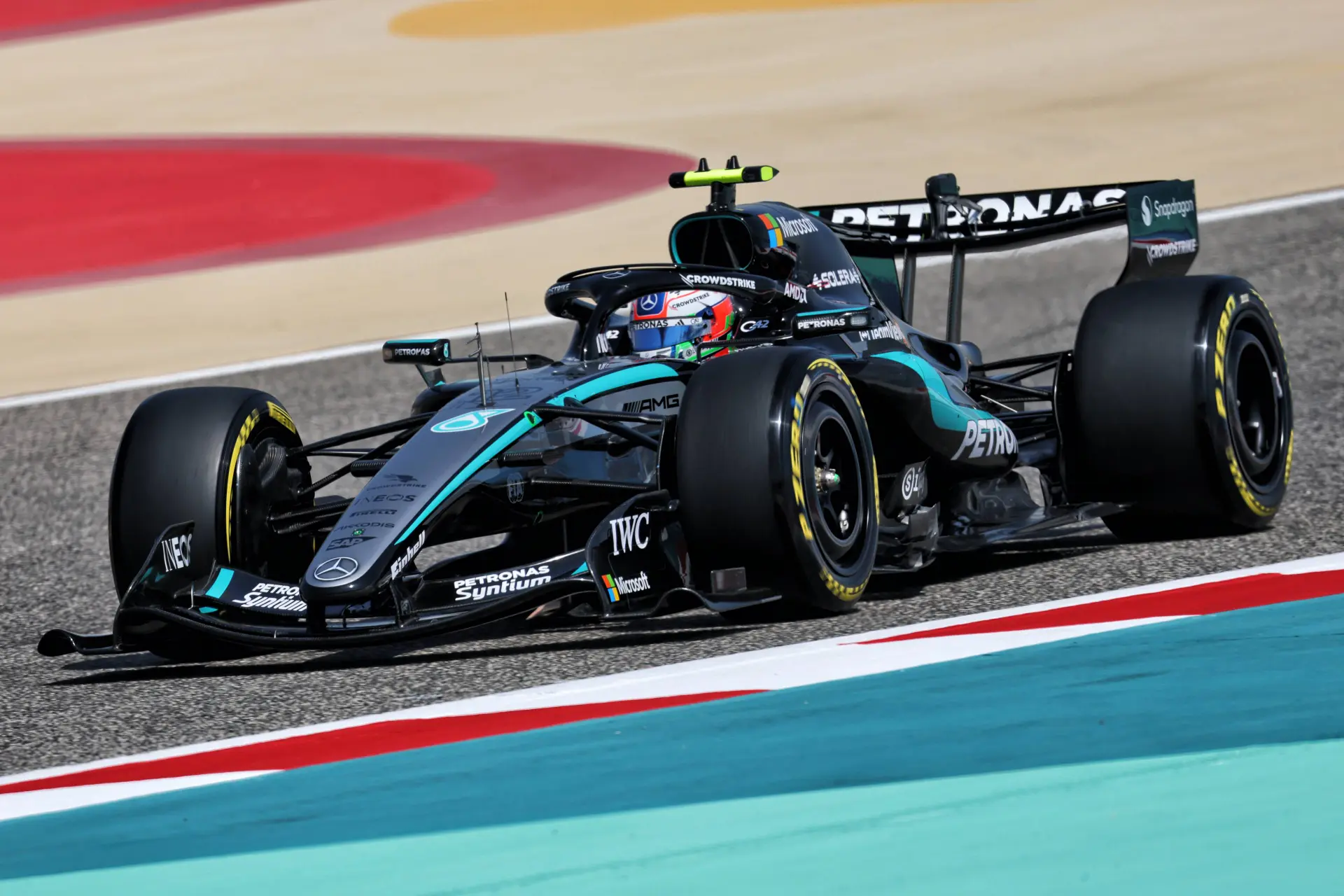
The W17 featured a new aerodynamic package during testing
Mercedes arrives in Australia as the favourite for pole position and victory of the race. The performance and the reliability shown by the W17 during the 9 days of testing available, where it was able to complete a huge amount of laps (716 only in Bahrain!) and the upgrades introduced at the beginning of the second week of testing are proof of a technical superiority.
To improve the car's aerodynamic performance, Mercedes engineers introduced a new package with visible changes to the floor, mirror support and to the rear wing, all elements that aimed at improving the airflow around the car and generating more downforce.
Starting to analyse the changes to the floor, Mercedes’ engineers introduced visible changes to the lower portion of the floor: as it can be seen in the photo below, the floor beneath the bargeboard is folded at the end, and the trailing edge has been cut to generate a series of small vortices that seal the edge, preventing turbulence from the front tires from being sucked under the floor (arrow and green circle).
ADVERTISEMENT
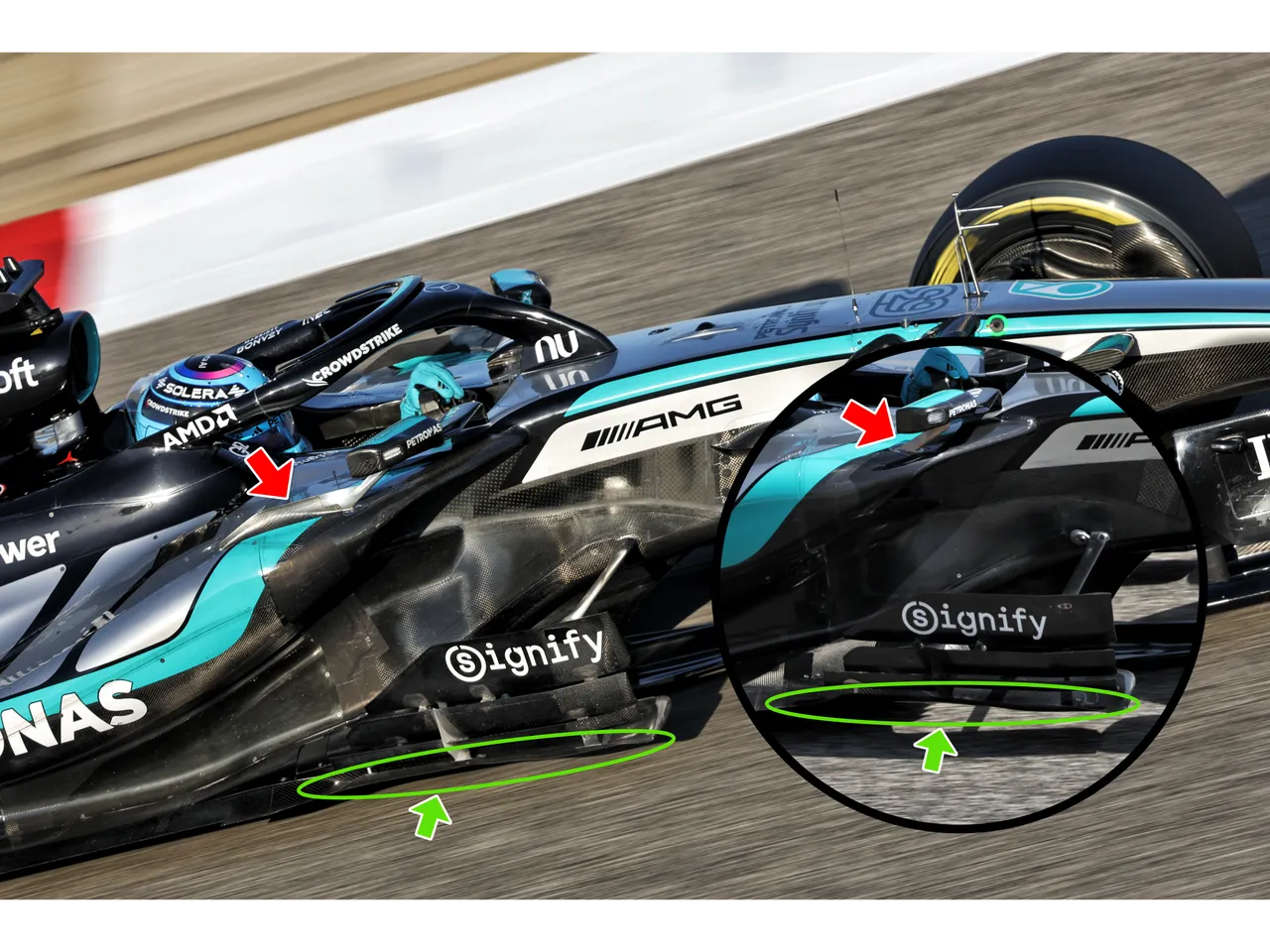
Mercedes' wing mirror support and floor changes - Image: Race Pictures
Furthermore, the mirror support has become a true winglet: compared to the previous version, the new support has an elongated and folded shape to generate a series of vortices along the side, thus reducing the detachment of the fluid vein that usually occurs in that region (red arrow).
The rear of the floor has also been revised to improve the management of turbulence produced by the rear tyres: as shown in the image below, the floor has been shaped with a series of three L-shaped cuts of increasing size, which break up the turbulence generated by the rear wheels into many small vortices and push them outward (red arrows).
This solution replaces a previous, more complex approach, which also featured a series of vortex generators connected by a "bridge" structure.
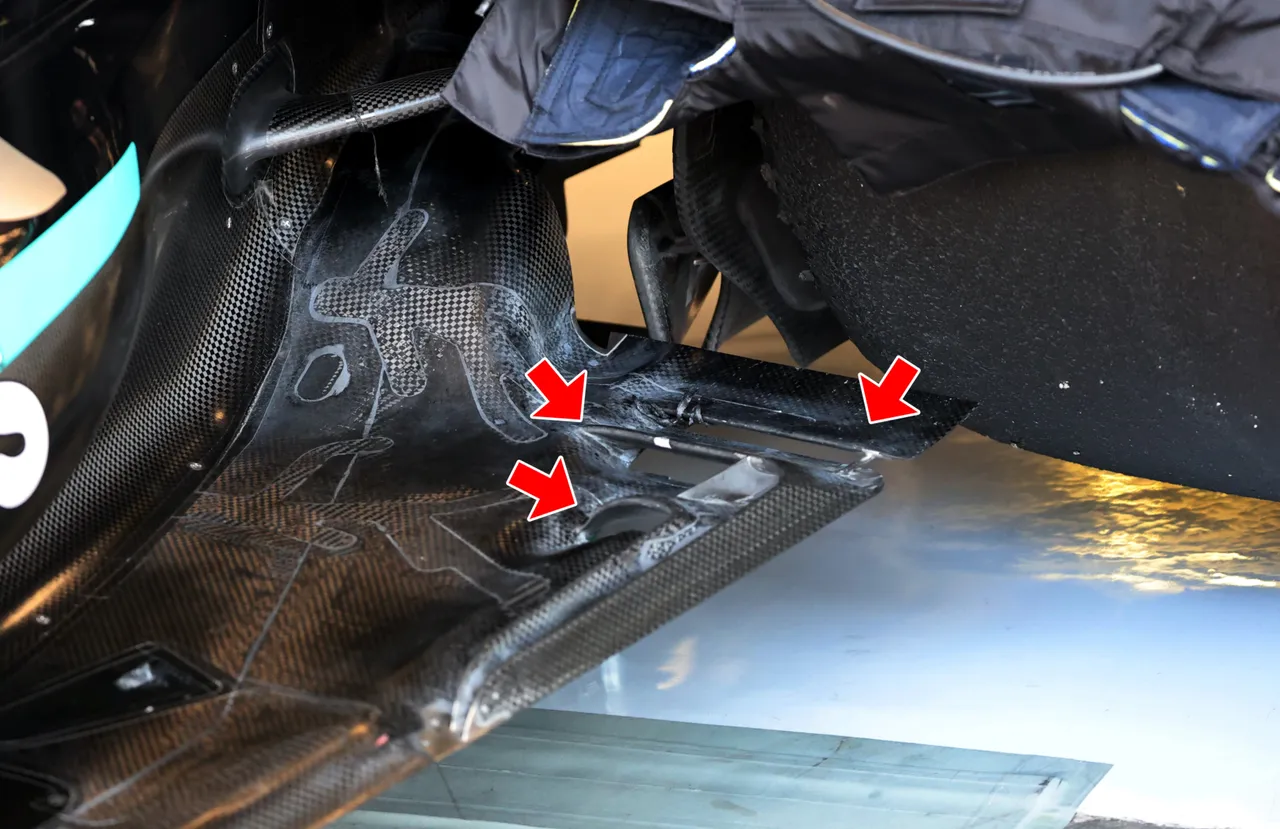
New Mercedes W17's rear end floor design - Image: Race Pictures
ADVERTISEMENT
The aerodynamicists from the Brackley-based team also modified the final portion of the sidepod, making it more tapered and flat, for greater efficiency towards the rear wing.
Mercedes introduced a new solution on the third day of testing: as is visible in the image below, the engineers took advantage of a gray area in the regulations to design two small “flaps” connected to the endplates and placed as an extension to the rear wing. This solution aims to generate more downforce, but also points at pushing the vortices produced at the tip of the wing towards the outside, reducing the drag produced.

Mercedes W17's innovative rear wing design that debuted in Bahrain - Image: Race Pictures
In addition, the team also tested a different front wing endplate in Bahrain, adopting a similar solution to the one that appeared on the Williams: using some glue and tape, in fact, the mechanics connected a horizontal winglet to the vertical endplate of the front wing, to test its behaviour and impact on the aerodynamic map directly on track.
The goal of this component is to produce a series of vortices and push them towards the outside of the front tyres, favouring the outwashing effect and reducing drag.
ADVERTISEMENT
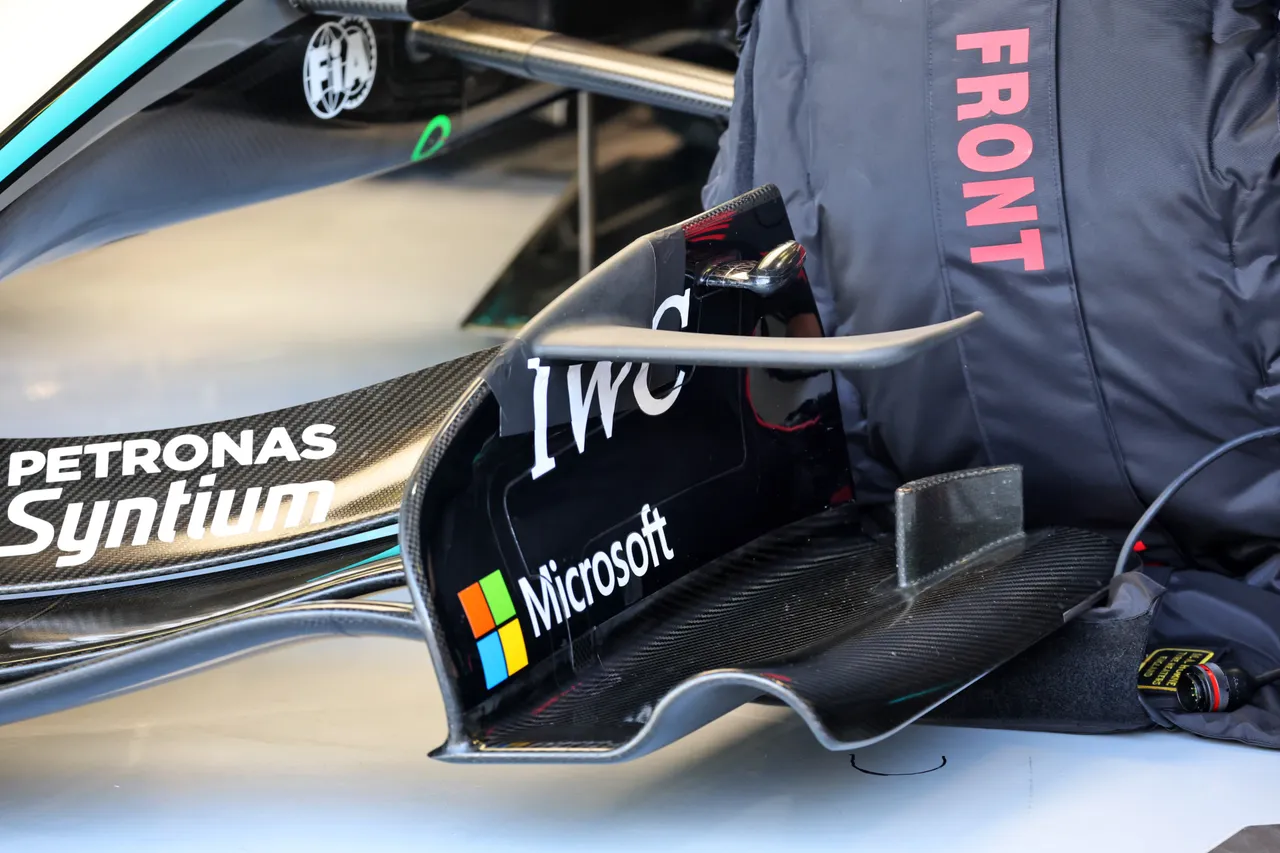
Mercedes' front wing endplate used in Bahrain - Image: Race Pictures
For the moment, that was just a test and both drivers completed just a few laps with it, but it’s very likely that we’ll see this kind of solution fitted on the car in Australia.
All these innovations and changes had a very positive impact on performance: the W17 seemed a very well balanced car on track, both in the slow speed and in the high speed, proof of a solid balance between mechanics and aerodynamics. Kimi Antonelli confirmed his impressions during the last day of testing when talking to the media, including GPblog: “Other than that, the car has felt pretty good. To be fair, we've done a lot of work, setup work, and the car is giving good feelings. Their top teams look pretty good as well.”
What's the news on Mercedes engine compression ratio?
ADVERTISEMENT
From 1 June, power units will not only be measured at ambient temperature, but also when it is at 130 degrees Celsius, when Mercedes' engine's compression ratio is said to increases from 16:1 to 18:1.
In the end, a compromise was reached that doesn’t hurt Mercedes at all and seems solely intended to give the complaining teams an easier way to catch up in 2027.
Read also

Don’t miss GPblog in Google
Mark us as a preferred source and our articles will appear more often at the top of Top Stories.
Add as a preferred / source on Google