Mercedes puts its cards squarely on the table with impressive race simulations

Photo: Race Pictures

Shanna is a Formula 1 journalist at GPblog, specializing in both F1 and endurance and GT racing. With a Master’s degree in Journalism and experience at international circuits, she provides in-depth, reliable coverage and insights based on her presence at Grands Prix and racing events worldwide.
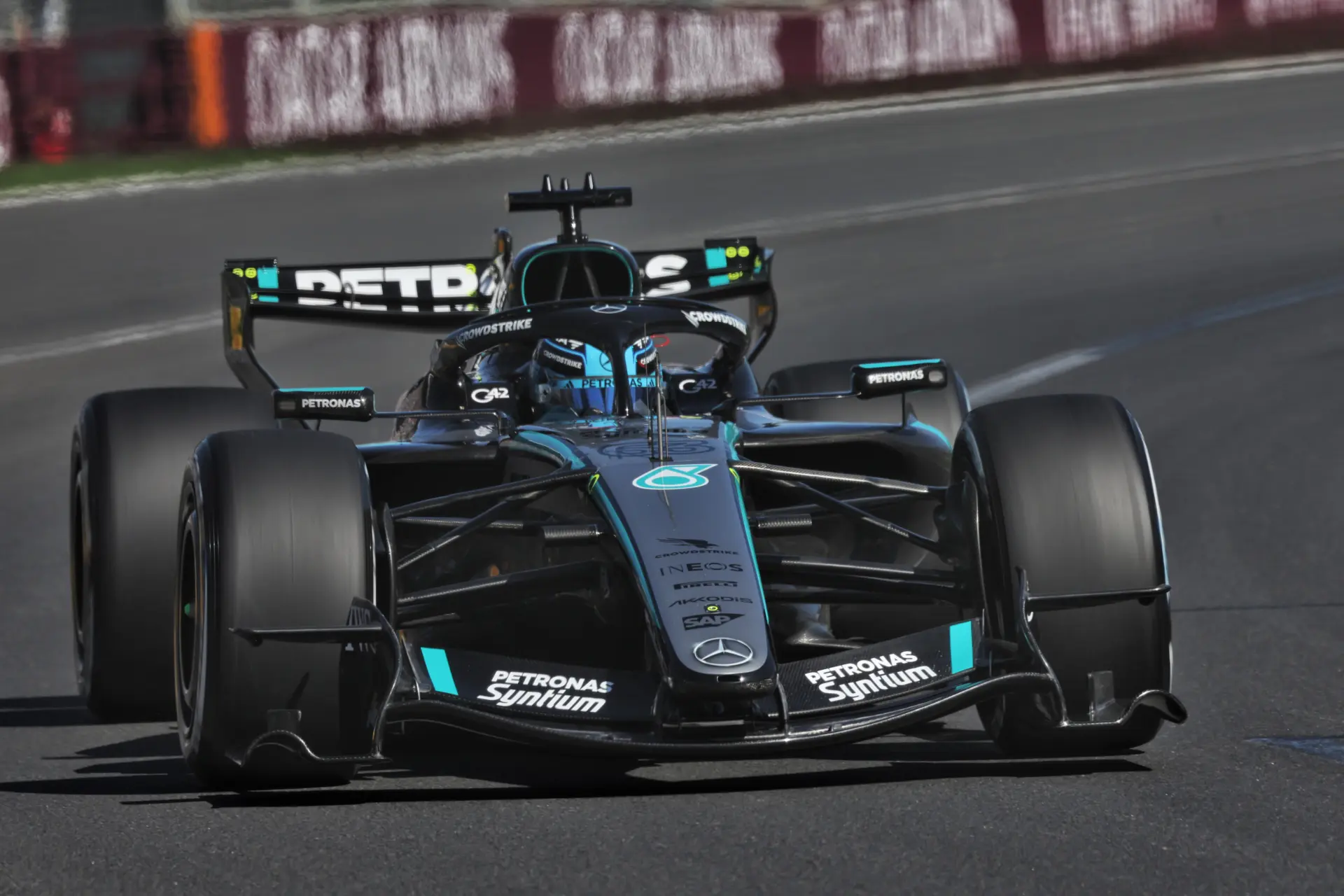
Mercedes impressed during the second free practice in Australia. The long-run data suggests the German team has well and truly earned the favorites tag for now. Red Bull Racing and Ferrari’s run plans were impossible to decipher.
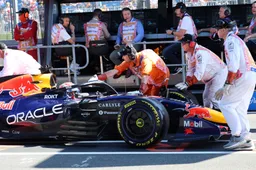
For Max Verstappen and Isack Hadjar’s team, FP2 in Melbourne was anything but smooth. The four-time world champion said afterwards they ‘ran into a few problems.’ Verstappen also struggled for grip and had a trip through the gravel, which damaged the car’s floor.
It shows in his runs during FP2, which weren’t consistent. A long run can’t really be derived from this data, as Verstappen never settled into a proper race simulation. An overview of his laps during FP2:
| Lap | VER |
| 1 | 1:22.210 |
| 2 | 2:01.533* |
| 3 | 1:21.080 |
| 4 | 1:47.397* |
| 5 | 1:40.261* |
| 6 | 1:20.366 |
| 7 | 7:21.705* |
| 8 | 2:40.109* |
| 9 | 1:24.588 |
| 10 | 1:28.706 |
| 11 | 1:24.918 |
| Average | 1:23.645 |
If we exclude the laps marked with an *, the average comes out at 1:23.645. It partly explains why Verstappen was somewhat satisfied with the pace, but the long run is, of course, not particularly representative.
ADVERTISEMENT
Mercedes lands the first blow
A caveat with long runs, just like the analyses provided by GPblog over the winter break: keep in mind that different engine modes or fuel loads are unknown. Still, consistent long runs can be a good indication of who’s in good shape for the Grand Prix.
On Friday afternoon in Australia, Mercedes drew the spotlight. Both George Russell and Kimi Antonelli completed long, consistent race simulations on the hard tyre. Russell averaged 1:23.714 over an eleven-lap stint. Antonelli was about four tenths slower, but also delivered a very consistent stint.
The long runs of Hadjar, McLaren, and Mercedes:
| Lap | HAD (M) | NOR (H) | PIA (H) | RUS (H) | ANT (H) |
| 1 | 1:24.386 | 1:22.712 | 1:24.906 | 1:24.428 | 1:24.650 |
| 2 | 1:24.680 | 1:23.473 | 1:25.210 | 1:24.314 | 1:24.194 |
| 3 | 1:33.426 | 1:22.690 | 1:24.594 | 1:23.469 | 1:24.089 |
| 4 | 1:24.046 | 1:23.030 | 1:24.648 | 1:23.298 | 1:24.045 |
| 5 | 1:24.313 | x | 1:24.884 | 1:23.461 | 1:24.053 |
| 6 | x | 1:24.917 | 1:23.507 | 1:24.024 | |
| 7 | x | 1:23.385 | 1:23.208 | 1:23.756 | |
| 8 | 1:25.909 | 1:22.989 | 1:23.138 | 1:23.712 | |
| 9 | 1:25.188 | 1:23.802 | 1:23.689 | ||
| 10 | 1:24.617 | 1:24.400 | 1:24.610 | ||
| 11 | 1:23.827 | 1:28.659 | |||
| 12 | 1:24.424 | ||||
| 13 | 1:24.890 | ||||
| Average | 1:25.821 | 1:23.314 | 1:24.848 | 1:23.714 | 1:24.138 |
As the table shows, Hadjar did manage something of a long run on the medium tyre, but the consistency is clearly lacking. That leaves him with an average of 1:25.821. Given Red Bull’s issues, it can be expected that this isn’t representative of race pace either.
ADVERTISEMENT
McLaren ran short long runs on the hard tyre, with Norris faster than Russell, but the first part of his long run came at the start of the session and the second part near the end, which also doesn’t give a true picture. Piastri also ran a short stint toward the end of the session.
Where is Ferrari?
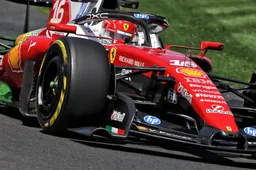
Charles Leclerc and Lewis Hamilton had tricky run plans, as can be seen from the FP2 lap times. Both drivers managed at most two or three laps at a consistent pace, meaning no long runs can be deduced from their plans. Hamilton’s fastest lap was a 1:20.050, Leclerc’s a 1:20.291, compared to Russell’s 1:20.049, Antonelli’s 1:19.943, and Piastri’s 1:19.729.
Verstappen’s fastest lap was a 1:20.366, and Hadjar’s a 1:20.941.
FIA confirm outcome of second George Russell investigation in Melbourne
ADVERTISEMENT
Mercedes' pace certainly impressed on the first practice day of the season, but Russell was in a bit of bother with the stewards after colliding with Arvid Lindblad in the pit lane, for which he only received a reprimand, and then committing a practice start error.
Don’t miss GPblog in Google
Mark us as a preferred source and our articles will appear more often at the top of Top Stories.
Add as a preferred / source on Google