The five technical innovations that changed Formula 1 in 2026
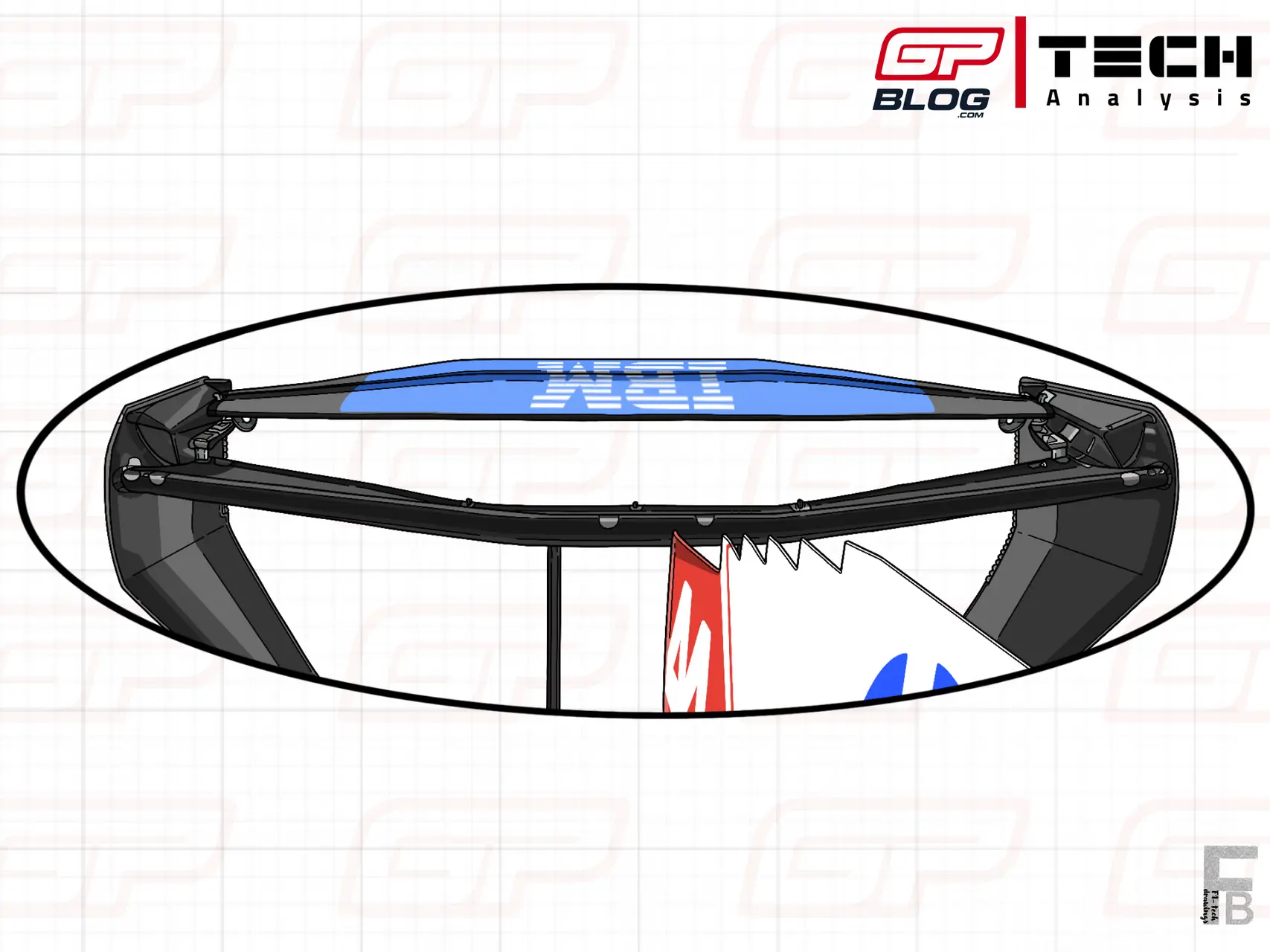
Ferrari's "Macarena" rear wing - Image: Francesco Bianchi
Updated: 12:37, 04 Aug
0 Comments

Francesco is a technical analyst at GPblog, specializing in the technical side of Formula 1. Through illustrations and analysis, he makes complex components and developments accessible to a wide audience.
During the first half of the 2026 season, teams introduced several highly innovative technical solutions that were later copied by their rivals.
The first half of the 2026 season was dominated by Mercedes, as they managed to win 8 out of the 11 races held, demonstrating a clear technical superiority thanks to the W17's versatility in adapting to various conditions and layouts.
However, when it comes to technical innovation for this season, Ferrari is certainly at the top of the list, thanks to the innovative design of many components—including the FTM (Flick Tail Mode), which the FIA has decided to ban for 2027.
"Macarena" rear wing becomes the benchmark
The first of the most interesting technical solutions introduced this season is undoubtedly the "Macarena" rear wing introduced by Ferrari during pre-season testing in Bahrain.
ADVERTISEMENT
This solution rotates the two upper flaps by approximately 270° when the "Straight-Line Mode" is activated, through a unique mechanism of its kind. Unlike what was done by other teams, Ferrari engineers decided to place the SM actuator inside the rear wing endplate (on the left side), thereby reducing the turbulence generated by a centrally mounted actuator, even though the mechanism is much more complex.

Ferrari's "Macarena" rear wing - Image: Francesco Bianchi
This allowed Ferrari's engineers to directly rotate the top two flaps using pins inserted into the endplates, avoiding lever mechanisms like those adopted by Red Bull or McLaren (with the version of the "Macarena" rear wing tested in Hungary, which will be adopted starting from Zandvoort).
Although highly effective, the solution required a testing period to function properly, as it made the car very unstable under braking (i.e., when the wing closed and returned to its natural position). For this reason, the team introduced a slightly modified version for the Miami Grand Prix, which has remained on the car ever since.
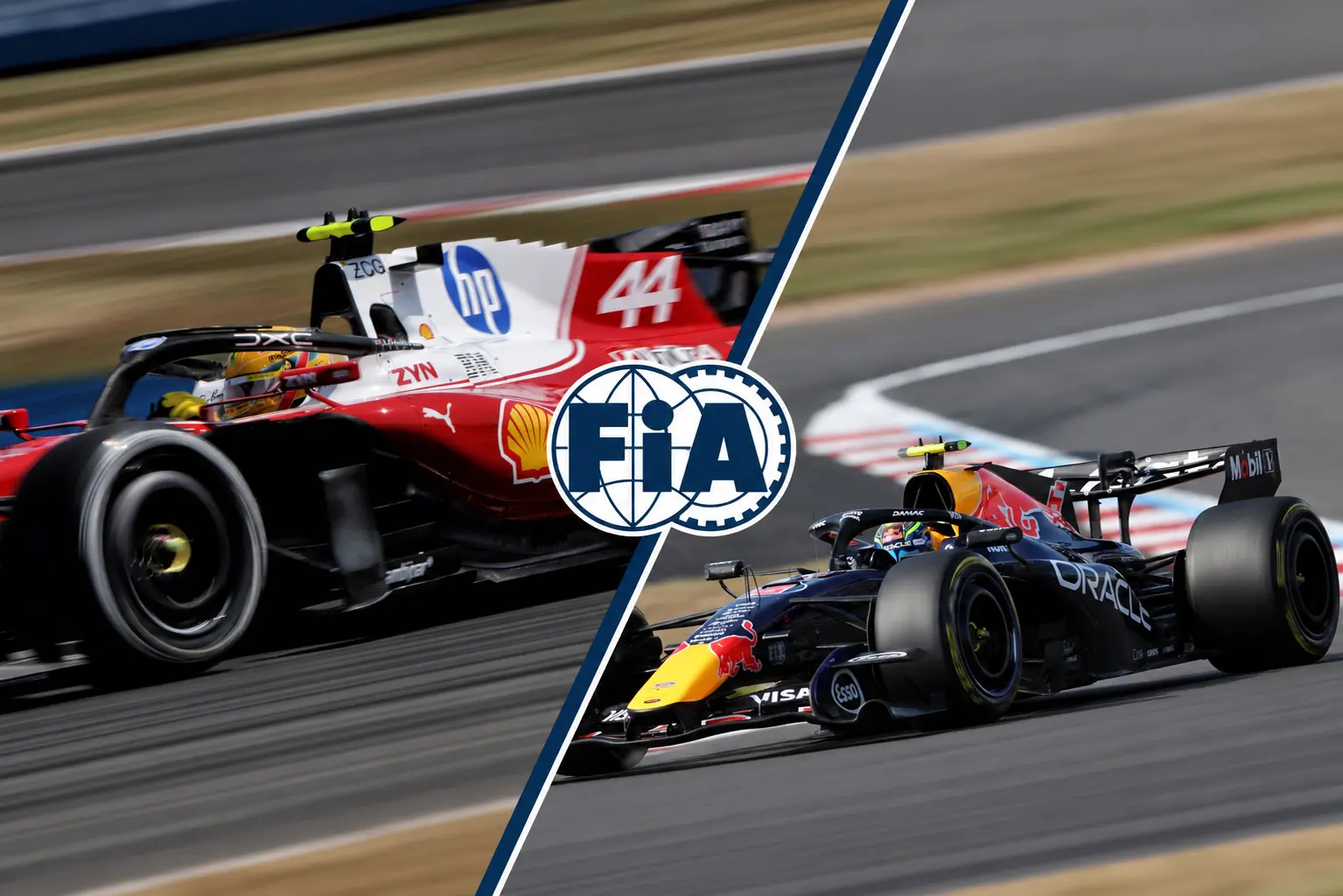
The effectiveness of the design became clear not only by the speed gain brought on the straights when the system was deployed, but above all by the fact that it was adopted by both Red Bull and McLaren, who—albeit with different mechanisms—developed a rotating wing to guarantee higher top speed on the straights.
ADVERTISEMENT
FTM: Ferrari's clever idea that was banned for 2027
The second very important solution introduced at the beginning of the year and subsequently copied by all teams was the FTM, an acronym for Flick Tail Mode, which consists of a small flap positioned at the engine exhaust outlet, designed to increase downforce by sacrificing a small portion of power. This solution is particularly ingenious, as it exploits a grey area of the regulations located within 60 mm of the rear axle.
This small element deflects the exhaust gases coming out of the pipe, increasing the efficiency of the rear wing and, above all, acting as an extension of the diffuser to improve flow extraction and overall downforce.

Ferrari's FTM adopted since Baharin testing - Photo: Race Pictures
ADVERTISEMENT
For this reason, this system was banned by the FIA ahead of next season, in line with their goal of reducing the aerodynamic load generated by the cars.
Despite this, the solution was also introduced by all other teams on their cars, albeit with a much simpler design compared to the one adopted on the SF-26, a sign of genuine innovation.
Mercedes diffuser sparks FIA intervention
Another solution that sparked much debate in this first half of the season was undoubtedly the Mercedes diffuser introduced in Canada: as visible in the photo below, this component featured a serrated trailing edge and two teardrop-shaped elements on the upper ramp.
This highly ingenious solution aimed to generate a series of vortices along the trailing edge to improve flow extraction from the diffuser and increase the diffuser's overall downforce. Furthermore, similar to what Ferrari did with the FTM, this solution aimed to extend the upper edge of the diffuser, thereby having a larger surface area available to generate downforce.
ADVERTISEMENT

Mercedes' diffuser introduced in Canada - Photo: Race Pictures
However, following this innovation, Ferrari requested clarifications from the FIA, after presenting a similar solution at the beginning of the season that had not been accepted.
For this reason, starting from the Austrian Grand Prix, the FIA forced Mercedes to abandon this solution and revert to the more conventional diffuser layout used up until before the Canadian Grand Prix.
Rear wing flaps and the rise of the 'mouse hole'
Another solution that set a precedent among all teams was the addition of small flaps to the rear wing trailing edge of the rear wing to extend the surface area available to generate downforce.
ADVERTISEMENT
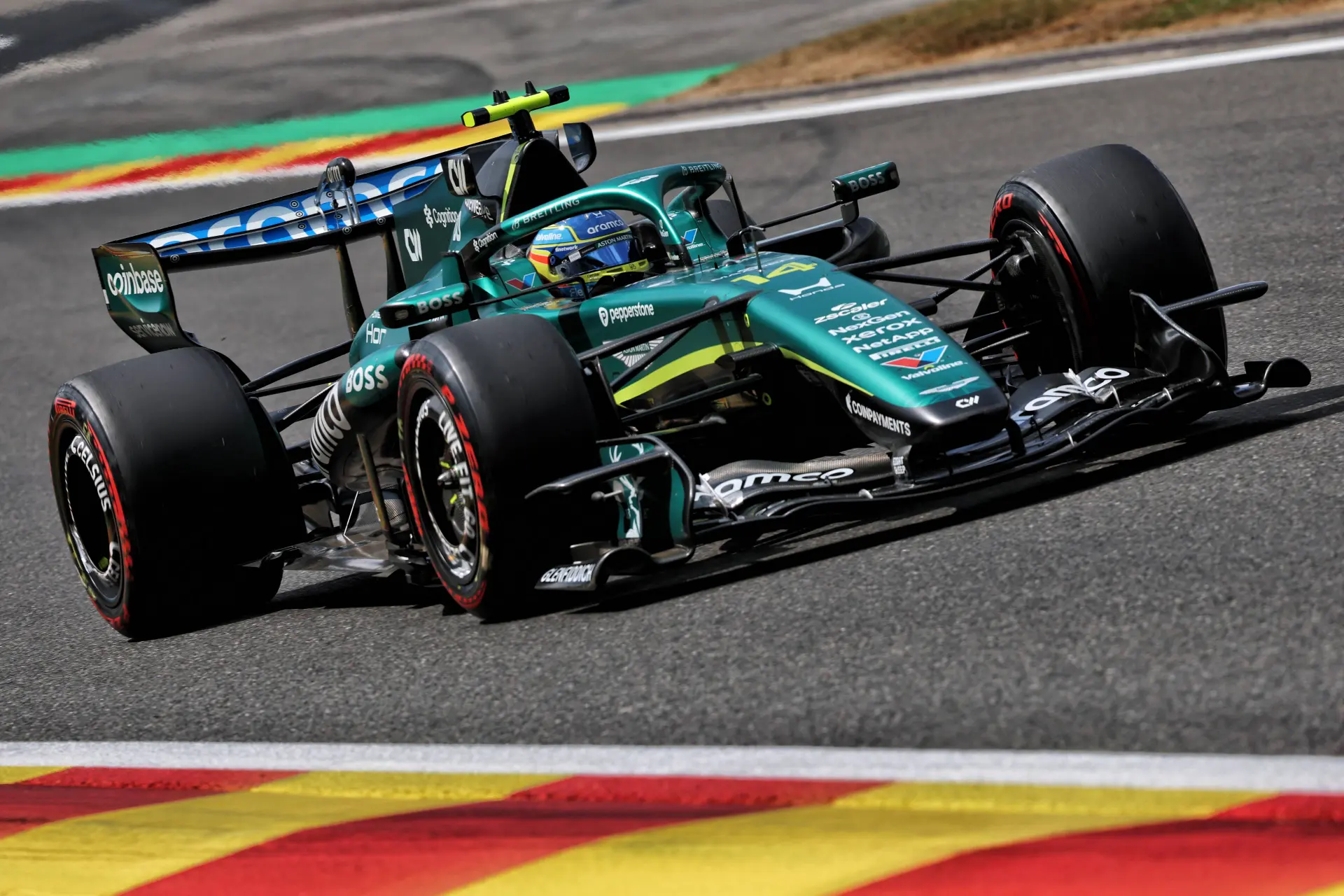
This solution was initially introduced by Mercedes and was then copied by practically all other teams, including Aston Martin, as highlighted by the orange arrows in the drawing below, over the following races, albeit with different interpretations.

Aston Martin's 'mouse hole' covers - Image: Francesco Bianchi
For instance, Red Bull introduced small triangular flaps on the trailing edge for the Monaco Grand Prix, whereas other teams favored a more classic rectangular shape.
This solution was also banned for the 2027 season, as it was deemed out of line with the spirit of the regulations.
The final innovation to spread throughout the grid is the shape of the "mouse hole". This term refers to the presence of a small hole on the lateral ramp of the diffuser that allows more airflow to reach the diffuser, maximizing downforce (yellow arrow and area).
ADVERTISEMENT

Mclaren's 'mouse hole' design introduced in Miami - Image: Francesco Bianchi
At the beginning of the season, it was clear that teams like Ferrari and Mercedes already had a generously sized mouse hole specifically to maximize the air pushed inside the diffuser. During the first part of the season, this small hole was pushed to greater extremes in terms of size, as it offered a clear performance advantage.
In conclusion, during the first half of the season, we saw a series of significant technical innovations, also stemming from the greater freedom allowed by the regulations. It will be interesting to see if similar solutions will continue to spread in the second half as well, when teams introduce further upgrade packages to improve their cars' performance.
Read also


Don’t miss GPblog in Google
Mark us as a preferred source and our articles will appear more often at the top of Top Stories.
Add as a preferred / source on GoogleRead more about:
latest news







Azerbaijan Grand Prix
Overview
Thursday 24.09.26
Practice 1
08:30 AM
Practice 2
12:00 PM
Friday 25.09.26
Practice 3
08:30 AM
Qualification
12:00 PM
Saturday 26.09.26
Race
11:00 AM
Thursday 24.09.26
Practice 1
Thu 08:30 AM
Practice 2
Thu 12:00 PM
Friday 25.09.26
Practice 3
Fri 08:30 AM
Qualification
Fri 12:00 PM
Saturday 26.09.26
Race
Sat 11:00 AM
Times are in your local timezone
Rumors
Popular on GPBlog

1
Azerbaijan GP schedule: why the race is a day earlier
1131 times read

2
F1 Today | Hamilton takes to social media to react to Ferrari rumors
911 times read

3
Audi finally has an in-house replacement for Hulkenberg and Bortoleto
815 times read

4
Wolff reveals lifelong battle with depression: 'I couldn't define what that was'
652 times read
F1-stand 2026
Season
| Pos. | Driver | Team | Points |
|---|---|---|---|
1 | MercedesMER | 292 | |
2 | MercedesMER | 211 | |
3 | FerrariFER | 191 | |
4 | McLarenMCL | 186 | |
5 | FerrariFER | 167 | |
6 | Red Bull RacingRBR | 145 | |
7 | McLarenMCL | 120 | |
8 | Red Bull RacingRBR | 71 | |
9 | Racing BullsRCB | 59 | |
10 | AlpineALP | 41 |
Loading