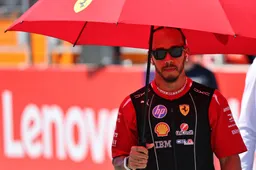
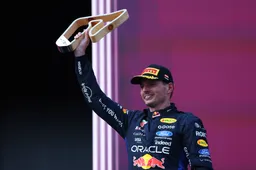
Red Bull’s upgrade package reignites the battle with Mercedes
RB22's changes to the cooling inlet and floor fence for the Austrian Grand Prix - Image: Francesco Bianchi
17:29, 29 Jun
0 Comments

Francesco is a technical analyst at GPblog, specializing in the technical side of Formula 1. Through illustrations and analysis, he makes complex components and developments accessible to a wide audience.
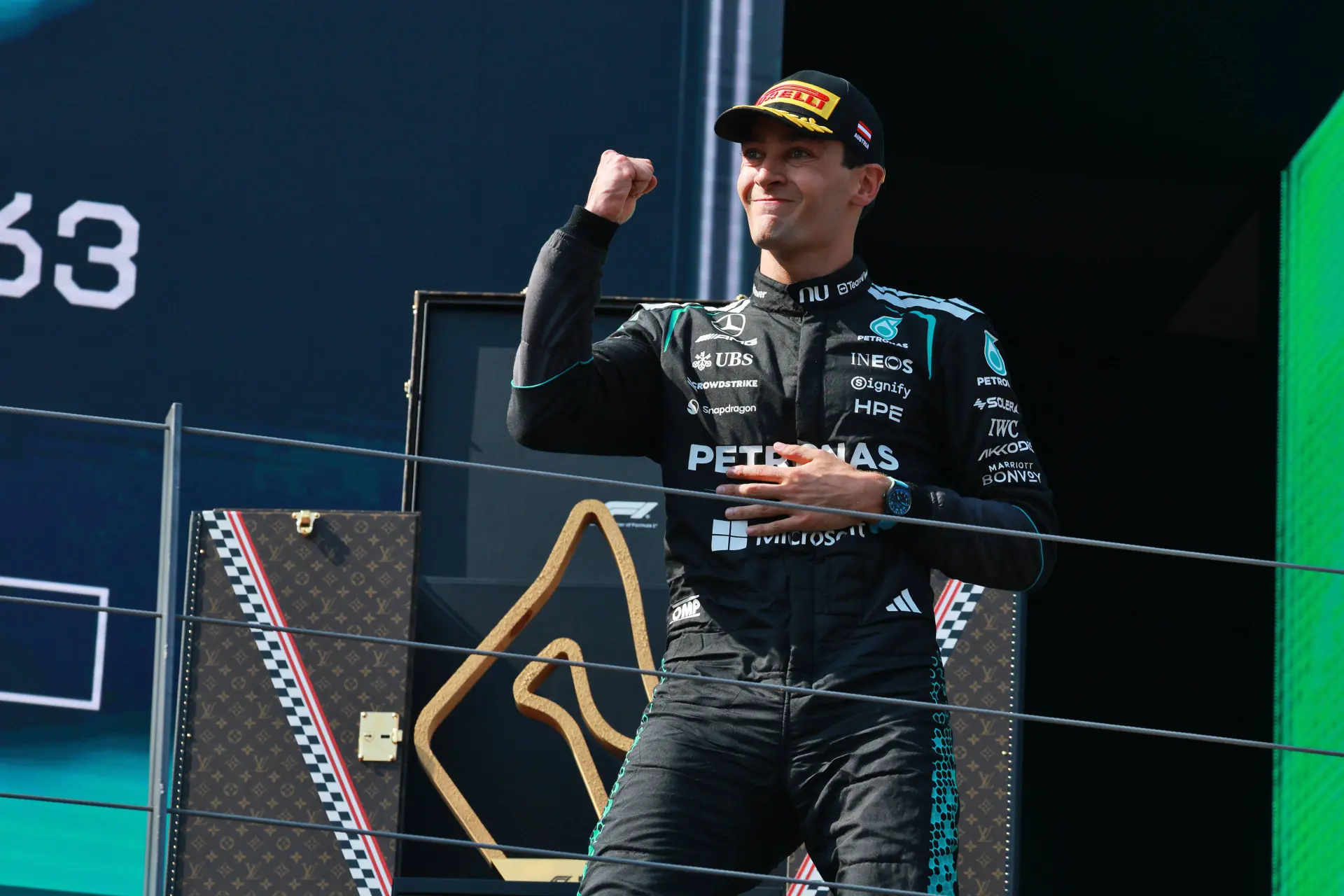
Red Bull Racing introduced a big update package in Austria, which allowed Max Verstappen to fight George Russell and Kimi Antonelli for the race victory.
The Austrian Grand Prix weekend was a major turning point for Red Bull's season, not only for their second-place finish in Sunday's race, but especially for their performance throughout the weekend.
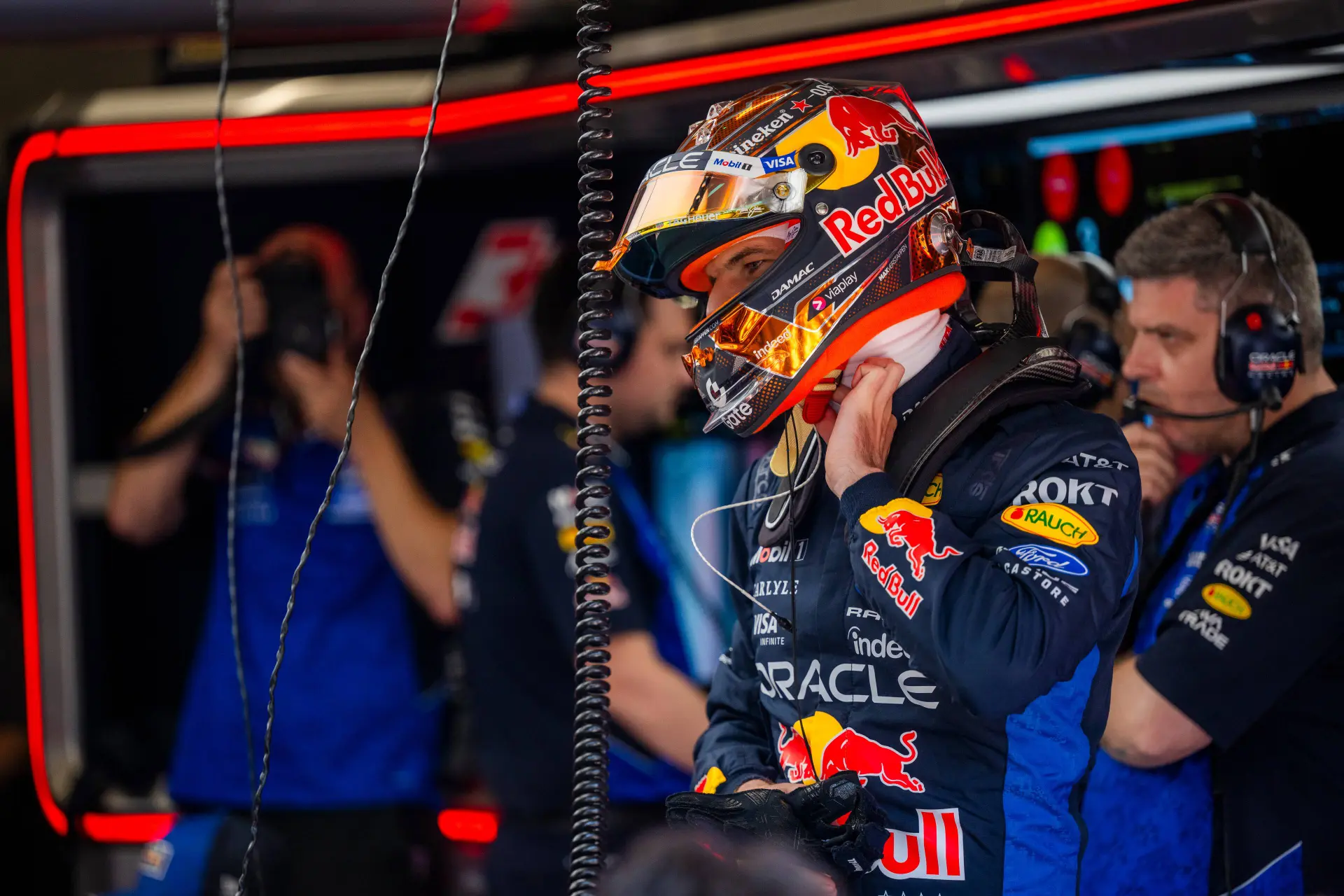
Despite the issue that prevented Verstappen from completing his final attempt in Q3, the Dutch driver managed to recover very easily during the opening laps of the race, subsequently setting impressive times on the hard tires, a sign of excellent balance and tire management.
Mercedes has yet to introduce its second major upgrade package after the one introduced in Canada, but the question on everyone's mind is whether this RB22 will be able to challenge the W17 in the upcoming races.
Read also
ADVERTISEMENT
A massively updated RB22 made its debut in Austria
After the Barcelona-Catalunya Grand Prix, where Verstappen finished a full 40 seconds behind Lewis Hamilton, Red Bull Racing Team Principal Laurent Mekies announced that the team would bring a substantial package of upgrades to the Austrian Grand Prix, including a drastic reduction in the car's weight.
Consequently, a series of new features appeared on Friday in key areas: cooling inlets and sidepods, a floor, and an evolved version of the FTM located behind the engine exhaust outlet.
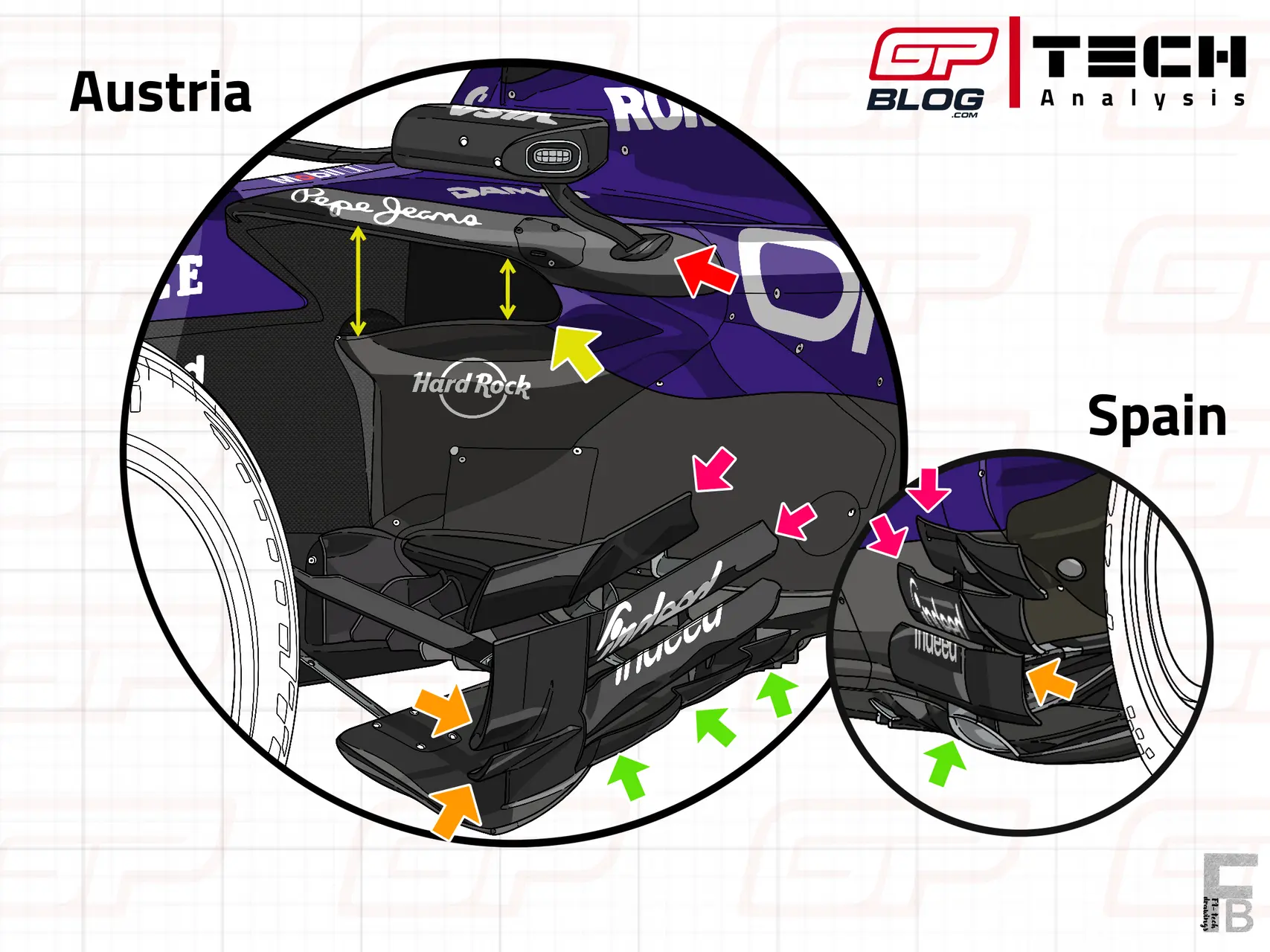
As for the changes to the cooling inlets, as highlighted in the drawing below, they now have an identical shape to those of the Mercedes W17. Compared to the previous version, which featured a significantly forward-moving lower lip to create a greater undercut, the new version features a "shark mouth" cooling inlet shape, with a very pointed shape at the ends and a larger frontal section near the chassis (yellow arrows).
Consequently, the mirror mount has also changed: while in the previous version, the upper SIS (Side Impact Structure) protruded from the sidepod, it has now been fully integrated and represents the starting support from which the upper edge of the sidepod itself extends (red arrow).
ADVERTISEMENT

RB22's changes to the cooling inlet and floor fence for the Austrian Grand Prix - Image: Francesco Bianchi
Further changes also concern the undercut, which has been reduced, and especially the external floor fence, which has been completely redesigned.
Starting from the bottom, you can see how the lower edge no longer simply curves upward like in the version used up to Barcelona, but has been folded into three small elements that serve the purpose of fragmenting the flow and creating a series of vortices to seal the floor edge (green arrows).
The two central elements of the fence have also been changed, while previously they had a similar shape. The second also featured a small airfoil designed to generate a series of vortices, the new version features a much more complex design, with a common vertical support to which two flaps are attached, a smaller one at the bottom and a larger, more inclined one at the top (orange arrows).
Finally, regarding the shape of the third element, as highlighted by the pink arrows, it also has a very different shape. In addition to having a much more angular central end than the previous version, it has been shortened in length and has a pointed end.
ADVERTISEMENT
The second and third elements also now have a more pointed end at the rear, a solution that works in synergy with the new undercut design.
All these changes aim to differently manage turbulence coming from the front wheels, in a crucial area for generating downforce.
To these changes we must also add some innovations in the floor area in front of the rear wheels, where an additional vortex generator has appeared and the slots that carry air towards the diffuser ramp have been redesigned, as well as the FTM which has been evolved into a true biplane wing.
How the updates impacted perfomance
All these upgrades were fitted to both cars starting in FP1, a sign that the team wanted to gather data and information on the effectiveness of this package. During the first session, as the team intended, the times were not remarkable, with Verstappen finishing the session a full six tenths behind Russell in P1.
ADVERTISEMENT
It was only in FP2, after the team had made some setup changes to adapt the mechanical setup to the new package, that the value of the new package began to emerge: despite a lackluster qualifying simulation, with Verstappen only able to post sixth fastest time, the race pace simulation showed that the RB22 had significantly improved in terms of tire management, an aspect it had particularly struggled with in Barcelona.
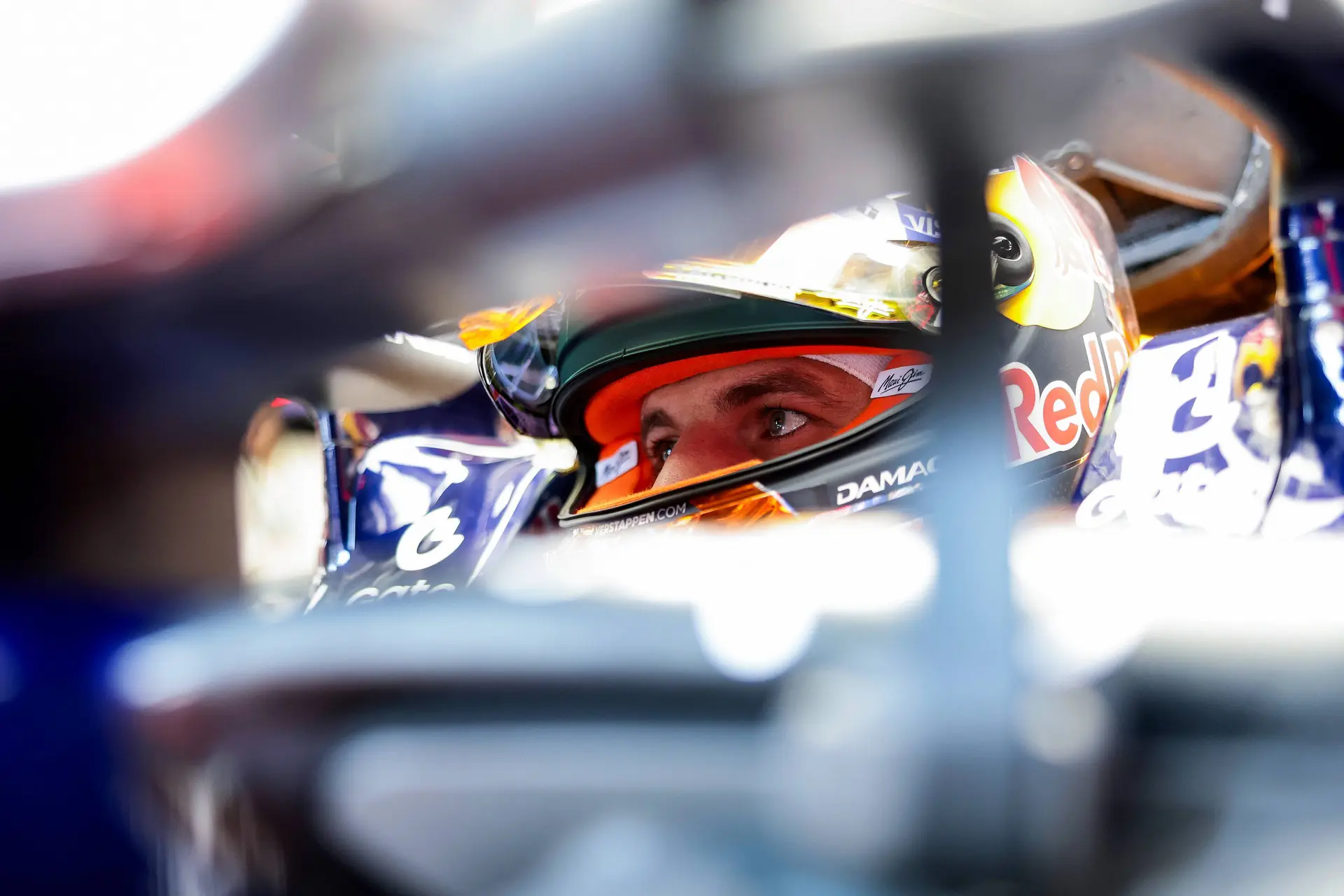
Thanks to further work on fine-tuning the car and improving the setup, during qualifying on Saturday the RB22's improved potential was revealed, even over a single lap. The new updates, in fact, have guaranteed a notable increase in downforce generated by the floor and bodywork and this has made the car much more stable in medium-high speed corners, especially in the second and third sectors.
This allowed Verstappen to fight for pole until his final Q3 attempt, where a rear wing issue led to heavy oversteer at Turn 9, causing him to crash into the barriers. Despite this, his pace in the first two sectors of the track indicated that the four-time world champion had what it took to battle for pole against the two Mercedes.

Photo: Race Pictures
ADVERTISEMENT
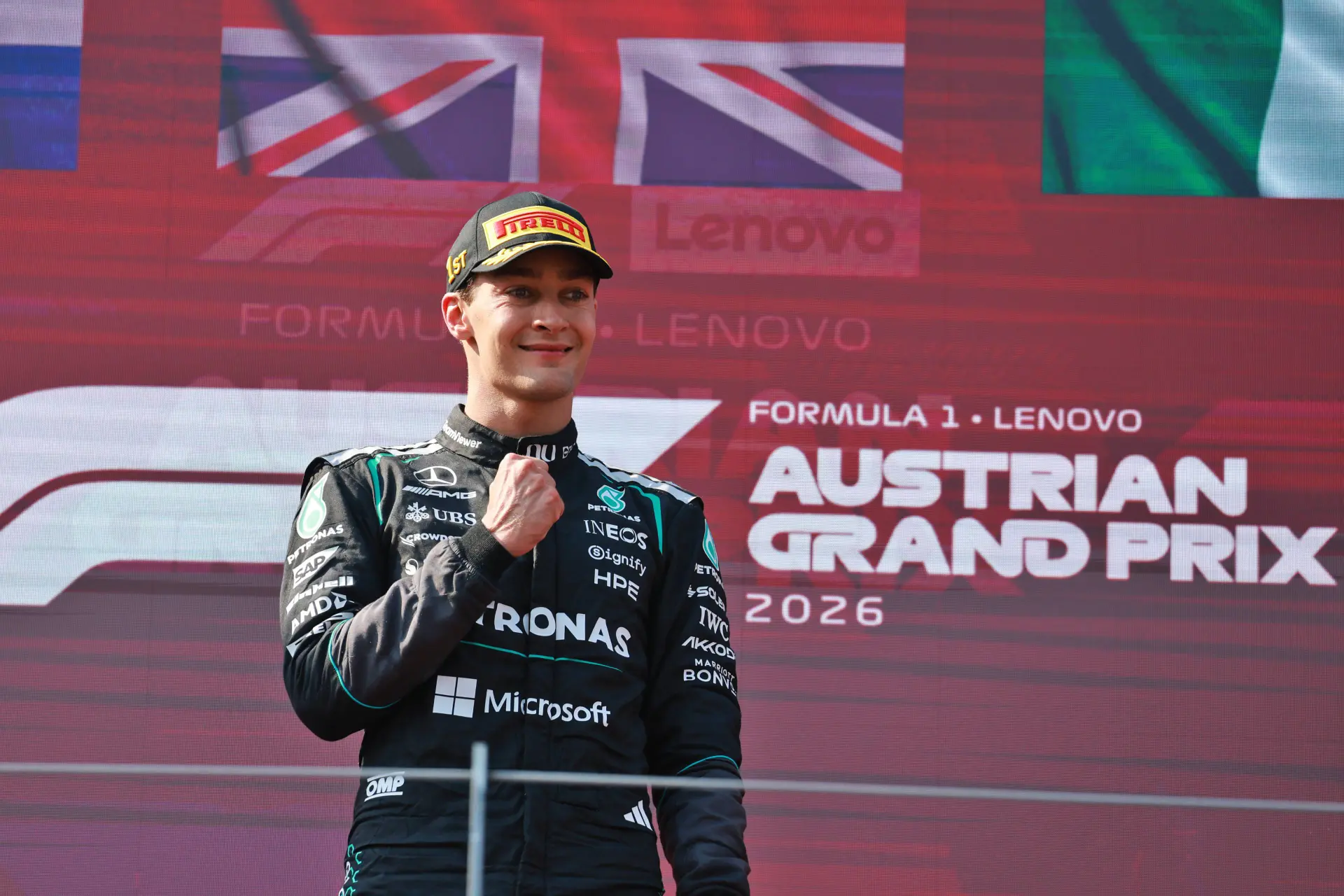
If Saturday was a bit of a disappointment for the Dutch driver, Sunday demonstrated a clear improvement for Red Bull: after a series of excellent opening laps, Verstappen found himself battling Russell and Antonelli for the race win, finishing just 1.6 seconds behind the Briton.
In particular, he demonstrated a very rapid pace on the hard tyres, managing to gain significant time on Russell towards the end of the stint, when the tires were starting to wear, a sign of better tyre management than the Briton.
Talking to the international media, including GPblog, after the race, Verstappen expressed his thoughts on the car’s performance as follows: “I think what was satisfying is that this was the first time I felt like actually I could fight for the win. I do think that the first half of the race, we were more competitive. [...] But still, to be that close to a win, I think is great effort from the team. They have worked really hard to get these upgrades on the car here, and this is the first time, I think, in the race where I felt really competitive. And I could push a bit more. So that is definitely the positive, I think, of this weekend.”
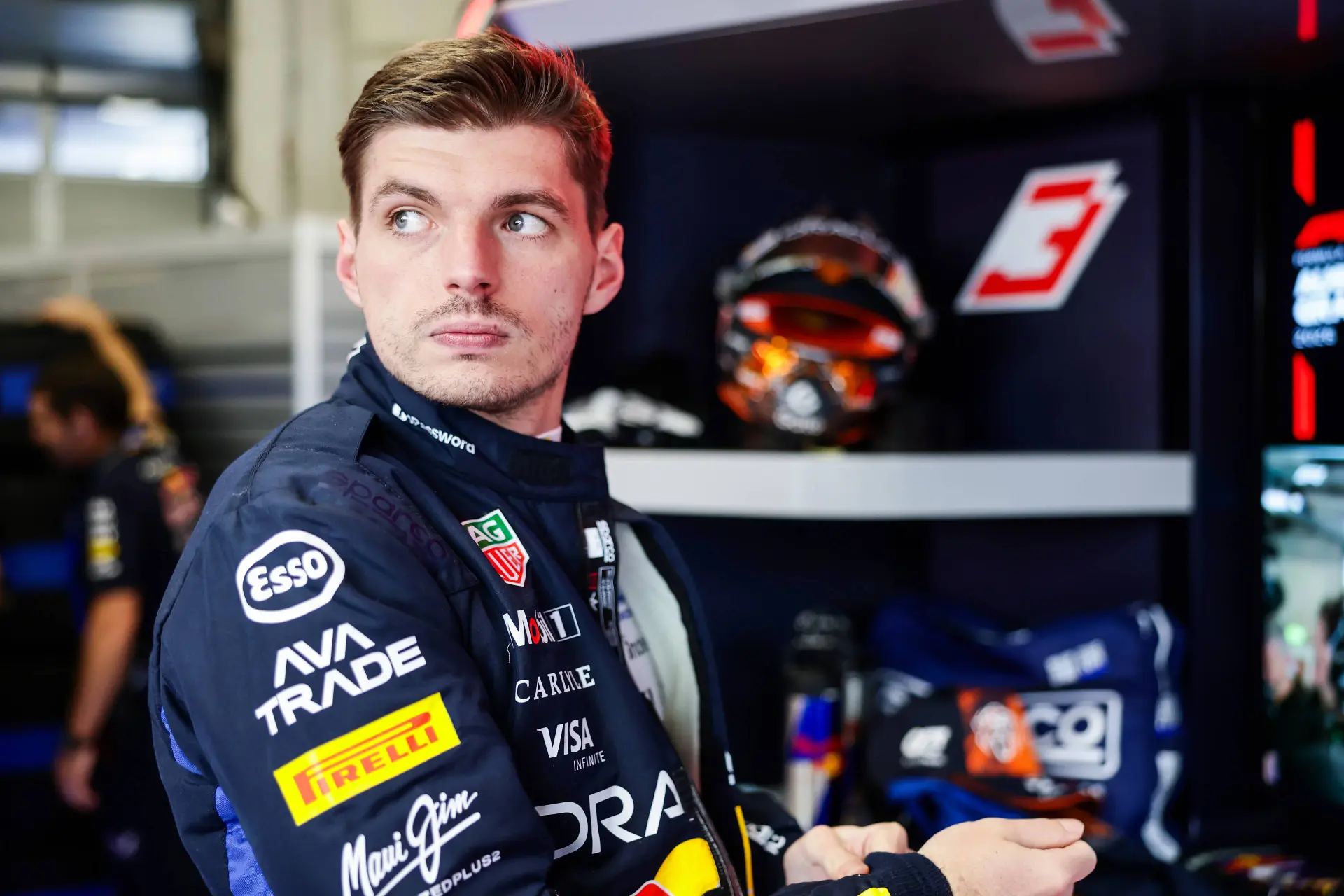
When asked about which area was most impacted by the upgrades he said “It’s a bit more grip. Just goes a bit faster around the corner,” meaning that the new components provided a bit more downforce in the medium-high speed corners.
ADVERTISEMENT
Will Red Bull continue to push Mercedes during the upcoming weekend?
In conclusion, Red Bull’s latest upgrade package has drastically improved the RB22’s performance, especially in those areas where it previously suffered compared to other top teams’ cars.
This is also a positive sign for the upcoming races, particularly at Silverstone and Spa, two tracks that are extremely demanding on tyres and feature many high-speed corners.
Much will also depend on the impact of Mercedes’ second upgrade package, as it could widen the gap between the Brackley team and other competitors, making it harder for Verstappen and Ferrari to fight for race wins.
Read also
ADVERTISEMENT
Don’t miss GPblog in Google
Mark us as a preferred source and our articles will appear more often at the top of Top Stories.
Add as a preferred / source on GoogleRead more about:
latest news
Bahrain Grand Prix
Overview
Friday 02.10.26
Practice 1
04:30 AM
Practice 2
08:00 AM
Saturday 03.10.26
Practice 3
04:30 AM
Qualification
08:00 AM
Sunday 04.10.26
Race
07:00 AM
Friday 02.10.26
Practice 1
Fri 04:30 AM
Practice 2
Fri 08:00 AM
Saturday 03.10.26
Practice 3
Sat 04:30 AM
Qualification
Sat 08:00 AM
Sunday 04.10.26
Race
Sun 07:00 AM
Times are in your local timezone
Rumors
Popular on GPBlog
1
Hamilton accused of 'sulking' at Ferrari as Corriere della Sera claims Vasseur sided with Leclerc
3123 times read
2
Hamilton's engine penalty just got cheaper for Ferrari after McLaren's Baku blank
3062 times read
3
Mercedes has its 2027 lineup set and picks this third driver
1487 times read
4
Horner claims Marko didn't want Verstappen at Red Bull: 'We don't need this one'
905 times read
F1-stand 2026
Season
| Pos. | Driver | Team | Points |
|---|---|---|---|
1 | MercedesMER | 302 | |
2 | MercedesMER | 236 | |
3 | FerrariFER | 199 | |
4 | McLarenMCL | 186 | |
5 | FerrariFER | 179 | |
6 | Red Bull RacingRBR | 163 | |
7 | McLarenMCL | 120 | |
8 | Red Bull RacingRBR | 86 | |
9 | Racing BullsRCB | 59 | |
10 | AlpineALP | 41 |
Loading