
Ludo van Denderen is a motorsport journalist at GPblog, specializing in Formula 1 and international racing series.
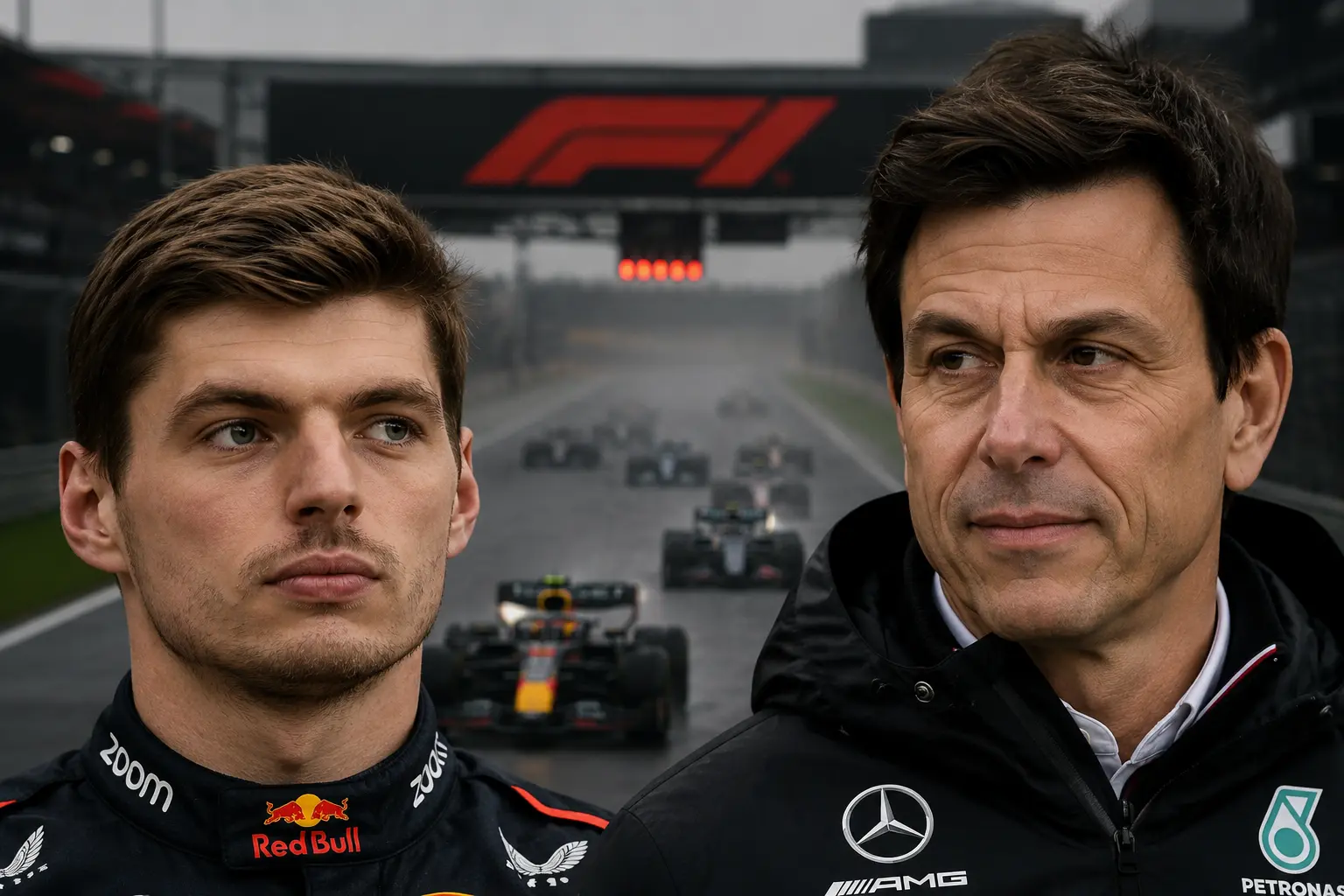
Toto Wolff has firmly aligned himself with Max Verstappen’s position regarding Formula 1’s proposed 2027 engine regulations.
The Mercedes team principal and CEO believes the changes that were previously discussed and seemingly agreed upon should now be pushed through without delay. According to Wolff, who met with Verstappen's father in the paddock at the Canadian GP, the proposal represents a logical compromise between manufacturers, making it difficult for him to understand why several teams have suddenly started resisting the plan.
The Mercedes team principal and CEO believes the changes that were previously discussed and seemingly agreed upon should now be pushed through without delay. According to Wolff, who met with Verstappen's father in the paddock at the Canadian GP, the proposal represents a logical compromise between manufacturers, making it difficult for him to understand why several teams have suddenly started resisting the plan.
Following the Miami Grand Prix, it appeared that the debate had largely been settled. The FIA announced that manufacturers had, “in principle,” agreed to modify the future power-unit regulations. Under the proposal, the balance between the internal combustion engine and the electrical component would shift from the planned 50/50 split to a 60/40 ratio in favour of the combustion engine starting in 2027. At the time, the announcement created the impression that the matter was nearly finalised.
However, the phrase “in principle” has now become highly significant. Ferrari and Audi, in particular, are believed to have reconsidered their earlier support for the proposal, raising doubts about whether the rule change will actually be approved. The issue is especially critical because a supermajority is required during the upcoming vote on the regulations. If Ferrari and Audi vote against the proposal — and there is speculation that Cadillac and Honda could also oppose it — the plan would almost certainly fail.

Photo: Race Pictures
ADVERTISEMENT
Verstappen's future hangs in the balance
The uncertainty surrounding the regulations has also placed additional attention on Verstappen’s future in Formula 1. The reigning four-time world champion has already made it clear that if the regulations move in a direction he disagrees with, he could walk away from the sport altogether.
Verstappen’s comments have intensified the pressure on Formula 1 and the FIA, both of whom are eager to avoid losing one of the sport’s biggest stars. As a result, there is now significant lobbying behind the scenes aimed at convincing the dissenting manufacturers to support the changes.
Interestingly, Mercedes remains one of the strongest supporters of the revised engine formula alongside Red Bull Ford, despite the fact that Mercedes is widely believed to currently possess the strongest power unit on the grid. The regulation change could potentially reduce that advantage, yet Wolff still considers the adjustment sensible.
Speaking after the Canadian Grand Prix, Wolff explained that the proposed changes — including increased power and improved energy deployment — represent a reasonable compromise for all engine suppliers. Nevertheless, no official vote has taken place yet, and time is running out. Teams soon need clarity on the final regulations in order to decide whether to develop entirely new engines or continue refining the current generation. Without a decision in the coming weeks, the entire voting process risks becoming irrelevant.
ADVERTISEMENT
Don’t miss GPblog in Google
Mark us as a preferred source and our articles will appear more often at the top of Top Stories.
Add as a preferred / source on Google