Verstappen sounds alarm as Ocon admits: "At today's prices I would not be here"
AI render GPblog.com - RacePictures.com
Tim Kraaij is Editor-in-Chief of GPblog.com and a Formula 1 analyst. With permanent FIA accreditation and direct access to the paddock, he delivers in-depth, data-driven analysis and insight into key developments within the sport.
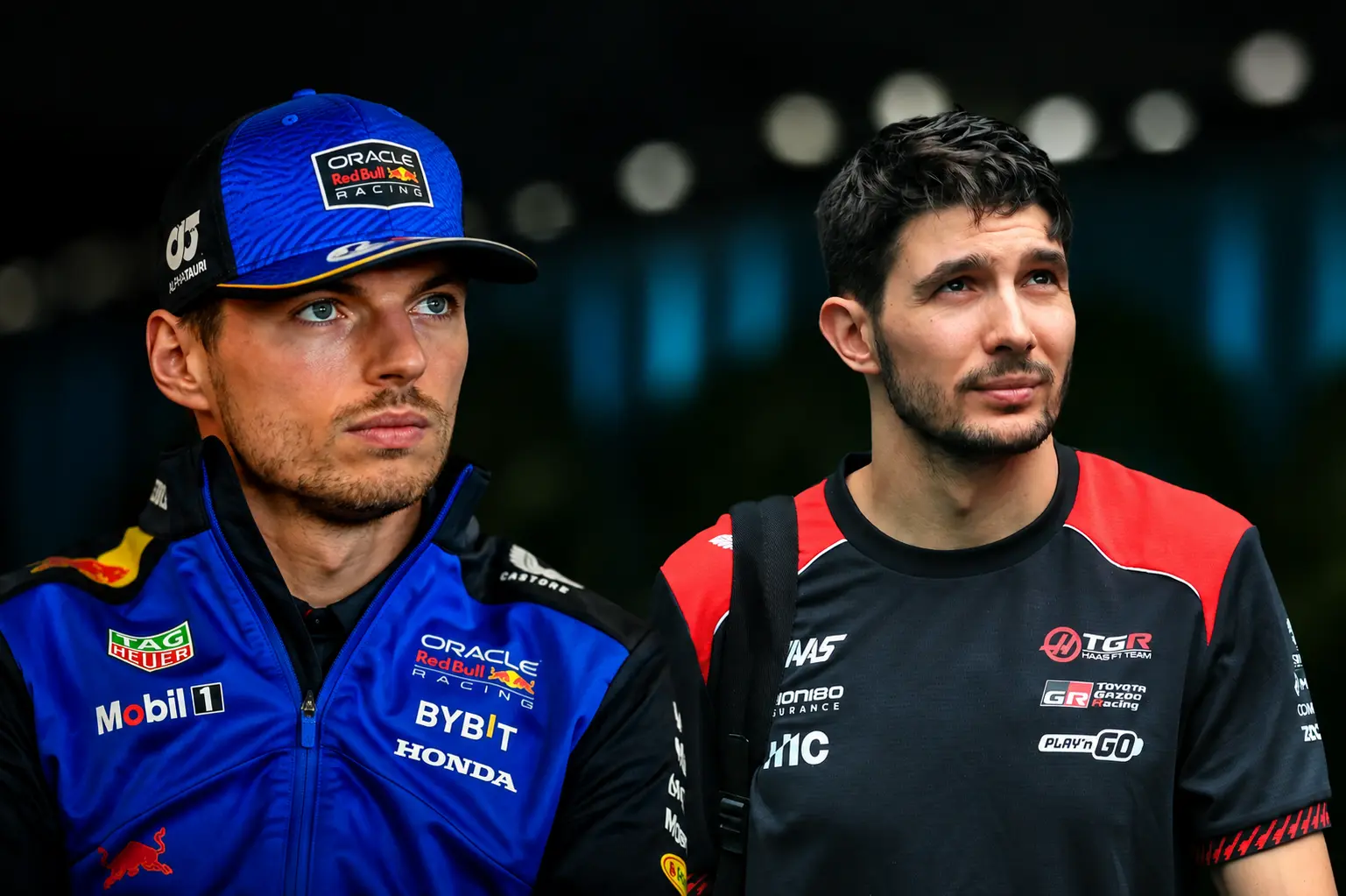
Formula 1 has a talent pipeline problem, and three of its own drivers said so out loud in Monaco on Thursday. Max Verstappen, Esteban Ocon and Alexander Albon were asked during the press conference whether karting remains the best route into the sport for young drivers, or whether simulators and cheaper alternatives are beginning to replace it. What followed was an honest conversations in the Monaco media room, with Ocon's admission landing hardest of all.
"If I had to restart my career and karting is as simple as it is now, I would not be here with the price that a race in mini costs now. It's quite crazy how expensive it is. And yeah, it's a shame that it is that way."
Ocon did not dress it up. A sitting Formula 1 driver, competing at the highest level of the sport, saying flatly that the current cost structure would have ended his career before it began. It is the kind of statement that tends to get noted and then quietly forgotten. It should not be.
Verstappen: "Prices are just going through the roof"
Verstappen set the tone. The four-time world champion acknowledged that the traditional route through karting remains valuable but identified cost as the central problem eating away at its accessibility.
ADVERTISEMENT
"I think in general, we all learned a lot from go karting. I think it's still, of course, a great category. The problem is the prices are just going through the roof. I mean, people are paying ten, twelve thousand for a round in minis. I mean, that's just insane, these kind of prices."
Ten to twelve thousand euros for a single round in the mini category. For context, that is not a season budget. That is one weekend. Verstappen was not exaggerating for effect. The numbers he cited are consistent with what junior motorsport insiders have been saying for years, and hearing them come from the most successful driver of his generation in a Monaco press conference gives them a different weight.
His concern is specific: real talent is being filtered out before it ever reaches formula racing, not because those drivers lack ability but because the financial barrier to even reaching the entry level of the pyramid has become too high for most families to clear. "That is limiting sometimes some real talent that do not have the financial backing to even reach formula racing at the moment."
The simulator generation
All three drivers pointed to simulation as the development tool that is beginning to compensate for what karting can no longer offer at scale. Verstappen described a generational shift in how young drivers arrive in formula cars, contrasting his own experience with what is possible today.
ADVERTISEMENT
"For me, and I think for all of us, we did go karting, there were some sim games out there, but they were not super realistic at the time. And when we jumped in a race car for the first time, there was a big learning curve. Where now, with how accurate simulators are, you can be already ten steps ahead in terms of your preparation before you jump in a Formula car. You can achieve already the correct braking curves, you know how to downshift, you know how to look at the data in general."
Ocon put a number on it. His estimate for where the balance is heading: "Maybe now, seventy percent simulator and thirty percent real go-kart driving is probably the way to go." He said it kills him to reach that conclusion, and the tension in his words was genuine. He knows what real driving gave him. He also knows that at current prices, telling a talented teenager to go karting is advice that only lands if their family can afford it.
Albon kept his contribution brief but honest. "I think in a perfect world scenario, you would do both, but it's more just that karting is looking like it's not that easy for people to do both anymore. I'm glad that simulator driving is a route that people can use now."
A problem the F1 has not solved
What makes this conversation significant is not that these three drivers identified a problem nobody knew about. The cost of junior motorsport has been a talking point for years, and Formula 1 has introduced various scholarship and support programmes over that time. What makes it significant is who is saying it, where, and with what level of candour.
ADVERTISEMENT
Verstappen, Ocon and Albon are not outsiders criticising the sport from a distance. They are the product of the system they are describing, and two of them are saying that the system as it currently functions would not have produced them. Ocon's admission is not rhetorical. It is a straightforward assessment of arithmetic: the costs have risen faster than any support structure has compensated for, and somewhere out there is a driver who would be sitting in one of these press conference seats who never got close because of it.
The simulator route offers a partial answer. The online competitive landscape Ocon described, where within a tenth of a second you find a hundred drivers at times, suggests the raw talent pool is not shrinking. The filtering mechanism is financial, not genetic. That is a solvable problem, in principle. Whether Formula 1 and the broader motorsport ecosystem will treat it with the urgency these three drivers implied on Thursday in Monaco is a different question.
Don’t miss GPblog in Google
Mark us as a preferred source and our articles will appear more often at the top of Top Stories.
Add as a preferred / source on Google