Why Ferrari put the 'Macarena' rear wing aside in China
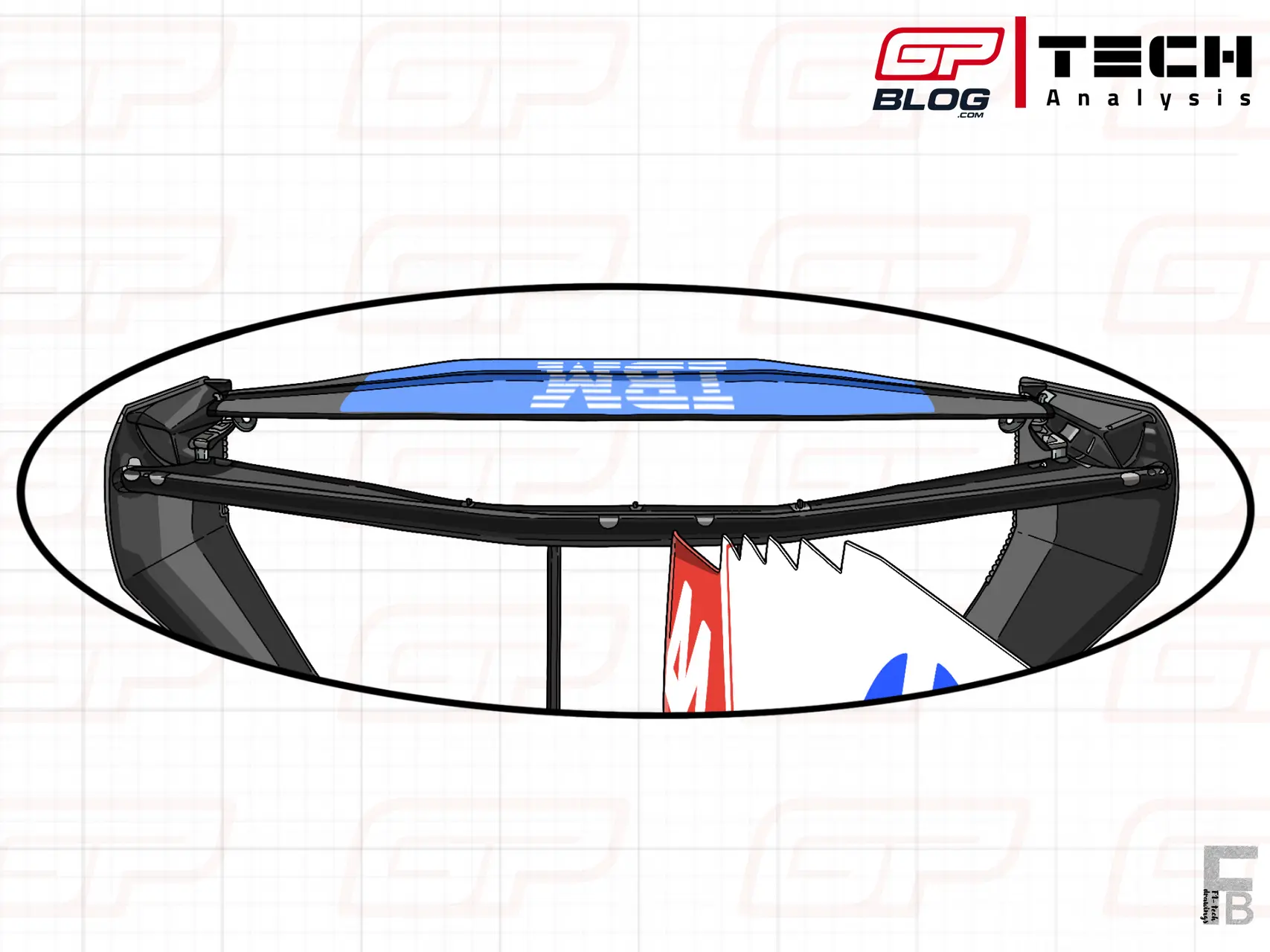
Ferrari's 'Macarena' rear wing configuration when the wing si fully open - Image: Francesco Bianchi
12:01, 23 Mar
0 Comments

Francesco is a technical analyst at GPblog, specializing in the technical side of Formula 1. Through illustrations and analysis, he makes complex components and developments accessible to a wide audience.
Ferrari decided to put the so-called ‘Macarena’ rear wing aside in China, after facing some rear instability issues during the closing phase of the system.
After showing a very competitive performance in the first race of the season in Melbourne, Ferrari arrived in China confident that they could close the gap to Mercedes, especially in qualifying.
To do so, the Maranello team introduced the ‘Macarena’ rear wing, after trying it out during the second week of testing in Bahrain at the end of February.
This solution, however, didn’t give the hoped-for results, forcing the team to set it aside after FP1. Let’s try to understand the reason behind this decision.
ADVERTISEMENT
Why the 'Macarena' rear wing didn't work
Ferrari started the 2026 F1 season with high hopes, proving to have a very competitive car already during the two weeks of testing in Bahrain.
The SF-26 showed a very strong aero-mechanical platform, which translated into optimal performance both in slow-speed and high-speed corners thanks to the great level of downforce generated by the bodywork. The good level of mechanical grip not only made the car easier to drive, but also made it more gentle on tyres, favouring tyre management especially on high fuel loads.

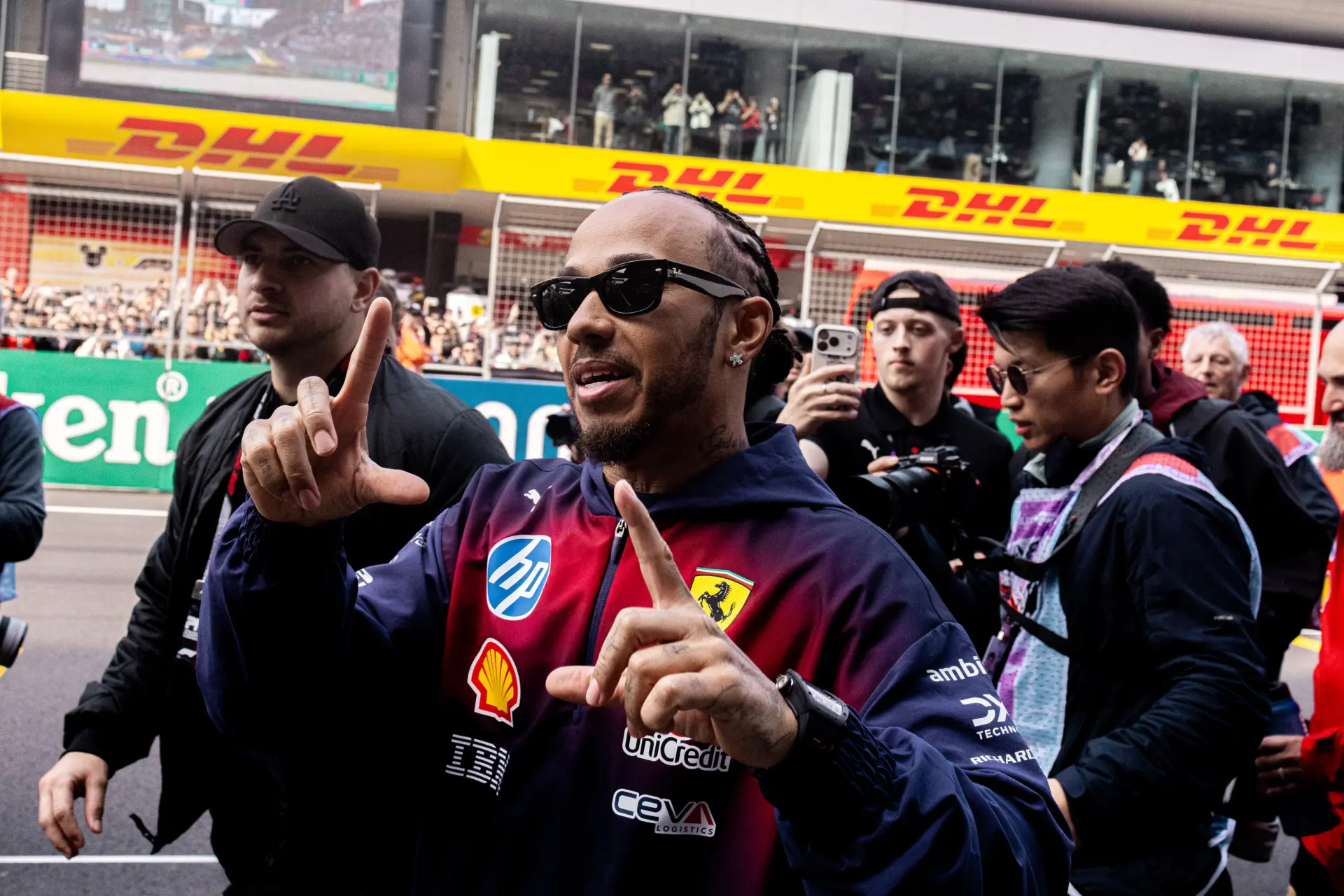
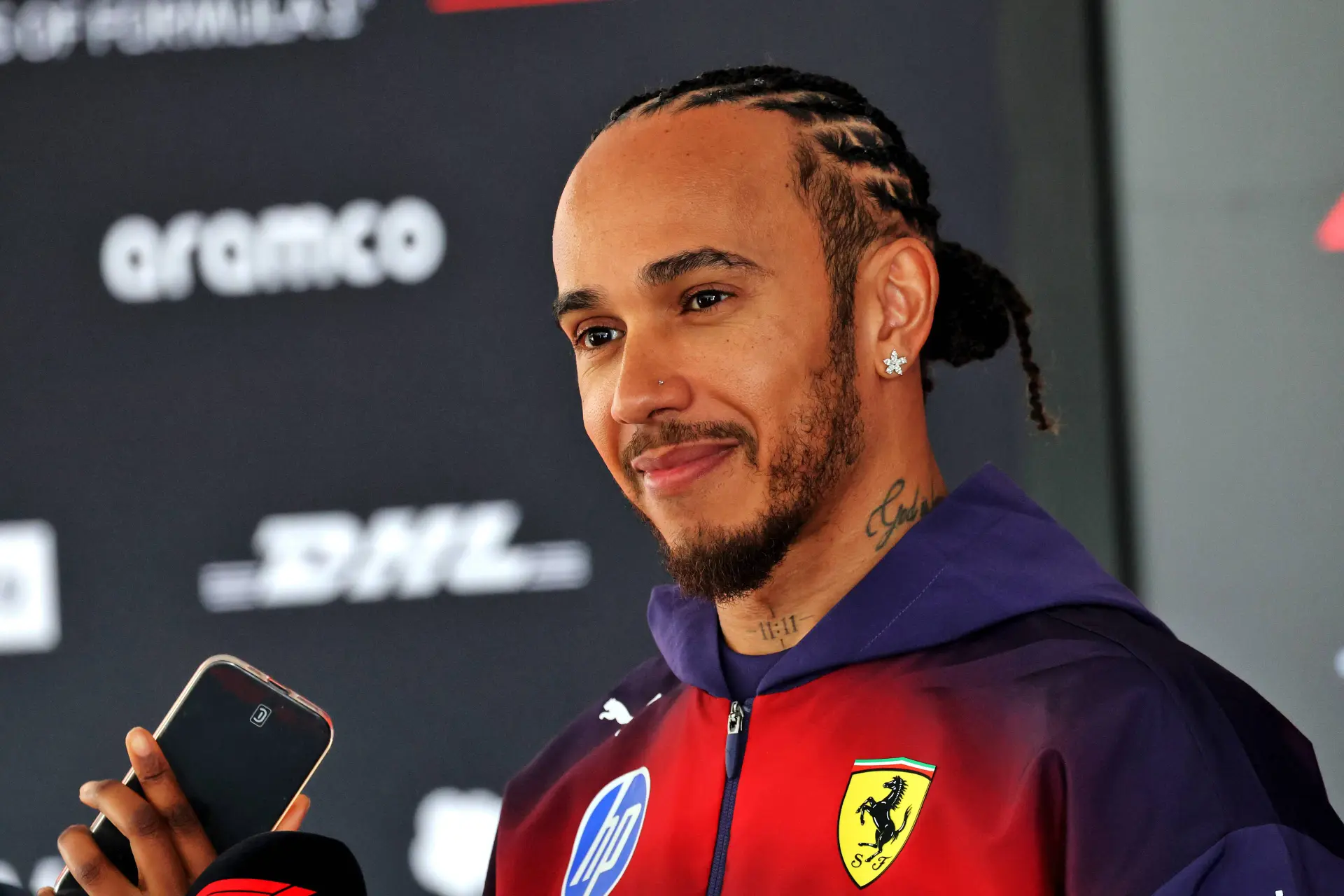
Lewis Hamilton during the Australian Grand Prix - Photo: Race Pictures
All these factors seemed to place Ferrari quite close to Mercedes at the end of testing, but the reality hit completely differently in Australia: the Brackley-based team, in fact, could count on more power from the ICE as well as a better energy management during the whole lap, which translated into an eight-tenths gap during qualifying.
ADVERTISEMENT
This big gap was also the result of imperfect energy management during the qualifying lap from Hamilton and Leclerc.
Despite this, both Ferraris took massive advantage of the SF-26’s smaller turbo to have a better start on Sunday, moving into first and third places during the first stages of the race and showing very good tyre management during the first stint on the medium tyres.
All these aspects, despite the final result, seemed to confirm that the gap to Mercedes wasn’t as big as it seemed after qualifying.
To try and close this gap, Ferrari’s engineers decided to re-introduce the ‘Macarena’ rear wing seen during testing for the second race in Shanghai, to have higher top speeds on the straights.
ADVERTISEMENT
As is visible in the drawing below, in fact, this rear wing has a peculiar and unique function: engineers decided to place the actuator system in the right endplate (left-hand side in the drawing), which turns the top two rear wing profiles of almost 270° as the straight mode is activated, consequently reducing drag.

Ferrari's 'Macarena' rear wing solution - Image: Francesco Bianchi
When the wing is rotated 270°, in fact, the two profiles are no longer oriented to produce downforce, but in the opposite direction, producing lift instead of downforce.
According to some rumors, this inclination helps slightly lift the rear wing, causing it to stall and further reducing the drag generated.
As a consequence, the wing was fitted on both cars during FP1 in China, to gather data and analyse the structural resistance of all the components, as they were all subjected to massive pressure as the top two flaps rotate.
ADVERTISEMENT
What emerged already from the first few laps was that the wing took too long to rotate back into its original position under braking, consequently making the rear-end loose.

Ferrari's 'Macarena' rear wing configuration when the wing si fully open - Image: Francesco Bianchi
This rear instability caused Hamilton to spin during the first stages of the first practice session, alerting engineers that something wasn't working properly.
The fact that the two rear flaps had to rotate 270° to close meant that the closure of the rear and front wings was not synchronized, with the former closing after the latter.
Beyond the instability problems generated by this wing spec, drivers also struggled with balance in general, as the car seemed on a knife’s edge especially in the turn-in and traction phases, with the rear-end sliding a lot.
ADVERTISEMENT
As a consequence, engineers decided to put this rear wing solution aside for the weekend, focusing exclusively on the original version that appeared in Australia, which gave drivers more confidence and stability under braking.

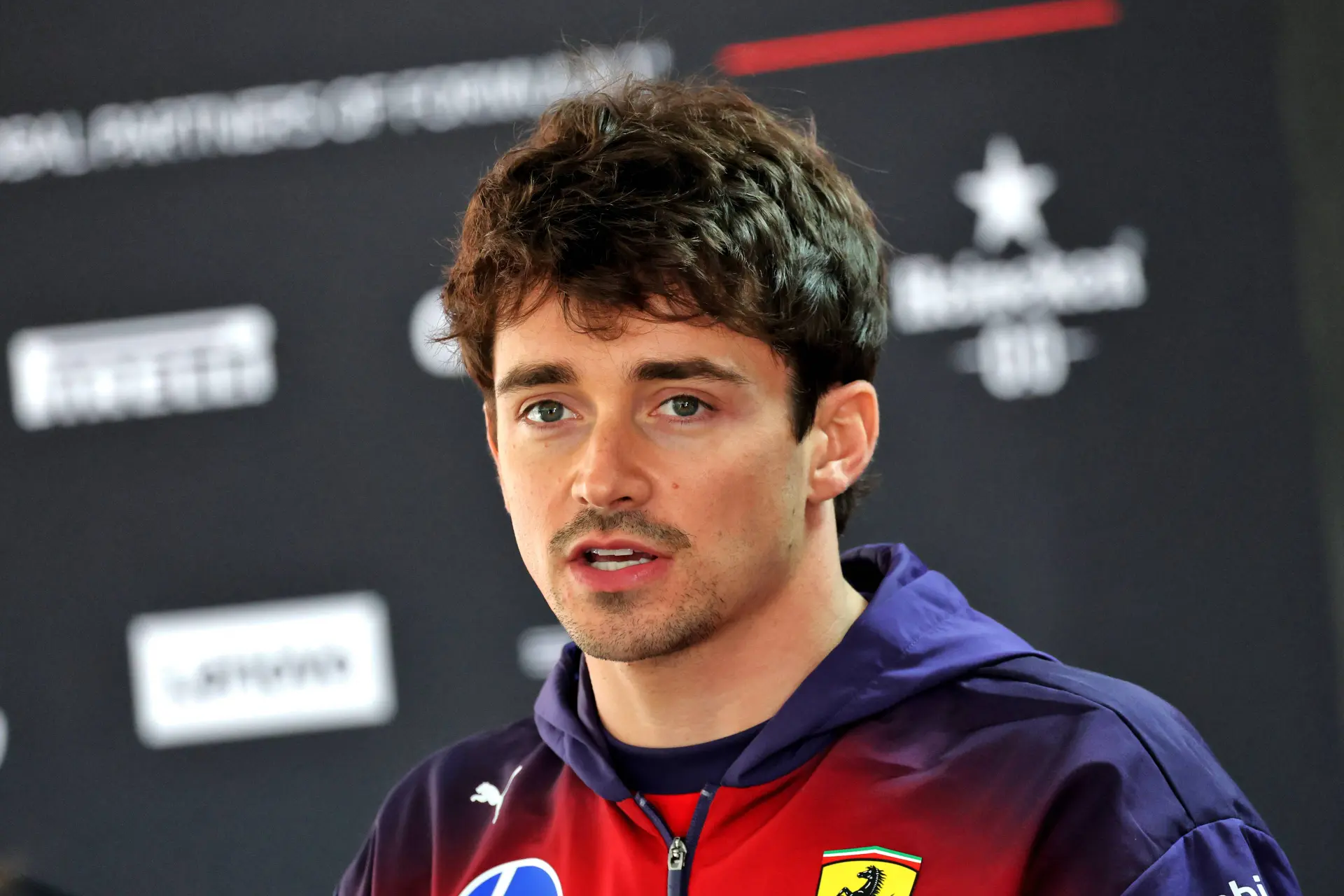
Leclerc during the Sprint in Shanghai - Photo: Race Pictures
Moreover, they made adjustments to the set-up before the Sprint qualifying, which allowed Hamilton to qualify in P4, with Leclerc in 6th.
However, thanks to the great starts from both drivers, Hamilton and Leclerc eventually managed to get on the podium during the Sprint, also showing a very competitive pace on the medium during the short race, demonstrating that the gap between Ferrari and Mercedes seemed closer on high fuel than the one seen in qualifying.
When asked about this during the post Sprint interviews, Hamilton described the scenario as follows: “In qualifying they [Mercedes] have another mode that they're able to go to, a bit like a ‘party mode’ back in the day, and once they get to Q2 they switch that on, and we don't have that. So, whatever that is. And then in the race they obviously don't have that mode, so they still obviously have an advantage overall.”
ADVERTISEMENT
“You see in Q1 we're not that far away, and then all of a sudden it's like a huge step. A tenth in Q1 behind, I think it was, and then all of a sudden it's seven tenths or another half a second. It's a big step,” said the seven times World Champion.
The real gap between Ferrari and Mercedes, however, emerged during Sunday’s Grand Prix: after another great start, Hamilton managed to get to P1 in front of Antonelli and Leclerc, but was unable to keep it, as Antonelli moved past him at the end of the second lap. From that moment onwards, the 19-year-old was on another level, setting fastest lap after fastest lap and eventually winning the race with a 25-second gap to Hamilton’s Ferrari in third place.
The great advantage shown proved that Mercedes’ performance doesn’t only come from the PU, but also from the chassis and aerodynamics, which guarantee strong tyre management.

Leclerc and Hamilton battling against Russell during the first stages of the Chinese Grand Prix - Photo: Race Pictures
ADVERTISEMENT
Ferrari, on the other hand, seemed a little bit on the back foot on the engine side, but have the best chassis on the grid, as well as good levels of downforce, which aren’t enough to match Mercedes’ times on the whole lap, as Antonelli and Russell were gaining an average of 4 tenths only in the last sector, made of a very long straight, during the race.
In conclusion, Ferrari’s gap to Mercedes seems to be primarily due to the Germans' power unit, while the two teams appear to be evenly matched in terms of chassis.
For this reason, it will be crucial for Ferrari to take advantage of the ADUO (Additional Development and Upgrade Opportunities), which will allow the engine manufacturers behind Mercedes to have more available funds, more time on the test bench to develop their engines, and the possibility of homologating a new engine during the season.
This strategy will allow the other manufacturers to close the gap to Mercedes more easily, without having to wait until the following season as was the case under the previous regulations.
Read also


ADVERTISEMENT
Don’t miss GPblog in Google
Mark us as a preferred source and our articles will appear more often at the top of Top Stories.
Add as a preferred / source on GoogleRead more about:
latest news


Azerbaijan Grand Prix
Overview
Thursday 24.09.26
Practice 1
08:30 AM
Practice 2
12:00 PM
Friday 25.09.26
Practice 3
08:30 AM
Qualification
12:00 PM
Saturday 26.09.26
Race
11:00 AM
Thursday 24.09.26
Practice 1
Thu 08:30 AM
Practice 2
Thu 12:00 PM
Friday 25.09.26
Practice 3
Fri 08:30 AM
Qualification
Fri 12:00 PM
Saturday 26.09.26
Race
Sat 11:00 AM
Times are in your local timezone
Rumors
Popular on GPBlog
1
F1 forced to break with tradition for expected season finale in Imola
6873 times read

2
MotoGP Full Race Results | Acosta snaps winless streak at the Red Bull Ring
757 times read

3
Of all people, Zara Larsson seems to reveal the fate of the Abu Dhabi Grand Prix
700 times read

4
Rosberg reveals where Mercedes has the real edge over Red Bull engine
629 times read
F1-stand 2026
Season
| Pos. | Driver | Team | Points |
|---|---|---|---|
1 | MercedesMER | 292 | |
2 | MercedesMER | 211 | |
3 | FerrariFER | 191 | |
4 | McLarenMCL | 186 | |
5 | FerrariFER | 167 | |
6 | Red Bull RacingRBR | 145 | |
7 | McLarenMCL | 120 | |
8 | Red Bull RacingRBR | 71 | |
9 | Racing BullsRCB | 59 | |
10 | AlpineALP | 41 |
Loading