How Red Bull's rear wing failure caused Max Verstappen's high-speed crashes
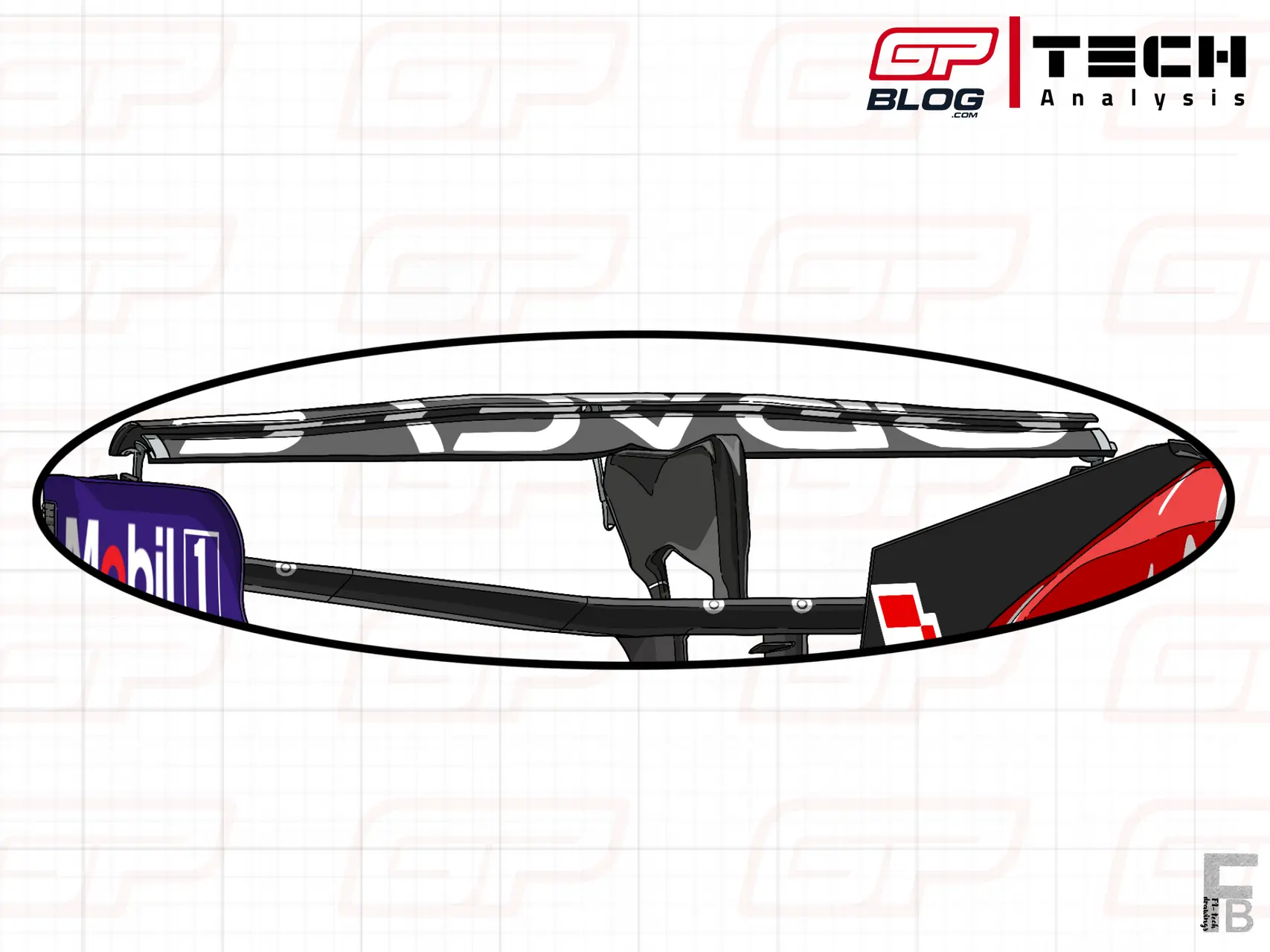
RB22's rear "Macarena" wing solution introduced in Miami - Image: Francesco Bianchi

Francesco is a technical analyst at GPblog, specializing in the technical side of Formula 1. Through illustrations and analysis, he makes complex components and developments accessible to a wide audience.
Max Verstappen suffered two high-speed crashes over consecutive race weekends, and both appear to have been caused by the same rear wing malfunction on the Red Bull car.
The British Grand Prix proved to be a major wake-up call for Red Bull Racing. A mechanical issue prevented the rear wing from closing correctly, forcing Verstappen to retire after suffering a high-speed crash. It was a repeat of the problem that had already emerged during qualifying for the Austrian Grand Prix.
The issue appears to stem from the design of Red Bull's rotating rear wing, commonly referred to as the "Macarena wing." Unlike Ferrari's solution, Red Bull's design relies on a different deployment philosophy that makes the closing phase particularly critical. As seen at both Silverstone and Austria, the mechanism can fail to return fully to its standard position under braking.
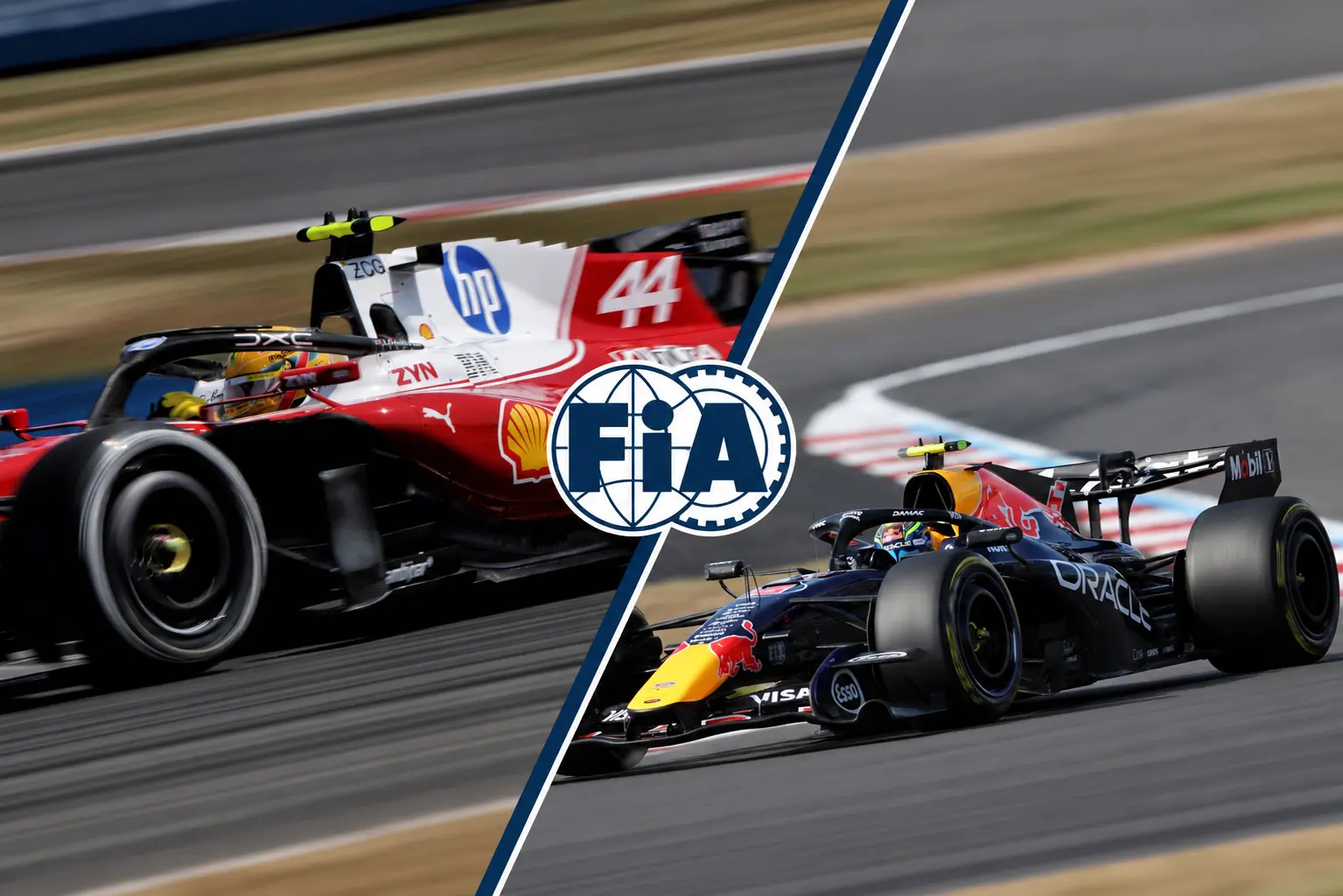
How Red Bull's 'Macarena wing' works
ADVERTISEMENT
At the Miami Grand Prix, Red Bull introduced an updated rear wing. While the flap and mainplane design remained unchanged, the team debuted a new actuator and a completely revised deployment mechanism.
The new system uses an actuator that simultaneously pushes the leading edge of the second flap rearwards while pulling the trailing edge of the final flap forwards. This causes the wing to rotate approximately 160 degrees counter-clockwise, as illustrated in the drawing below.

RB22's rear "Macarena" wing solution introduced in Miami - Image: Francesco Bianchi
During the rotation, both flaps are also lifted slightly, allowing Red Bull to exploit the maximum deployment permitted by the FIA regulations and reduce drag as much as possible when DRS is activated. The system is controlled by two hydraulically operated linkages — one upper and one lower — and, at first glance, appears mechanically straightforward.
Ferrari's solution is considerably more complex
ADVERTISEMENT
Ferrari's rotating rear wing follows a very different design philosophy. Unlike Red Bull, Ferrari has integrated the actuator inside the right-hand endplate rather than positioning it centrally. This solution reflects the Maranello team's relentless pursuit of lower drag and improved aerodynamic efficiency, although it inevitably results in a much more complex mechanism.
The movement of Ferrari's wing is also fundamentally different. Instead of rotating backwards like Red Bull's design, Ferrari's wing rotates forwards by approximately 270 degrees clockwise — a significantly larger rotation despite having to comply with the FIA's requirement that the wing must close within 0.4 seconds.

Ferrari's SF-26 "Macarena" rear wing closing phase - Image: Francesco Bianchi
This complexity initially created several development challenges. Early versions of Ferrari's rotating wing struggled to meet the required closing time, generating rear instability under braking — a symptom remarkably similar to what Red Bull has experienced in recent races.
Only after introducing an updated version in Miami was Ferrari able to fully resolve the issue and successfully use the system across every circuit.
ADVERTISEMENT
Why the RB22's rear wing struggles to close
If Red Bull's actuation system is mechanically simpler than Ferrari's, where does the problem originate?
The answer may lie in the aerodynamic loads acting on the wing during the closing phase. As the driver brakes for a corner, the upper linkage pushes the trailing edge rearwards while the lower linkage pulls the leading edge forwards, rotating the wing back into its standard configuration.
However, during this reverse rotation, there appears to be a point where aerodynamic forces oppose the actuator's movement. If the aerodynamic load exceeds the force generated by the actuator, the wing may fail to complete its closing sequence, leaving the rear wing partially open as the car enters the corner.

Photo: Race Pictures
ADVERTISEMENT
If the malfunction occurs before a slow-speed corner, the driver may simply experience rear instability or oversteer on corner entry.
At high-speed corners, however, the consequences are far more severe. These corners require maximum aerodynamic load from both the front and rear wings. If the rear wing remains partially open, the car suddenly loses a significant amount of rear downforce, dramatically reducing tyre grip and making the car unstable at high speed.
Under those conditions, the driver has virtually no chance of making the corner, resulting in a loss of control. That appears to be exactly what happened to Verstappen during qualifying at the Austrian Grand Prix and again during the British Grand Prix at Silverstone, with both incidents occurring in high-speed sections of the circuit.
Following the British Grand Prix, Red Bull team principal Laurent Mekies confirmed that the team is investigating every possible solution. "The answer is that we will do whatever is necessary to be on the safe side. We could even go back to the previous concept if necessary. We've raced with this concept since Miami, so it's still too early to establish whether the issue lies with the concept itself or with something else. But we will leave no stone unturned, and every option remains open."
ADVERTISEMENT
Red Bull's immediate priority will be eliminating the issue before the upcoming races. Possible solutions include revising the actuator design, modifying the wing's closing sequence, or adjusting the timing of the closing phase at the end of the straights.
Whatever the final solution, preventing another rear wing malfunction will be essential if the team wants to avoid another high-speed incident and restore confidence in its innovative rotating rear wing concept.
Don’t miss GPblog in Google
Mark us as a preferred source and our articles will appear more often at the top of Top Stories.
Add as a preferred / source on Google