F1 Tech | Hamilton's maiden victory made possible by Ferrari's upgrade package
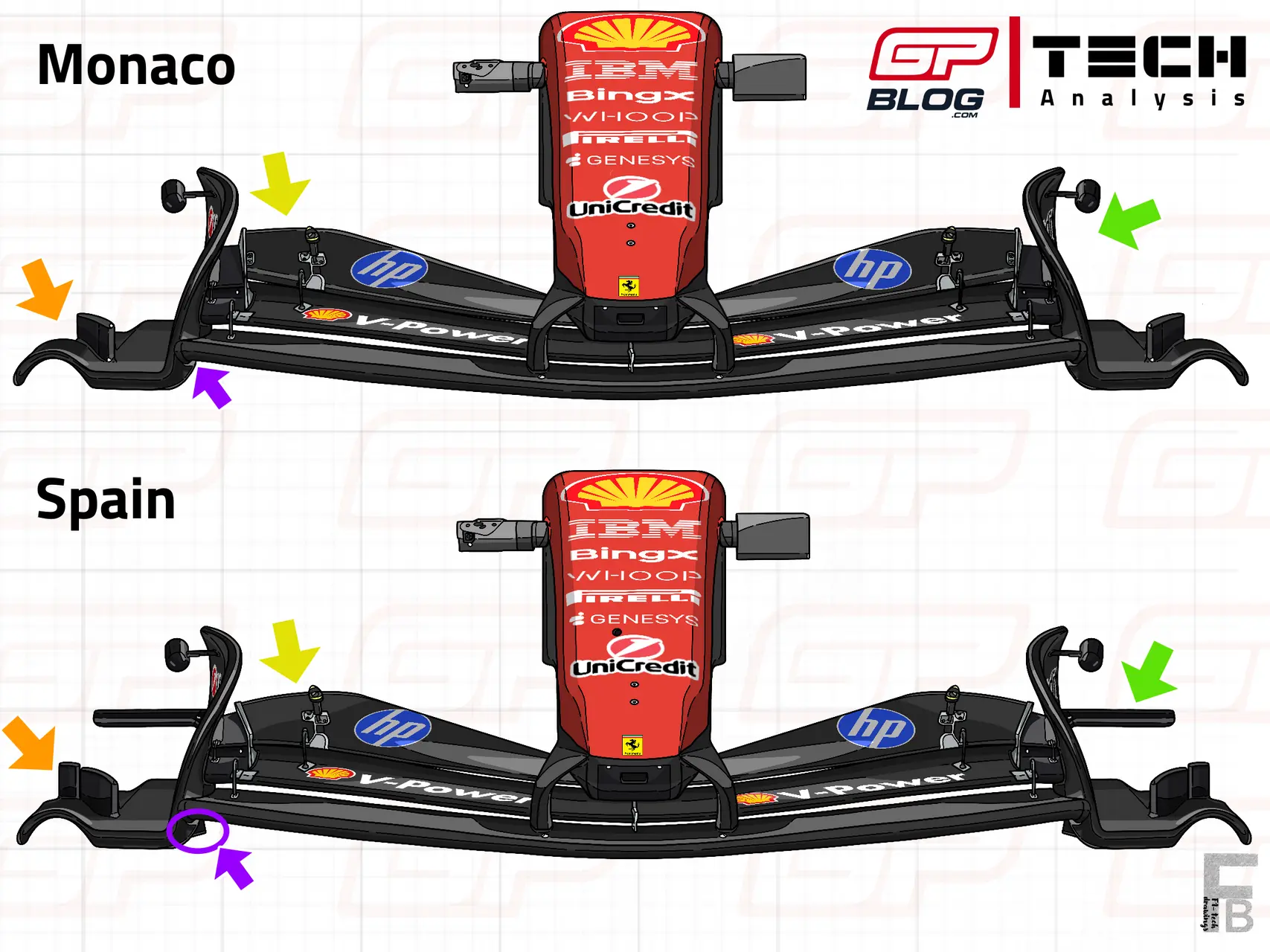
Ferrari's front wing comparison between Monaco and Barcelona - Image: Francesco Bianchi
Updated: 12:28, 17 Jun
6 Comments

Francesco is a technical analyst at GPblog, specializing in the technical side of Formula 1. Through illustrations and analysis, he makes complex components and developments accessible to a wide audience.
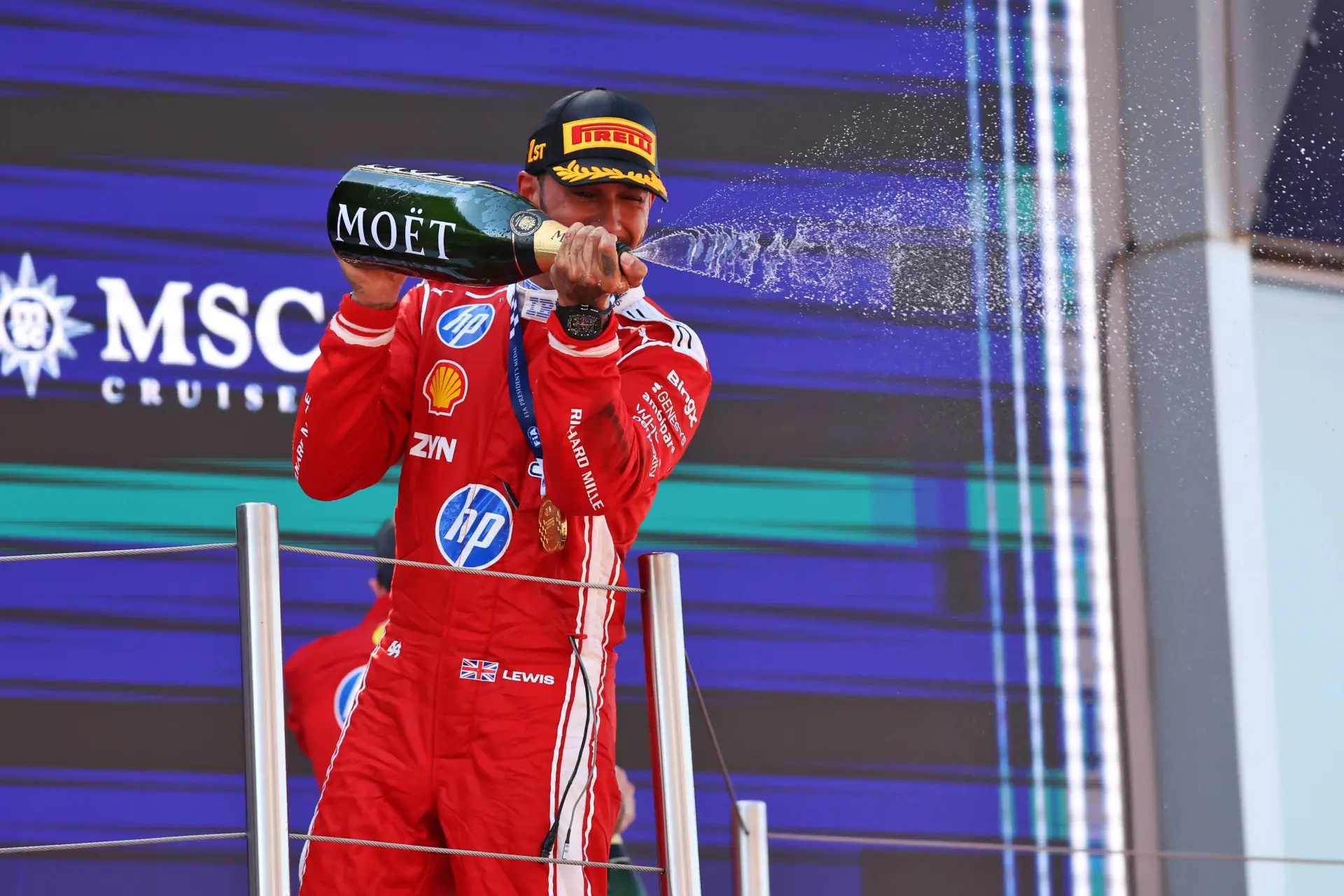
Lewis Hamilton secured his first Ferrari victory in Barcelona, with the Scuderia's latest upgrade package playing a decisive role. Here GPBlog looks at the technical specifications of those upgrades and how they played a crucial role in his win.
The Spanish Grand Prix weekend offered a very tight and exciting battle between Ferrari and Mercedes both during qualifying and in the race, with Lewis Hamilton eventually securing the 106th victory of his career.
The Briton took advantage of the updated SF-26 both during qualifying, when he managed to get a P2 just a few thousandths of a second behind Russell, and especially during the race, where he enjoyed a significantly stronger pace than his rivals during the final stint thanks to excellent tyre management.
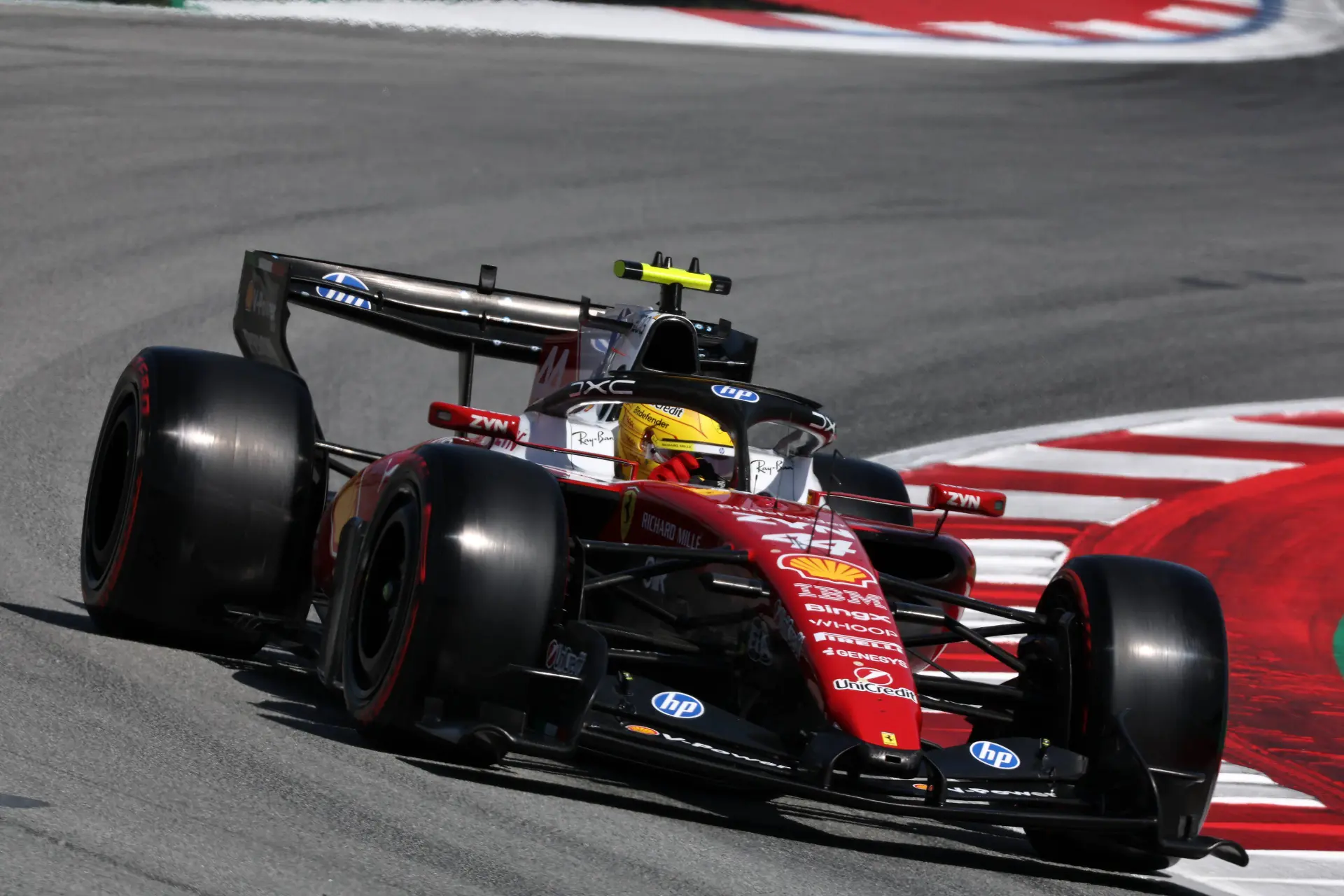
A 'monster' package of upgrades to improve tyre management
ADVERTISEMENT
Just one week after getting a podium with Hamilton in Monaco, Ferrari arrived in Barcelona hoping that the upgrades planned for the Spanish race could be helpful on a track that was expected to favor McLaren and Mercedes.
This package of updates included major changes to the front wing, floor, and sidepods.
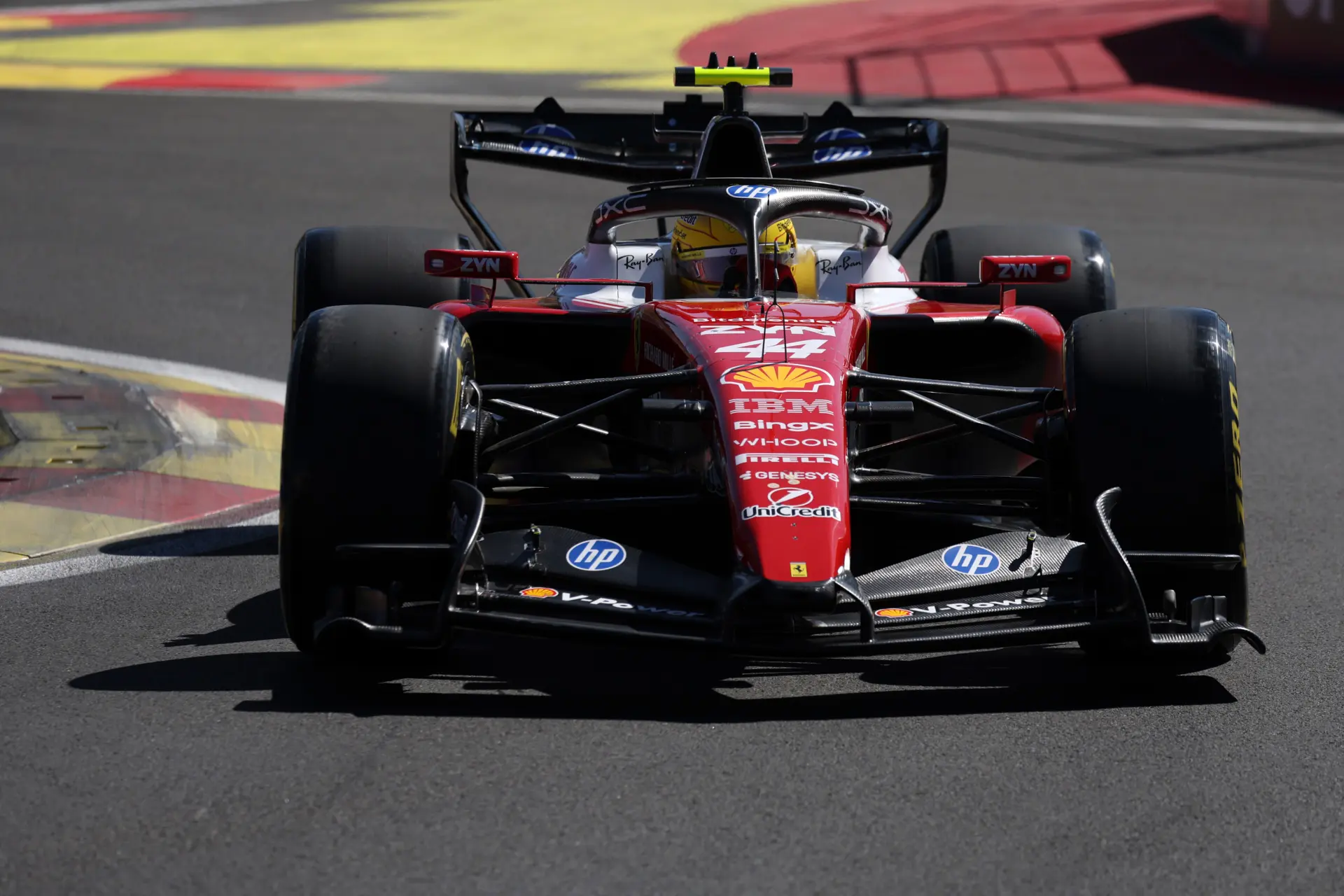
As for the front wing, the version brought to Barcelona is completely new: as can be seen in the drawing below, the changes affect both the flap design and the endplate area, which has been extensively modified.
The second and third flaps have a slightly higher chord than the previous version and a more curvilinear exit profile, to increase the outwash effect (yellow arrow). Furthermore, regarding the endplate, a diveplane (green arrow) has appeared approximately halfway up the endplate.
This approach is consistent with concepts already adopted by other top teams. and this element is particularly effective, as it generates a vortex that, in addition to directing airflow away from the front wheel, also seals the edge of the floor, maximizing the downforce generated beneath the car.

Ferrari's front wing comparison between Monaco and Barcelona - Image: Francesco Bianchi
ADVERTISEMENT
Regarding the footplate, an additional vortex generator has appeared, positioned at the end. It is smaller than the existing one and, again, serves the purpose of maximizing the outwash effect (orange arrow).
In this regard, the existing small winglet has also been slightly modified in size and positioned slightly further back than the previous version, which was very close to the footplate's inlet profile.
Finally, as highlighted by the purple circle and arrow, prominent winglets have appeared beneath the footplate. These vortex generators are primarily designed to direct front wheel turbulence outward.
The second major visible change concerns the sidepods, which now feature a higher profile than the previous specification, and the upper edge has a different slope, to direct the airflow in this area differently, primarily to increase the flow of air towards the diffuser and increase the downforce generated.

Ferrari's sidepod comparison between Monaco and Barcelona - Image: Race Pictures
ADVERTISEMENT
Regarding the floor, there have been small visible changes in the area ahead of the rear wheels, where Ferrari has introduced small knife-blade-shaped elements connecting the three existing winglets.
Furthermore, the vortex generators in the front area at the entrance to the floor have been modified, and a long horizontal element has been added connecting all these elements.
The goal of all these changes was to increase the downforce generated by the floor and bodywork, without significantly increasing drag.
Positive impressions since FP1
Ferrari tested all these new features during FP1 on Leclerc's car. After his accident in Monaco, he decided to adopt Carbon Industrie brakes, a solution Hamilton had already adopted since the Japanese Grand Prix.
ADVERTISEMENT
On Hamilton's car, driven by Beganovic during the first session, the team left the old sidepod and floor specifications in place to conduct a direct comparison on the track and gather extensive data on the new package's efficiency.
Leclerc's third-place finish at the end of the session, despite being half a second behind Russell in P1, provided encouraging evidence that the package was performing as predicted by simulation data.

Photo: Race Pictures
As a result, Ferrari fitted the full upgrade package to Hamilton's car for the remainder of the weekend. It was during this session that the first confirmation emerged that the updates brought by Ferrari were working even better than the team expected: during race pace simulations, conducted with a high fuel load and a very hot track, the SF-26 was able to set very competitive times, suffering less tire degradation than its rivals.
These early indications suggested Ferrari had the pace to challenge Mercedes over a race distance. However, the situation became even more interesting during Saturday qualifying.
ADVERTISEMENT
After analysing Friday's data and refining the setup overnight and during FP3, Ferrari unlocked even more performance from the SF-26, which proved capable of challenging the Mercedes even on a single lap.
In both Q1 and Q2, Hamilton and Leclerc set very competitive times, until Q3, where Hamilton managed to secure an impressive second place, just 64 thousandths behind Russell in P1.

Photo: Race Pictures
In particular, the SF-26 proved to be extremely fast and balanced in all the corners of the circuit, gaining an advantage over the W17 especially in the second sector and the first part of the third sector, where the additional downforce generated by the updates made the car very smooth even in the long turns 10 and 12, where Ferrari's improved balance helped limit rear-tyre overheating
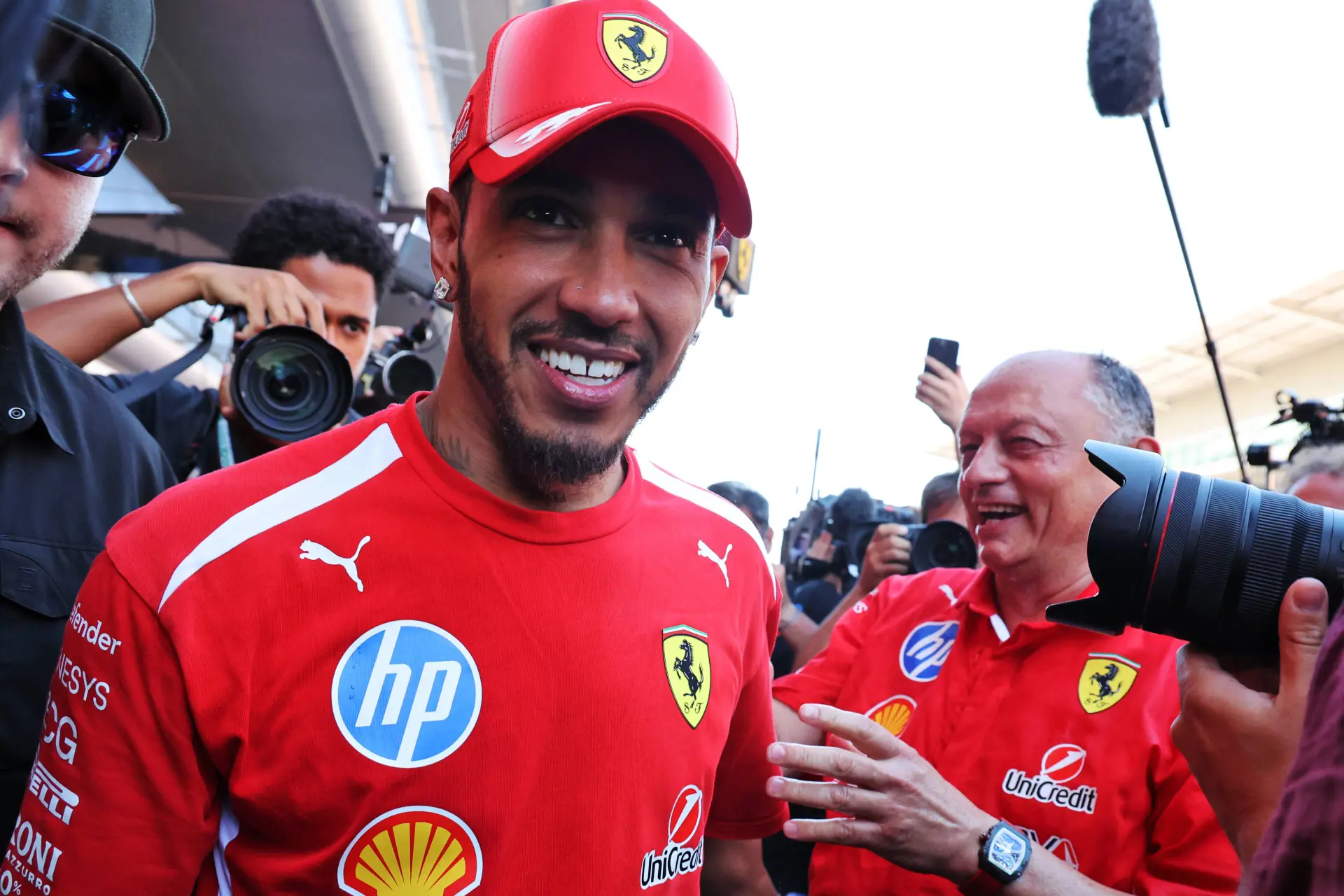
When asked about the incredible performance on Saturday evening, The 7-time World Champion described his feelings as follows: "It feels great to be up here. Honestly, this weekend has been so difficult. Normally it's ok to miss P1, but it had a huge offset. In P2 I was just over a second off and I didn't quite feel comfortable. Between P3 and Qualifying I went off the track to my motorhome, came back and in Q1 I was first, so I knew I had a good balance and was comfortable.”
ADVERTISEMENT
“All weekend we have been four tenths off these guys. Even with the upgrade we thought that's maybe where we were. For us to be that close - less than a tenth - is a real showing of the hard work everyone has done to bring these upgrades to the track,” said the Briton.
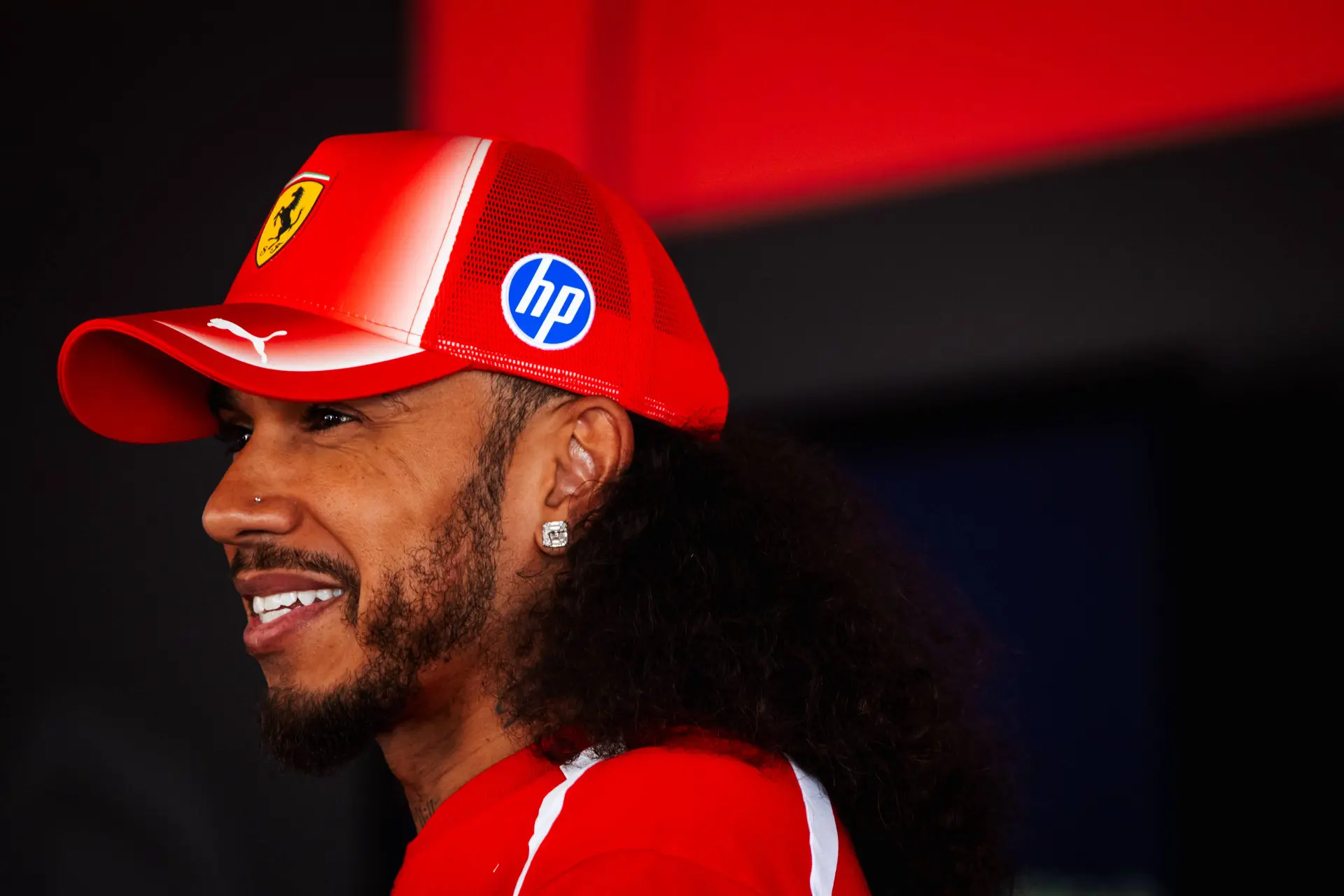
The impressions that emerged during Friday's free practice sessions were confirmed on Sunday: although Hamilton was unable to pass the Mercedes at the start, Ferrari executed an excellent three-stop strategy that gave the Englishman the opportunity to make his final pit stop under the Virtual Safety Car, halving the time lost and maintaining the lead ahead of Russell.
Barcelona provided the clearest indication yet that Ferrari's latest development package is delivering the expected gains. The upcoming races will reveal whether the SF-26 can maintain this level of competitiveness across a wider range of circuits and conditions.
Read also
ADVERTISEMENT
Don’t miss GPblog in Google
Mark us as a preferred source and our articles will appear more often at the top of Top Stories.
Add as a preferred / source on GoogleRead more about:
latest news




Azerbaijan Grand Prix
Overview
Thursday 24.09.26
Practice 1
08:30 AM
Practice 2
12:00 PM
Friday 25.09.26
Practice 3
08:30 AM
Qualification
12:00 PM
Saturday 26.09.26
Race
11:00 AM
Thursday 24.09.26
Practice 1
Thu 08:30 AM
Practice 2
Thu 12:00 PM
Friday 25.09.26
Practice 3
Fri 08:30 AM
Qualification
Fri 12:00 PM
Saturday 26.09.26
Race
Sat 11:00 AM
Times are in your local timezone
Rumors
Popular on GPBlog
1
Monaco's famous Sunday race set for a dramatic new twist
4722 times read

2
Renault veto expires as Horner targets Alpine equity stake for F1 return
1742 times read

3
Lewis Hamilton shares cryptic new message on social media
1325 times read

4
Norris called 'unprofessional' for Coca-Cola can incident at Spanish Grand Prix
1064 times read
F1-stand 2026
Season
| Pos. | Driver | Team | Points |
|---|---|---|---|
1 | MercedesMER | 292 | |
2 | MercedesMER | 211 | |
3 | FerrariFER | 191 | |
4 | McLarenMCL | 186 | |
5 | FerrariFER | 167 | |
6 | Red Bull RacingRBR | 145 | |
7 | McLarenMCL | 120 | |
8 | Red Bull RacingRBR | 71 | |
9 | Racing BullsRCB | 59 | |
10 | AlpineALP | 41 |
Loading