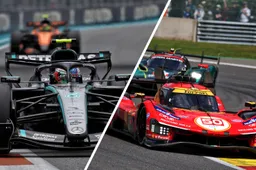
Why Canada is the most unpredictable circuit in F1: the safety car was needed 39 times

Tim Kraaij is Editor-in-Chief of GPblog.com and a Formula 1 analyst. With permanent FIA accreditation and direct access to the paddock, he delivers in-depth, data-driven analysis and insight into key developments within the sport.
No circuit in Formula 1 history has needed the safety car more often than Circuit Gilles Villeneuve. In total, the safety car was deployed 40 times during Grands Prix, across races from 1978 through 2025. In 2022 there were three. In 2023 two. In 2024 also two. And the very first safety car in Formula 1 history — in 1973, then at the Mosport circuit — also appeared at the Canadian Grand Prix. Montreal and chaos go hand in hand.
Why this F1 circuit is so unpredictable
The layout of Circuit Gilles Villeneuve explains the record. The track sits on an artificial island in the St. Lawrence River, surrounded by concrete walls and guardrails with virtually no runoff areas. Where modern circuits are equipped with large gravel traps and grass that cushion rather than punish mistakes, Montreal punishes bad choices instantly. One wheel wrong and you’re in the wall. And those walls don’t give.
The track consists largely of long straights connected by heavy braking zones and tight chicanes. Those chicanes are not only technical but also dangerous: drivers who brake too late, get overzealous when overtaking, or suffer a puncture can end up stationary within a few meters. The pit lane, at 417 meters, is one of the shortest in Formula 1, which means time losses during a stop are small — but it also means drivers are quick to gamble on a stop at odd moments, creating extra chaos.

The famous hairpin at Circuit Gilles Villeneuve - Photo: RacePictures
ADVERTISEMENT
The 2011 race: six safety cars and four hours
The absolute peak of Montreal chaos took place in 2011. The race began behind the safety car due to heavy rain, stopped after 25 laps for a red flag lasting more than two hours, and then saw four more safety car periods. In total, the safety car was needed six times, the most ever in a single F1 race. The race lasted 4 hours, 4 minutes and 39 seconds — still the longest in Formula 1 history.
Jenson Button won that race, doing so from dead last, with a drive-through penalty, a collision with Fernando Alonso and a puncture. He took the lead in the final sector of the very last lap after Sebastian Vettel slid off the track. It was the race that definitively gave the circuit the status of the most unpredictable venue on the calendar.
2026: sprint weekend in a city that knows chaos
This year there’s an extra dimension. It’s a sprint weekend, which means there’s less time for practice and drivers have less opportunity to test their new cars on this unique circuit. That increases the chance of mistakes, especially if it rains — the weekend forecast shows a chance of precipitation. Moreover, the 2026 cars run under new regulations that drivers have not yet fully mastered. More uncertainty, same circuit. The chance of safety cars is greater than ever this year.
ADVERTISEMENT
In short
– At Circuit Gilles Villeneuve, the safety car has been deployed more than 40 times: more than at any other F1 circuit
– The first safety car in F1 history appeared in 1973 at the Canadian GP (Mosport)
– In 2011 there were six safety cars in one race: also an F1 record
– That 2011 race lasted 4:04:39 — the longest F1 race ever
ADVERTISEMENT
– In 2022, 2023, 2024 and 2025 combined, the safety car was already needed eight times

Don’t miss GPblog in Google
Mark us as a preferred source and our articles will appear more often at the top of Top Stories.
Add as a preferred / source on GoogleRead more about:
latest news








Bahrain Grand Prix
Overview
... ...
Practice 1
...
Practice 2
...
... ...
Practice 3
...
Qualification
...
... ...
Race
...
... ...
Practice 1
...
Practice 2
...
... ...
Practice 3
...
Qualification
...
... ...
Race
...
Times are in your local timezone
Rumors
Popular on GPBlog

1
F1 driver set for Bahrain GP back-of-grid start after engine penalty
1597 times read

2
Bottas says F1 drivers don't want to finish season in Italy amid tax threat
1184 times read
3
Back-of-grid start confirmed as three drivers face Sepang setback
994 times read

4
‘You just have to pay it’: Verstappen responds to F1 drivers’ Italian tax concerns
883 times read
F1-stand 2026
Season
| Pos. | Driver | Team | Points |
|---|---|---|---|
1 | MercedesMER | 302 | |
2 | MercedesMER | 236 | |
3 | FerrariFER | 199 | |
4 | McLarenMCL | 186 | |
5 | FerrariFER | 179 | |
6 | Red Bull RacingRBR | 163 | |
7 | McLarenMCL | 120 | |
8 | Red Bull RacingRBR | 86 | |
9 | Racing BullsRCB | 59 | |
10 | AlpineALP | 41 |
Loading