
Ben Hunt is an award-winning motorsport journalist with over two decades of experience in Formula 1 and international media. As a former editor-in-chief and bestselling author, he delivers in-depth analysis and strategic insight from the highest level of the sport.
There is a reason Formula 1 drivers consistently rank the Canadian Grand Prix among their favourite weekends of the season. The Circuit Gilles Villeneuve has served up some of the best races in recent history.
Set on the man-made Notre Dame Island in the middle of Montreal's St. Lawrence River, the circuit has a geography unlike anywhere else on the calendar. It is a semi-permanent track built around park roads, with walls sitting close to the racing line and barely any run-off to forgive mistakes. The consequence is a venue that rewards bravery in a way that few other circuits can match, and punishes hesitation in a way that most cannot.
The circuit's layout is deceptively simple. Long, flat-out straights feed into heavy braking zones. Tight chicanes and the slow hairpin demand precision. Then the straights open up again. On paper, it reads like a conventional street circuit however, in practice, it is one of the most demanding places on the calendar, because getting every element right simultaneously is extraordinarily difficult.
Read also
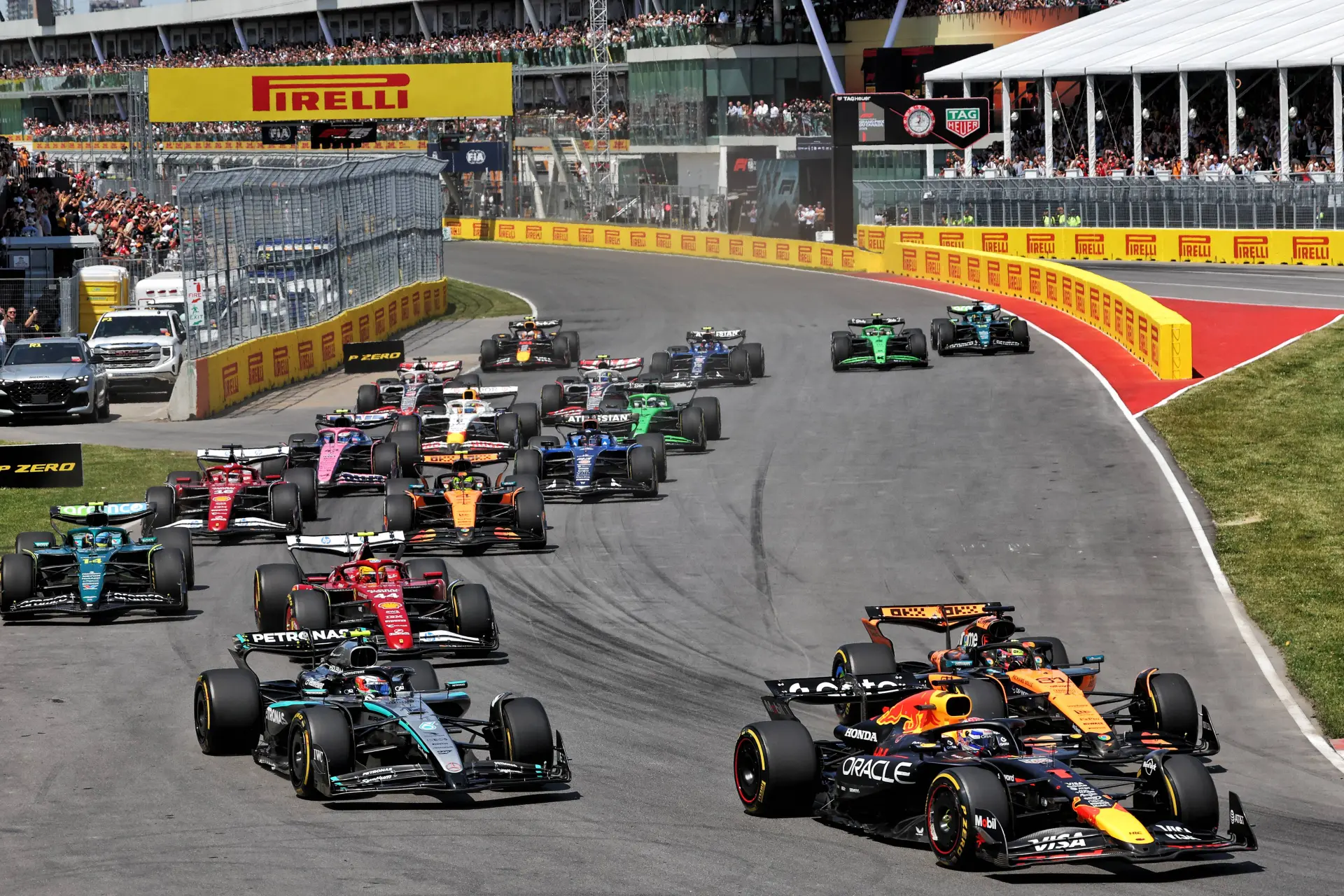
Negotiating the Wall of Champions
ADVERTISEMENT
The key to understanding why Montreal produces such compelling racing lies in those braking zones. The circuit has some of the longest stopping distances in Formula 1, with drivers arriving at certain corners at over 300km/h before hauling the car down to around 70km/h in a matter of moments. Under the 2026 regulations, with the new Straight Mode aerodynamics flattening the wings for maximum top speed, speeds along the back straight are expected to push even higher, making those braking zones longer and the overtaking opportunities more numerous.
And then there is the Wall of Champions. Sitting at the exit of the final chicane, this strip of barrier has collected an extraordinary list of casualties over the decades. It earned its nickname in 1999 when Damon Hill, Michael Schumacher and Jacques Villeneuve all crashed there in a single race weekend. It remains one of the circuit's defining features and a constant reminder that one moment of lost concentration at the most pressurised point of the lap can end a weekend instantly.

Photo: Race Pictures
The weather is also a factor
The circuit's geography also contributes to strategic complexity. The island location and proximity to the St. Lawrence River create microclimatic conditions that can shift rapidly, meaning rain is never far away regardless of what the morning forecast suggests. Safety cars have appeared in 14 races at the Circuit Gilles Villeneuve, making it one of the most interrupted venues on the calendar. That interruption rate is not incidental and linked to the technical challenge offered by the circuit.
ADVERTISEMENT
All of this combines to create a venue where no lead is truly comfortable. A driver with a commanding lead can then find themselves in a sprint battle after a safety car. A team that qualified outside the top 10 can find themselves on the podium after a well-timed strategic call. The 2011 race, where Jenson Button won from last place in over four hours of chaos, remains the ultimate expression of what this circuit can deliver.
New regulations offer a new challenge
In 2026, the new regulations bring active aero, Overtake Mode and a much heavier emphasis on energy management to a track already designed to produce drama. The combination could make this year's Canadian Grand Prix the most unpredictable in years.
That is precisely why the circuit in Montreal has the reputation it does for creating some of the best moments over the season.
ADVERTISEMENT
Don’t miss GPblog in Google
Mark us as a preferred source and our articles will appear more often at the top of Top Stories.
Add as a preferred / source on GoogleRead more about:
latest news



Bahrain Grand Prix
Overview
... ...
Practice 1
...
Practice 2
...
... ...
Practice 3
...
Qualification
...
... ...
Race
...
... ...
Practice 1
...
Practice 2
...
... ...
Practice 3
...
Qualification
...
... ...
Race
...
Times are in your local timezone
Rumors
Popular on GPBlog

1
F1 driver set for Bahrain GP back-of-grid start after engine penalty
1658 times read

2
Bottas says F1 drivers don't want to finish season in Italy amid tax threat
1487 times read
3
Back-of-grid start confirmed as three drivers face Sepang setback
1149 times read

4
Lando Norris reveals why he skipped karting with F1 drivers
1129 times read
F1-stand 2026
Season
| Pos. | Driver | Team | Points |
|---|---|---|---|
1 | MercedesMER | 302 | |
2 | MercedesMER | 236 | |
3 | FerrariFER | 199 | |
4 | McLarenMCL | 186 | |
5 | FerrariFER | 179 | |
6 | Red Bull RacingRBR | 163 | |
7 | McLarenMCL | 120 | |
8 | Red Bull RacingRBR | 86 | |
9 | Racing BullsRCB | 59 | |
10 | AlpineALP | 41 |
Loading