FIA confirms lowest battery limit to date for 2026 Canadian GP
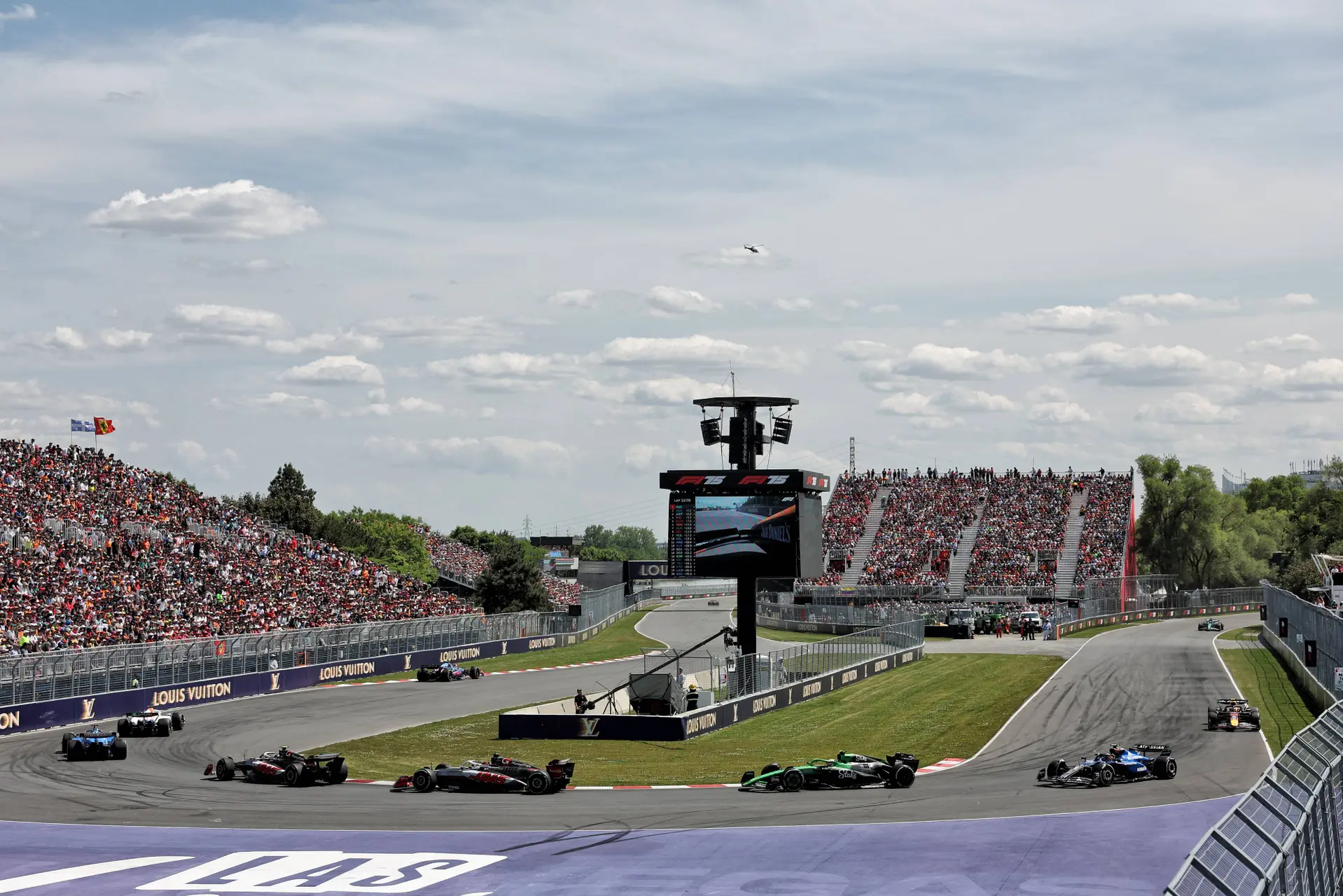
The famous hairpin at Circuit Gilles Villeneuve - Photo: Race Pictures

Shanna is a Formula 1 journalist at GPblog, specializing in both F1 and endurance and GT racing. With a Master’s degree in Journalism and experience at international circuits, she provides in-depth, reliable coverage and insights based on her presence at Grands Prix and racing events worldwide.
For the Canadian Grand Prix weekend, the battery energy limit is set at 6 mega joules (MJ) the lowest value Formula 1 has used so far under the new regulations. The limit for recharging the battery has been significantly reduced because F1 wanted to considerably cut back on energy saving in qualifying.
It’s part of the rule changes announced earlier and is intended to allow drivers to push more in qualifying. The ‘original’ Formula 1 feeling would return somewhat, although many, including Max Verstappen and Lando Norris, were still not satisfied during the Miami Grand Prix. Ahead of the race in Montreal, the FIA confirms the 6 MJ battery limit. That is the lowest value at any circuit so far.
Circuit Gilles Villeneuve is therefore among the tracks with the second-lowest recharge limits, along with the Red Bull Ring and the Las Vegas Strip Circuit. Only Monza is at 5 MJ, due to its track characteristics with long straights and few corners where energy can be recovered. Montreal’s challenge lies not only in the low recharge limit, but also in the circuit design. Drivers must be able to cope with the track’s ‘asymmetric’ energy demands.
The first part of the lap features heavy braking zones and short straights, making recharging easy and energy consumption relatively low. In the final sections of the circuit comes one of the trickiest corners: in Turn 13, speed drops from 306 kilometers per hour to 147 kilometers per hour in less than two seconds, according to brake supplier Brembo. Drivers then experience 3.7G and apply 101 kilograms of force on the brake pedal.

The FIA confirms the energy limits per session in Canada — Source: FIA
ADVERTISEMENT
Getting the turbo and battery into the right operating window
The hairpin will demand a lot of energy, and from there the circuit offers few opportunities to recover it. Drivers must manage the battery well so they still have something to deploy later in the lap. At the same time, they must avoid running the battery flat on the straight before the hairpin. The turbo and battery also need to be in a good operating window before a driver starts a flying lap in qualifying. This weekend even features two qualifying sessions: the sprint qualifying and the Grand Prix qualifying.
The FIA states that the maximum recharge per lap for the sprint race and the race is 8 MJ when overtake is not active, and 8.5 MJ when overtake is active. For the qualifying sessions it’s 6 MJ, for free practice 8.5 MJ and on out laps outside the sprint and the race. The governing body has also shared a track map showing a total of four Straight Mode Zones, though the one between Turns 9 and 10 is essentially inactive.

The track map for the Canadian GP — Source: FIA
Overtake Mode
ADVERTISEMENT
We know that Overtake Mode has replaced the DRS detection point. This is a new power mode that allows a driver to recover more electrical energy and generate additional electric power, enabling them to sustain a higher speed for a longer period. At Circuit Gilles Villeneuve, the detection point for Overtake Mode is located just before the entry to Turn 13, while the activation line follows at the exit of Turn 14 heading onto the start-finish straight.
Don’t miss GPblog in Google
Mark us as a preferred source and our articles will appear more often at the top of Top Stories.
Add as a preferred / source on Google