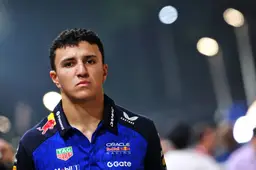
The boy Maranello turned away: How Kimi Antonelli slipped through Ferrari's fingers

Photo: Race Pictures

Ben Hunt is an award-winning motorsport journalist with over two decades of experience in Formula 1 and international media. As a former editor-in-chief and bestselling author, he delivers in-depth analysis and strategic insight from the highest level of the sport.
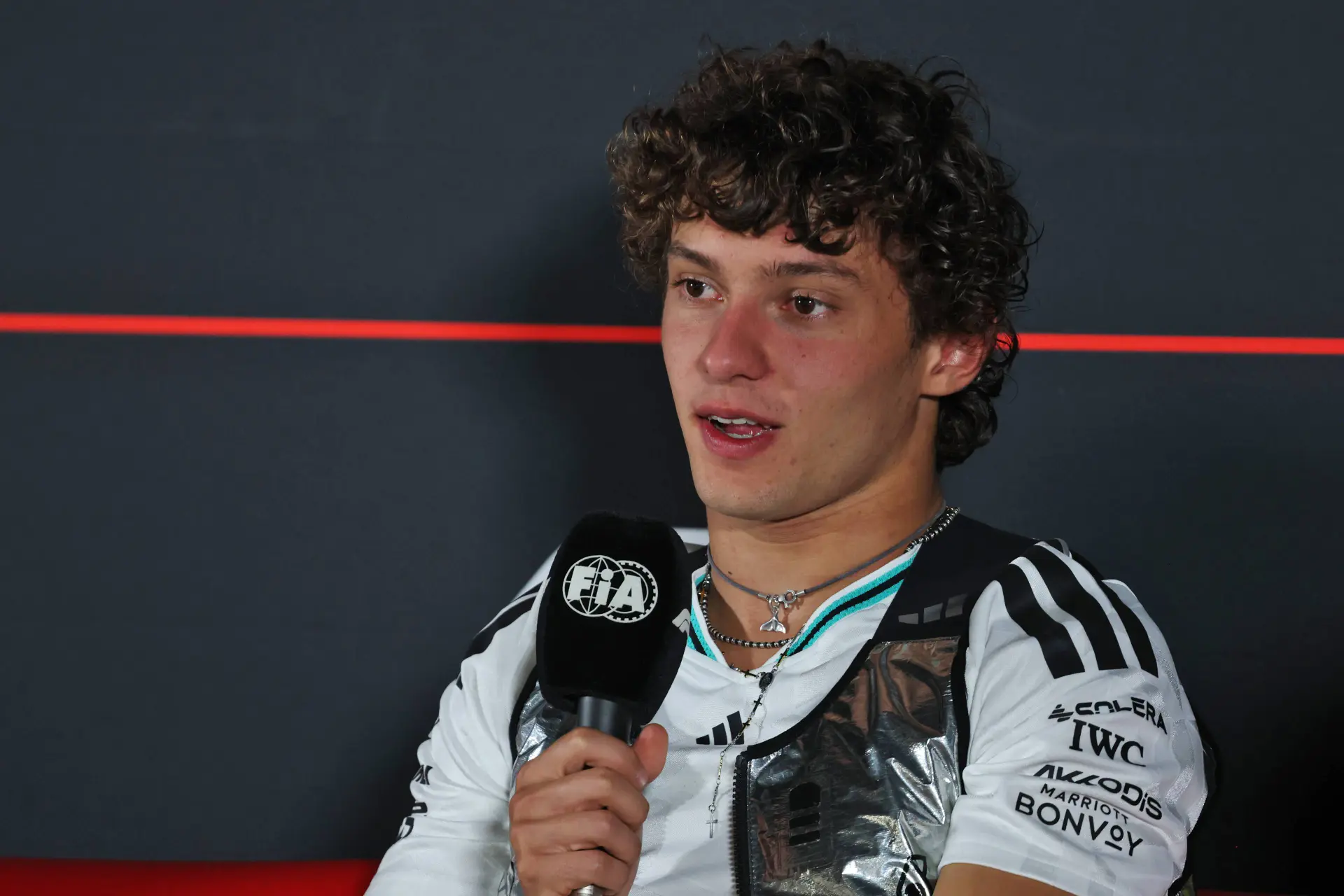
Kimi Antonelli stands directly on the threshold of motorsport immortality. Heading into the Mexico City Grand Prix with a commanding 123-point championship cushion courtesy of a blistering ninth Grand Prix victory of the campaign in Austin, the 20-year-old sensation can already seal the deal.
As detailed in GPBlog's title breakdown, the permutations are overwhelmingly in his favour. Barring an unprecedented catastrophe across the remaining rounds, he will become the first Italian driver to claim the Formula 1 World Drivers' Championship since the legendary Alberto Ascari clinched his second consecutive crown back in 1953.
As detailed in GPBlog's title breakdown, the permutations are overwhelmingly in his favour. Barring an unprecedented catastrophe across the remaining rounds, he will become the first Italian driver to claim the Formula 1 World Drivers' Championship since the legendary Alberto Ascari clinched his second consecutive crown back in 1953.
Yet, when Antonelli inevitably hoists that trophy into the air, he will not be draped in the romantic scarlet red of Maranello. Instead, Italy’s first world champion in over seven decades will celebrate his coronation decked out in the silver and black overalls of Mercedes.
For the legions of tifosi who pack the grandstands of Monza and Imola each year, it represents an emotional paradox. Italian motorsport culture has long prioritised the Prancing Horse above all individual personalities, fostering a collective allegiance where the manufacturer's crest trumps national driver loyalty.
Italian fans have celebrated Michael Schumacher, Niki Lauda, and Kimi Raikkonen as honorary sons while domestic talents languished on the sidelines. Antonelli’s meteoric rise is forcing an unprecedented cultural shift across the peninsula, because this generational Italian superstar was once sitting directly inside Ferrari's own headquarters, only to be shown the exit door.

ADVERTISEMENT
The Maranello test and the fateful rejection
The story of how Ferrari allowed the most gifted Italian racing driver of the 21st century to slip through their fingers dates back nearly a decade.
When Antonelli was just 11 years old, his explosive pace in the international karting ranks had already set paddock tongues wagging. He caught the watchful eye of Massimo Rivola, the astute talent spotter who served as the sporting director and head of the Ferrari Driver Academy before moving on to lead Aprilia's factory MotoGP outfit.
Rivola was convinced that Antonelli was a once-in-a-generation prospect and invited the youngster to Maranello. There, the young Italian was strapped into the Scuderia's cutting-edge driver-in-the-loop simulator, the very same high-tech machinery utilised by Ferrari’s elite academy proteges and Grand Prix test drivers.
Antonelli reportedly impressed everyone in the room with his raw instincts, car control, and rapid adaptability. However, when it came to officially signing the young prodigy to a long-term junior development contract, the boardroom slammed the brakes.
ADVERTISEMENT
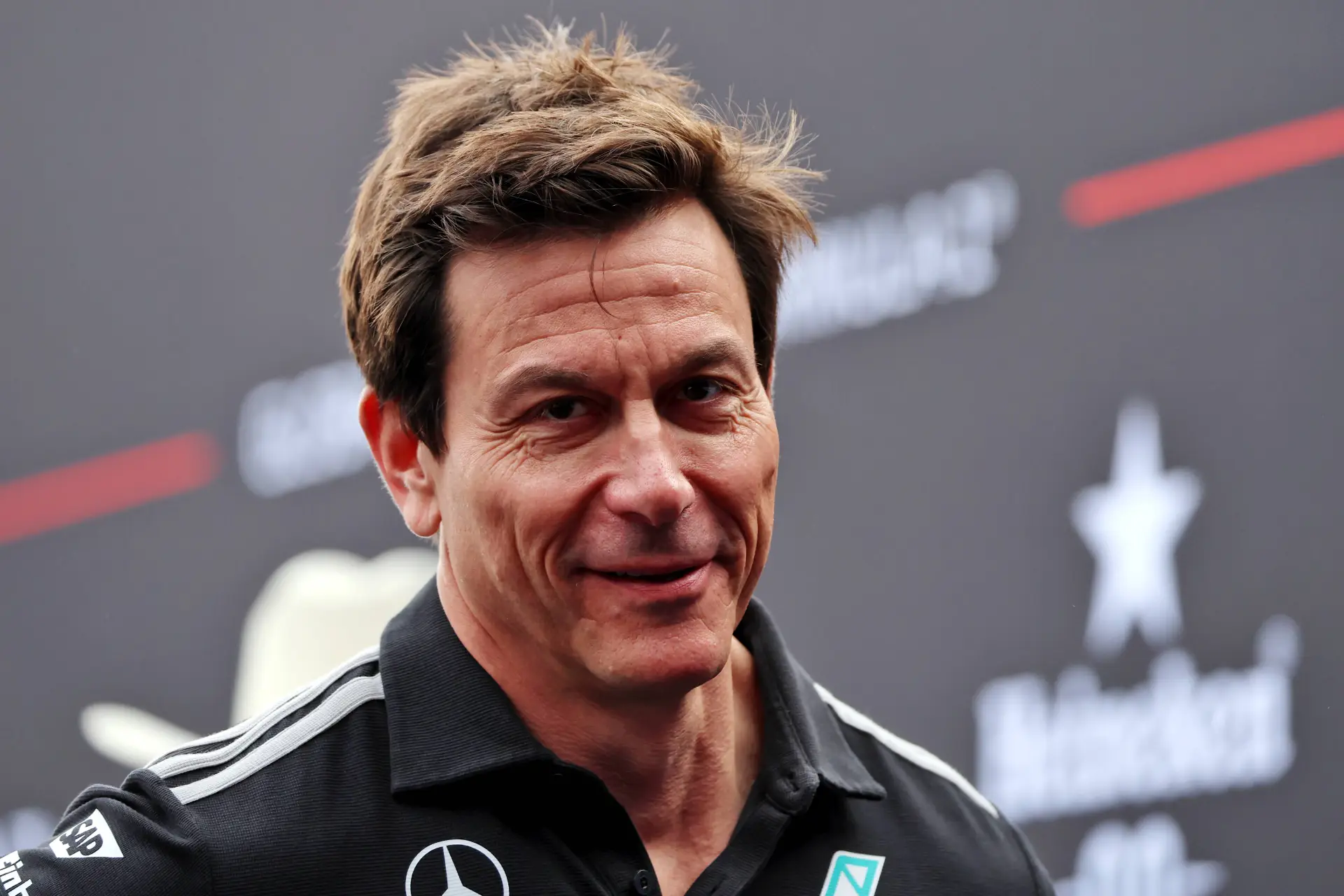
Ferrari’s hesitation proved fatal. While Maranello stalled, Brackley moved with ruthless efficiency. Mercedes team principal Toto Wolff had also been tracking Antonelli's dominant displays across European karting circuits.
Antonelli later confirmed the sudden sequence of events, illustrating just how swiftly the Silver Arrows pounced to secure his services before any rival could reconsider: "Toto contacted us at the end of 2017 and told us they wanted me in their youth program."
Mercedes immediately wrapped Antonelli in a comprehensive, bespoke development structure, nurturing him through every step of the junior single-seater pyramid before fast-tracking him into Lewis Hamilton’s vacant race seat.

Photo: Race Pictures
Arrivabene's defence: Infrastructure, not talent
ADVERTISEMENT
In the years since Antonelli’s breakout emergence, the decision to reject him has come under intense scrutiny in Italy. Pundits and fans alike have questioned how Ferrari's management could have failed to recognise what Mercedes spotted almost instantly.
Some early paddock whispers suggested that Maurizio Arrivabene felt the 11-year-old was physically "too small" to be treated as a serious single-seater prospect.
Arrivabene himself firmly refuted that characterisation, insisting that the rejection was never a question of talent, but rather institutional limitations within Maranello at that specific point in time.
Regardless of whether the stumbling block was age, stature, or logistical readiness, the outcome remained unchanged: Mercedes secured a future world champion for nothing, while Ferrari was left with empty hands and a lingering question mark over its talent acquisition protocols.
ADVERTISEMENT
A long history of Italian heartbreak at Ferrari
While the Antonelli saga feels like an acute modern misstep, it actually mirrors a broader, tragic trend that has defined Ferrari's relationship with domestic drivers for more than half a century.
Ferrari's historical reluctance to back Italian drivers can be traced back to the harrowing events of the 1967 Monaco Grand Prix, where Lorenzo Bandini suffered fatal burns in a fiery crash while piloting the 312 F1.
The psychological toll on the team's founder was profound and lasting. Racing legend Mario Andretti reflected on that sombre turning point during a motorsport symposium, revealing: "Enzo Ferrari swore after the death of Bandini that he'd never again hire an Italian driver."
The emotional burden of seeing Italian drivers perish in Italian cars weighed heavily on 'Il Commendatore', leading to an unwritten company policy that kept domestic racers at arm's length.
ADVERTISEMENT
Since Bandini’s tragic demise, Michele Alboreto remains the only Italian driver to complete a full season behind the wheel of a Ferrari, famously finishing runner-up to Alain Prost in the 1985 World Championship.
Proven race winners like Riccardo Patrese and Elio de Angelis spent their peak years representing British operations such as Williams, Brabham, and Lotus, overlooked by the national team.
Prior to Antonelli’s era, the last Italian to pull on the red race suit in a Grand Prix was Giancarlo Fisichella, who made a brief, five-race stand-in cameo in late 2009.

Ascari's shadow and a new dawn
ADVERTISEMENT
Both of Alberto Ascari's world titles in 1952 and 1953 were claimed behind the wheel of a Ferrari, establishing an iconic pairing that remains frozen in history.
Now, 73 years later, Antonelli is poised to end the longest championship drought in Italian sporting history, but he will do so powered by an engine designed in Brixworth and built in Brackley in the UK.
For Antonelli, carrying the weight of an expectant nation across the line in Mexico is just the initial step in what promises to be a legendary career.
"It would be very cool to close this off, to be the next Italian champion, but of course then this has to be just the beginning, you know," Antonelli admitted after his triumph in Austin.
As the champagne flows and the Italian national anthem rings out across the podium, Italian fans will undoubtedly celebrate their new hero. Yet inside the walls of Maranello, Antonelli’s crowning moment will serve as a poignant, permanent reminder of the 11-year-old kid who walked away from their simulator and never looked back.
ADVERTISEMENT
Don’t miss GPblog in Google
Mark us as a preferred source and our articles will appear more often at the top of Top Stories.
Add as a preferred / source on Google