Why Wolff’s potential Alpine investment may not raise conflict of interest fears
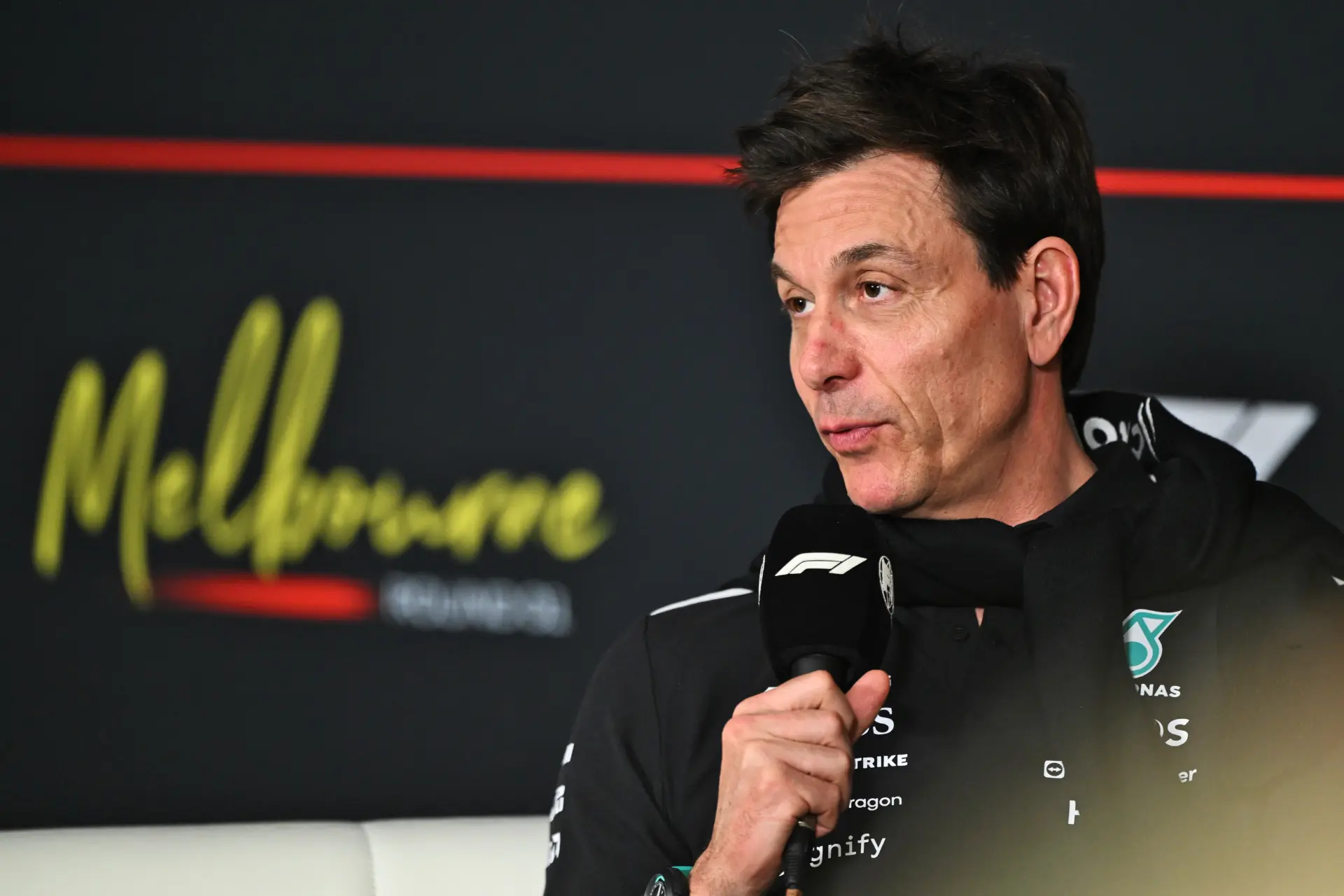
Photo: Race Pictures
Updated:
4 Comments

Tobia is a Formula 1 journalist at GPblog with experience at international circuits. Since 2022, he has covered Grands Prix across Europe, delivering reliable coverage and insights from the paddock.
The rumour suggesting that Toto Wolff has joined the race to acquire a minority stake in Alpine has sparked some buzz online.
On Monday, reports from British media claimed that the Mercedes CEO and team principal is interested in the 24% stake held by Otro Capital, the investment group that has been a minority co-owner of the French team since 2023 - a stake that Christian Horner has also reportedly been eyeing.
Last January, Flavio Briatore personally confirmed that Otro Capital “has held preliminary talks to sell its stake in the team”, further fuelling the speculation and effectively validating the rumours.
Wolff’s reported interest in acquiring a stake in Alpine has sparked debate, raising questions about a potential conflict of interest given the Austrian’s prominent role within Mercedes.

Photo: Race Pictures
ADVERTISEMENT
In addition to his role as team principal, Wolff has long controlled a third of the Formula 1 team alongside Mercedes-Benz Group AG and INEOS, each previously holding 33.3%.
That share was later reduced to 28.33% following the arrival of George Kurtz, CEO of CrowdStrike and a long-time partner of the Silver Arrows, who acquired 15% of Wolff’s stake to become a 5% shareholder in the team.
Shared team ownership, a familiar story in Formula 1
However, shared ownership is not new in Formula 1, and the Red Bull–Racing Bulls relationship is a clear example of it, even if the link between the two teams has repeatedly come under scrutiny.
The FIA and Formula One Management do not explicitly prohibit an individual from holding stakes in more than one team, as long as such a situation does not result in any form of competitive advantage or the exchange of confidential information.
ADVERTISEMENT
Read also
Potential issues could arise, for example, through access to sensitive technical data from rival teams, influence over the strategic decisions of multiple outfits, or interference in the political dynamics of the championship.
Wolff has already had financial links within the broader Formula 1 sphere in the past. In 2020, the Austrian invested in Aston Martin Lagonda, acquiring a stake of roughly 4.7–5% in the British car manufacturer. However, the investment did not involve the Formula 1 team itself, but the road car company.
His shareholding was later diluted to below 1% following a capital increase. Wolff also moved quickly at the time to clarify that the move was strictly a personal financial investment and carried no implications for his position within the Mercedes Formula 1 team.
Given that Wolff remains both team principal and co-owner of Mercedes, any potential acquisition of a minority stake in Alpine would likely be classified as a passive investment and therefore deemed permissible under the current rules.
ADVERTISEMENT
Read also

Don’t miss GPblog in Google
Mark us as a preferred source and our articles will appear more often at the top of Top Stories.
Add as a preferred / source on Google