Aston Martin's major update analyzed: why the competition is right to be worried

Photo: Race Pictures
11:01, 12 Aug
2 Comments

Tim Kraaij is Editor-in-Chief of GPblog.com and a Formula 1 analyst. With permanent FIA accreditation and direct access to the paddock, he delivers in-depth, data-driven analysis and insight into key developments within the sport.
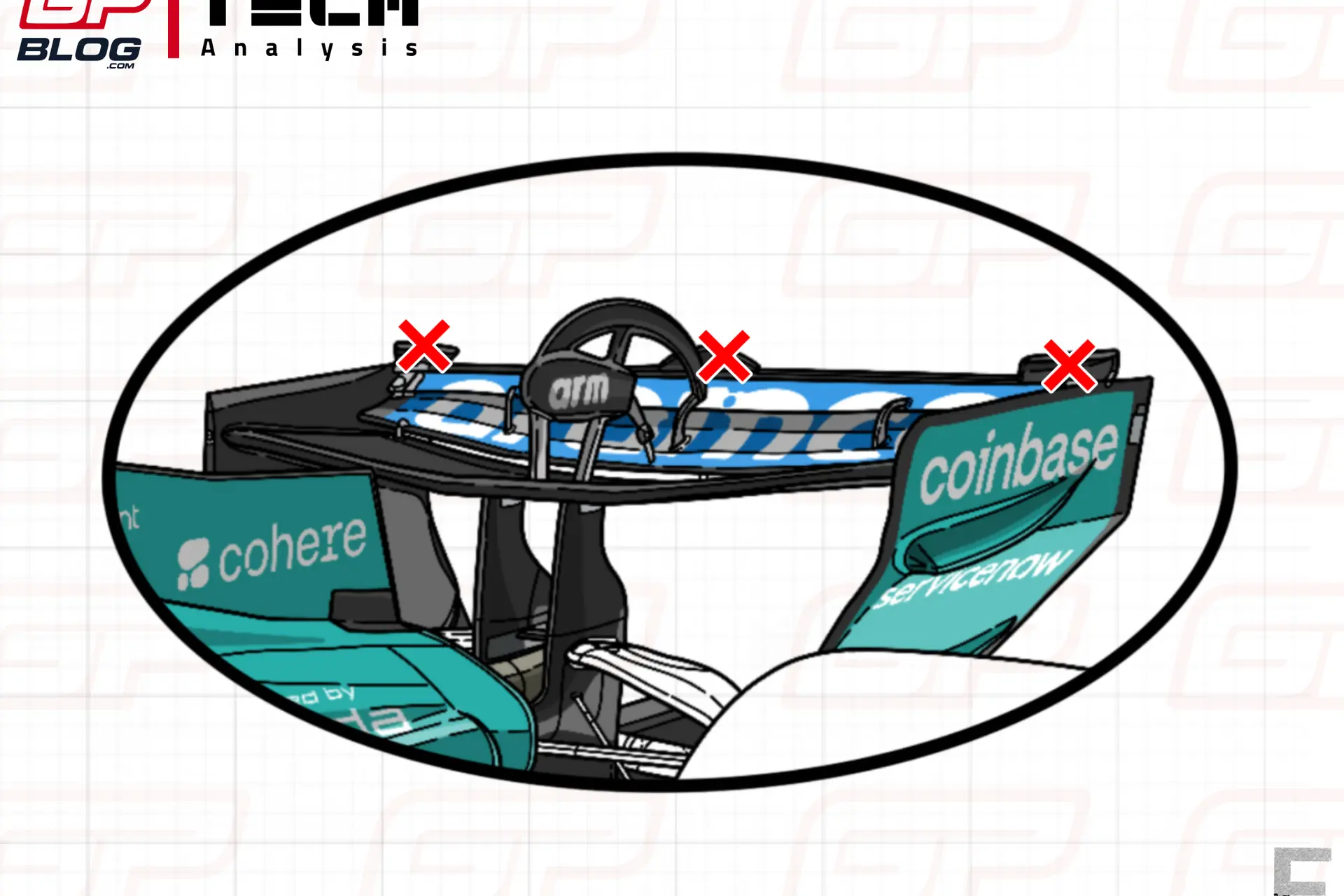
Aston Martin gave its rivals plenty to think about in Hungary with Adrian Newey's updates, but how good was the major package really? GPblog analyzes the step forward the British outfit made with the new parts added to the AMR26.
Newey’s miracle update
Aston Martin sits tenth in the Formula 1 World Championship but could justifiably be considered the weakest team of 2026 so far. They scored a point in Monaco only due to Sergio Perez's mistake, but in terms of pure pace, Cadillac has been quicker on multiple occasions.
Aston Martin had to wait for updates on the car for a long time. Together with his team, Newey deliberately chose not to bring several small updates, but one larger package. The first part of that was delivered in Hungary and it caused surprised looks among the competition. From being clearly the worst team, Aston Martin shot up the pecking order.
Looking at the first 10 Grands Prix of 2026, Aston Martin’s gap to the frontrunners is clearly visible. It also grew as the season progresses, because all teams showed with multiple updates to many weekend. Moreover, Honda's update is also still to come, with the changes expected to arrive at Zandvoort.
ADVERTISEMENT

Photo: Race Pictures
Aston Martin was the weakest F1 team
If you compare Aston Martin’s best qualifying lap at each GP with the pole position time, it’s clear the gap is growing. At the start of the season, the team on average just over 2 seconds behind, and that increased as the season went on.
From a relative deficit of around 2–3%, this rose to as much as 5% on power circuits like Silverstone and Spa-Francorchamps. The average over the first 10 Grands Prix is clear. Aston Martin was, on average, 2.99 seconds off the fastest time, a deficit of 3.59%.
In terms of race pace, the picture is even more painful. The Silverstone-based team loses 4.28 seconds per lap, which equates to 4.91%. Race pace also shows an upward trend throughout the season, although it is less steep than the trend in qualifying pace.
ADVERTISEMENT
| GP | Pole | Best AM (quali) | Gap | Fastest race pace | Best AM race pace | Gap |
| Australia | 1:18.518 | 1:21.969 | +2.462 (3.14%) | 1:23.015 | 1:27.416 | +4.401 (5.30%) |
| China | 1:32.064 | 1:35.203 | +2.028 (2.20%) | 1:36.360 | 1:40.356 | +3.996 (4.15%) |
| Japan | 1:28.778 | 1:32.646 | +2.731 (3.08%) | 1:33.478 | 1:37.888 | +4.410 (4.72%) |
| Miami | 1:27.798 | 1:31.098 | +2.445 (2.79%) | 1:32.496 | 1:35.796 | +3.300 (3.57%) |
| Canada | 1:12.578 | 1:15.196 | +1.816 (2.50%) | 1:15.559 | 1:20.409 | +4.850 (6.42%) |
| Monaco | 1:12.051 | 1:15.349 | +2.056 (2.85%) | 1:16.661 | 1:19.243 | +2.582 (3.37%) |
| Barcelona | 1:14.679 | 1:18.758 | +3.133 (4.20%) | 1:21.410 | 1:26.306 | +4.896 (6.02%) |
| Austria | 1:06.113 | 1:09.942 | +2.859 (4.33%) | 1:11.662 | 1:15.130 | +3.468 (4.84%) |
| Great Britain | 1:28.111 | 1:32.863 | +4.752 (5.39%) | 1:33.916 | 1:38.760 | +4.844 (5.16%) |
| Belgium | 1:44.361 | 1:50.002 | +5.641 (5.41%) | 1:49.915 | 1:55.958 | +6.043 (5.50%) |
| Average (10 GPs) | ~2.99s / 3.59% | ~4.28s / 4.91% |
Hungarian GP proves Newey right
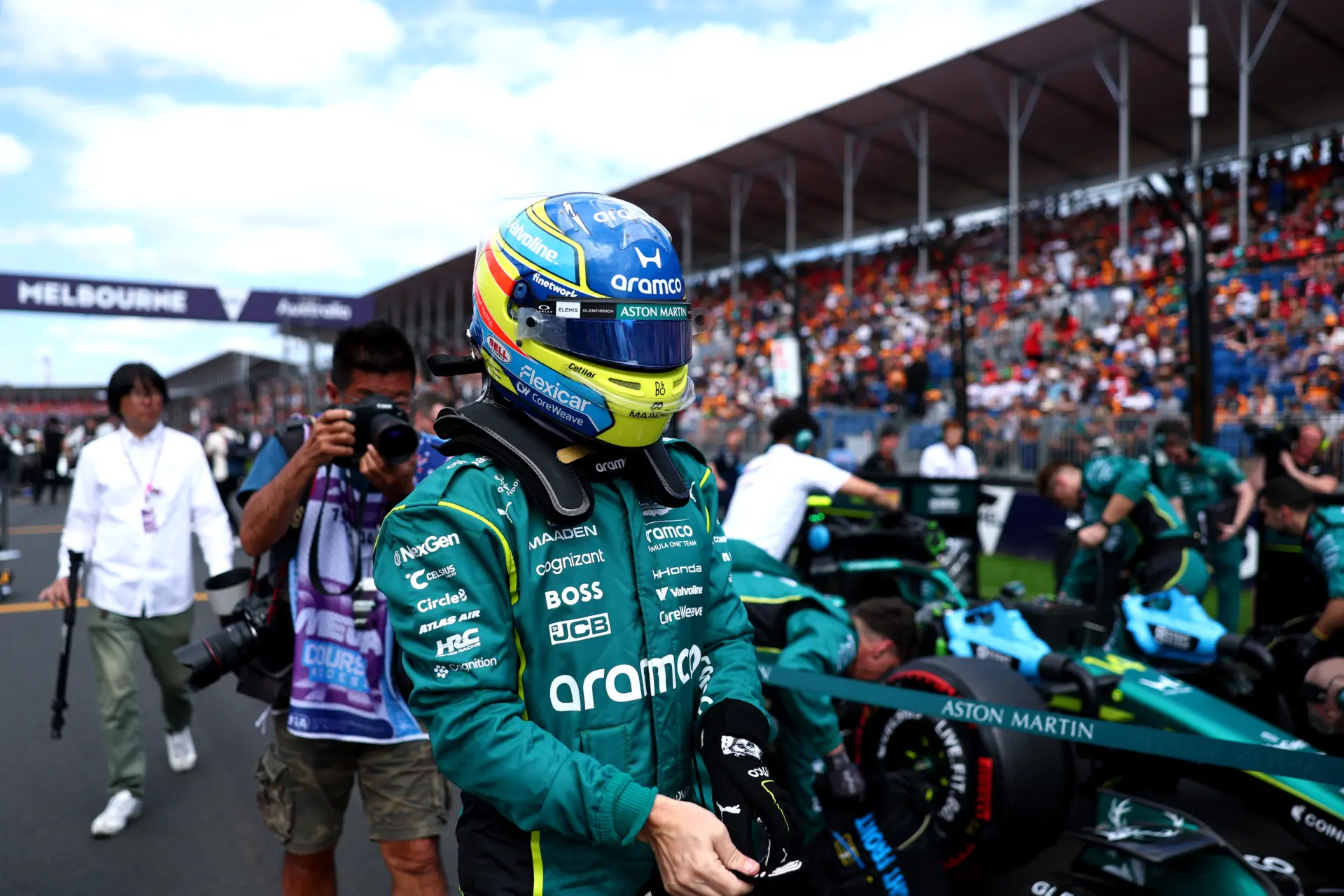
Fast forward to the most recent Grand Prix of the season in Hungary, Aston Martin taking a step in the right direction was clearly visible there. In qualifying, Fernando Alonso set a 1:19.808. That makes him 2.352s slower than Lando Norris’s pole position time, which equates to 3.05%. That is much lower than the 3.59% average over the first 10 races and significantly lower than the most recent races in Great Britain (5.39%) and Belgium (5.41%).
Looking at race pace, the step forward is even more evident. Norris had the best with an average of 1:24.507 at the Hungaroring. Lance Stroll was the quicker of the two Aston Martin drivers with a 1:26.951. That means the Canadian was “only” 2.444s per lap slower than the fastest driver, a relative difference of 2.89%.
Compared to the first 10 GPs, Aston Martin once again managed to gain considerable time. The race pace deficit over the first ten GPs was 4.28s, or 4.91%. That means the race deficit to the front of the field has been almost halved.
ADVERTISEMENT
| Session | Reference | Best AM | Gap |
| Qualifying | Norris 1:17.207 | Alonso 1:19.808 | +2.352 (3.05%) |
| Race (median) | Norris 1:24.507 | Stroll 1:26.951 | +2.444 (2.89%) |
Conclusion: Aston Martin rightly scares the competition
There are plenty of caveats to the result. It is, after all, only one race weekend to draw data from since the update, compared to the ten previous Grands Prix of the season. In addition, there were several outliers, such as China and Monaco, where Aston Martin was already relatively closer to the front.
But despite those caveats, the fear among the competition is easy to understand. Aston Martin has only brought part of the updates, with the rest set to follow in the coming races. It also takes time to optimize an upgrade package, something that is highly unlikely to have been achieved after just one weekend.
The fact that this update hit the mark also means Aston Martin has its correlation in the new wind tunnel in order. That makes the chance of subsequent updates being on target much greater. Add to that the fact that Honda will also bring substantial updates and you understand why drivers from Haas, Racing Bulls, and Williams are anxiously looking at Aston Martin.
ADVERTISEMENT


Don’t miss GPblog in Google
Mark us as a preferred source and our articles will appear more often at the top of Top Stories.
Add as a preferred / source on GoogleRead more about:
latest news







Bahrain Grand Prix
Overview
Friday 02.10.26
Practice 1
04:30 AM
Practice 2
08:00 AM
Saturday 03.10.26
Practice 3
04:30 AM
Qualification
08:00 AM
Sunday 04.10.26
Race
07:00 AM
Friday 02.10.26
Practice 1
Fri 04:30 AM
Practice 2
Fri 08:00 AM
Saturday 03.10.26
Practice 3
Sat 04:30 AM
Qualification
Sat 08:00 AM
Sunday 04.10.26
Race
Sun 07:00 AM
Times are in your local timezone
Rumors
Popular on GPBlog

1
FIA reaches verdict on Hadjar as rival is hit with time penalty
1850 times read

2
Hadjar summoned after Baku GP as FIA calls up two more drivers
1750 times read

3
F1 Standings | Antonelli recovers but Russell and Red Bull score big at Azerbaijan GP
1501 times read

4
Hamilton's telling one-word response to Vasseur-Horner Ferrari rumours
1430 times read
F1-stand 2026
Season
| Pos. | Driver | Team | Points |
|---|---|---|---|
1 | MercedesMER | 302 | |
2 | MercedesMER | 236 | |
3 | FerrariFER | 199 | |
4 | McLarenMCL | 186 | |
5 | FerrariFER | 179 | |
6 | Red Bull RacingRBR | 163 | |
7 | McLarenMCL | 120 | |
8 | Red Bull RacingRBR | 86 | |
9 | Racing BullsRCB | 59 | |
10 | AlpineALP | 41 |
Loading