Hulkenberg backs change Verstappen is demanding against own team Audi: "I'm open for it"
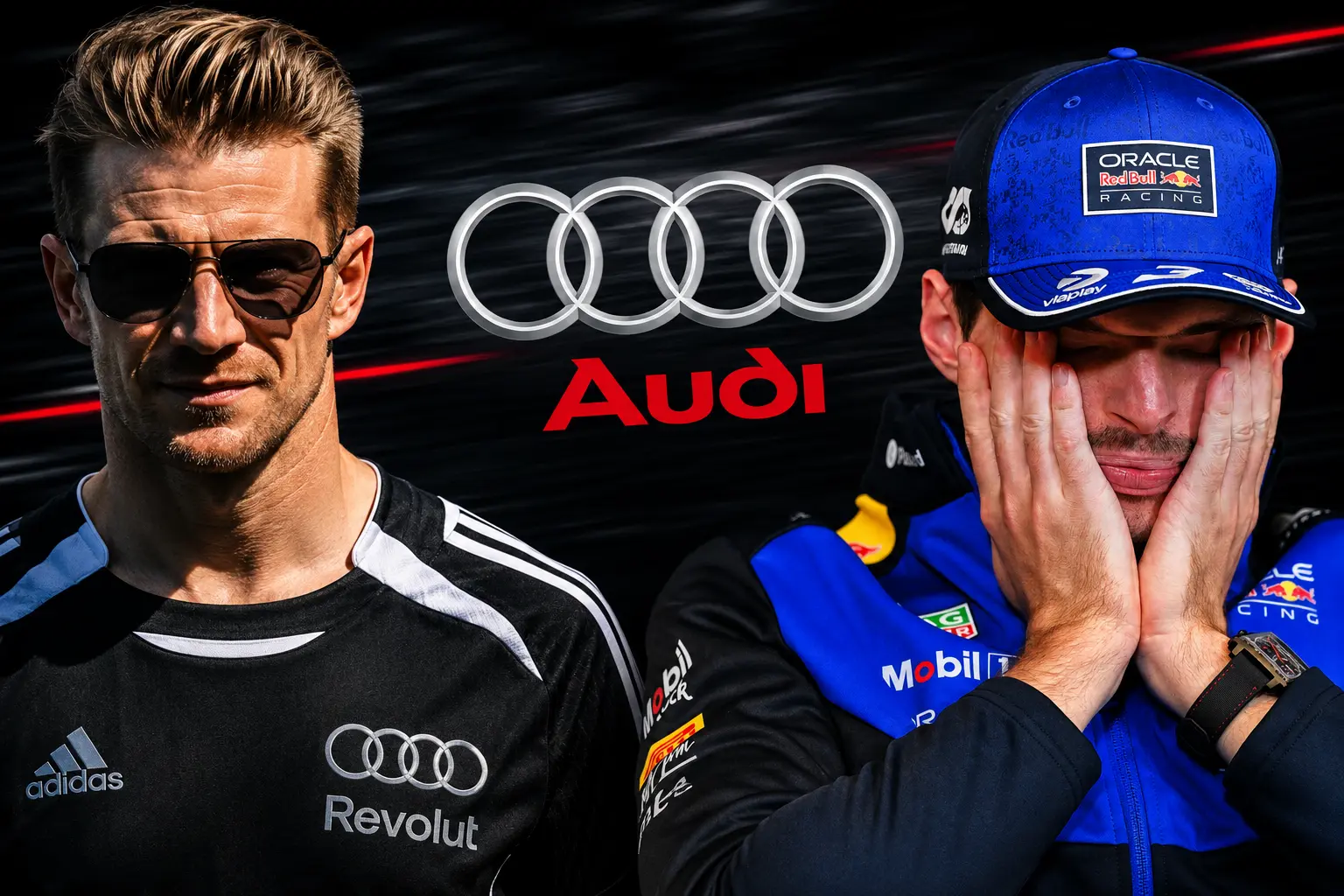
AI render GPblog.com - RacePictures.com
Updated:
1 Comments

Tim Kraaij is Editor-in-Chief of GPblog.com and a Formula 1 analyst. With permanent FIA accreditation and direct access to the paddock, he delivers in-depth, data-driven analysis and insight into key developments within the sport.
Nico Hulkenberg has broken ranks with his own constructor on one of Formula 1's most politically charged technical debates. Speaking to GPblog during the Monaco Grand Prix media day on Thursday, the Audi driver said he is open to the proposed shift to a 60/40 combustion-to-electrical power split in 2027, a change his own team is understood to oppose and one that Max Verstappen has been pushing hard to get through.
The question was put to Hulkenberg directly by GPblog, and his answer was careful but unambiguous on the central point.
"Well, it's not about what I want, it's about what happens. It's obviously a big discussion between all the manufacturers, there needs to be an agreement the way that I understand it. I think it would help certain areas and make life easier, especially in qualifying, being a bit less reliant on some of the energy things. So yeah, I think I'm open for it."
Hulkenberg and Audi with different perspectives
When it was put to Hulkenberg that his team is among those opposed to the change, he did not dispute it. Instead he framed the debate as a broader political problem with no straightforward solution, one made more complicated by the simultaneous arrival of the Agreed Development Under Operations framework.
ADVERTISEMENT
"I think there's different proposals flying around. Not sure what exactly, but it's obviously political, and with ADUO now kicking in as well for the first time, it's obviously a bigger discussion. A lot of these things also, it sounds easy, the solution, but I think a lot of people don't understand how complex it is and the knock-on effect it has in terms of the engine, the development, and you're having to redesign certain things. And these things, you don't redesign in a month, these are more complex things."
The acknowledgement that any change carries significant engineering consequences is a point Audi and other opposing manufacturers have made repeatedly. Hulkenberg understands the complexity, but his openness to the change regardless puts him at odds with the position his own constructor has taken in the manufacturer meetings where the proposal is being debated.
Verstappen has been the most vocal advocate for the 60/40 split, arguing that the current balance leaves drivers too dependent on managing electrical energy during races and reduces the spectacle of wheel-to-wheel combat. His influence as the sport's dominant driver of recent years gives his position weight in those negotiations beyond what his single vote in the room would suggest.
The 60/40 debate and what it means for 2027
The current 2026 power unit regulations introduced a substantially increased role for the electrical component relative to the interal combustion engine, a shift that has generated criticism from several drivers who argue it places too great a premium on energy management at the expense of raw racing.
ADVERTISEMENT
A move to 60/40 in favour of the internal combustion engine would reduce that dependency and, proponents argue, make overtaking and tyre management less vulnerable to the state of a driver's battery. Opponents counter that any mid-cycle regulation change carries development costs and timelines that cannot simply be wished away, a point Hulkenberg himself acknowledged.
What makes his comments in Monaco notable is not that he expressed a preference, but that he did so while representing a manufacturer that has invested its entire Formula 1 programme around the current power unit architecture. Hulkenberg's willingness to step outside that position, even in the measured terms he used on Thursday, adds a voice from inside the Audi camp to a debate that Verstappen has so far been carrying largely from the outside.


Don’t miss GPblog in Google
Mark us as a preferred source and our articles will appear more often at the top of Top Stories.
Add as a preferred / source on Google