
Tobia is a Formula 1 journalist at GPblog with experience at international circuits. Since 2022, he has covered Grands Prix across Europe, delivering reliable coverage and insights from the paddock.
One of the most frequently mentioned terms in this new era of Formula 1 is the acronym ADUO - but what is it, and what does it mean for the teams?
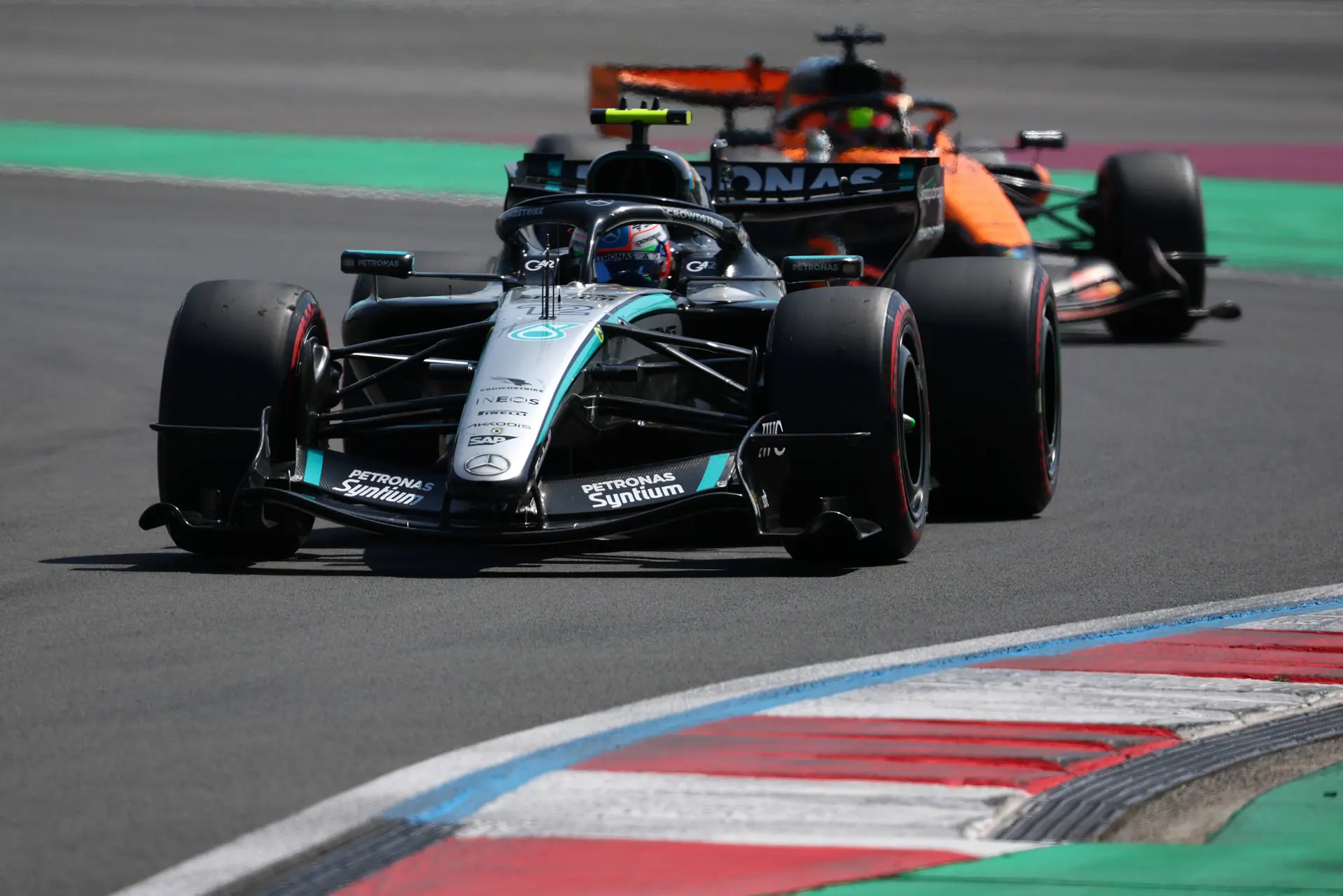
The opening three races of the 2026 season have confirmed the clear superiority of the Mercedes power unit, something that had already been evident during testing. Widely tipped as the benchmark even last year, the German manufacturer arrived fully prepared for the major regulation shift.
As a result, the Brackley-based team has swept up everything on offer across Melbourne, Shanghai and Suzuka, fully aware that its current engine advantage may soon begin to shrink - precisely because of the system mentioned above.
What is ADUO - and how does it impact the teams?
From this year, in fact, the FIA has introduced the ADUO system, short for Additional Development and Upgrade Opportunities. In essence, it allows manufacturers that are struggling more on the engine side to run their power units on the dyno for longer than the reference benchmark - in this case Mercedes - and to introduce extra upgrades depending on the performance gap.
ADVERTISEMENT
Put simply, ADUO can be seen as a modern form of Balance of Performance, although with a key difference: it is the chasing teams that must close the gap themselves, rather than the leading outfit being slowed down, as happens for example in the WEC.
Follow GPblog on social media to stay updated on all Formula 1 news: Facebook, Instagram and TikTok.

Photo: Race Pictures
Read also


How often is the ADUO system applied?
ADVERTISEMENT
The framework behind the system is reviewed at regular intervals, with the FIA carrying out performance checks on the power units every six races.
The goal is to give manufacturers who are trailing a chance to close the gap during the season itself, rather than being forced to wait until the following year - ultimately raising the level of competition across the grid.
Make GPblog your preferred source on Google and see our content first in Google Discover and Google News.
How many upgrades are allowed for each team?
The extent to which engine suppliers can develop their power units depends on clearly defined performance brackets. If a manufacturer is operating between 2% and 4% below the benchmark, it is granted the opportunity to introduce one additional upgrade.
ADVERTISEMENT
Should the deficit exceed the 4% threshold, the allowance increases to two extra upgrades. This scenario could realistically apply to Honda, which has so far appeared well adrift of the leading manufacturers.
Engine evaluation timeline shift looms after Middle East cancellations
As previously mentioned, the ADUO process is structured around a series of evaluation points, with the first major comparison taking place after six rounds of the championship.
It serves as an initial benchmark to determine whether any adjustments may be required. However, the FIA is now considering bringing that assessment forward, aiming to provide greater flexibility for manufacturers. As previously reported by GPblog, discussions around a revised timeline have already taken place.
The need for a change stems from the altered calendar, following the cancellation of both the Bahrain and Saudi Arabian Grands Prix. As a result, the six-race mark would now only be reached after Monaco, rather than Miami as originally planned.
ADVERTISEMENT
That leaves Mercedes’ position unclear. The key question is whether Wolff and the team will attempt to block the earlier introduction of the ADUO assessment, or whether they are willing to accept the change. For the time being, GPblog understands that the Brackley-based outfit has not taken a firm stance either way.
Stay up to date with the latest Formula 1 news? Follow GPblog.com on WhatsApp Channels andreceive the most important updates first.
Listen to or watch the GPblog.com video podcast. In the F1 Paddock Update, Jim Kimberley and Ben Hunt discuss the latest Formula 1 news. New episodes are available every Monday and Thursday on YouTube, Spotify, or your favourite podcast app.
Read also



ADVERTISEMENT
Don’t miss GPblog in Google
Mark us as a preferred source and our articles will appear more often at the top of Top Stories.
Add as a preferred / source on Google