Verstappen may have found an answer to both Ferrari and Mercedes in promising long runs

Shanna is a Formula 1 journalist at GPblog, specializing in both F1 and endurance and GT racing. With a Master’s degree in Journalism and experience at international circuits, she provides in-depth, reliable coverage and insights based on her presence at Grands Prix and racing events worldwide.
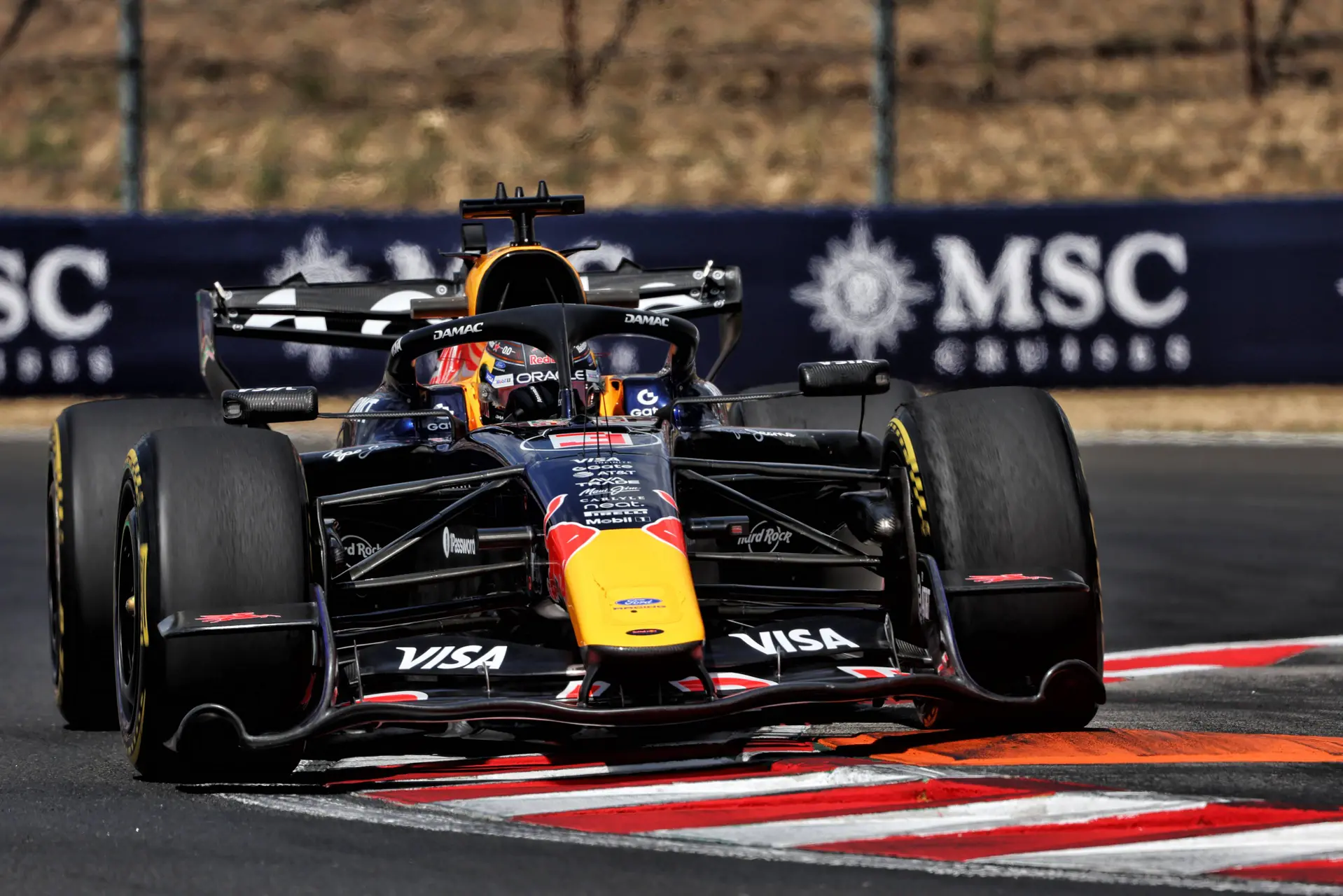
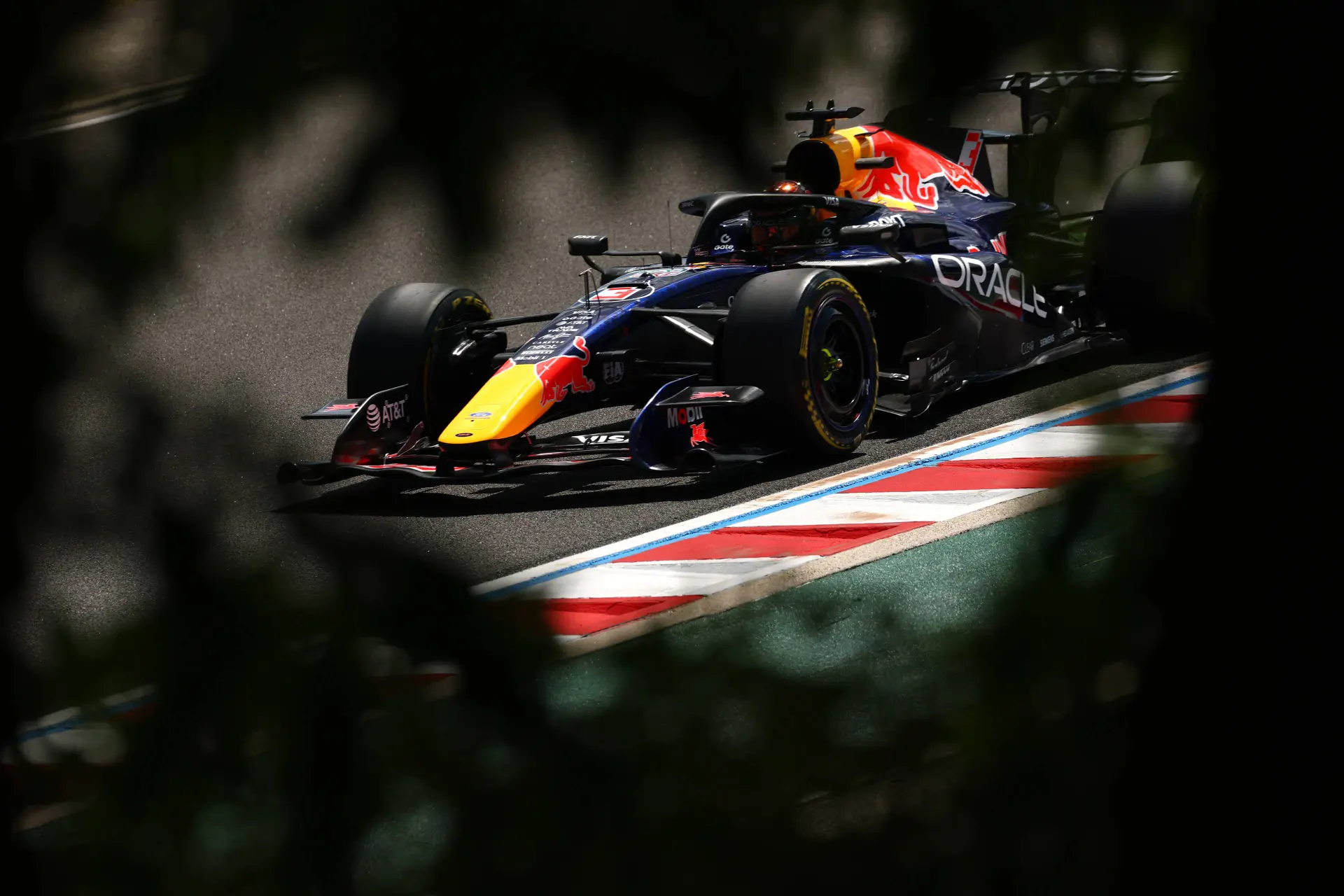
Max Verstappen struggled on Friday afternoon in Hungary with various issues on his RB22. The two practice sessions were important for Red Bull because they had put the ‘Macarena’ wing back on the car and made two additional changes. Although Verstappen is not satisfied yet, the long runs don’t look bad at all.
Ferrari, however, currently appears to be the team to beat. As expected, the Ferrari car suits the twisty circuit near Budapest better, where - unlike Spa-Francorchamps - it’s mainly about stability, traction, and cornering grip. Many teams have therefore implemented specific changes to the car to meet the Hungaroring’s downforce demands.
Red Bull has reinstalled the rear wing that was recently scrutinized and improved. So Verstappen and Isack Hadjar had a busy program lined up to test the revised car and gather solid data. While Verstappen was left a long way behind the two Ferrari drivers in the second free practice, that seems less concerning over the long runs.
Verstappen faster than Russell again
As usual when analyzing long runs, it’s important to bear in mind that we don’t know what engine modes, fuel loads, and run plans the teams were using. Consistency and average pace can, of course, indicate where a team’s focus lay. What’s noticeable in the last few race weekends is that Red Bull and Mercedes go for extended long runs—race simulations of at least about eight laps. They did so again.
ADVERTISEMENT
| Lap | RUS (M) | ANT (S) | VER (M) | HAD (M) | NOR (M) | PIA (M) | LEC (S) | HAM (M) |
| 1 | 1:24.254 | 1:25.205 | 1:24.735 | 1:24.942 | 1:24.384 | 1:25.238 | 1:23.708 | 1:24.434 |
| 2 | 1:24.371 | x | 1:24.140 | 1:24.577 | 1:24.346 | 1:25.451 | 1:23.755 | x |
| 3 | 1:24.021 | x | 1:24.110 | 1:25.215 | 1:24.008 | 1:25.400 | x | 1:24.611 |
| 4 | 1:24.002 | 1:23.736 | 1:23.879 | x | 1:24.423 | 1:25.029 | 1:24.219 | 1:24.809 |
| 5 | 1:24.099 | 1:23.723 | 1:25.373 | 1:23.871 | 1:25.432 | x | 1:25.170 | |
| 6 | 1:24.205 | 1:23.917 | 1:24.814 | 1:25.727 | 1:24.944 | 1:25.155 | ||
| 7 | 1:25.096 | 1:24.025 | VER (S) | 1:25.123 | 1:25.684 | x | ||
| 8 | 1:25.298 | 1:24.106 | 1:23.747 | 1:25.380 | x | x | ||
| 9 | 1:25.413 | x | 1:23.547 | 1:25.383 | 1:24.302 | |||
| 10 | 1:25.805 | 1:24.172 | 1:24.081 | 1:25.295 | ||||
| 11 | 1:25.860 | 1:25.414 | ||||||
| 12 | 1:25.256 | |||||||
| 13 | 1:24.141 | |||||||
| Average | 1:24.656 | 1:24.343 | 1:24.447 (M) | 1:24.911 | 1:24.703 | 1:25.423 | 1:24.186 | 1:24.636 |
| 1:24.365 (S) |
George Russell and Kimi Antonelli both completed a long run of more than ten laps, although Antonelli was held up a few times, making those lap times unrepresentative for calculating an average. Mercedes ran two different plans, with Russell on the medium tire and Antonelli on the soft. As a result, the young Italian was about three tenths quicker than his teammate with an average of 1:24.343.
Verstappen worked hard in FP2: he did runs on both the medium and soft tires, while Hadjar focused only on the mediums. Despite the balance issues, they still managed to gather somewhat representative data. On the medium tire Verstappen averaged 1:24.447 - about two tenths faster than Russell - and on the soft tire he almost matched Antonelli’s average at 1:24.365. Hadjar couldn’t do as long a race simulation as his teammate and posted an average of 1:24.911, which doesn’t paint an accurate picture of the true pace.
Leclerc solid on pace, McLaren lags behind
Although Mercedes and Red Bull came up first in this analysis, Ferrari must of course be watched closely. Over a single lap and in the qualifying runs, Charles Leclerc was especially quick, but Lewis Hamilton also showed his hand toward the end of the day to top the timesheets. In the long runs, Leclerc appears to have the upper hand for now. With an average of 1:24.186 on the soft tire, he is by far the fastest driver among the top teams, beating Antonelli’s average by almost two tenths.
ADVERTISEMENT

Charles Leclerc is the fastest driver on Friday in Hungary - Photo: RacePictures
Hamilton is on Russell’s pace on the mediums, with an average of 1:24.636. Whether the Brit is actually lacking compared to his teammate is hard to determine, as it could well be that Ferrari had one car running with more fuel because they split their run plans. Where McLaren stands remains a question mark for now, since both Lando Norris and Oscar Piastri ran on the medium tire and were both considerably slower than Mercedes, Ferrari, and Red Bull.
McLaren has, of course, also introduced a very large upgrade and it’s unknown how they approached gathering data on the package. McLaren may show a bit more of themselves on Saturday in Hungary. Given that two of the top teams were still busy trying to understand their car (in part), it seems likely that significant steps will still be made—both in qualifying pace and race pace.
Don’t miss GPblog in Google
Mark us as a preferred source and our articles will appear more often at the top of Top Stories.
Add as a preferred / source on Google