Norris faster than Verstappen and Leclerc in Austin long-run comparison
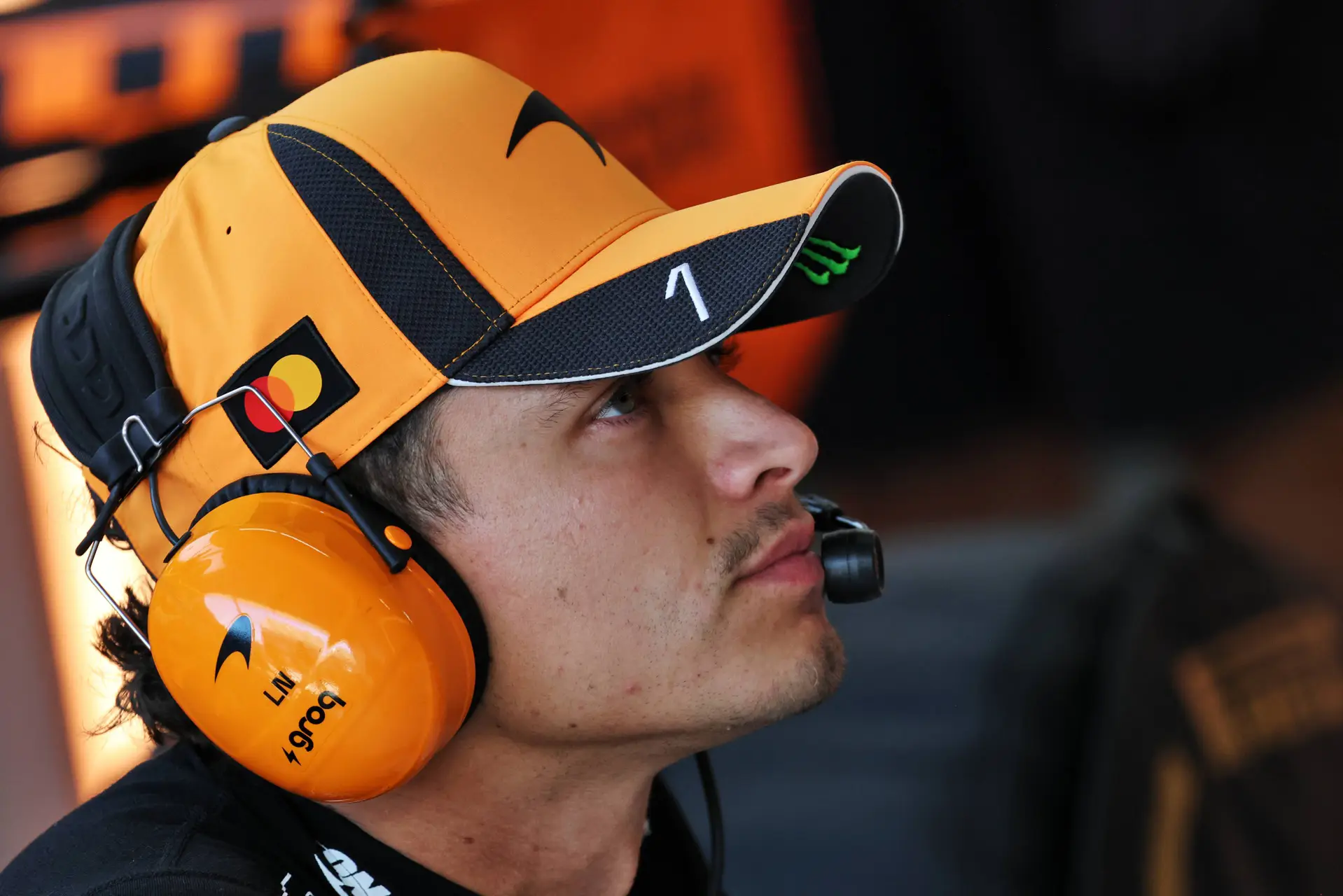
Norris had reason to be cheerful on Friday (Photo: Race Pictures)

Shanna is a Formula 1 journalist at GPblog, specializing in both F1 and endurance and GT racing. With a Master’s degree in Journalism and experience at international circuits, she provides in-depth, reliable coverage and insights based on her presence at Grands Prix and racing events worldwide.
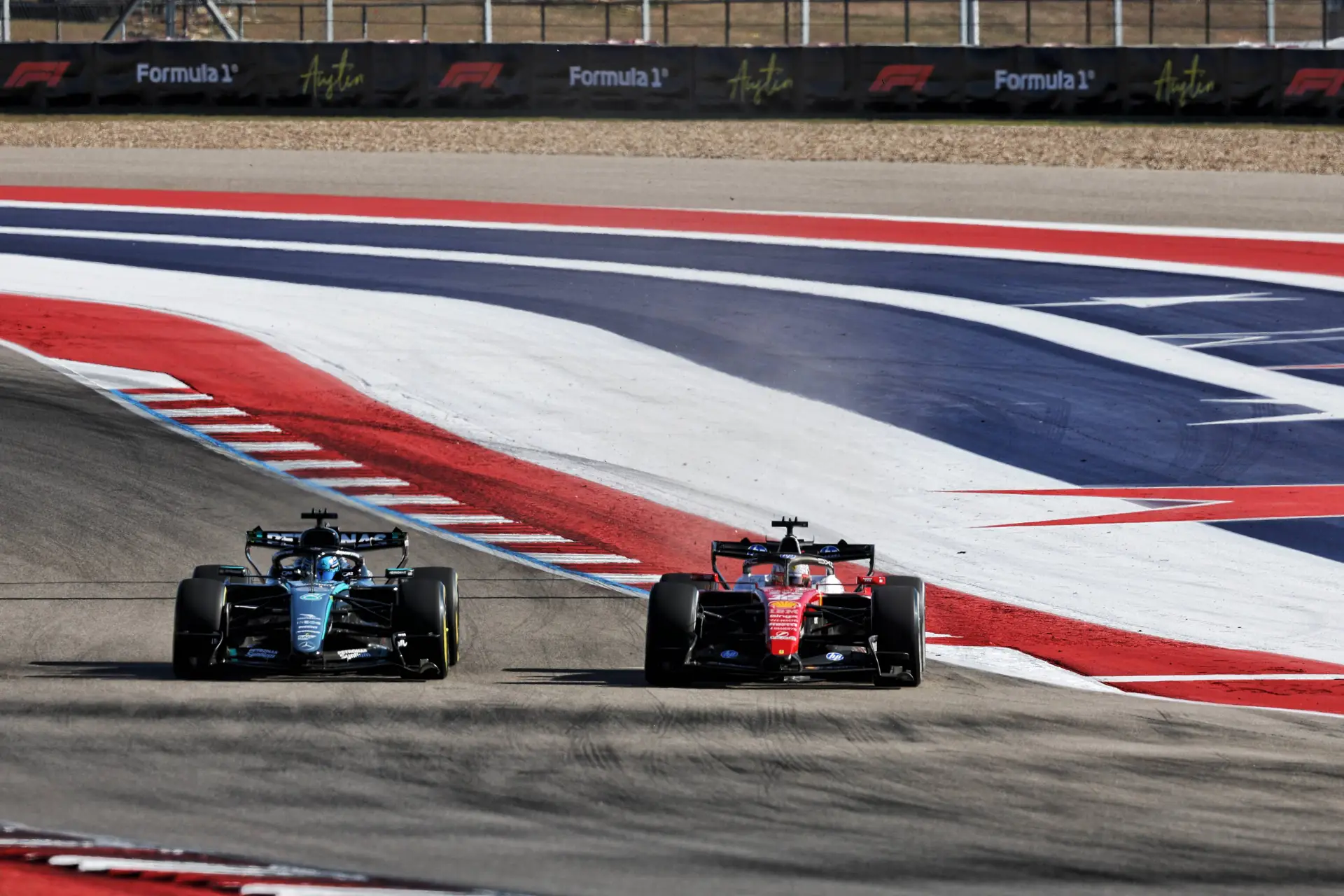
Max Verstappen had to settle for second place behind Charles Leclerc in both practice sessions in Austin, but the gap has almost disappeared in the long runs. The two posted virtually identical averages on the soft tyres. That offers Red Bull Racing hope for Sunday, although Mercedes and McLaren's tyre choices leave the door open for their rivals.
Leclerc ended both sessions at the Circuit of The Americas as the fastest driver. Verstappen was 0.084 seconds off the pace in the first practice session, while the gap grew to 0.189 seconds in FP2. Kimi Antonelli managed to slot in between the Ferrari and the Red Bull. Over a single lap, then, Leclerc had the edge on Friday.
Verstappen was not entirely satisfied with his car at the start of the weekend. Red Bull began on the hard tyres, before the Dutchman switched to softs. On that compound, he was already close to Leclerc, despite his earlier complaints about the car's handling. The first laps on the mediums followed in FP2, and Verstappen seemed to find a better balance.
Verstappen and Leclerc almost inseparable
The comparison becomes more interesting for Red Bull once the drivers embark on their longer runs. Verstappen posted an average of 1:41.481 over eleven laps on the softs. Leclerc averaged 1:41.479 over the first eleven laps of his long run on the same compound. Based on the rounded times, the difference is just two thousandths of a second. That means the gap seen in the qualifying simulations has almost completely disappeared over this stint.
ADVERTISEMENT
| Lap | RUS (M) | ANT (M) | VER (S) | HAD (M) | LEC (S) | HAM (S) | PIA (S) | NOR (H) |
| 1 | 1:41.221 | 1:41.151 | 1:41.176 | 1:41.947 | 1:41.088 | 1:41.668 | 1:41.355 | 1:40.593 |
| 2 | 1:41.180 | 1:40.783 | 1:41.042 | 1:41.880 | 1:40.691 | 1:42.184 | 1:41.734 | 1:40.776 |
| 3 | 1:41.401 | X | 1:40.785 | 1:41.749 | 1:40.644 | 1:40.951 | 1:41.896 | 1:41.177 |
| 4 | 1:42.606 | 1:41.062 | 1:41.457 | 1:41.984 | 1:40.656 | 1:42.638 | X | 1:41.028 |
| 5 | 1:42.814 | 1:41.398 | 1:41.574 | 1:42.342 | 1:41.217 | 1:42.304 | 1:42.433 | 1:41.354 |
| 6 | X | X | 1:41.537 | 1:42.512 | 1:42.086 | X | 1:41.940 | 1:41.835 |
| 7 | 1:41.504 | 1:41.862 | X | 1:42.075 | 1:42.625 | X | ||
| 8 | X | 1:42.188 | 1:42.858 | 1:41.539 | 1:41.304 | |||
| 9 | 1:42.229 | 1:41.555 | X | 1:41.962 | 1:42.248 | |||
| 10 | 1:41.978 | 1:41.401 | 1:41.802 | 1:42.149 | ||||
| 11 | 1:41.705 | 1:41.713 | 1:42.166 | |||||
| 12 | 1:41.880 | |||||||
| Average | 1:41.844 | 1:41.521 | 1:41.481 | 1:42.134 | 1:41.479 | 1:41.949 | 1:41.997 | 1:41.289 |
The runs do differ a little in how they unfold, however. Leclerc posts three consecutive laps under 1:41 early in his stint, while Verstappen dips below that mark just once. Later on, the Ferrari driver more often goes above 1:42. After his slowest lap, a 1:42.188, Verstappen gets back down to 1:41.555 and 1:41.401.
That is encouraging for Red Bull. Verstappen also maintains a fairly consistent pace further into the stint. Leclerc starts faster, but does not sustain that advantage over these eleven laps. Fuel loads and the tyres' earlier usage are unknown, so no definitive conclusions about tyre wear can be drawn from this data yet.
Mercedes and McLaren run different tyres
The virtually identical averages do not mean, however, that the race will automatically be a contest between Verstappen and Leclerc. Antonelli averages 1:41.521 on the mediums, putting him just four hundredths behind Verstappen. However, three outliers have been excluded from the Italian's average. As a result, his figure is less directly comparable with the Red Bull driver's complete set of laps.
ADVERTISEMENT
Norris also deserves attention. The McLaren driver averages 1:41.289 on the hard tyres across the selected laps. That makes him faster than both Verstappen and Leclerc on softs. One slower lap has also been excluded for Norris, and his stint is shorter, but his pace gives Red Bull ample reason to keep an eye on McLaren.

Can McLaren make a comeback in Austin this weekend? - Photo: RacePictures
The tyre choices mainly highlight just how much remains uncertain. Verstappen used all three compounds on Friday, but his longer run in FP2 provides information primarily about the softs. There is no comparable run here to show his pace on the mediums. Hadjar did complete a long run on that compound, but his average of 1:42.134 cannot simply be taken as an indication of what Verstappen might achieve on it.
For Red Bull, the key takeaway for now is that they are keeping pace with Ferrari. Leclerc has a small advantage over one lap, but when several laps are strung together, Verstappen can stay right with him on the same compound. So, despite the Ferrari driver's two fastest practice times, he has yet to build a clear advantage for Sunday.
Read also
ADVERTISEMENT
Don’t miss GPblog in Google
Mark us as a preferred source and our articles will appear more often at the top of Top Stories.
Add as a preferred / source on Google