F1 Tech | What's behind Haas' phenomenal progress in 2025
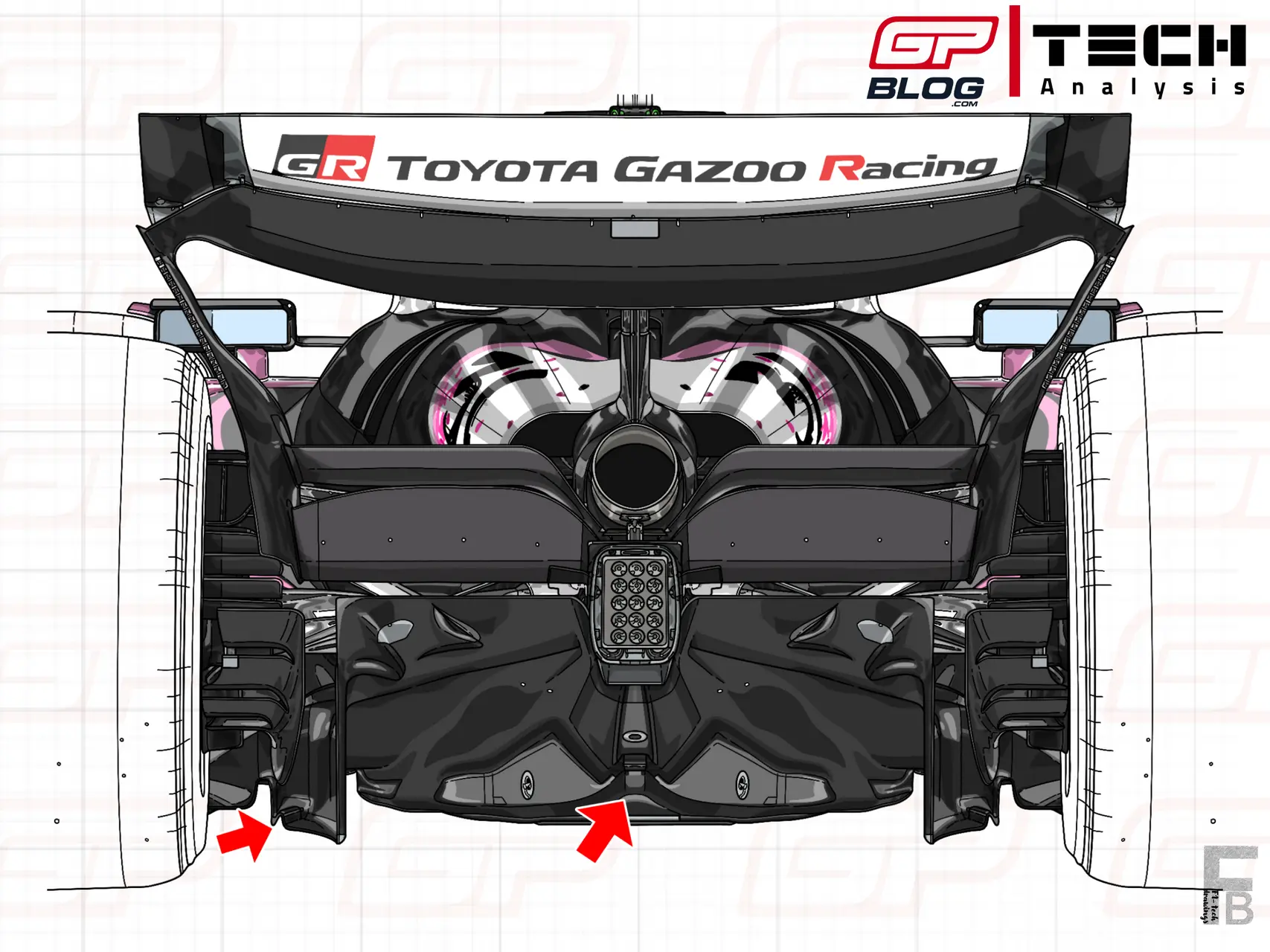
Haas' diffuser specification introduced at Suzuka - Image: Francesco Bianchi

Francesco is a technical analyst at GPblog, specializing in the technical side of Formula 1. Through illustrations and analysis, he makes complex components and developments accessible to a wide audience.
Haas made exceptional progress during 2025 and almost got close to scoring a podium at the Mexico City Grand Prix.
The last year of the ground-effect regulations has been a big challenge for all midfield teams, due to the necessity to concentrate on the 2025 season and on the 2026 regulation change at the same time.
Despite this aspect, some teams, such as Haas and Racing Bulls, managed to showcase the results of all the work done behind the scenes at the factories, delivering upgrades and achieving phenomenal results as a consequence.
That’s exactly what happened to Haas, whose engineers deployed some crucial updates in Japan to solve the porpoising issues that emerged during the Bahrain testing, and a new floor for their home race in Austin, which allowed Bearman and Ocon to score a huge amount of points during the last rounds of the Championship.
2026 may still be a significant challenge for them, but the flexibility and abilities shown during the past season prove that Haas is in a strong position for the upcoming campaign as well. Let’s try to understand why.
ADVERTISEMENT
Porpoising issues at the beginning of the season
The beginning of the season has been particularly tough for Haas, because during the first two rounds of the season, the team massively struggled with bouncing.
After showing off a prominent performance during testing in Bahrain, where the VF-25 demonstrated very agile in the slow-speed corners, in Melbourne the car suffered from bouncing in the high-speed sections of the circuit, proving that the aerodynamic platform wasn’t stable at high speeds, causing this phenomenon to happen as soon as the distance between the ground and the keel of the Venturi channels got close.
To solve this issue, engineers adapted a higher ride height for the first race in Australia, with a consequent poor result for both drivers: Ocon and Bearman finished 13th and 14th, respectively, after six cars retired from the race.

Haas VF-25 running on the kerb during the Australian Grand Prix weekend - Image: Race Pictures
ADVERTISEMENT
Despite the difficulties encountered during the first race, both drivers immediately bounced back during the following round in Shanghai, where the slow-speed nature of the circuit, together with a smoother asphalt and lower temperatures, allowed Ocon and Bearman to adapt a one-stop strategy during Sunday’s race, consequently earning 14 precious points for the team.
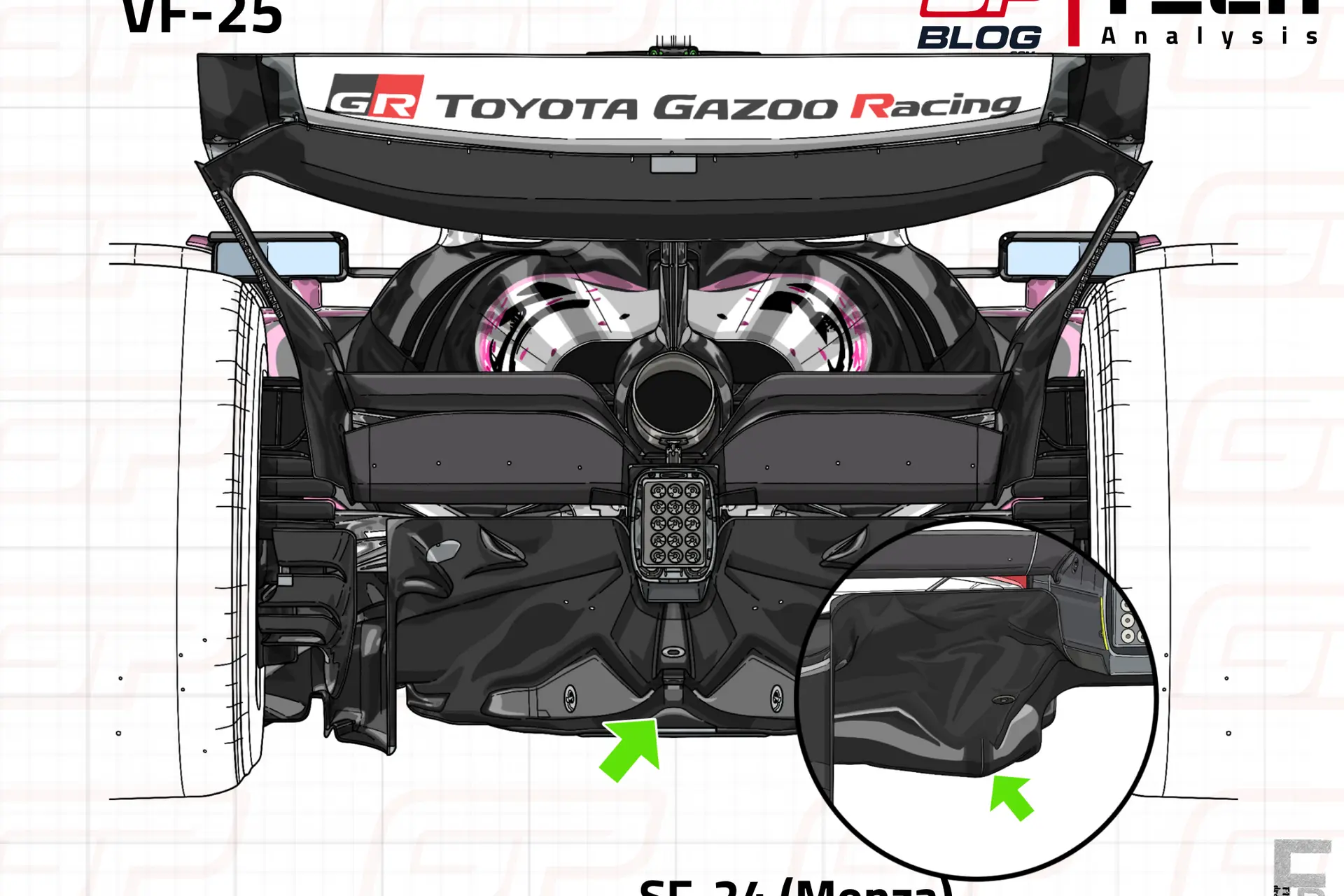
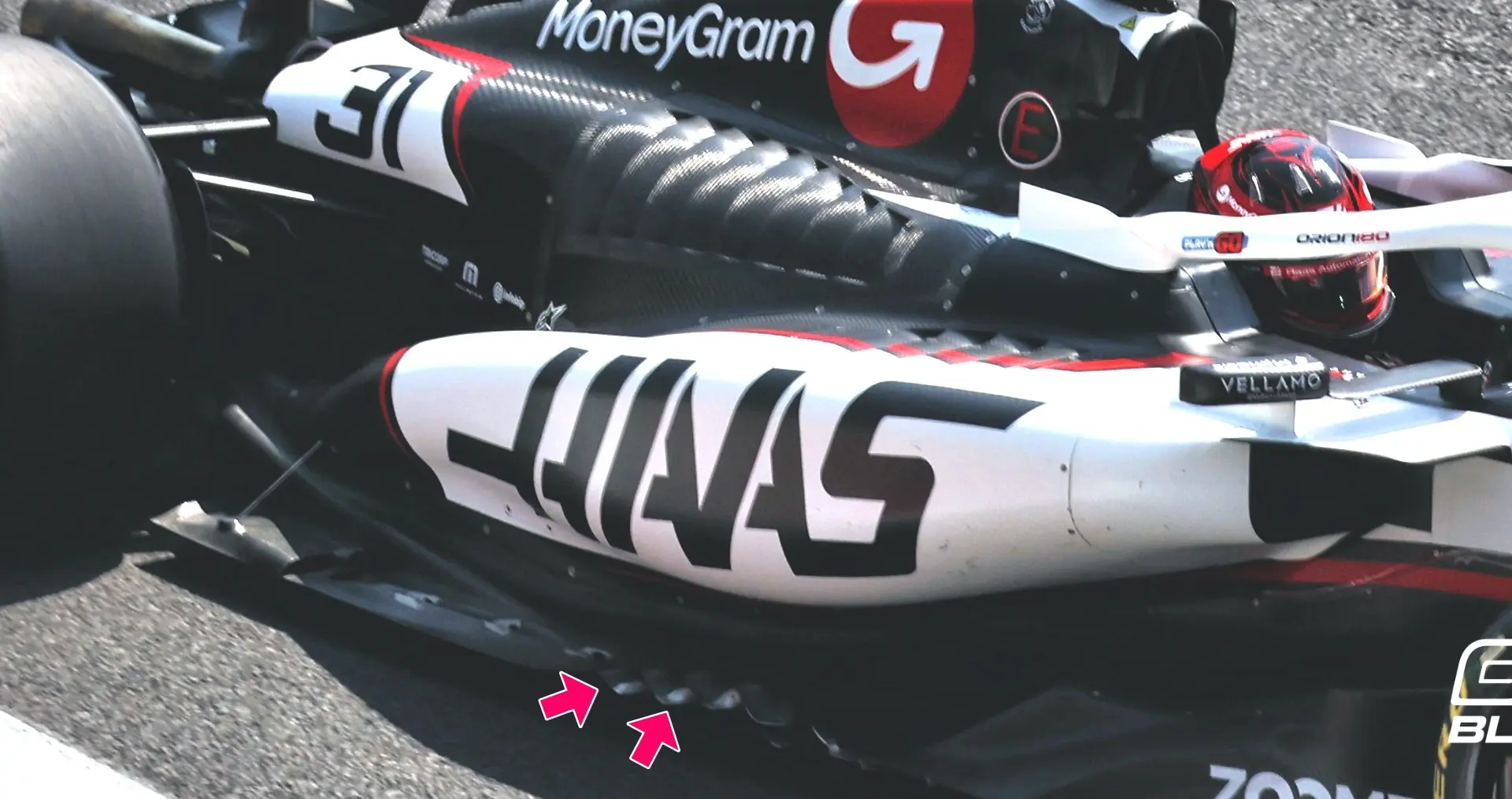
The first updates to improve bouncing, however, were directly brought to the track in Suzuka, where a new diffuser appeared: as shown in the drawing below, the tail-end of the boat section featured a more pointed shape, with a steeper ramp of the diffuser above (red arrow on the right).
This solution was very similar to the one adopted by Ferrari on the SF-24 for the Italian Grand Prix in 2024, after they experienced very similar bouncing issues. The red arrow on the left, instead, points at a smaller hole placed right behind the “mouse hole”. The goal of this smaller hole is to increase the amount of air drawn from the side walls of the diffuser ramp, increasing the amount of air that feeds the diffuser.

Haas' diffuser specification introduced at Suzuka - Image: Francesco Bianchi
This new component immediately produced a positive effect: the team sacrificed a bit the performance in the slow-speed corners, but the engineers found a way better operating window for the VF-25 in the high-speed sections, with Bearman who was able to qualify in P10 and finish the race in the same position. The proved that the update drastically improved bouncing.
ADVERTISEMENT
The following race in Bahrain was another great weekend for Haas: also thanks to the track layout and nature, which emphasises traction and performance in the slow-speed corners, both Ocon and Bearman managed to finish the race within the top-10, respectively in P8 and P10.
After this weekend, however, the team faced quite a difficult period, scoring points in only one of the five races between Saudi Arabia and the Spanish Grand Prix.
A new package of updates in Silverstone
To try to improve the performance of the car, the team brought some minor updates to Silverstone, where a new cooling inlet support and a slightly revised floor appeared. The main changes involved the cooling inlet, where the “shark” inlet has been replaced with a proper tray placed above the cooling inlet, in line with the solutions adopted by all other top teams.
ADVERTISEMENT
As for the changes to the floor, it showed off a new design of both the floor fences and the floor ceiling, which, however, couldn’t be appreciated from the outside. This new floor, together with the changes just described, aimed at increasing the overall downforce generated at a good efficiency cost.
These new components brought additional performance to the car: despite the floor introduced in Suzuka, in fact, the VF-25 still had some troubles in high-speed corners and on a more complete layout and Silverstone represented the perfect challenge to test this package. The result was highly positive: for the first time since the Monaco Grand Prix, Bearman managed to get his car into Q3, qualifying in P8.

Haas new updates introduced at the British Grand Prix - Image: Francesco Bianchi
The British driver confirmed the impressions during the post-qualifying interviews: “On one hand, we've brought an upgrade this weekend and clearly it's showing potential, because our qualifying pace has not been fantastic recently and now to be in Q3 on merit is a good feeling.”
The race didn’t end as expected, due to the wet and challenging conditions faced, as both drivers failed in finishing into the top-10, also due to some poor strategic choices.
ADVERTISEMENT
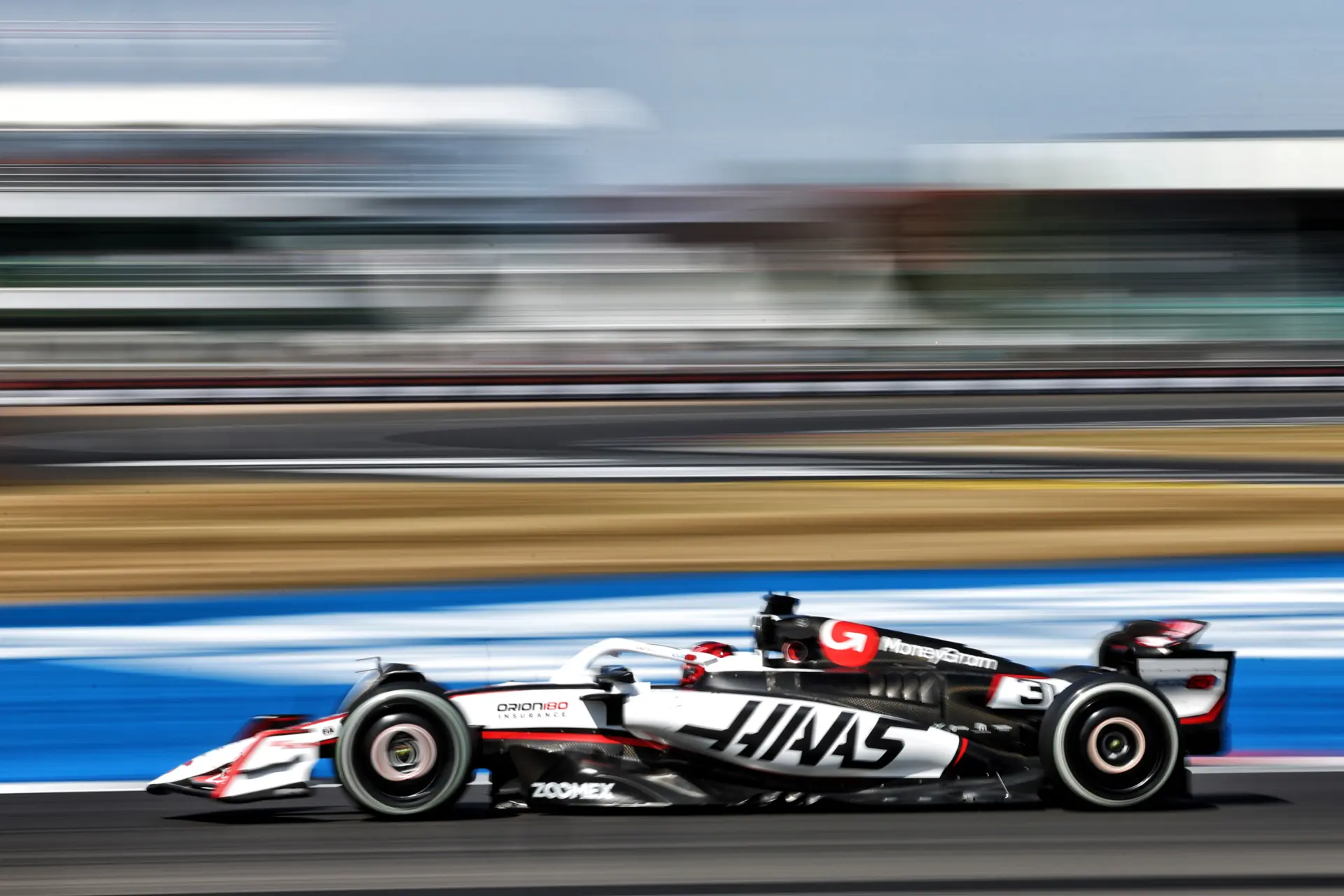
Despite the result, the performance was real: not by accident, in fact, Haas was able to score some more points in the following races, including at Spa-Francorchamps, Zandvoort, and Singapore; all tracks that particularly suited the VF-25. The turning point for the American team arrived at their home race in Austin, where they brought a completely new floor to improve the performance of the car.
New floor at the US Grand Prix
The new component was characterised by an additional vortex generator to the floor edge wing, together with some visible changes to the diffuser ramp. The goal of this new component was to produce a more linear amount of downforce at different ride heights, expanding the car’s working window and making it suitable for a wider variety of tracks.

Oliver Bearman during the Mexico City Grand Prix - Photo: Race Pictures
ADVERTISEMENT
The goal of the team was completely centered: the VF-25 looked way more balanced between high-speed corners and slow-speed corners, with Bearman immediately able to get a strong P8 during the United States Grand Prix (he even battled Tsunoda for a P7 finish, but spun during the battle on track).
The results achieved in Mexico were even more astonishing: thanks to the fact that the VF-25 was very well suited to the thin air conditions of the Autodromo Hermanos Rodriguez, as well as its layout, Bearman managed to finish the race in P4, with his teammate down in P9, confirming another double-point finish for the team and scoring an incredible 14 points.
The final four races of the season were on a high for Haas, able to score 17 additional points between Brazil, Las Vegas and Abu Dhabi, showing a progress nobody expected in the paddock.
Focusing on 2026, the new set of regulations will represent a big challenge for Haas, along with all other midfield teams due to the complicated rules and the details related to all the areas of the car.
ADVERTISEMENT
An additional value for them could be the strong partnership with Toyota, as it could allow Haas to have a strong support in development, especially from the aerodynamic point of view. Beyond this aspect, only three weeks separate us from the shakedown of the new cars in Barcelona and, even as the test is private, the rumors circulating will give us a clearer idea on which team is in the best shape for the Bahrain testing and beginning of the season.
Read also

F1 Paddock Update
Want to stay up-to-date with what happens in the F1 paddock? Then GPblog's F1 Paddock Update video is the perfect way to do it. Subscribe to GPblog's YouTube channel and turn on notifications to never miss the latest episodes.
ADVERTISEMENT
Don't forget to follow us on Spotify as well!
Don’t miss GPblog in Google
Mark us as a preferred source and our articles will appear more often at the top of Top Stories.
Add as a preferred / source on Google