F1 Tech | How Red Bull tried to have a go at Norris with the new floor
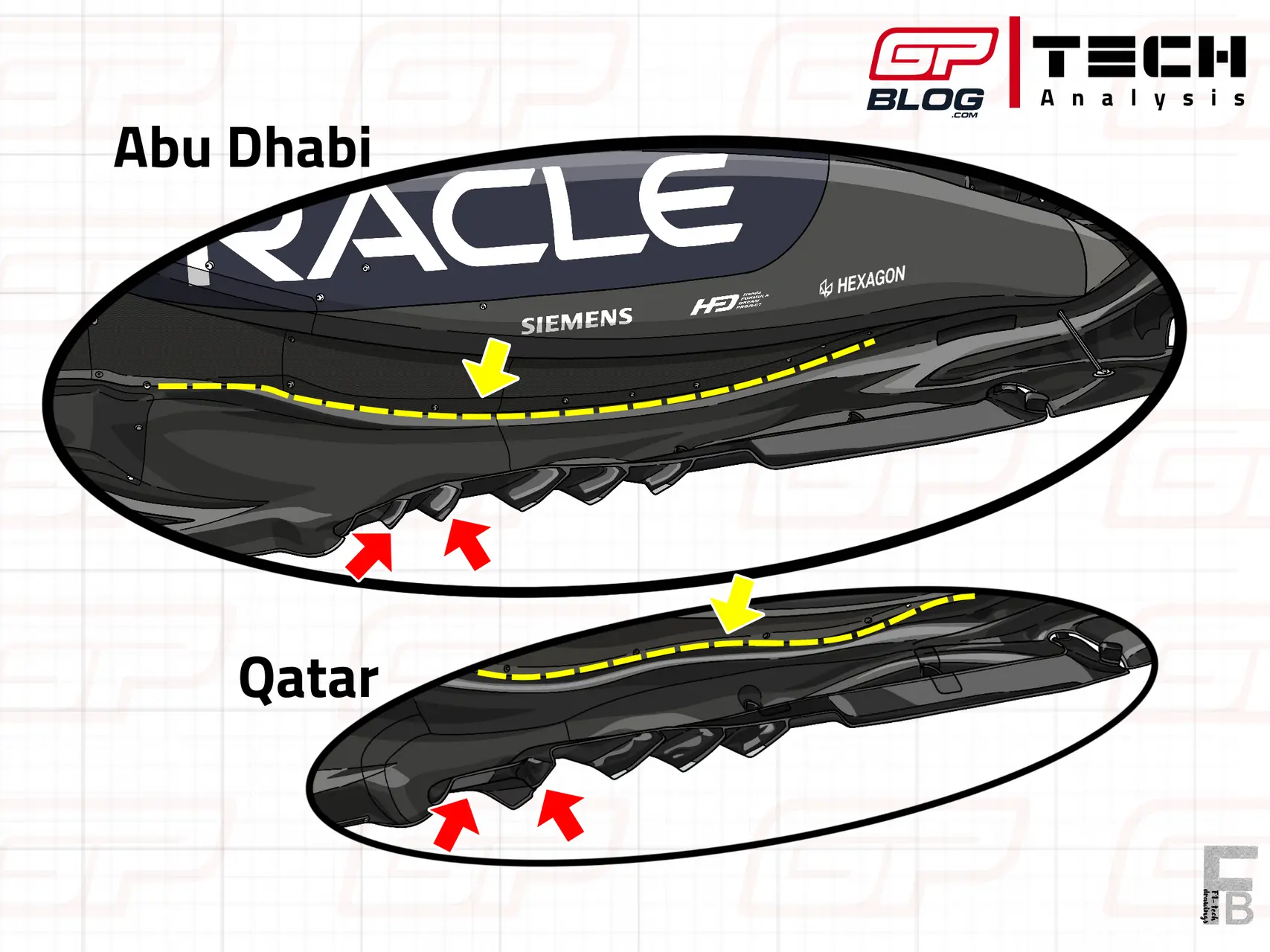
RB21's floor comparison between the version used in Abu Dhabi and the one adopted in Qatar on Verstappen's car - Image: Francesco Bianchi
Updated:
0 Comments

Francesco is a technical analyst at GPblog, specializing in the technical side of Formula 1. Through illustrations and analysis, he makes complex components and developments accessible to a wide audience.
For the last race of the season, Max Verstappen decided to use the floor he set aside after Brazil to gain as much performance as possible over the two McLarens.
The last Grand Prix of the season offered a tight and exciting battle between the two Drivers’ Championship contenders, Lando Norris and Max Verstappen.
Despite not fighting each other on track, the two-point gap meant the Briton couldn’t make any mistakes to bring the Title home while Verstappen was leading the race.
Norris eventually managed to finish third and win the Championship, but the great turnaround made by Red Bull in the second half of the season proves that the team has the right tools and people to fight for victories even against the odds. Let’s try to understand which technical decisions allowed Verstappen to dominate the Abu Dhabi Grand Prix.
A difficult Friday for Red Bull
ADVERTISEMENT
The Championship-deciding weekend didn’t start in the best way for Red Bull Racing: during both Friday’s practice sessions, in fact, Verstappen complained of a very unstable car in the cornering phase, with a behaviour that changed between understeering and oversteering in different kinds of corners.
His RB21 was fitted with a very unloaded aerodynamic set-up to gain most of the time in the second sector’s long straights, but eventually made the car unstable through the slow and medium speed corners in the first and third sectors of the lap, with Verstappen able to finish the qualifying simulations in P2 almost 4 tenths behind Norris.
Red Bull Racing’s engineers decided to adopt the same medium-low downforce rear wing used in Brazil on both cars, matched with a double-element beam wing with a very short chord, to minimise drag on the straights, as shown in the drawing below.
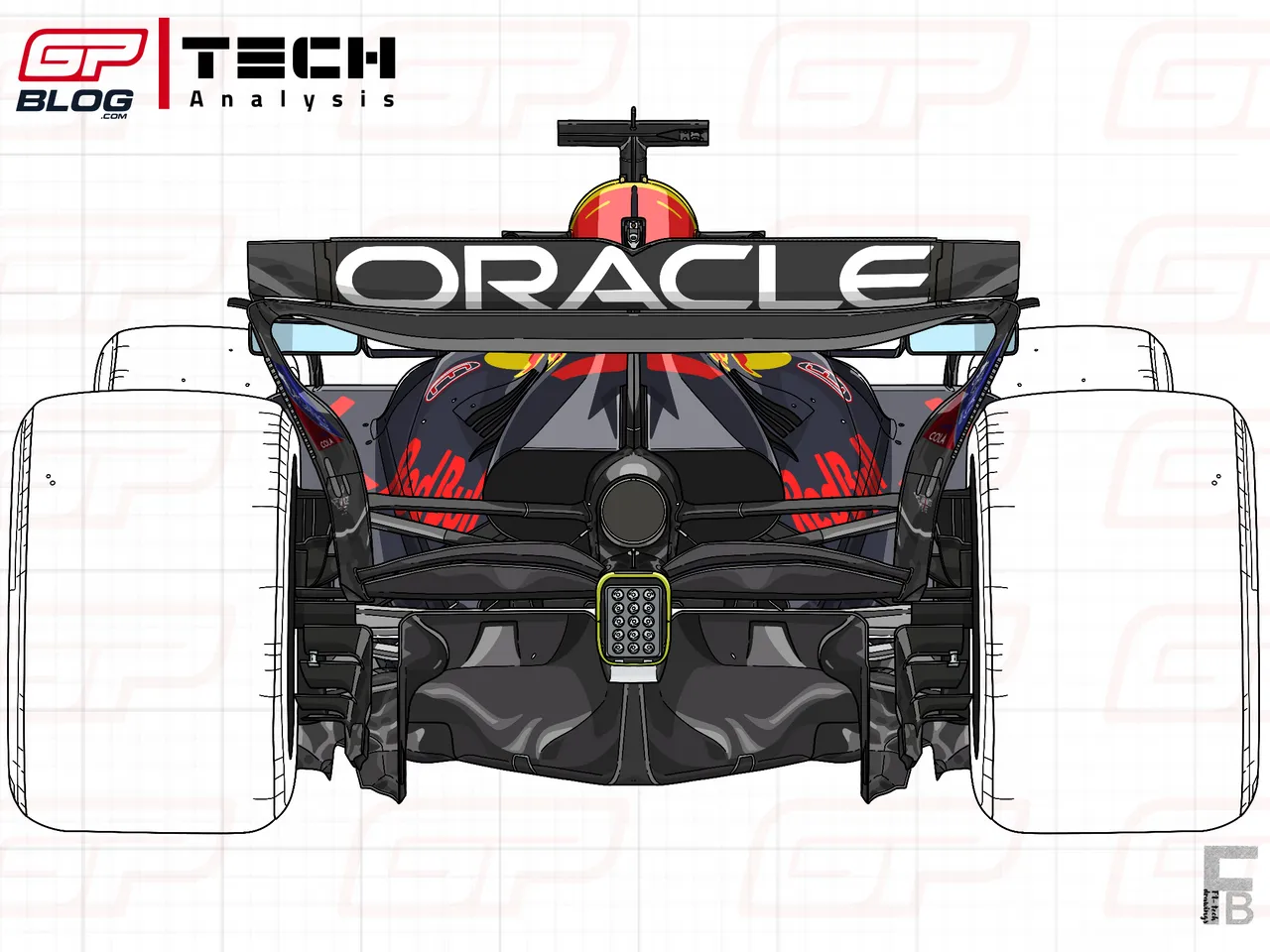
RB21's low-downforce rear wing and beam wing used in Abu Dhabi - Image: Francesco Bianchi
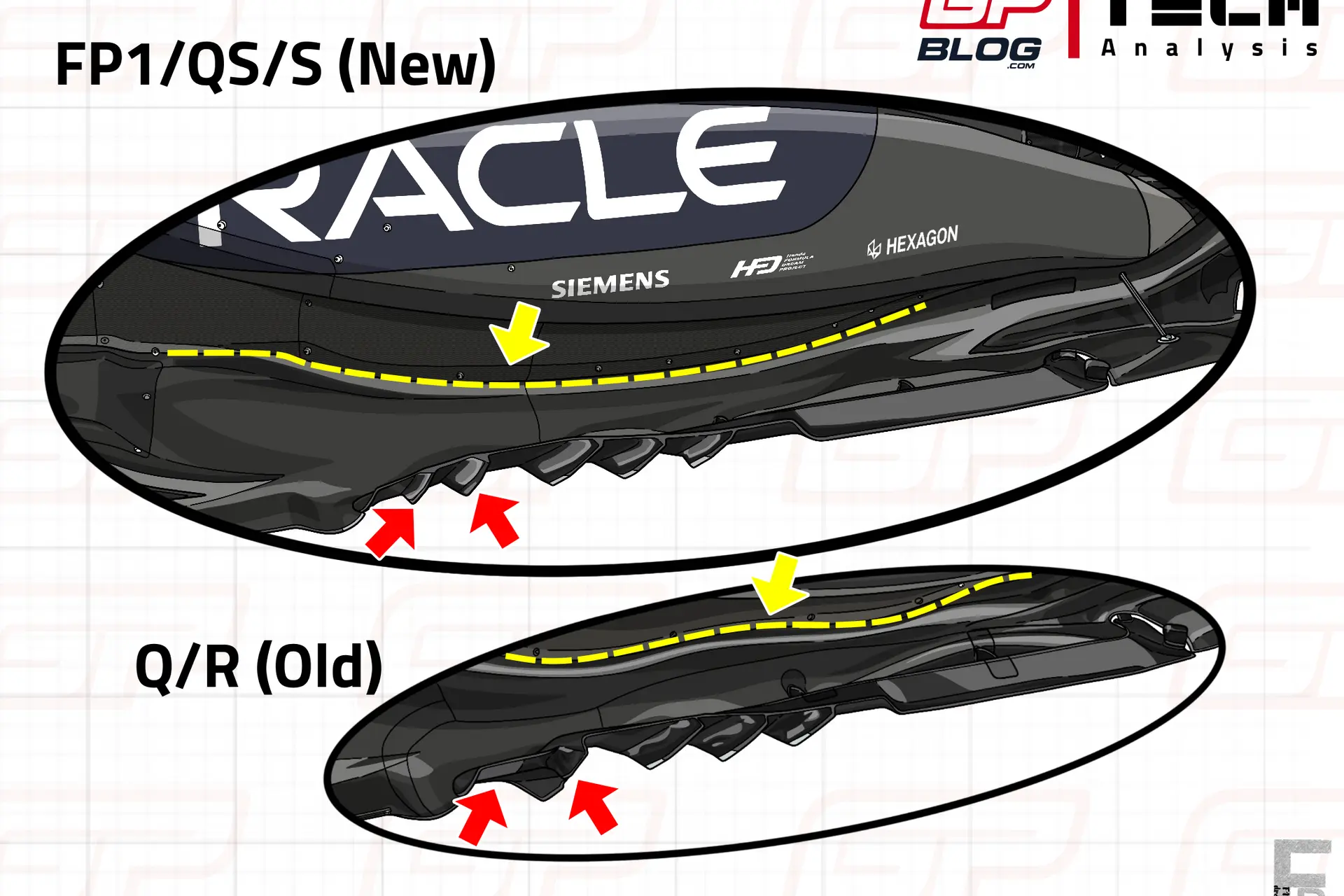
Another interesting technical choice was the floor: after setting the new floor aside during the Brazil Grand Prix weekend, Verstappen decided to use the new component for the Abu Dhabi Grand Prix, to get as much downforce as possible and fight against the two McLarens. As shown in the drawing below, the new component is characterised by a different trend of the G-line (yellow arrows) and a different design of the frontal portion of the floor edge wing, with two additional vortex generators to maximise the downforce generated (red arrows).
ADVERTISEMENT
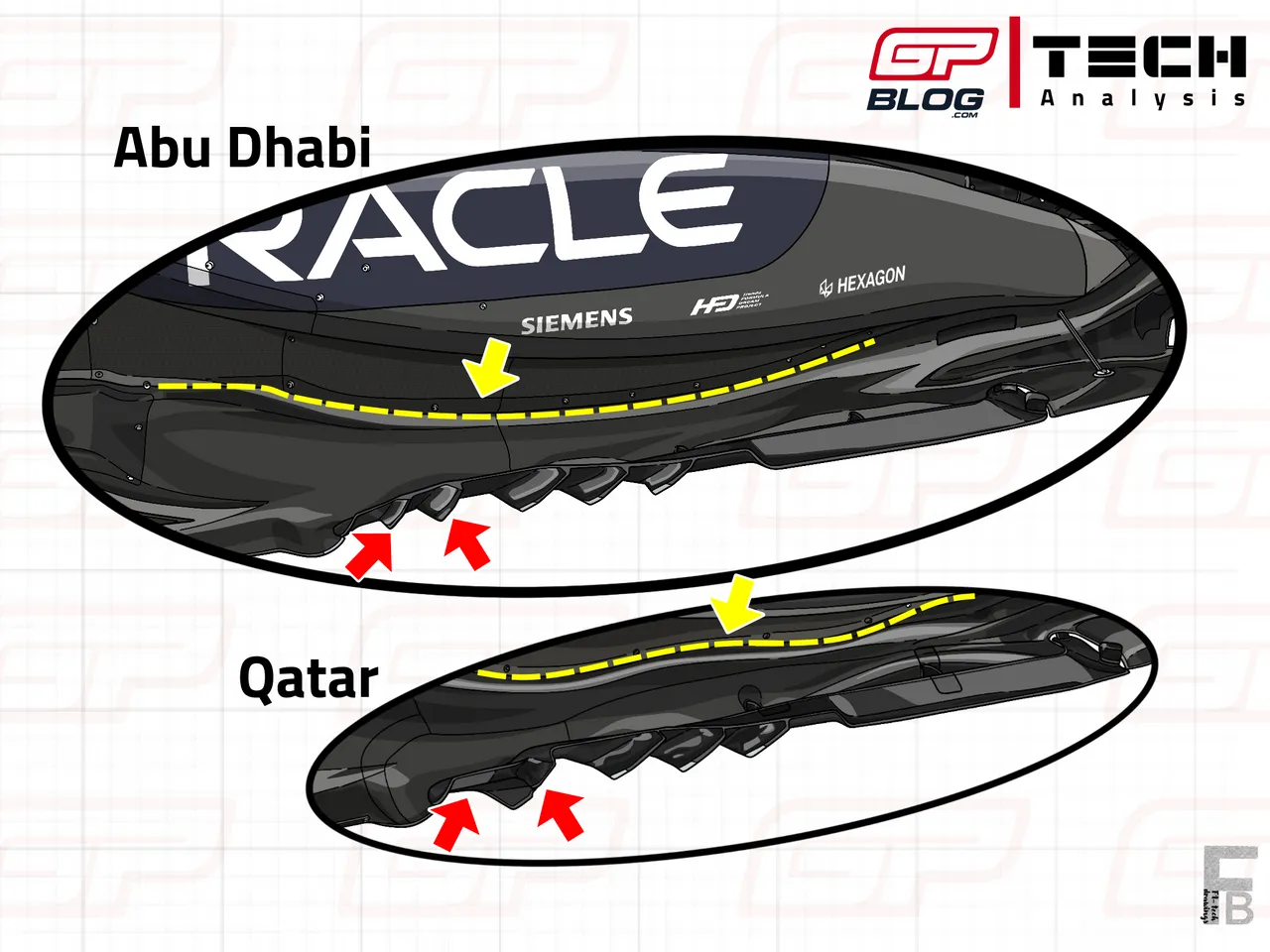
RB21's floor comparison between the version used in Abu Dhabi and the one adopted in Qatar on Verstappen's car - Image: Francesco Bianchi
The wrong technical choices also reflected on the race pace simulations made during FP2: despite managing to keep a good and constant pace for the first ten laps of the simulation, Verstappen’s lap times eventually dropped by around a second, proving that his RB21 wasn’t managing the rear tyres as the team expected.
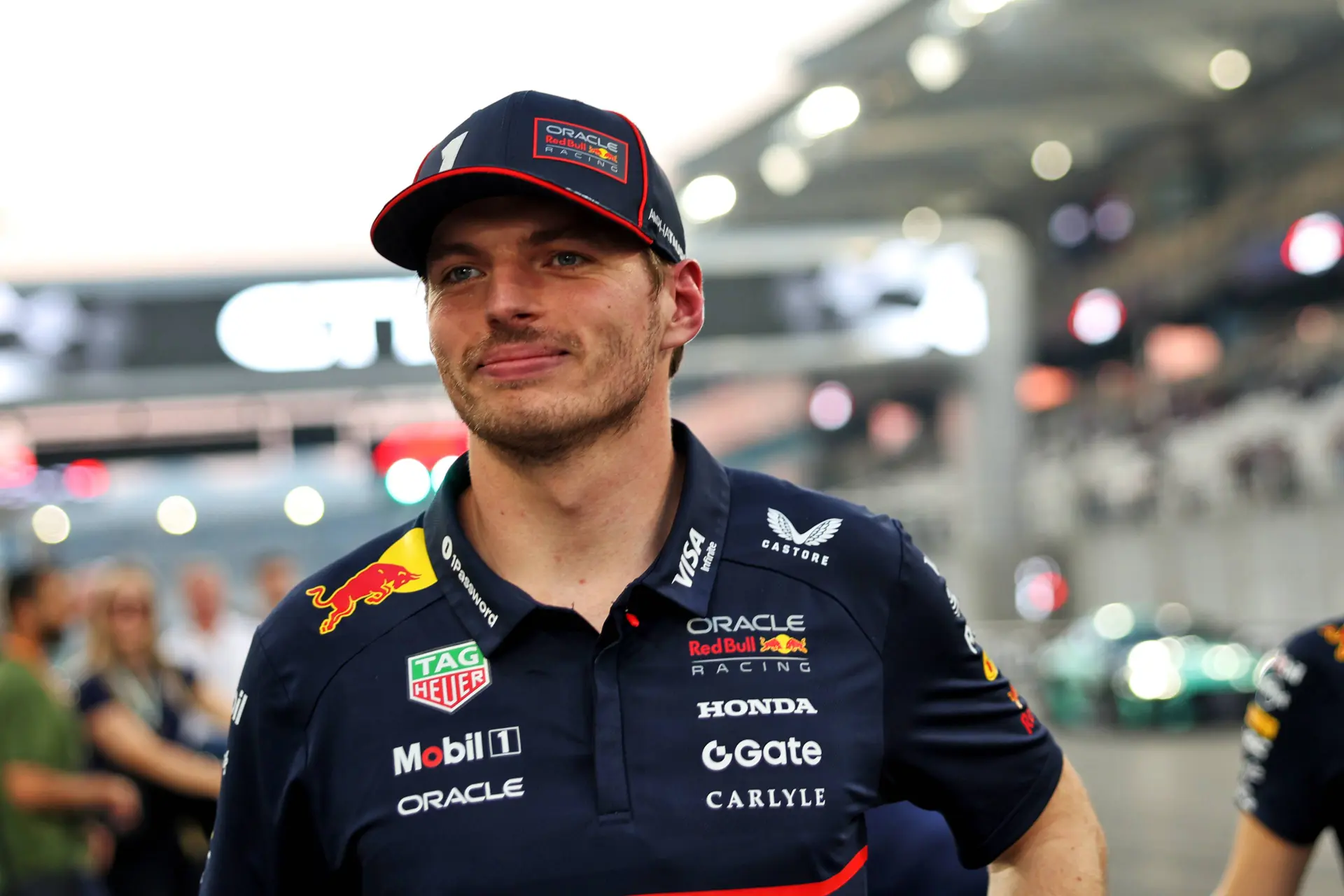
After the usual post-practice interviews, he commented on the result as follows: “(The car was) pretty okay,” he told Sky Sports after FP2. “I was fairly happy with the car, we just need to be probably a little bit faster. I think still not quick enough, but I think overall we’ve been in a, for us, I think in a decent window around here.”
As has often happened during this season, Red Bull Racing’s mechanics and engineers were forced to turn around the RB21’s balance on Friday night and find a better solution that could make the car more competitive and closer to McLaren, especially in qualifying.
ADVERTISEMENT
The changes mainly focused on the mechanical set-up, to generate more grip on the front axle and reduce the understeering in the slow speed sections, which made Verstappen lose time not only mid-corner, but especially on traction, as he was going full gas way later than the two McLarens.
The RB21's balance drastically improved overnight
The RB21’s balance looked immediately better during Saturday’s FP3: despite not setting the fastest time, Verstappen’s gap to Norris was a bit over a tenth, but the most important element for the team was that the car’s behaviour had drastically improved compared to the day before, especially in the first and third sector, while keeping the same great top speed in the middle part of the lap thanks to the unloaded set-up.
The team probably used a stiffer mechanical setup laterally, which provided a more stable and solid platform for the new floor, which caused many bottling issues in Mexico and Brazil.
Some additional minor changes were made to the car after FP3, and this allowed Verstappen to feel even better with the car during qualifying: the drop in temperatures compared to the last practice session, together with a more grippy asphalt, favoured Red Bull’s unloaded set-up, allowing Verstappen to eventually get pole position.
ADVERTISEMENT
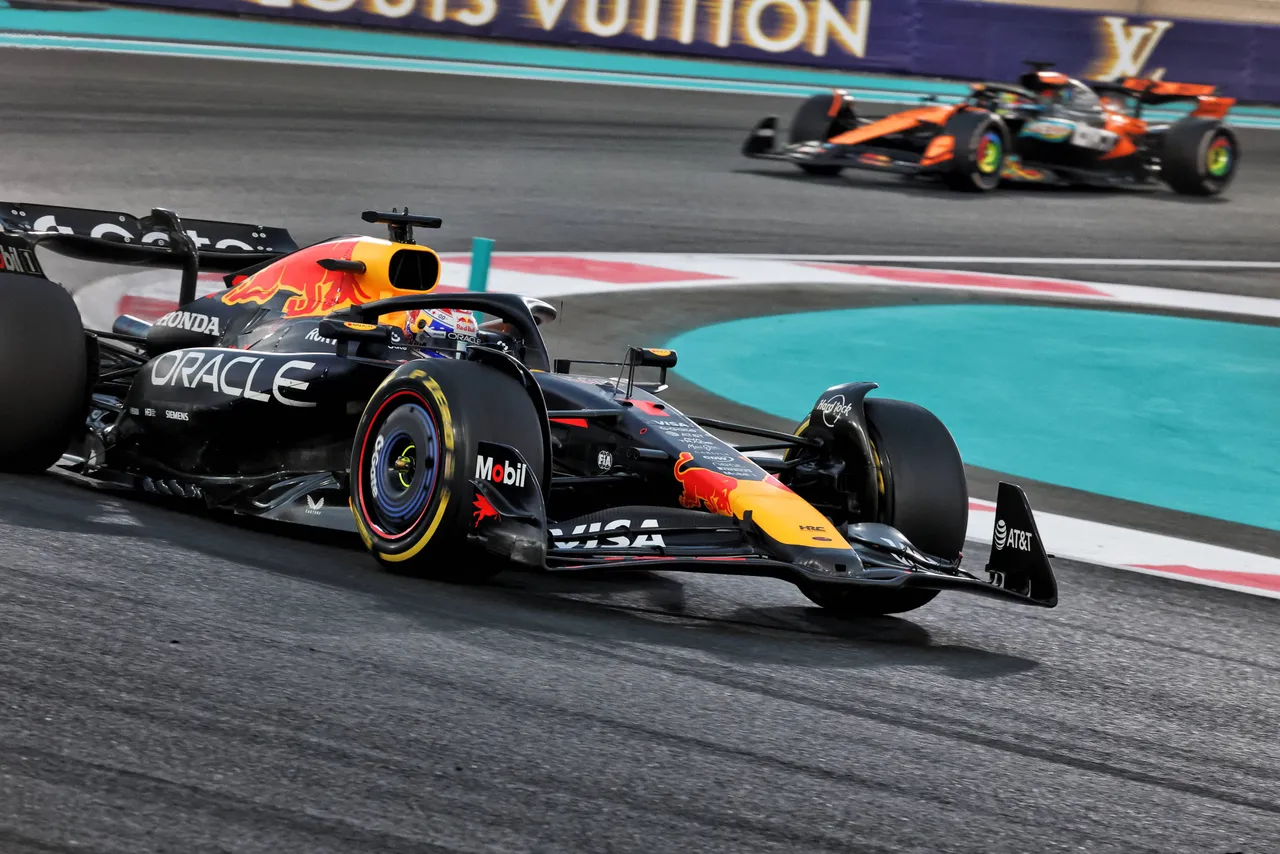
Verstappen during the first lap of the Abu Dhabi Grand Prix - Photo: Race Pictures
Despite these favourable factors, the RB21 had a much better balance compared to Friday and was able to keep the rear tyres in the right working window for the whole lap, without losing too much time to the MCL39 in the last sector.
As explained by Verstappen to the media after qualifying: “I think in general, qualifying felt a little bit more together compared to the other sessions, where I always felt like we were still lacking a little bit. But then I think with the final changes that we made going into the night, that seemed to help us a bit.”
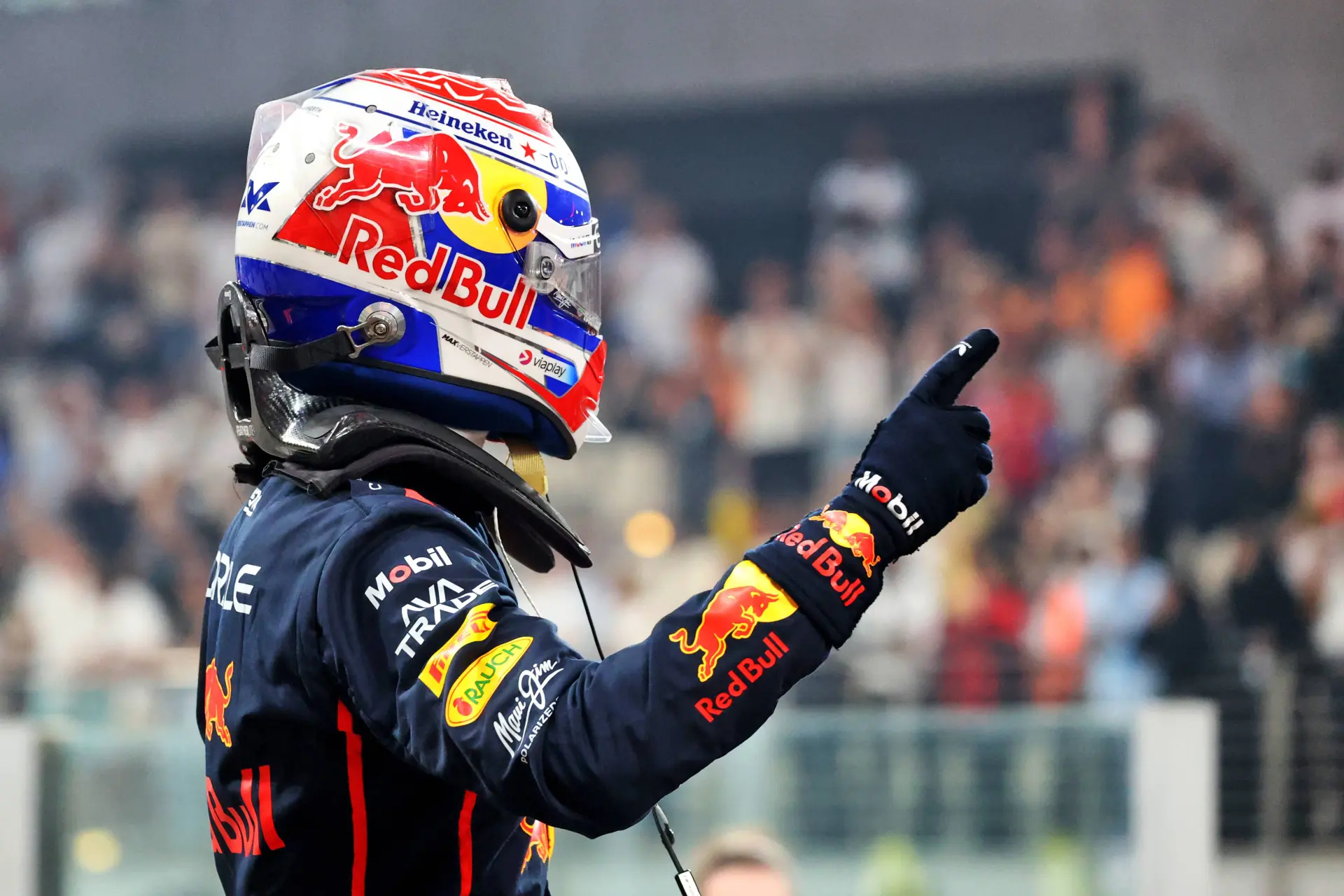
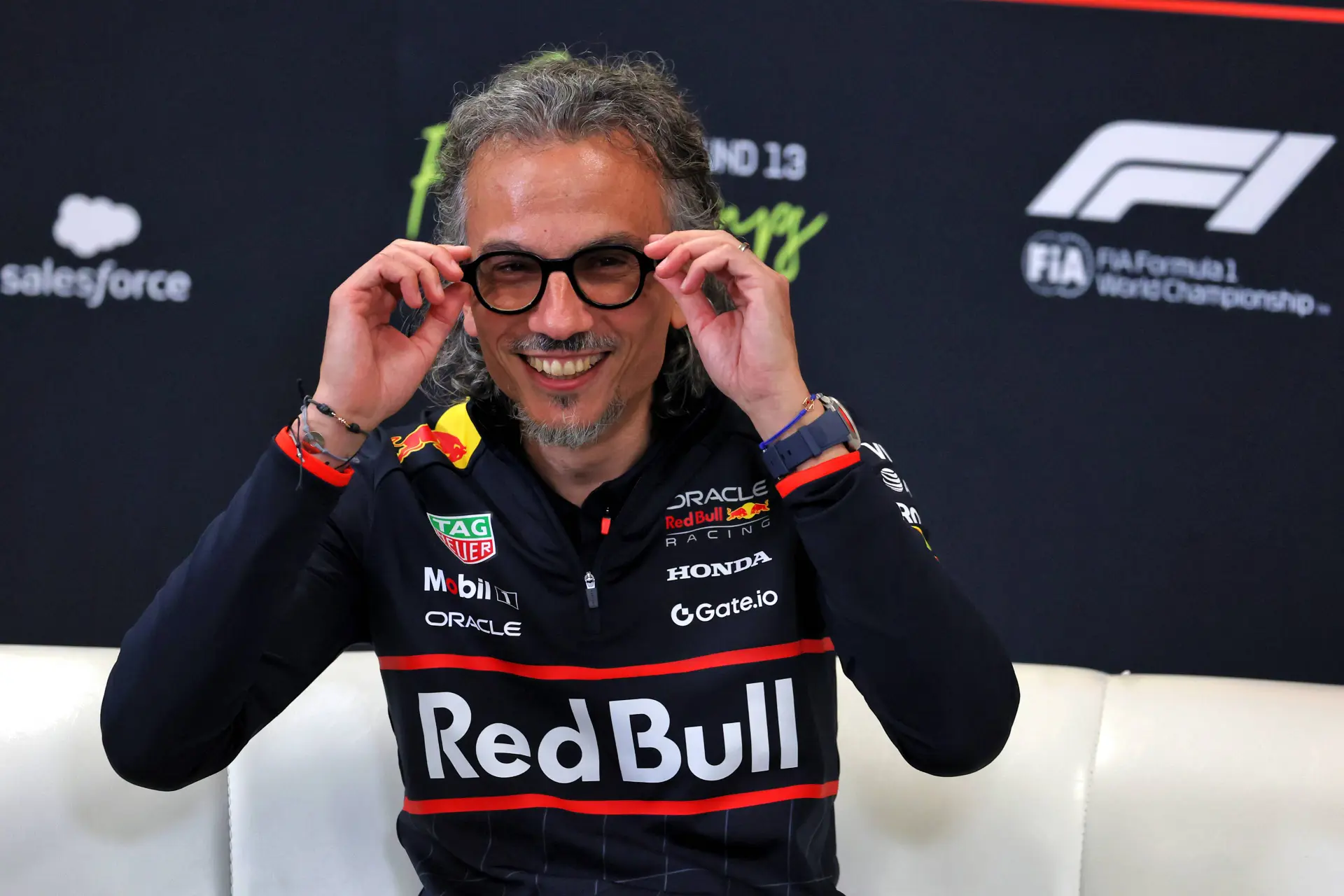
Team Principal Laurent Mekies also praised the hard work done by the team during Friday night after qualifying: “We were not looking that fast yesterday and everybody has done a mega job overnight, both at the factory and here to to manage to invent a new better window for the car, and it worked.”
ADVERTISEMENT
The big question mark for the team was then the race: after facing some degradation problems in the simulations made during the second practice, the team was hoping that the changes made during the weekend could have helped for the race as well. That’s exactly what happened on Sunday: after a perfect start on the medium tyres, Verstappen was able to control the race to the chequered flag, setting his own pace without having to worry about the two McLarens behind.
Despite the great performance across qualifying and the race, the result wasn’t enough for him to win the fifth World Championship, but it just demonstrated the big progress made by the whole team since the arrival of Laurent Mekies as Team Principal.
Since Zandvoort, where the gap to Piastri was 104 points, Verstappen and the team managed to win six races out of nine, proving the phenomenal step forward made especially on the technical side with the introduction of some specific upgrades that improved the RB21’s potential across different layouts.
The great work was also praised by Mekies on Sunday night: “I truly think the turnaround was sensational. And the girls and the guys back at home should be proud of what has been achieved. I don't think it happened very often in the last few years or decades.”
ADVERTISEMENT
Read also
GPblog's F1 Paddock Update
Want to stay up-to-date with what happens in the F1 paddock? Then GPblog's F1 Paddock Update video is the perfect way to do it. Subscribe to GPblog's YouTube channel and turn on notifications to never miss the latest episodes.
Follow us on Spotify as well!
ADVERTISEMENT
Don’t miss GPblog in Google
Mark us as a preferred source and our articles will appear more often at the top of Top Stories.
Add as a preferred / source on Google