Ludo van Denderen is a motorsport journalist at GPblog, specializing in Formula 1 and international racing series.
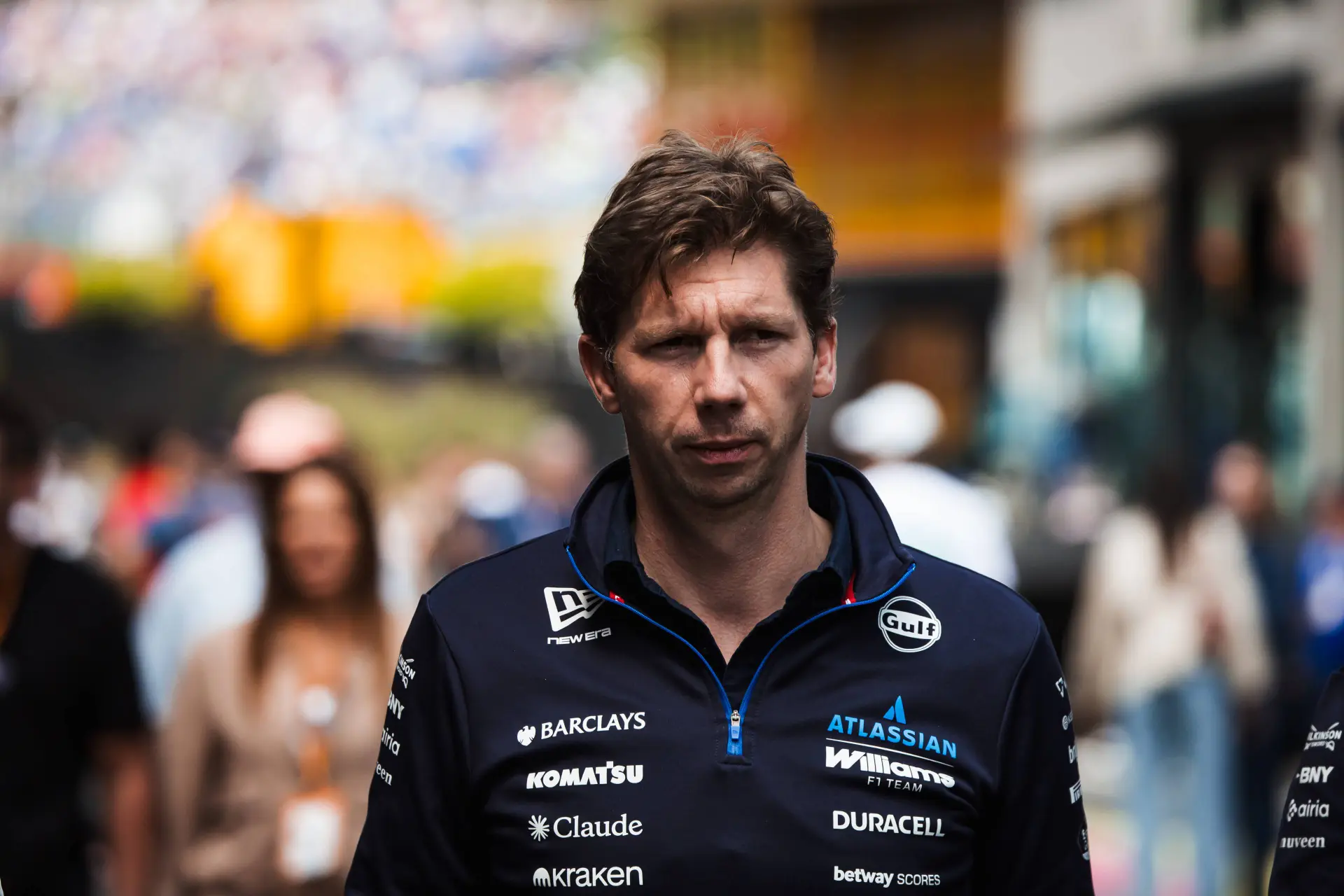
For James Vowles, being Williams team principal is more than just a job. It's his life's mission to return the once-dominant team to the top of Formula 1. The Brit refuses to become an autocrat in the process: “I prefer people telling me that I am wrong most of the time, but here is what we're going to do about it. It's a breath of fresh air.”
Three and a half years ago, Vowles took on a major challenge: turning the once-dominant Williams back into a top Formula 1 team. In a world dominated by major manufacturers, the most successful private team in F1 history wants to prove that, with targeted investments, the right personnel, and smart solutions, it can achieve success once again.
At the halfway point of the 2026 season, it's clear that the process so far has been one of trial and error. For Williams, the results have fallen short of expectations, despite the team's hopes of taking a step forward under the new regulations. When things go worse than expected, both those inside and outside the team quickly turn their attention to its leader, Vowles.
Vulnerability is the foundation of good leadership according to Vowles
Over the past month, Vowles has not glossed over his team's problems, choosing instead to be open about the situation and show vulnerability. “We've made mistakes. We've owned them,” Vowles told GPblog in an exclusive interview.
ADVERTISEMENT
"More than any other team I think. Go find me another team that's really owned up to where they are. I'm comfortable with that because I'm secure in myself as the leader of the organization. I own the mistakes I've made, but more importantly, I own the decisions we're making going forward that will bring about change."
Why Vowles doesn’t believe in traditional leadership
Vowles is a modern team principal. He wants to understand why people, at every level of the organization, run into obstacles, and why stress arises and problems exist. Above all, he is someone who wants to help.
“That's not traditional leadership. Traditional leadership is that you're sat on a balcony with tactical or strategic instructions that go down and then you have your cappuccino. I don't believe that works. I don't believe that works in our environment. I don't believe that works in many environments.
“To be very clear, what I'm not describing is micromanagement. You're not there to manage what they're doing day to day, but you have an understanding of where the problems are in the business because it allows you to then strategically direct the business the right way over the long term,” Vowles continued.
ADVERTISEMENT
The Williams team principal sees setting a clear direction as the second key task. “Where do you want this team to be in three years, five years and ten years? And a sensible set of pathways that are realistic. There's no point coming up here and going, 'we want to be world champions next year.' There's no pathway to it that's realistic that your team will follow.
“So it has to be the right set of goals that are realistic in the business, which goes back to, if you don't understand the problems at all layers, you won’t to understand what's achievable within the next month, three months, one year, three years.”
Vowles deliberately avoids acting like someone who has all the answers. “My job in all this is employing individuals around me that are far more intelligent than I am, and experts at what they do. And they employ people that are more intelligent than they are. So it's an inverse pyramid. And that's not how typical leadership is. For whatever reason, you tend to enjoy people you you're right. I prefer people telling me that I am wrong most of the time, but here's what I'm going to do about it. It's a breath of fresh air.”
Anyone walking through the paddock these days encounters a wide variety of personalities, each with a different background in the sport. Vowles himself comes from a technical and race strategy background.
“But the most successful, I'd argue, doesn't have that,” the Briton added, referring to Toto Wolff, the CEO of Mercedes. Vowles worked under the Austrian for around a decade.
ADVERTISEMENT
“He's not grown up in that regard. But as long as you layer yourself up with individuals that have the skills that you don't, so in the case of Toto, he layers himself up with incredibly strong technical people. It absolutely works. The leadership part is actually still, how do you set your milestones and goals for the next three to five years.”
When Vowles started at Williams, he noticed the enormous commitment from everyone within the team. “That's not a healthy way of working. What it means is the reliance on human knowledge and human ways of working to build a racing car, rather than constructive processes and systems.
“This is the interesting transition we've been going through over the last three years, because we're moving away from that to really structured, documented ways of working. And as you do that, you need to take inherent knowledge that's in a few people's brains and get it out onto a structured system. And the system has to be fit for purpose.”
Data sets the course at Williams
As the leader of a Formula 1 team, trusting your people is essential. Vowles trusts those around him until they give him a reason not to. After that, that trust erodes.
ADVERTISEMENT
“I trust you implicitly. I will tell you what I require of you, and I will go and trust you. But if I start finding elements that fall away from that, I will let you know. And I will let you know that you have eroded my trust in your ability. So, different humans are different. There's no good way of doing it. But I wouldn't say it's a trust problem because of my way of working implicitly, you already have my trust as a result of it.
“Conversely, back to me, the board trusts me. That's why they brought me in. That's why we were able to make changes. And the investment we've been doing is very big. I don't know how to put it in any other way. It's enormous amounts of investment. So I'm not worried about that either. So now, did everyone trust that I have the capability to do that? Some at the beginning, I would say yes. Some, no, not at the beginning.”
In addition, according to Vowles, there was a belief within the team that they were already operating at world championship level in many areas. “That was misplaced because we didn't. A lot of it was approaching it the right way, and I'm boring, so I use data. The difference with data is, it should be reproducible, so someone else should be able to go and reproduce it exactly in the same way, and you should come up with the same answer. And that now means that you don't have to trust my words, you can go and look at something that's written out in a really clean way, time and time again. More importantly, track if it's getting better or worse over time.”
That's why he has made it part of his approach to always look at what the data shows. “What are we with doing over the last three years, we are getting proper data in every single area on our performance and what is working and what isn't working. No blame. There's nothing about blame, it is just baseline errors. Probably it's not going to be in a good place, it's okay.
"Where do we want to be to be championship level? And what is that gap? What do we have to do to be able to fill that gap over the next two years, three years, five years, whatever it may be as the times go? Honestly, I've just summarized my job to you, you can go and do it yourself. At the very beginning of it, you need to use words to get people to work in the way that you need them to, to trust the process in general. And then data speaks for itself,” the Briton said.
ADVERTISEMENT
'I want to leave Williams better than I found it'
Vowles has no plans to leave Williams, but he has thought about his legacy at the team. “One of my main goals is that in a number of years, I can't tell you how much it'll be, five, ten, whatever, is to hand this to another generation that can do a better job than I can to bring it to a new place on top of where I am at. I'm a custodian of the brand for a period of time and I want to leave it in a better place.
“By the way, that's my belief in life. Why are we here on Earth? My personal one is I want to leave a legacy behind and things in a better place than where I left it. Part of that is through children. Part of it is what I do here. It is a huge toil. I was in America for three days, flew overnight, came here yesterday morning, worked a 16-hour day, had a few hours sleep, and I'm back here this morning. I won't see my family for probably two weeks. That's just facts.”
Still, Vowles is at peace with that. “I'm comfortable with it because what we're doing makes a difference. And I also personally believe that this is one if not the best job in the world. How many times can you have real control over something? You're in charge of your destiny, you're in charge of where you're going, with the right finance backing behind it, with a team of 1,300 people that would jump through walls if I asked them to. I don't. But I don't think that exists in many places, so I have the responsibility to invest every part of my soul I can into it to make this a success, whilst I have the opportunity to do so. That's how I see it.”
Read also
ADVERTISEMENT
Don’t miss GPblog in Google
Mark us as a preferred source and our articles will appear more often at the top of Top Stories.
Add as a preferred / source on GoogleRead more about:
latest news
Azerbaijan Grand Prix
Overview
Thursday 24.09.26
Practice 1
08:30 AM
Practice 2
12:00 PM
Friday 25.09.26
Practice 3
08:30 AM
Qualification
12:00 PM
Saturday 26.09.26
Race
11:00 AM
Thursday 24.09.26
Practice 1
Thu 08:30 AM
Practice 2
Thu 12:00 PM
Friday 25.09.26
Practice 3
Fri 08:30 AM
Qualification
Fri 12:00 PM
Saturday 26.09.26
Race
Sat 11:00 AM
Times are in your local timezone
Rumors
Popular on GPBlog
1
Toto Wolff reveals how he really knew Lewis Hamilton was okay after Abu Dhabi
1323 times read
2
F1 forced to break with tradition for expected season finale in Imola
1172 times read
3
F1 Today | Raikkonen’s son linked to Verstappen’s path as Tsunoda makes painful Red Bull admission
741 times read
4
MotoGP Full Race Results | Acosta snaps winless streak at the Red Bull Ring
581 times read
F1-stand 2026
Season
| Pos. | Driver | Team | Points |
|---|---|---|---|
1 | MercedesMER | 292 | |
2 | MercedesMER | 211 | |
3 | FerrariFER | 191 | |
4 | McLarenMCL | 186 | |
5 | FerrariFER | 167 | |
6 | Red Bull RacingRBR | 145 | |
7 | McLarenMCL | 120 | |
8 | Red Bull RacingRBR | 71 | |
9 | Racing BullsRCB | 59 | |
10 | AlpineALP | 41 |
Loading