The factor that risks shaping Miami once more without rule changes
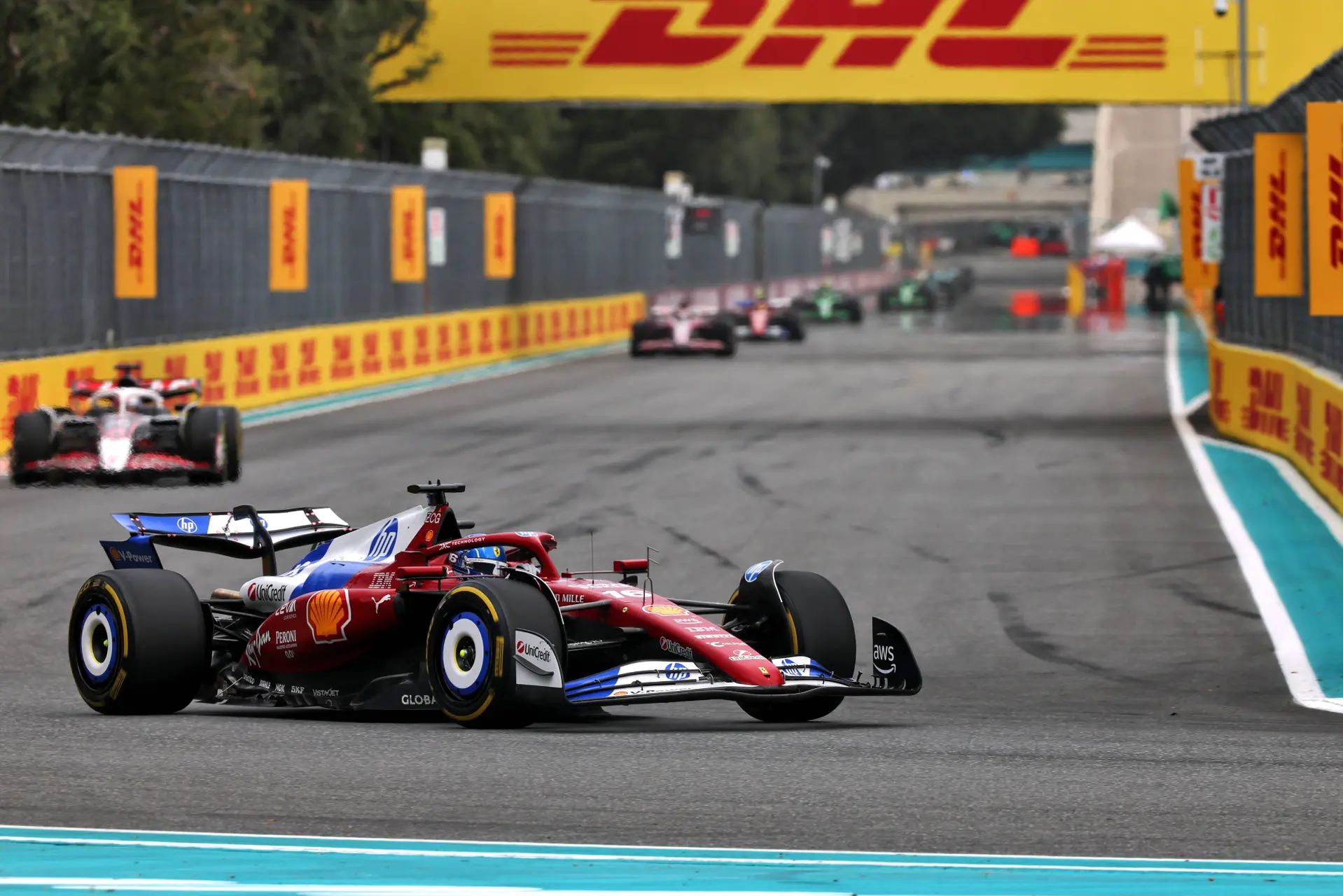
Photo: Race Pictures
Tobia is a Formula 1 journalist at GPblog with experience at international circuits. Since 2022, he has covered Grands Prix across Europe, delivering reliable coverage and insights from the paddock.
Super clipping could still prove a decisive factor in Miami, unless changes are made to the regulations in the meantime.
The opening three races of the season have exposed a major issue that is putting the new era of Formula 1 under serious strain, drawing heavy criticism from all sides - fans, drivers and paddock insiders alike.
While the phenomenon appeared slightly less pronounced in China, both Melbourne and especially Suzuka highlighted significant speed differentials, particularly between the entry to 130R and the braking zone for the Triangle chicane.
Adding to the concern was Oliver Bearman’s crash, triggered by a sudden overspeed as he approached Franco Colapinto ahead, further fuelling doubts over the current regulations.
On paper, Miami could once again see super clipping play a decisive role, with the American circuit featuring two very long straights - especially the one leading onto the start-finish line.
ADVERTISEMENT

Photo: Race Pictures
Make GPblog your preferred source on Google and see our content first in Google Discover and Google News.
The first is preceded by a sequence of high-speed corners, similar to Suzuka and Austin, where drivers can recharge energy, but only to a limited extent given the sustained cornering speeds. This could leave them short on deployment heading into the braking zone at the stadium section, particularly in qualifying.
A similar scenario applies to the back straight, one of the longest on the calendar. However, clipping may be slightly reduced there thanks to the slow and twisty middle sector, where drivers are able to harvest more energy before deploying it fully down the straight.
The hope is that the upcoming meeting on April 9 will introduce adjustments to mitigate the issue, helping to avoid situations where cars dangerously slow down in sections that should be taken flat out.
ADVERTISEMENT
Read also
Follow GPblog on social media to stay updated on all Formula 1 news: Facebook, Instagram and TikTok.
Toto Wolff agrees with Ferrari boss' Miami Grand Prix suspicion
During the Japanese Grand Prix, Frederic Vasseur told Sky Italy that Ferrari must stay within touching distance of Mercedes, with Miami potentially marking the start of a new phase in the championship.
Wolff echoed that view at Suzuka, admitting Mercedes would have preferred the momentum to carry into the Middle East rounds to build a bigger points buffer. However, he agreed that a shift in the competitive order could be on the horizon, as teams and drivers are beginning to better understand how to maximise the new systems.
ADVERTISEMENT
He pointed to early signs of that trend in Japan, highlighting Oscar Piastri’s strong pace on his way to finishing second behind Antonelli.
Stay up to date with the latest Formula 1 news? Follow GPblog.com on WhatsApp Channels andreceive the most important updates first.
Listen to or watch the GPblog.com video podcast. In the F1 Paddock Update, Jim Kimberley and Ben Hunt discuss the latest Formula 1 news. New episodes are available every Monday and Thursday on YouTube, Spotify, or your favourite podcast app.
Read also
ADVERTISEMENT
Don’t miss GPblog in Google
Mark us as a preferred source and our articles will appear more often at the top of Top Stories.
Add as a preferred / source on Google