The reason Barcelona and Bahrain have become F1’s go-to test venues
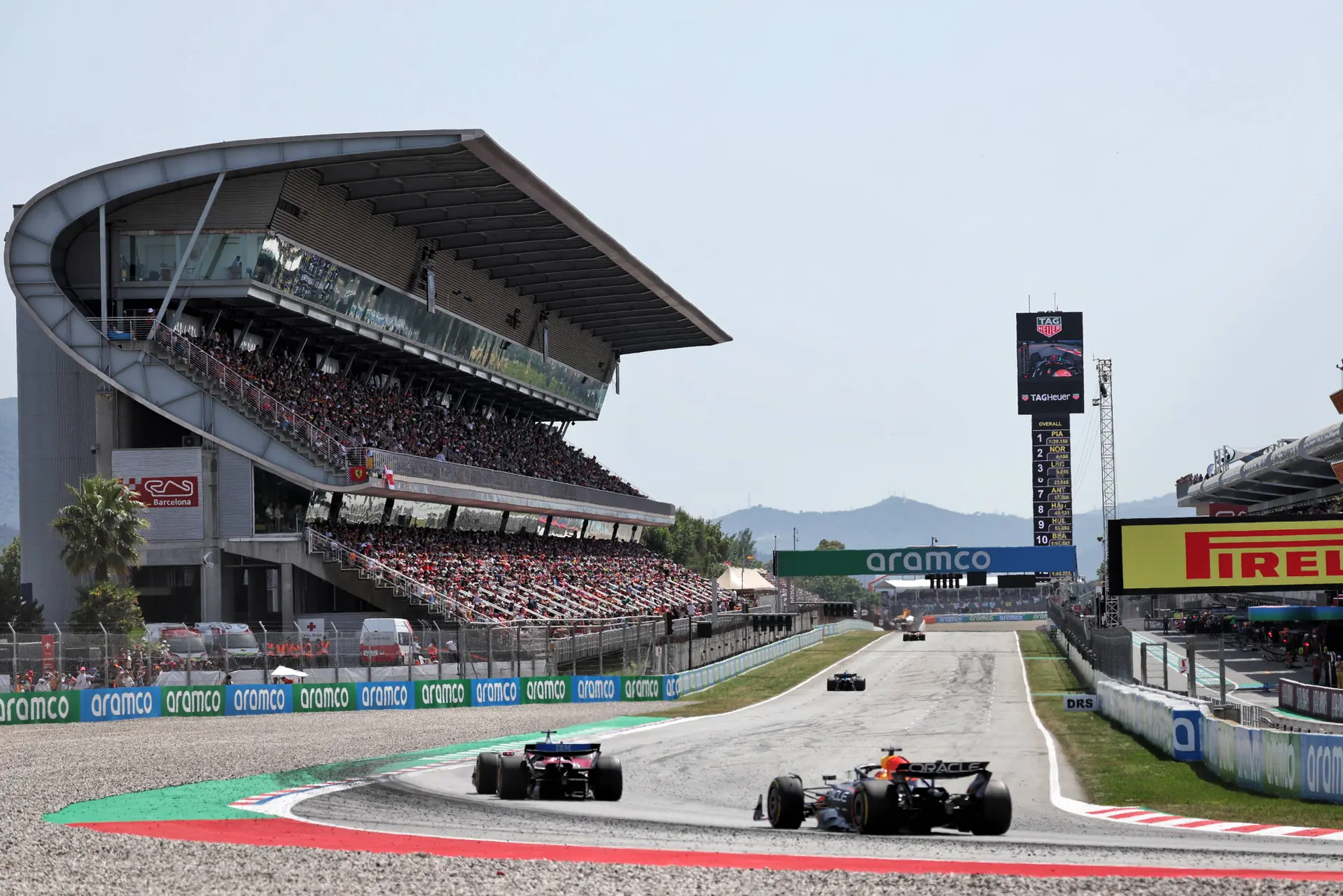
Photo: Race Pictures
Tobia is a Formula 1 journalist at GPblog with experience at international circuits. Since 2022, he has covered Grands Prix across Europe, delivering reliable coverage and insights from the paddock.
Barcelona and Sakhir will once again serve as the two venues for pre-season testing ahead of the 2026 F1 championship.
Although the year has only just begun, the 2026 season is far closer than it might appear. The sweeping new regulations have effectively shortened the traditional winter break that usually gives drivers and teams a brief period of downtime.
With the scale of change to the new cars set to be unprecedented, the FIA has opted to grant teams three separate test sessions, a significant departure from the single, three-day test that has become the norm in modern Formula 1.
The first block of testing will take place in Barcelona, which will return to hosting pre-season running for the first time since 2022 — when the FIA also approved three test sessions following the introduction of the ground-effect car generation.
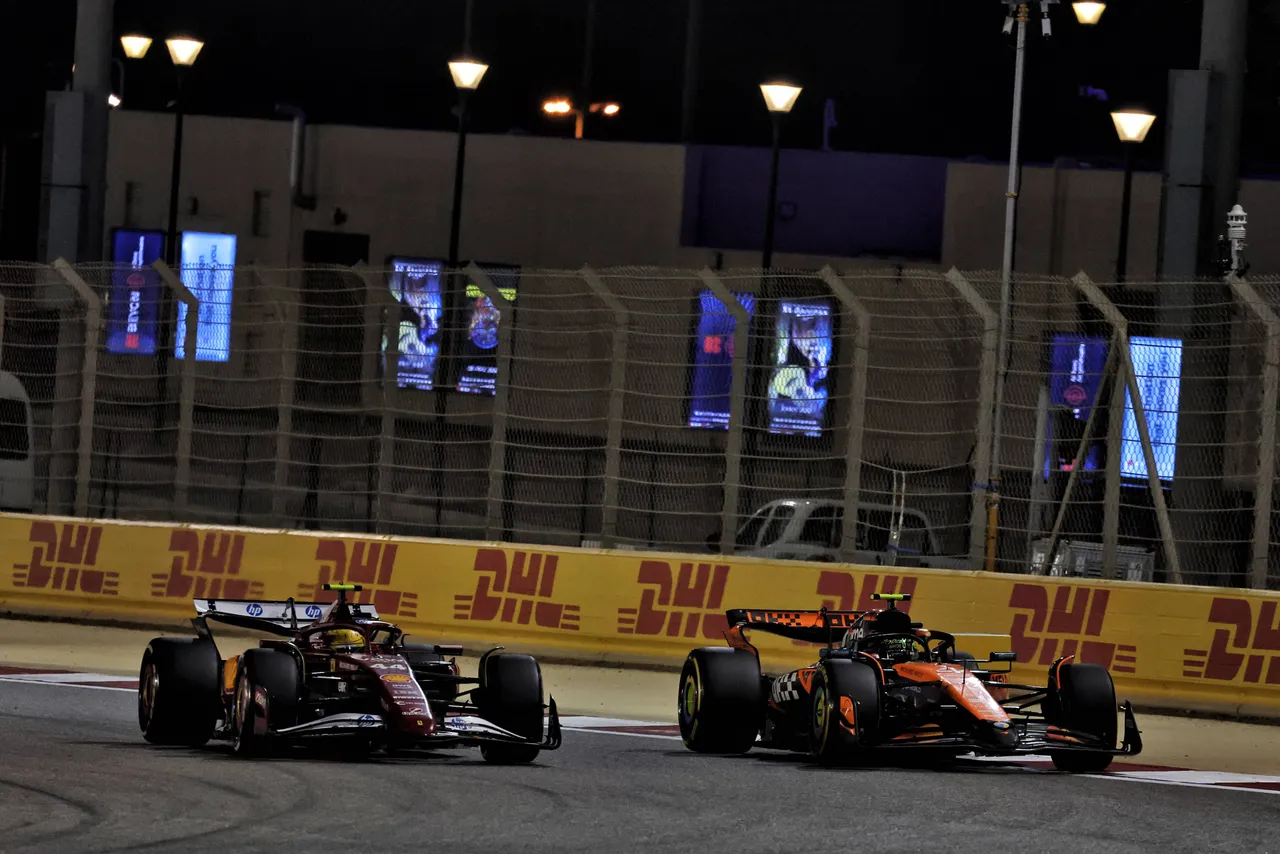
Photo: Race Pictures
ADVERTISEMENT
In the past, Formula 1 also used to carry out testing at Jerez, also in Spain — most notably in 2014, which marked the dawn of the hybrid era. Since then, however, Barcelona and Sakhir have completely taken over, becoming the default venues for pre-season running.
So why have these two circuits, and only these two, come to dominate Formula 1 testing?
Read also
How Barcelona and Bahrain came to rule F1 pre-season testing
The two tracks have become staples of pre-season testing not out of habit, but because they offer almost ideal technical conditions for car evaluation.
ADVERTISEMENT
Barcelona in particular packs an unusually wide range of corner types into a single lap, combining slow, medium- and high-speed turns that allow teams to assess multiple performance areas at once.
Long, high-load corners such as Turn 3 are invaluable for analysing aerodynamic stability and validating CFD and wind-tunnel data, while slower sections and chicanes highlight traction and mechanical balance.
This is why the circuit has long been considered a universal benchmark: if a car performs well in Barcelona, it is generally considered capable of being competitive everywhere — a belief that was even stronger when the final-sector chicane was part of the layout.
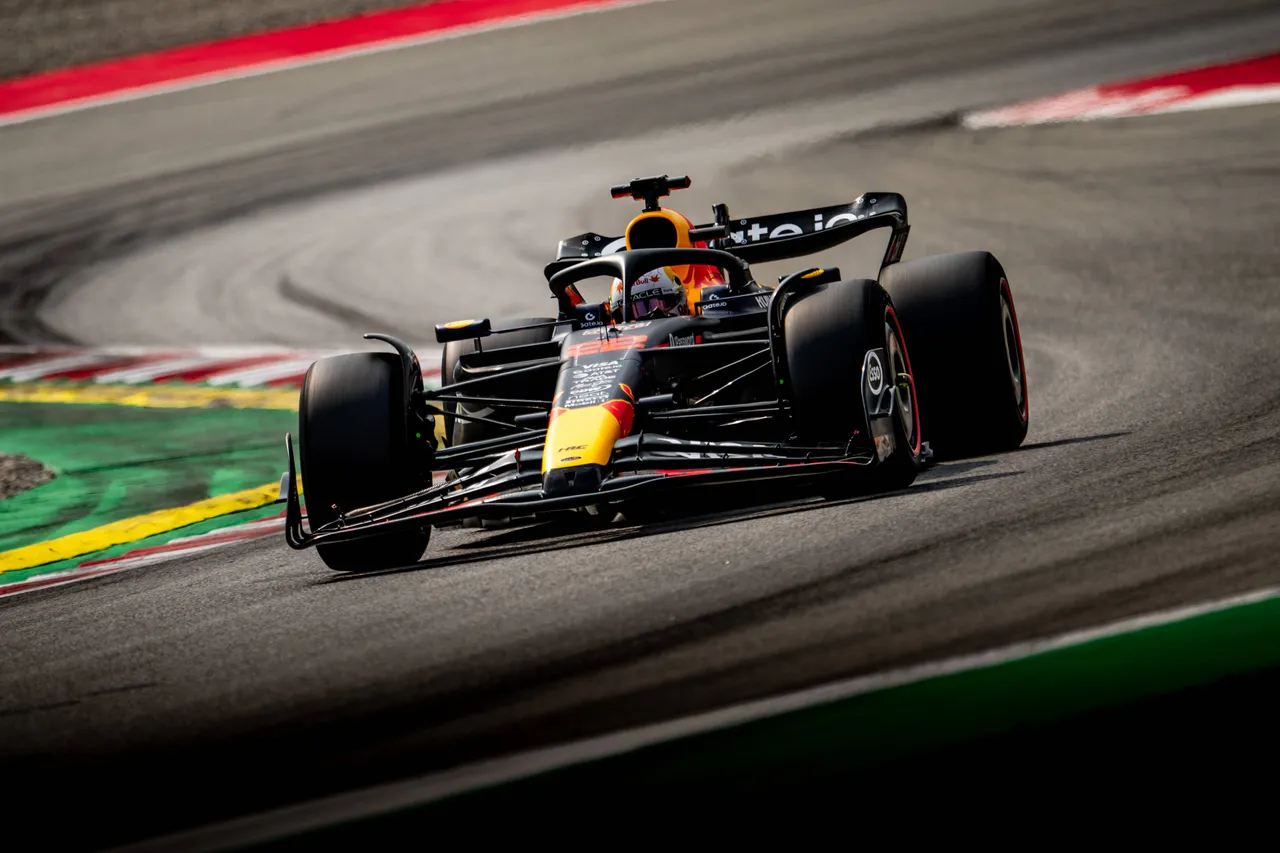
Photo: Pirelli
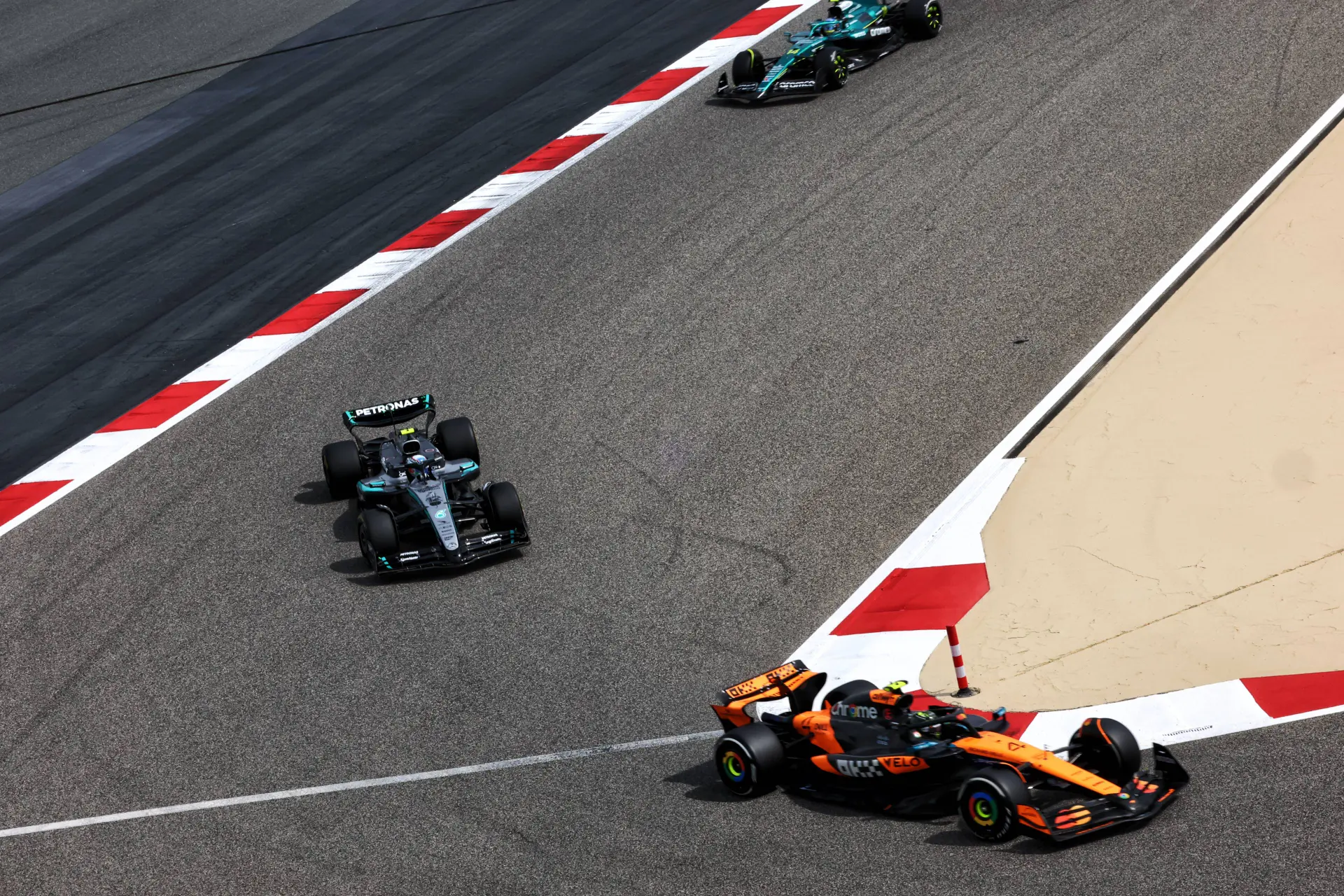
Bahrain complements Barcelona perfectly by placing far greater emphasis on traction and stop-and-go performance. The layout features multiple slow corners followed by heavy acceleration zones, allowing teams to closely analyse rear-end behaviour on corner exit and how the car puts power down.
ADVERTISEMENT
This makes Sakhir an ideal environment for evaluating power unit characteristics, while also exposing any weaknesses in rear stability and traction management under high-load acceleration.
A crucial benchmark for tyre degradation
From a tyre wear perspective, the two circuits offer complementary but equally demanding challenges. Barcelona is particularly punishing in terms of lateral wear, with its long, loaded corners placing sustained stress on the tyres and quickly revealing how efficiently a car manages energy across a stint.
Sakhir, on the other hand, is far harsher on thermal degradation, exposing how well the tyres cope with repeated traction zones, braking events and high track temperatures — making it a crucial test for understanding wear progression over realistic long runs.
Finally, temperatures also play a crucial role. Barcelona typically offers cold conditions in the morning followed by warmer afternoons, creating the perfect environment to explore tyre operating windows and assess thermal sensitivity across a wide range of conditions.
ADVERTISEMENT
Bahrain, by contrast, delivers higher and far more consistent temperatures, making it ideal for cooling evaluations, power unit testing, and long-run reliability checks as teams are able to cover a remarkably broad spectrum of thermal scenarios.
Read also
GPblog's latest F1 Paddock Update
Want to stay up-to-date with what happens in the F1 paddock? Then GPblog's F1 Paddock Update video is the perfect way to do it. Subscribe to GPblog's YouTube channel and turn on notifications to never miss the latest episodes.
ADVERTISEMENT

Don’t miss GPblog in Google
Mark us as a preferred source and our articles will appear more often at the top of Top Stories.
Add as a preferred / source on Google