
Ben Hunt is an award-winning motorsport journalist with over two decades of experience in Formula 1 and international media. As a former editor-in-chief and bestselling author, he delivers in-depth analysis and strategic insight from the highest level of the sport.
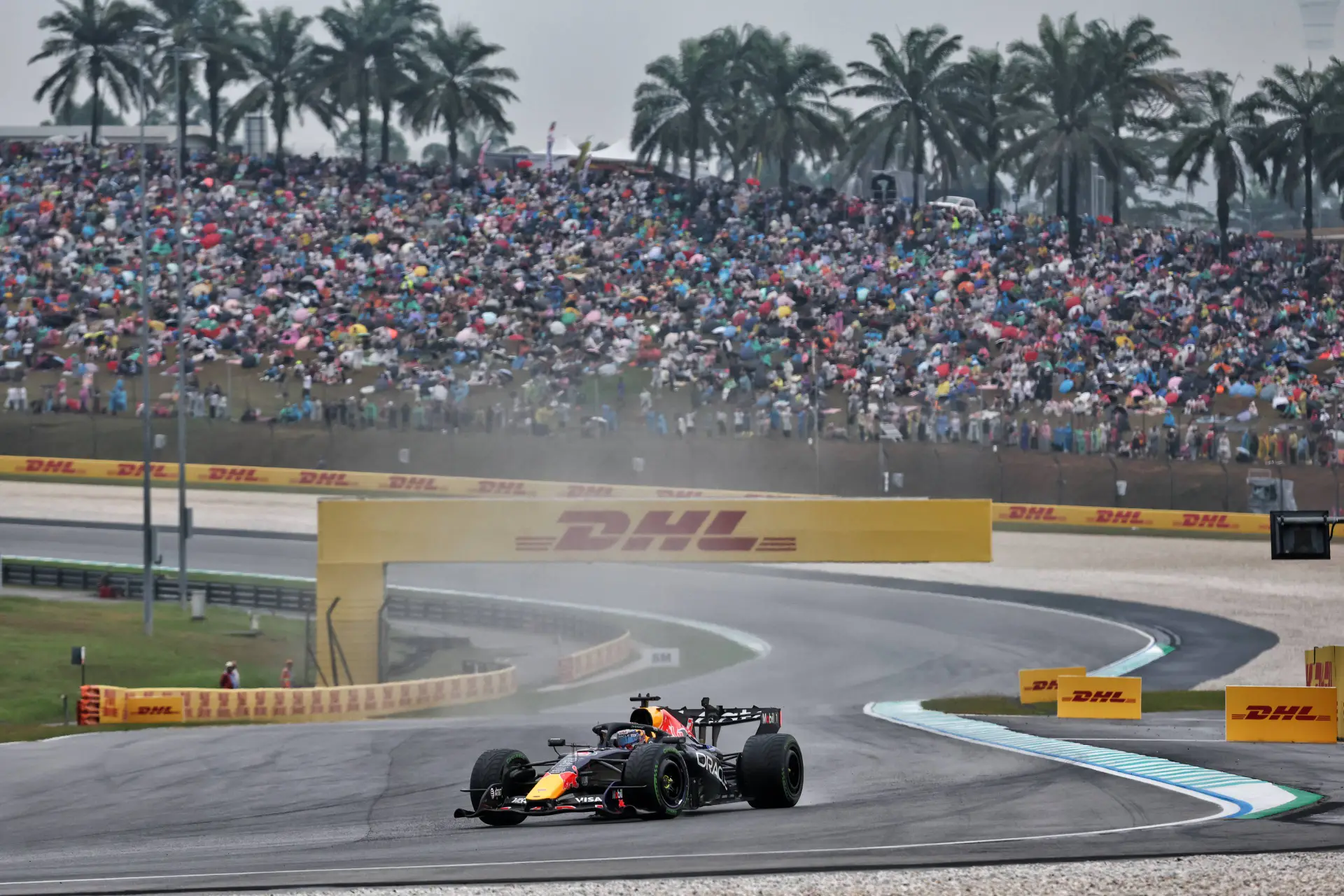
Max Verstappen delivered the victory, Lewis Hamilton produced the recovery, and Malaysia supplied the crowds. But beneath the sporting drama, the Bahrain Grand Prix at Sepang exposed some uncomfortable shortcomings. Cars struggled to complete formation laps, spectators reported transport chaos, and a much-anticipated return of a circuit become overshadowed by poor logistics. Formula 1 should resist the temptation to call that a successful weekend simply because the race eventually entertained.
It was always going to be controversial. Holding the Bahrain Grand Prix in Malaysia would not sit well with some of the purists and the way the event was badged certainly jarred. Official channels heralded the race, with host broadcasters going so far as to repeatedly praise the ingenuity of the Bahrain GP promoters to hosts it's race in another continent.
Of course, the reason for the relocation was because of the war in the Middle East which meant that Bahrain was sought to find a new location if it wanted to proceed with its race. Holding a race in another country is not something new in F1. The San Marino GP was held in Italy. The Luxembourg GP was held in Germany to name two, but at least those races were in neighbouring countries.
Of course, the reason for the relocation was because of the war in the Middle East which meant that Bahrain was sought to find a new location if it wanted to proceed with its race. Holding a race in another country is not something new in F1. The San Marino GP was held in Italy. The Luxembourg GP was held in Germany to name two, but at least those races were in neighbouring countries.
This, the Bahrain GP in Malaysia, some 6,040 kilometers (3,753 miles) between Sakhir and Sepang, was a different prospect altogether. And it jarred. The Bahrain logos being painted on to the kerbs. The furniture being jetted to Malaysia to make it feel like the Bahrain GP - it was all too false.
Fans deserved more than an endurance test.
Operationally, another failure cannot be ignored. The Straits Times reported hours-long shuttle waits, spectators undertaking lengthy walks, and complaints about access to drinking water. One attendee described walking 11 kilometres after buses became trapped in traffic.
ADVERTISEMENT
Malay Mail also documented complaints about congestion, crowd management, and inadequate information after Friday’s running. Transport is not an optional extra attached to a Grand Prix. It is part of delivering one and should have been accounted for.
Likewise, accessible water and clear instructions are basic requirements, particularly when spectators are spending long days in Malaysia’s heat.
Successfully rebranding a track and assembling a paddock is only part of staging a successful event. Fans need to arrive, move around safely, and get home.
It would be misguided to use this weekend as evidence that Malaysia does not belong on the calendar. Sepang delivered compelling racing, and the crowd’s enthusiasm was unmistakable.
Strong demand makes competent planning more important, not less. Supporters who showed up so enthusiastically deserved an operation capable of handling them.
ADVERTISEMENT

Photo: Race Pictures
The technical failures that would have been much worse
The sight of Formula 1 cars crawling around the circuit invited jokes. Verstappen’s comparison with the Silverstone Lego race captured the absurdity perfectly.
But Hamilton stopping his Ferrari and restarting it was not merely amusing. It demonstrated that drivers could find themselves unable to make their cars respond normally, even during a controlled procedure before the start.
The FIA’s explanation identified a combination of low engine speed, limited grip, wet-weather energy settings, and circuit configuration. That may explain the trigger. It does not, by itself, answer whether the testing programme was adequate.
ADVERTISEMENT
Nor should the eventual software update close the discussion. Getting the race underway was necessary, establishing that the underlying vulnerability has been understood is a separate responsibility.
Complexity must serve the racing.
Formula 1 cannot reasonably be expected to operate without sophisticated software. These are advanced racing machines, and presenting electronics as inherently undesirable would miss the point.
The problem is not that software exists, it is that the systems controlling performance must remain dependable in circumstances the sport can reasonably encounter.
Slow formation laps and wet weather are hardly alien concepts. Their particular interaction may have been unusual, but that makes this a validation problem worth investigating, not an acceptable quirk of technological ambition.
ADVERTISEMENT
A driver should be managing grip, positioning, and tyre temperature before the start. They should not be wondering whether crawling behind another car will leave their power unit unable to respond.
The FIA must therefore review more than the offending software setting. It should examine how the requirements were specified, how unusual operating conditions were tested, and how emergency changes are validated. A patch is a solution to an immediate problem and not automatically proof that the wider system is robust.
Entertainment is not accountability.
The danger now is that the highlights become the official memory. Verstappen triumphant, Hamilton charging back, grandstands cheering. Those images tell the sporting story and will be embellished along with record crowds, but they do not tell the whole story.
Formula 1 needs to seek a transparent technical review, while organisers should explain what went wrong with spectator transport and what would change before another event - should there be one amid speculation that Malaysia now wants a spot back on the F1 calendar.
ADVERTISEMENT
There is no need to deny that the race was enjoyable. The sharper conclusion is that enjoyable racing rescued a poor overall event and ultimately, Sepang showed why people want Formula 1 back in Malaysia. The surrounding failures showed how much better the sport must prepare to deserve that welcome.
A memorable Sunday and a landmark win for Max Verstappen is worth celebrating but weekend that depended on emergency fixes and spectators’ patience should not become the standard. F1 needs to do better and cautiously rethink any other plans to franchise races to other destinations.

Don’t miss GPblog in Google
Mark us as a preferred source and our articles will appear more often at the top of Top Stories.
Add as a preferred / source on Google