Data show how Verstappen was still able to match Mercedes pace in Melbourne
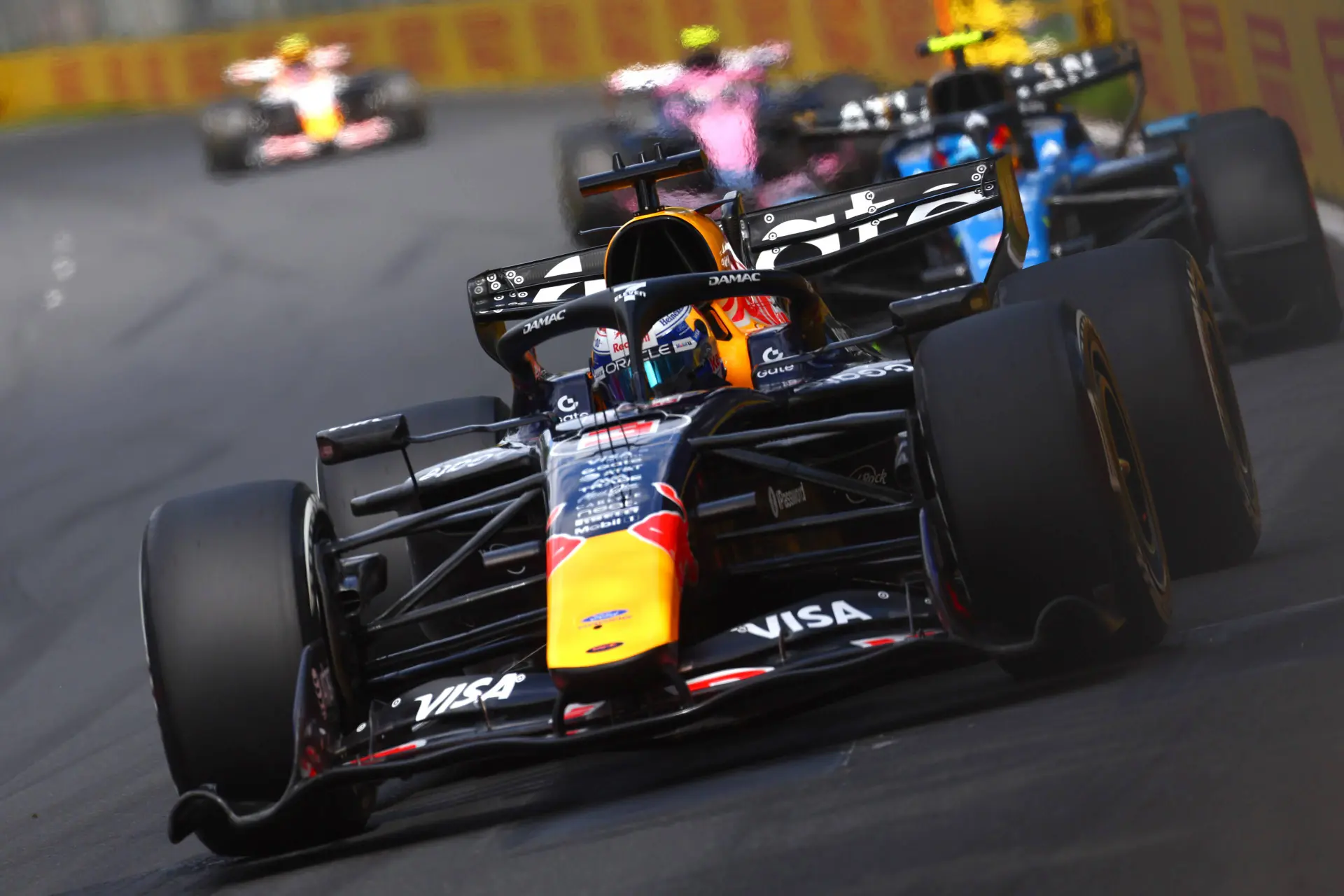
Verstappen during the Australian Grand Prix - Image: Race Pictures
Updated:
11 Comments

Shanna is a Formula 1 journalist at GPblog, specializing in both F1 and endurance and GT racing. With a Master’s degree in Journalism and experience at international circuits, she provides in-depth, reliable coverage and insights based on her presence at Grands Prix and racing events worldwide.
Mercedes impressed on Friday in Australia with their very consistent long runs. After the first race weekend, many—everyone except Max Verstappen—were surprised by the German team's advantage. However, by the end of the race, the Dutchman actually wasn’t that far behind at all.
Friday’s long runs already predicted that George Russell and Kimi Antonelli would head into race day with the best hand. They were by far the fastest team and clearly had their act together. In the second free practice long runs, it’s still difficult to get a clear picture of race pace, as engine modes and fuel loads are unknown.
Mercedes’ Friday pace is reflected in the race pace the team showed on Sunday in Melbourne. Over at Red Bull, the mood was gloomy due to the deficit to Mercedes. In the first half of the Grand Prix, the gap was indeed still quite large. The most consistent stints of all drivers began roughly around laps 20–23.
For the race pace analysis, we took the two most consistent stints from the drivers of the four top teams. First, we will look at Verstappen vs. Russell and Antonelli. The stints are marked in the table as S1 and S2.
| Lap | VER S1 (M) | Lap | VER S2 (H) | Lap | RUS S1 (H) | Lap | RUS S2 (H) | Lap | ANT S1 (H) | Lap | ANT S2 (H) |
| 20 | 1:23.566 | 46 | 1:22.810 | 21 | 1:22.670 | 41 | 1:23.073 | 21 | 1:22.781 | 43 | 1:23.015 |
| 21 | 1:23.536 | 47 | 1:22.489 | 22 | 1:22.892 | 42 | 1:23.054 | 22 | 1:22.862 | 44 | 1:23.079 |
| 22 | 1:23.458 | 48 | 1:22.906 | 23 | 1:22.828 | 43 | 1:22.893 | 23 | 1:22.582 | 45 | 1:23.123 |
| 23 | 1:23.516 | 49 | 1:22.939 | 24 | 1:23.466 | 44 | 1:22.856 | 24 | 1:23.222 | 46 | 1:23.038 |
| 24 | 1:23.472 | 50 | 1:22.738 | 25 | 1:22.879 | 45 | 1:23.477 | 25 | 1:24.545 | 47 | 1:23.066 |
| 25 | 1:23.554 | 51 | 1:22.690 | 26 | 1:23.093 | 46 | 1:23.751 | 26 | 1:23.138 | 48 | 1:22.992 |
| 26 | 1:23.363 | 52 | 1:22.683 | 27 | 1:23.188 | 47 | 1:23.033 | 27 | 1:23.103 | 49 | 1:23.245 |
| 27 | 1:23.740 | 53 | 1:23.109 | 28 | 1:23.390 | 48 | 1:23.034 | 28 | 1:23.030 | 50 | 1:22.903 |
| 28 | 1:23.463 | 54 | 1:23.090 | 29 | 1:23.486 | 49 | 1:22.844 | 29 | 1:22.968 | 51 | 1:22.625 |
| 29 | 1:23.439 | 55 | 1:23.211 | 30 | 1:23.272 | 50 | 1:23.087 | 30 | 1:22.889 | 52 | 1:22.558 |
| 30 | 1:23.390 | 56 | 1:23.109 | 31 | 1:23.147 | 51 | 1:22.762 | 31 | 1:22.880 | 53 | 1:22.613 |
| 31 | 1:23.510 | 57 | 1:23.469 | 52 | 1:23.106 | ||||||
| 32 | 1:23.587 | 58 | 1:23.533 | ||||||||
| 33 | 1:23.930 | ||||||||||
| Stint average | 1:23.537 | 1:22.984 | 1:23.119 | 1:23.080 | 1:23.090 | 1:22.932 |
ADVERTISEMENT
Red Bull decided to go for a two-stopper with Verstappen, while Mercedes ran a one-stop strategy for both drivers. In the first half of the race, Verstappen recorded a stint average of 1:23.527, while Antonelli and Russell were significantly lower: the Italian averaged 1:23.090, the Brit was slightly slower at 1:23.190.
Did Ferrari underestimate their own speed?
The four-time world champion was therefore about four to five tenths short on race pace in the first stint, but towards the end of the race he managed to close the gap. He was even a bit quicker—with an average of 1:22.984. Russell averaged 1:23.080, Antonelli 1:22.932.
Of course, it should also be noted that the car gets lighter towards the end of the race. Russell, during that second stint, was running in clean air and, aside from some backmarkers, had a clear track. Antonelli was about six to seven seconds behind.
To analyze McLaren and Ferrari, we did the same as with Verstappen and the two Mercedes drivers. Again, the two most consistent stints are listed in a table and the stint averages have been calculated. This shows that Norris and the two Ferraris were, on average, faster than the two Mercedes towards the end of the race.
ADVERTISEMENT
Do you follow Formula 1 on social media? Then follow GPblog on Facebook, Instagram and TikTok to stay up to date with the latest F1 news.
| Lap | NOR S1 (H) | Lap | NOR S2 (M) | Lap | LEC S1 (M/H) | Lap | LEC S2 (H) | Lap | HAM S1 (M/H) | Lap | HAM S2 (H) |
| 21 | 1:23.972 | 47 | 1:22.778 | 21 | 1:23.322 | 40 | 1:22.930 | 21 | 1:23.617 | 38 | 1:22.688 |
| 22 | 1:23.687 | 48 | 1:22.953 | 22 | 1:23.416 | 41 | 1:22.995 | 22 | 1:23.509 | 39 | 1:22.536 |
| 23 | 1:23.534 | 49 | 1:22.804 | 23 | 1:23.476 | 42 | 1:22.846 | 23 | 1:23.382 | 40 | 1:22.550 |
| 24 | 1:23.394 | 50 | 1:22.763 | 24 | 1:23.660 | 43 | 1:22.750 | 24 | 1:24.329 | 41 | 1:22.648 |
| 25 | 1:23.500 | 51 | 1:22.598 | 25 | 1:37.834* | 44 | 1:23.094 | 25 | 1:23.660 | 42 | 1:22.636 |
| 26 | 1:23.403 | 52 | 1:22.784 | 26 | 1:29.317* | 45 | 1:23.160 | 26 | 1:24.085 | 43 | 1:22.559 |
| 27 | 1:23.896 | 53 | 1:22.358 | 27 | 1:23.106 | 46 | 1:22.894 | 27 | 1:23.760 | 44 | 1:22.837 |
| 28 | 1:24.040 | 54 | 1:22.796 | 28 | 1:23.089 | 47 | 1:22.952 | 28 | 1:39.578* | 45 | 1:22.529 |
| 29 | 1:24.080 | 55 | 1:22.867 | 29 | 1:22.987 | 48 | 1:22.899 | 29 | 1:29.135* | 46 | 1:22.945 |
| 30 | 1:23.961 | 56 | 1:22.843 | 30 | 1:23.026 | 49 | 1:23.364 | 30 | 1:23.474 | 47 | 1:22.677 |
| 31 | 1:24.094 | 31 | 1:22.934 | 50 | 1:23.200 | 31 | 1:23.129 | 48 | 1:22.764 | ||
| 32 | 1:24.075 | 32 | 1:22.947 | 51 | 1:22.989 | 32 | 1:23.185 | 49 | 1:22.835 | ||
| 33 | 1:24.790 | 33 | 1:23.174 | 52 | 1:23.049 | 50 | 1:23.310 | ||||
| 53 | 1:23.014 | 51 | 1:22.683 | ||||||||
| 54 | 1:23.045 | 52 | 1:23.008 | ||||||||
| 53 | 1:23.165 | ||||||||||
| Stint average | 1:23.881 | 1:22.754 | 1:23.194 | 1:23.012 | 1:23.613 | 1:22.773 |
In the first stint, Norris was about eight tenths off Mercedes and roughly seven off Leclerc. The gap to Hamilton in the first stint was a bit smaller, around 0.25 seconds. Norris managed to match the Ferraris’ speed toward the end — with a lighter car — whereas Leclerc fell short there.
At the end of the race it was clear that the Monegasque’s pace dropped and Hamilton was able to close in, although not enough to try an overtake. Norris was running in clean air regardless; he had a gap of at least 33 seconds ahead to Hamilton. Behind him, Verstappen was about two seconds back.
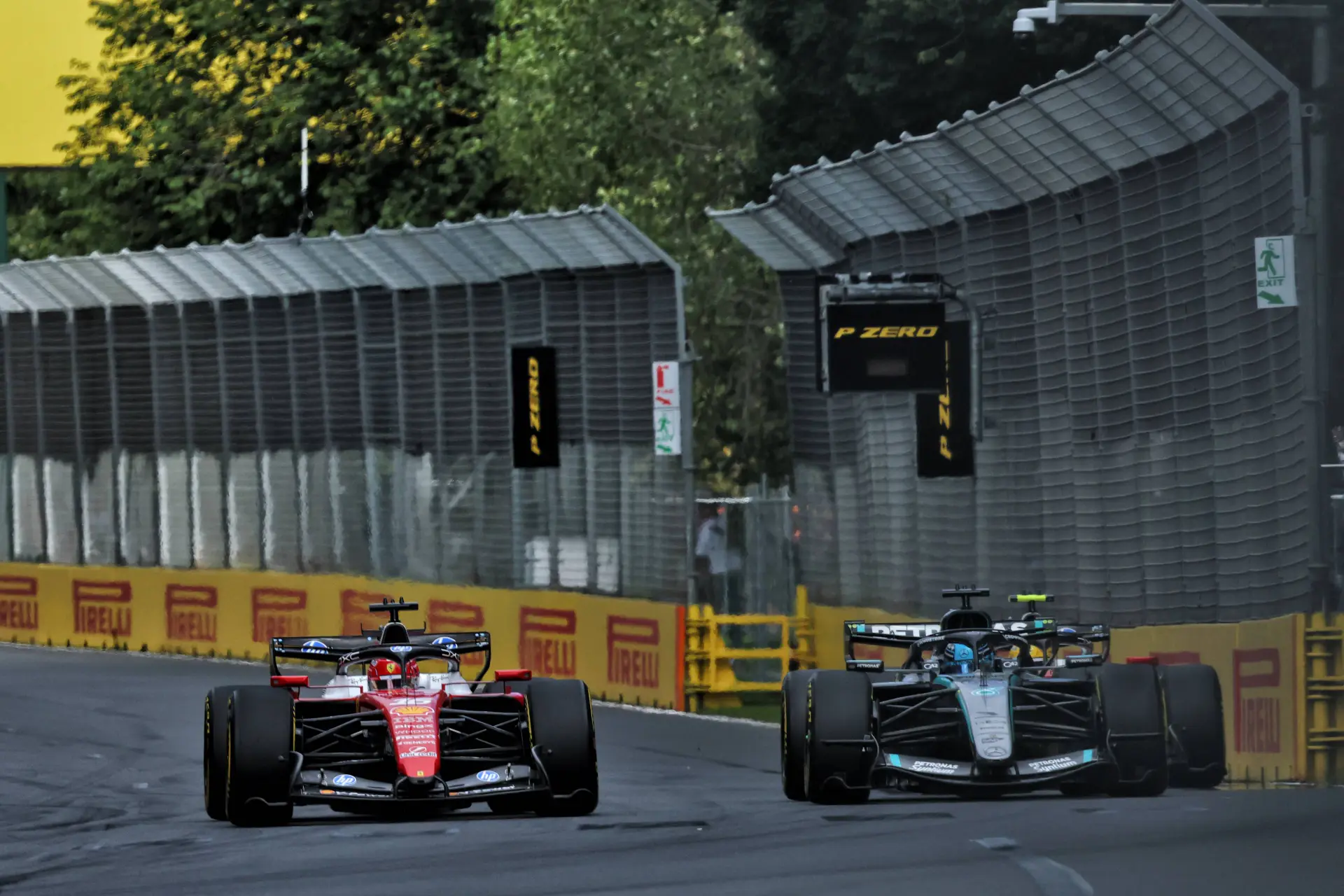
Ferrari, however, was roughly on Mercedes’ pace in their first two stints, allowing Leclerc to take the lead and fight with Russell. You can see it in the table, which shows roughly equal stint averages for Leclerc and the Mercedes drivers.
ADVERTISEMENT
A different picture in China
Especially in the opening phase and the first half of the race, it proved difficult for McLaren and Red Bull to keep up with Mercedes. The question is how the picture will change in China, where there is one long straight. Albert Park and the Shanghai International Circuit are, of course, two completely different propositions.
For now, Mercedes has the upper hand, but toward the end of the race it closes up more than perhaps expected. If Red Bull and McLaren can unlock that speed a bit earlier in the race, as Verstappen already indicated, they can be expected to join that fight.
Read also

Don’t miss GPblog in Google
Mark us as a preferred source and our articles will appear more often at the top of Top Stories.
Add as a preferred / source on Google