Red Bull's biggest problems stem from the car, not the engine
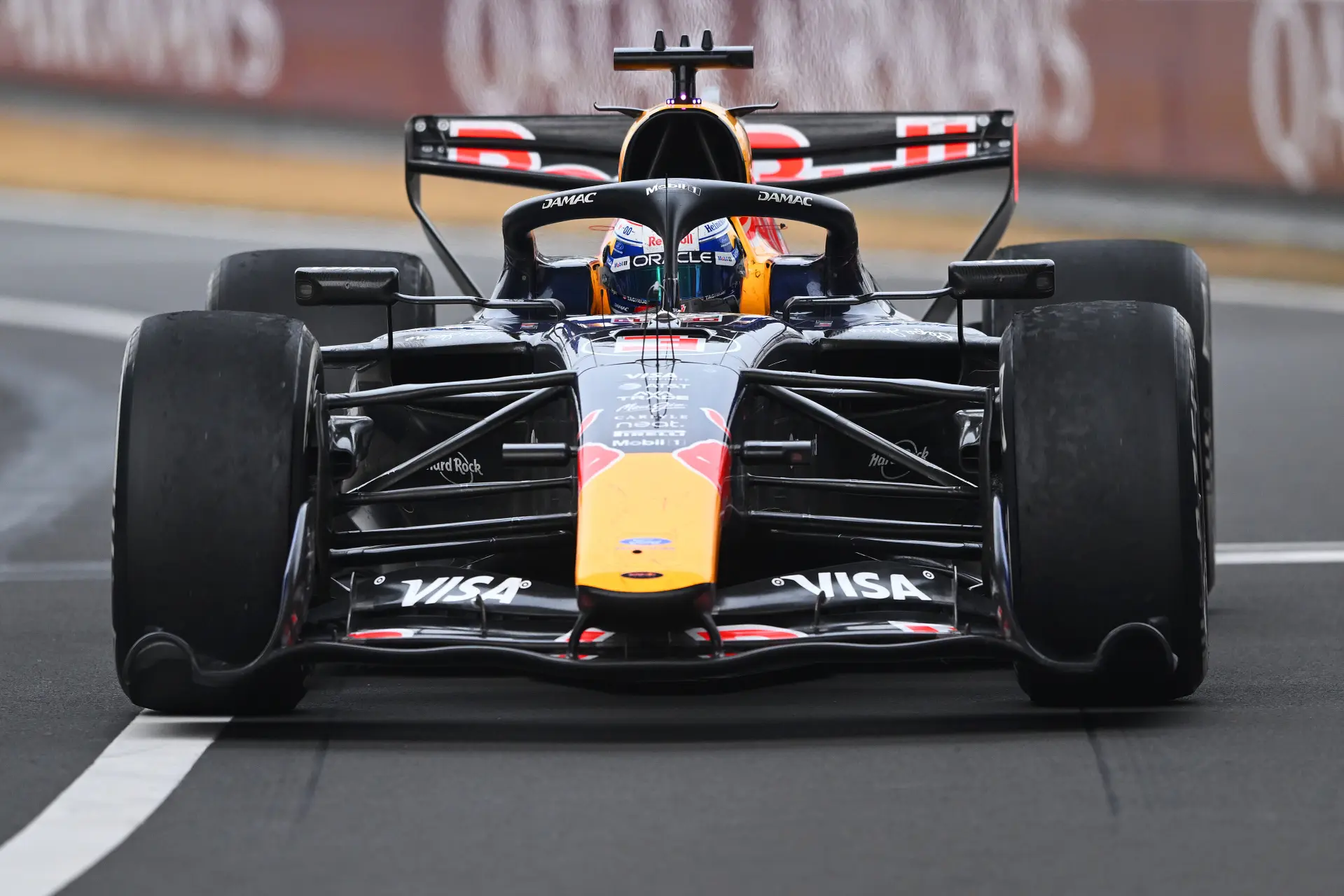
Photo: Red Bull Content Pool
12:06, 16 Mar
3 Comments

Francesco is a technical analyst at GPblog, specializing in the technical side of Formula 1. Through illustrations and analysis, he makes complex components and developments accessible to a wide audience.
Red Bull Racing have struggled considerably during the first two races of the season, even finishing behind Pierre Gasly and Oliver Bearman in China.
The beginning of the 2026 F1 championship has been one of the toughest for Red Bull Racing in recent history.
The Milton Keynes-based team, fresh from the debut of their new Power Unit designed in collaboration with Ford, has struggled massively in the first two races of the season, with a car that retired with engine problems in each race and only 12 points scored in the first two rounds.
Red Bull Racing is clearly the fourth fastest team at the moment, with a big gap to fill to get closer to McLaren, Ferrari and eventually Mercedes.
The surprising element, however, is that the majority of this gap doesn’t come from the engine: the RB22 has serious balance issues, which make the car surprisingly slow in all kinds of corners and that consequently puts high stress on tyres, tearing them down quicker than competitors.
ADVERTISEMENT
A terrible balance that puts a lot of stress on tyres
After a reliable and decent performance during testing in Bahrain, Red Bull Racing was expected to be the third or fourth fastest team, but quite close to McLaren and Ferrari.
The scenario that emerged in qualifying in Melbourne seemed to confirm the hypothesis, with Hadjar qualifying in P3, ahead of both Ferraris and McLarens.
The race, however, offered a more realistic picture: Hadjar retired due to an engine problem, while Verstappen, forced to start from 18th place due to an early Q1 exit on Saturday, managed to get back to fifth place, but couldn’t do any better than that.
ADVERTISEMENT
His RB22, showed serious tyre management problems, suffering from serious understeer in slow and medium-speed corners throughout the race, consequently forcing Verstappen to adopt a two-stop strategy.

Verstappen during the Australian Grand Prix - Image: Race Pictures
He eventually finished the race 54 seconds behind Russell in P1, proving that Red Bull was way further than what emerged from testing.
A clearer scenario of their true performance, however, emerged during last weekend in China: already in FP1, the RB22 was showing a high level of understeering through long corners, like Turn 1 and Turns 12 and 13 (the long right-hand before the straight in the last sector), which made Verstappen lose valuable time in the final sector.
Moreover, the balance issues also appeared in all the technical slow speed corners in the first and second sector: through Turns 2, 8, 9 and 10, Verstappen couldn’t get his RB22 to turn properly, almost getting to full-lock to get the nose of his car to turn in.
ADVERTISEMENT
The Dutchman also completed a short race pace simulation during the session and this accentuated the balance problems: after just a few laps on the medium tyre, significant graining appeared on the front-left tyre.

Hadjar during the Sprint qualifying in China - Photo: Race Pictures
When the car doesn’t have grip on the front axle, in fact, the driver is forced to use larger steering angles to turn in and this generates a lot of stress (and consequent rise in temperatures) on the upper surface of the front tyres, inducing the graining phenomenon, as the surface gets hotter while the bulk is still cold.
Beyond this, Red Bull Racing was also losing a lot of time compared to Mercedes on the straights: the Brackley-based team, in fact, thanks to the more efficient internal combustion engine, has a smaller level of super-clipping at the end of the straights, gaining a huge amount of lap time on their competitors in those sections, including Ferrari and Red Bull.
All these aspects combined relegated Verstappen to eighth place in the first practice session, 1.8 seconds behind Russell in first place and even behind Haas’ Bearman.
ADVERTISEMENT

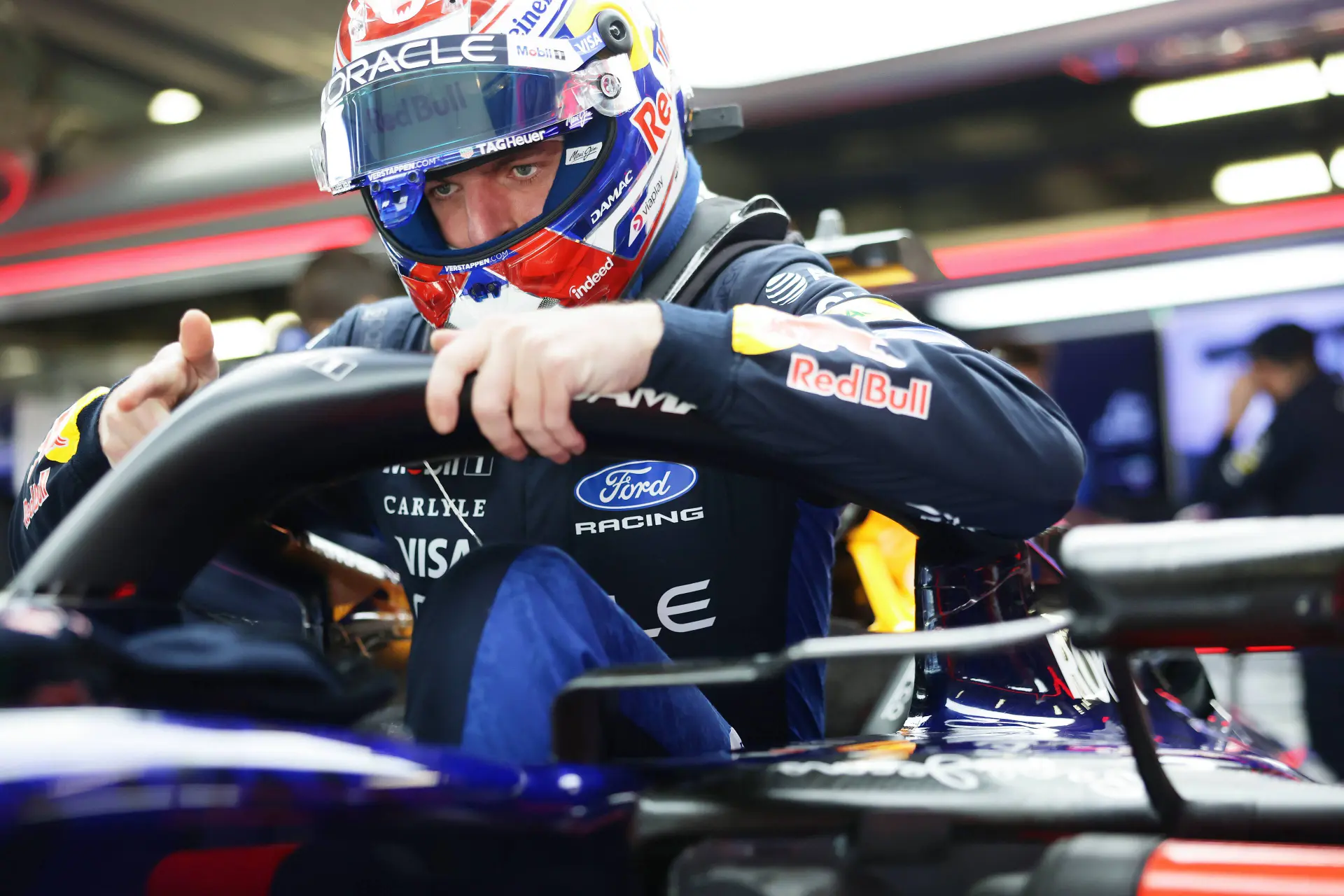
Verstappen getting in the car for the Chinese Grand Prix - Photo: Red Bull Content Pool
The scenario in the Sprint Qualifying didn’t get any better: Verstappen once again finished the session in eighth place, with a similar gap to FP1 and behind Gasly who managed to get in a lap four tenths faster than his, proof of the serious troubles the team were facing.
Despite the soft tyre and the low fuel load, the car’s problems remained the same: drivers experienced massive understeer, which inevitably translated into oversteer out of slow corners, making them lose time both in the cornering phase and on corner exit.
Talking to F1TV after the Sprint qualifying, the four-time World Champion described the scenario as follows: "There's no grip, and I would say I think that's the biggest problem. No balance, just losing massive amounts of time in the corners, to be honest.”
"Then, of course, because of that, you start triggering other little problems. But the big problem for us is that the cornering is just completely out."
ADVERTISEMENT
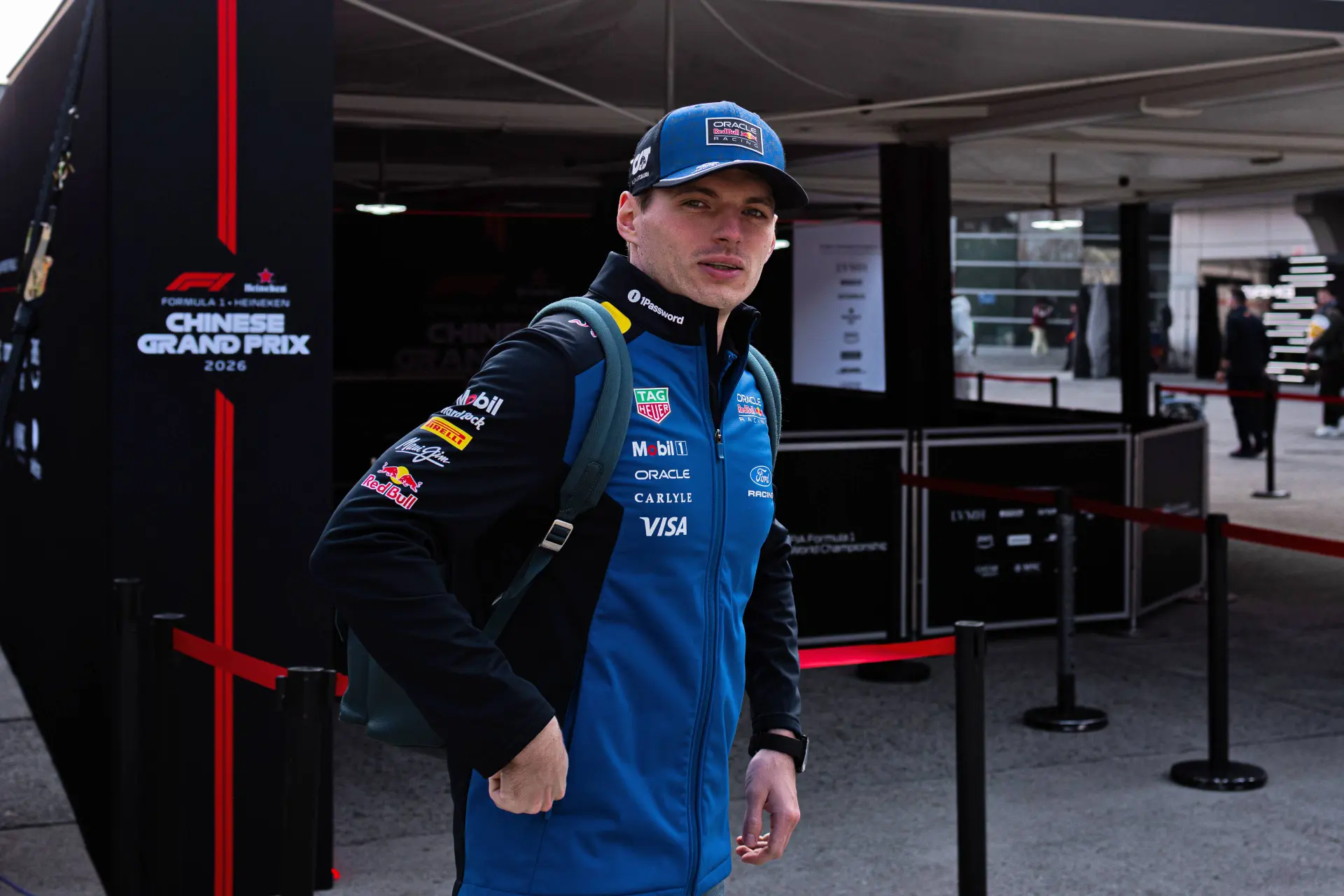
The Sprint race on Saturday highlighted another problem for Verstappen: the start. As already happened in Australia, the driver stuck on the release of the clutch, stalling and consequently losing a lot of positions. He eventually finished ninth, out of the points for the first time since the Sprint race format was introduced (excluding the Sprints where he retired).
The rest of the weekend was just a copy-paste of the performance seen on Friday and during the Sprint: after qualifying once again in P8 behind Galsy, he still had problems at the start of the main race on Sunday.
The performance on Sunday was once again terrible: the graining on the front left tyre was massive and the car also lacked stability on the rear end, proof of a very compromised balance.

Verstappen in the pitlane at the Shanghai International Circuit - Photo: Race Pictures
ADVERTISEMENT
The issues, in fact, mainly seem on the mechanical side of the car: both the chassis and the suspension system aren’t interacting with the tyres correctly, causing a big tyre degradation and balance issues in all cornering phases.
The car also lacks downforce on both axles, as shown by the fact that Verstappen also suffered understeer in high-speed corners, where downforce comes into play.
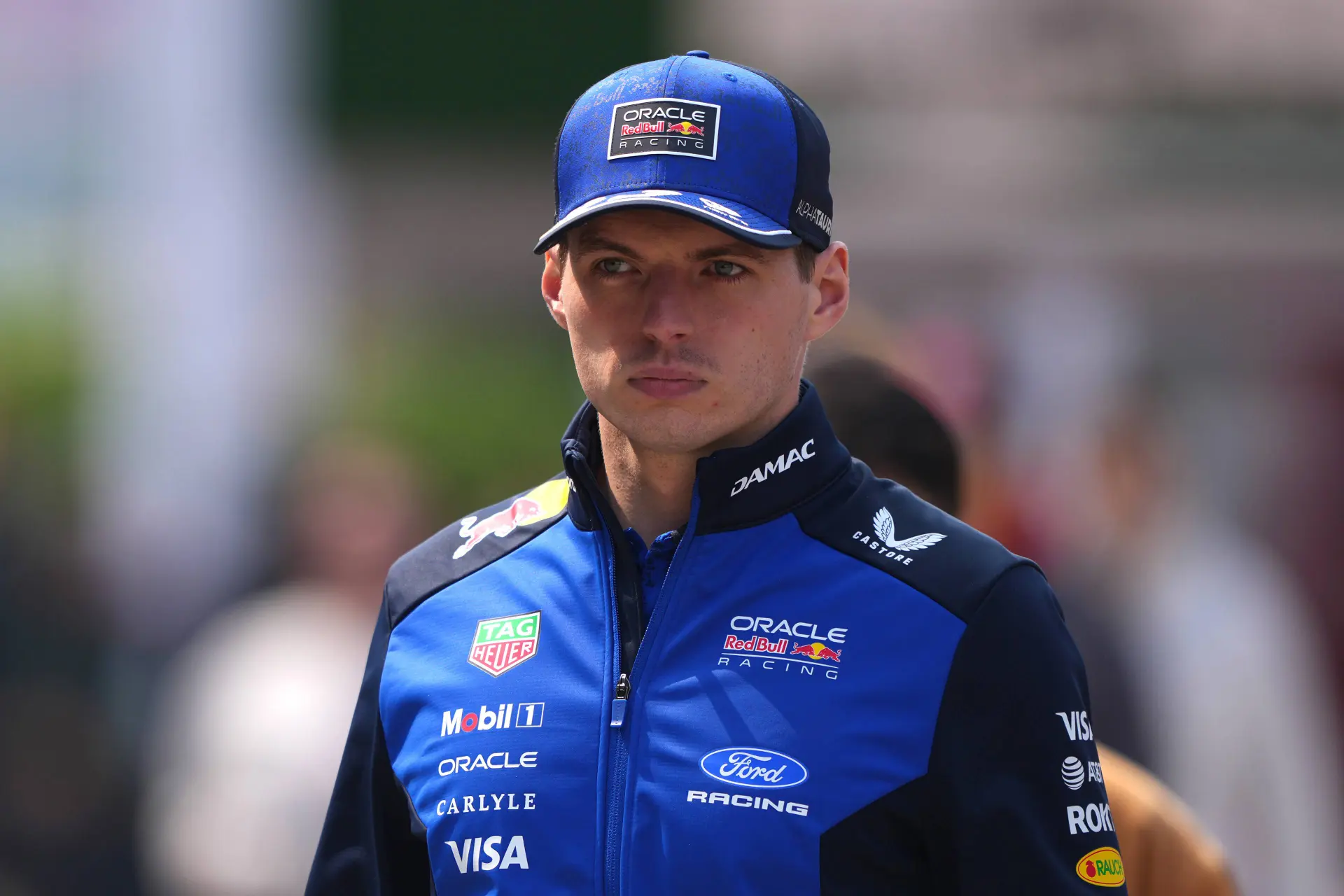
Particularly significant is that every set-up change produces no tangible result, as underlined by Verstappen himself during Saturday’s post-qualifying press conference: “We change a lot on the car and it makes zero difference. So, the whole weekend we've been off. The car is completely undriveable. I cannot even put a bit of a reference in. Every lap is like survival.”
“A little bit from the engine side, but that's not probably the biggest side. We lose so much with the car at the moment around here. Plus also I cannot push at all because the car doesn't let me. Everything at the moment, oversteer and understeer.”
ADVERTISEMENT
The Dutchman eventually retired from the race due to an engine issue, but it would have been very difficult for him to catch Bearman for fifth place, as he was really struggling in terms of grip and tyre degradation.
The scenario didn’t look any better on Hadjar’s side of the garage: after spinning on the first lap, he tried to make a comeback, but eventually finished the race in eighth place.
In conclusion, Red Bull Racing have been facing serious balance issues during the first few races, which will probably take a lot of time and updates to be sorted: Because the problem appears to be related to the car’s mechanical design, the team will first need to fix the major issues before focusing on smaller details, as it’s currently where the problems come from.
It won’t be an easy next few months for the team, but it’ll be interesting to understand how they’ll try to sort this difficult beginning of the season.
Read also

ADVERTISEMENT
Don’t miss GPblog in Google
Mark us as a preferred source and our articles will appear more often at the top of Top Stories.
Add as a preferred / source on GoogleRead more about:
latest news
Azerbaijan Grand Prix
Overview
Thursday 24.09.26
Practice 1
08:30 AM
Practice 2
12:00 PM
Friday 25.09.26
Practice 3
08:30 AM
Qualification
12:00 PM
Saturday 26.09.26
Race
11:00 AM
Thursday 24.09.26
Practice 1
Thu 08:30 AM
Practice 2
Thu 12:00 PM
Friday 25.09.26
Practice 3
Fri 08:30 AM
Qualification
Fri 12:00 PM
Saturday 26.09.26
Race
Sat 11:00 AM
Times are in your local timezone
Popular on GPBlog
1
McLaren makes decision on Norris' participation in the 24 Hours of Le Mans
1871 times read
2
Hamilton breaks silence on Ferrari staff shake-up rumors
1053 times read
3
Red Bull set to confirm Hadjar and Lawson 2027 decisions within days as Tsolov complicates the equation
817 times read
4
Ralf Schumacher reveals Vasseur was 'annoyed' with both Hamilton and Leclerc at Madrid
571 times read
F1-stand 2026
Season
| Pos. | Driver | Team | Points |
|---|---|---|---|
1 | MercedesMER | 292 | |
2 | MercedesMER | 211 | |
3 | FerrariFER | 191 | |
4 | McLarenMCL | 186 | |
5 | FerrariFER | 167 | |
6 | Red Bull RacingRBR | 145 | |
7 | McLarenMCL | 120 | |
8 | Red Bull RacingRBR | 71 | |
9 | Racing BullsRCB | 59 | |
10 | AlpineALP | 41 |
Loading