F1 Tech | Ferrari spark major intrigue as new technical ideas emerge in Bahrain
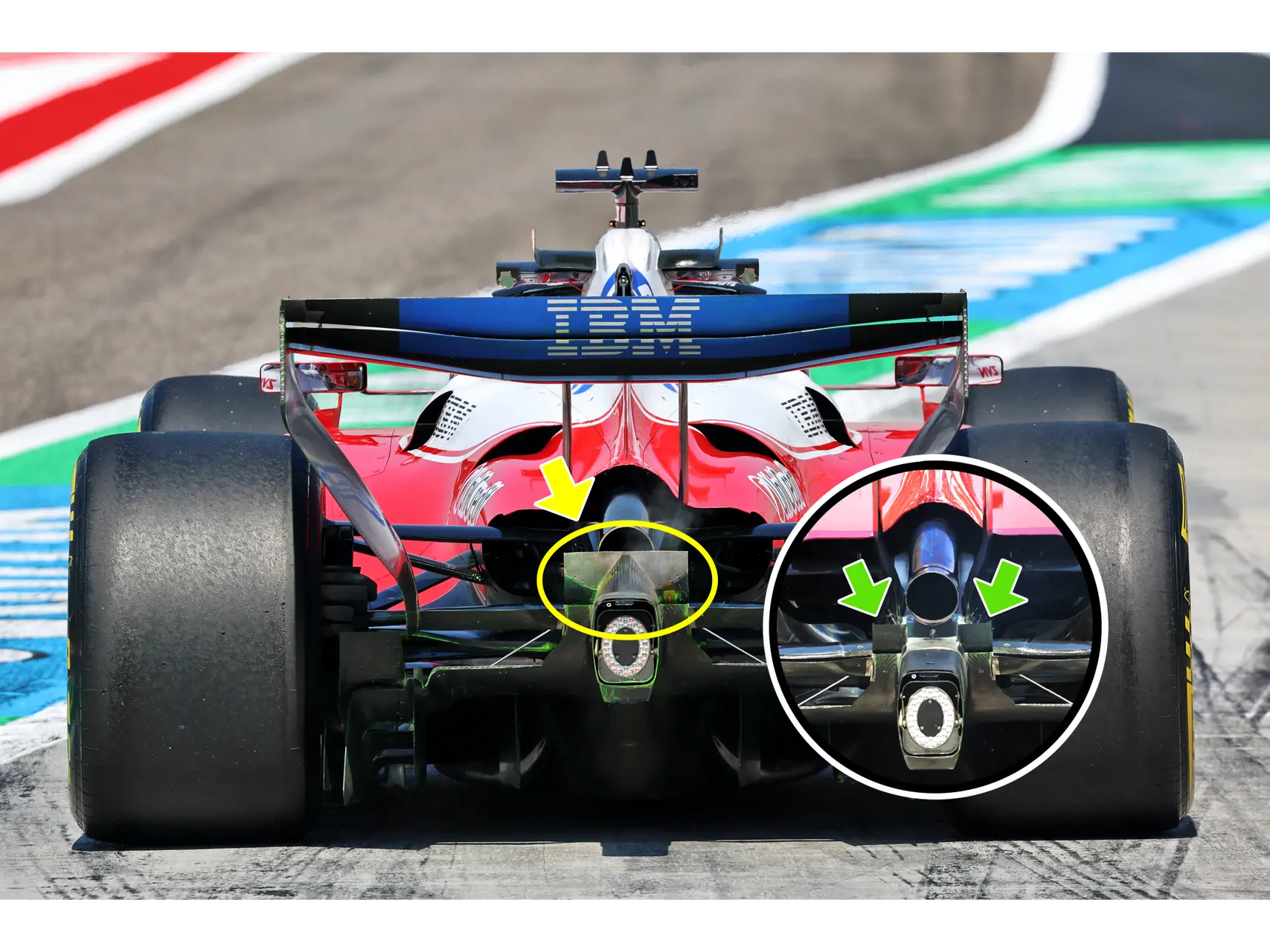
Ferrari's winglet placed just behind the exhaust exit - Image: Race Pictures
Updated:
0 Comments

Francesco is a technical analyst at GPblog, specializing in the technical side of Formula 1. Through illustrations and analysis, he makes complex components and developments accessible to a wide audience.
Most of the top teams have begun rolling out upgrades in the second week of testing, with a lot of interesting technical solutions.
As testing resumed, teams began introducing a series of updates to gather data and compare them with the base versions of their cars.
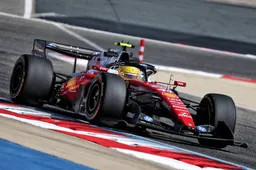
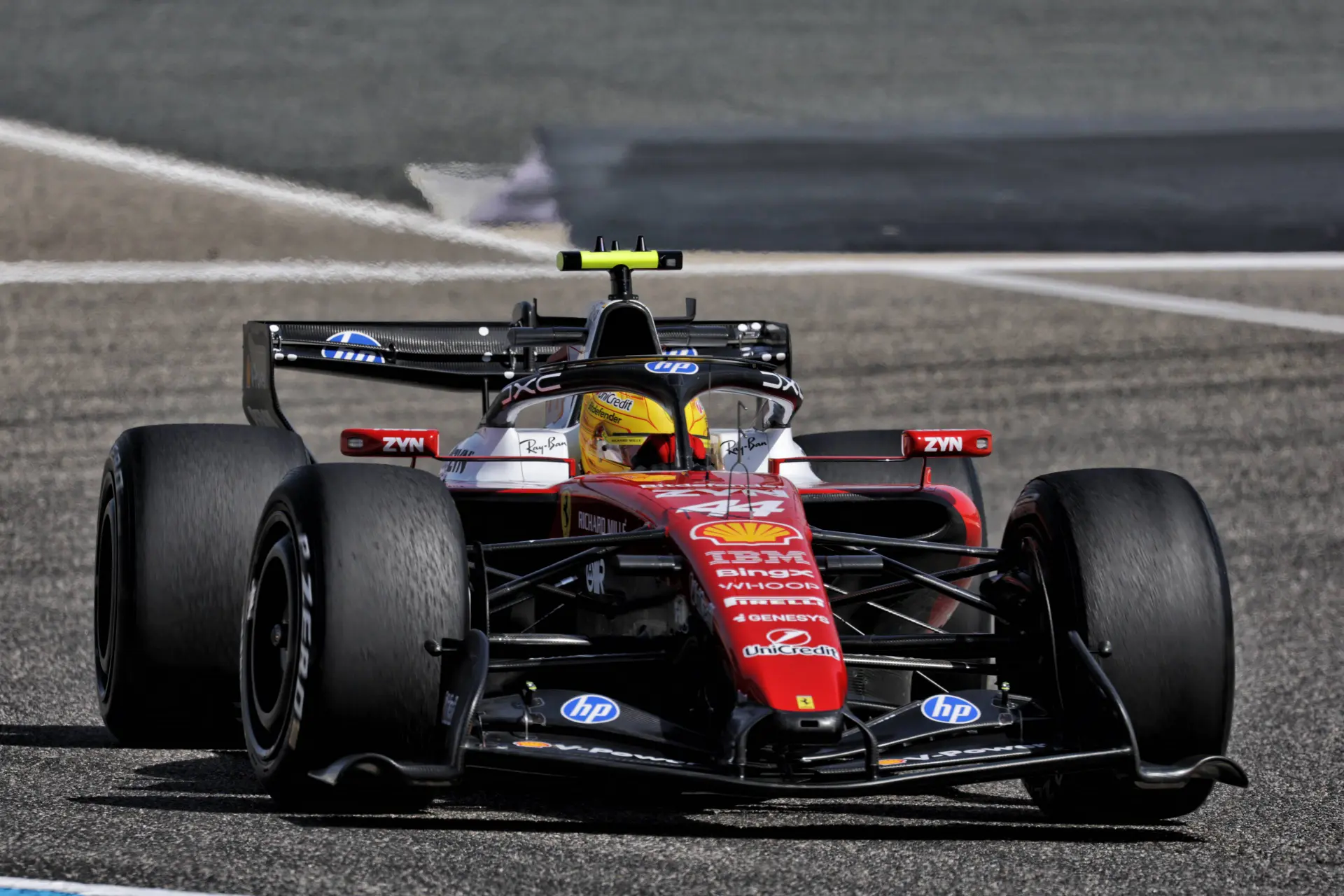
Mercedes and Red Bull Racing introduced a big package of updates, with changes to the floor and sidepod area, while Ferrari introduced an interesting detail that takes advantage of a grey area of the new regulations. Let’s try to describe all the updates spotted during the first few days of testing.
Red Bull with a new front wing and new sidepod
ADVERTISEMENT
Starting from Red Bull Racing, they introduced a new front wing and sidepods design on Wednesday. The front wing features a completely different design of the mainplane and the endplate: as highlighted in the picture below, in fact, the new mainplane shows a wavy profile along its length, while the old version had a more pointed shape (light blue arrow and line).
For what concerns the endplate lower tray, the new version shows a vertical winglet that aims at generating vortices and favours the out-washing effect (green arrow and circle), while the previous version featured an endplate tray without and winglet.
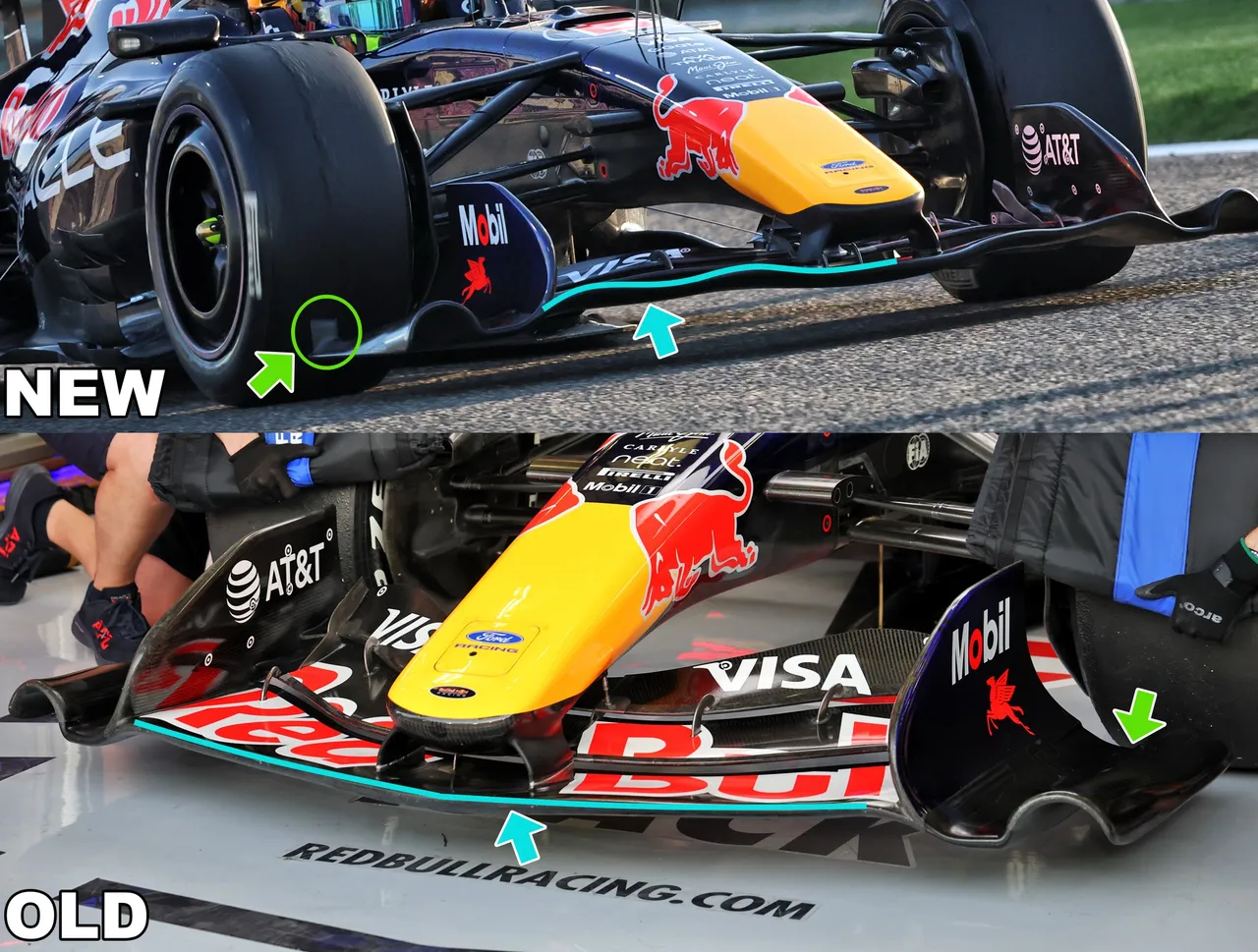
Red Bull Racing's front wing comparison between the two specs used in Bahrain - Image: Race Pictures
Moving now on to analyse the new sidepod design, Red Bull Racing engineers adopted a very similar approach to the one used in 2022: after testing a ‘base’ version of their sidepods in the first two sessions of testing, the team led by Laurent Mekies introduced new sidepods for the last three days.
As shown in the picture below, the old version (used in Barcelona and last week in Bahrain), featured a very square shape in the undercut.
ADVERTISEMENT
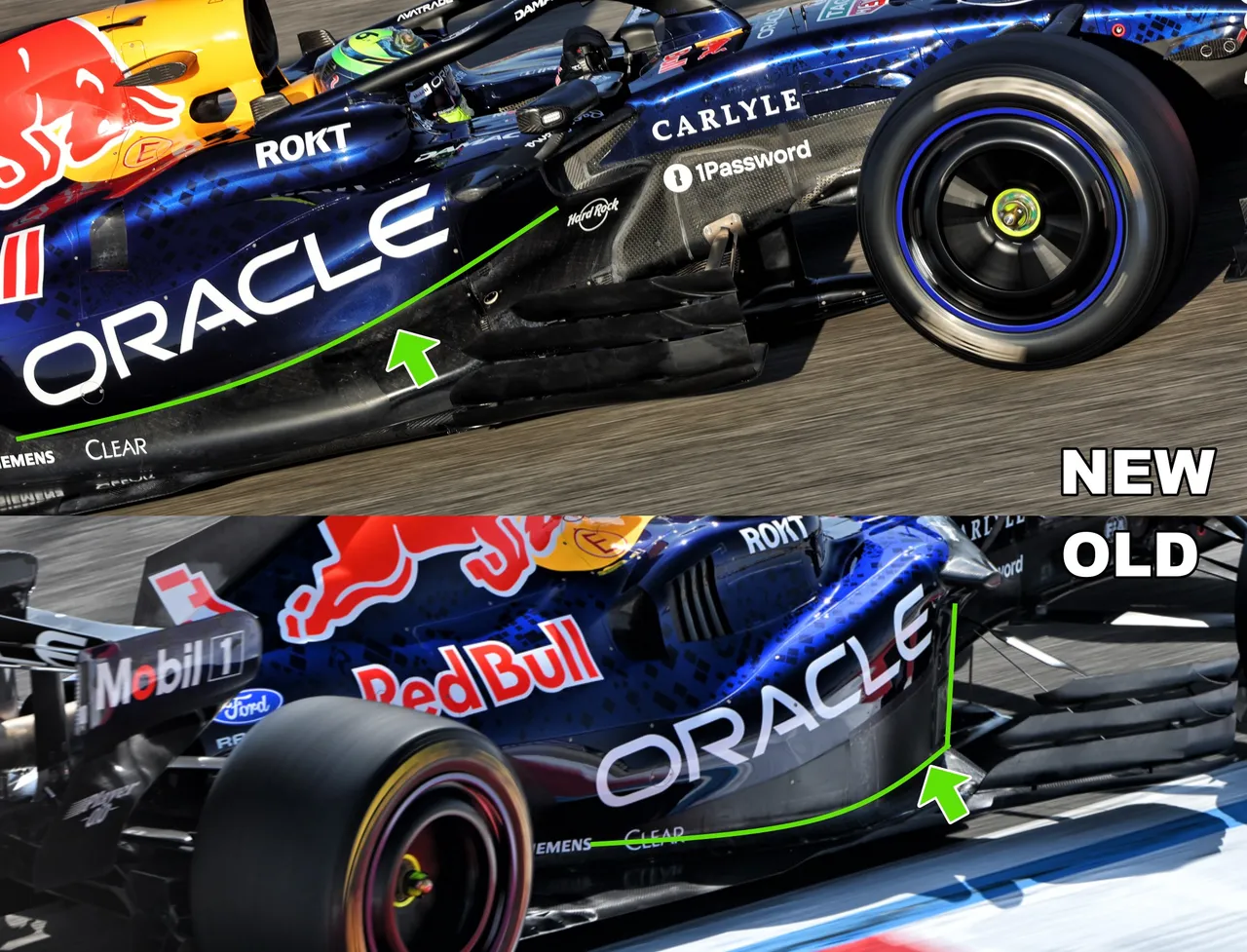
Comparison of Red Bull Racing's sidepod design tested in Bahrain - Image: Race Pictures
The new version, instead, shows a sharper cut at about half the height of the sidepod, which leaves a larger space in the lower part of the sidepod, precisely to create an undercut forming a channel that carries a large quantity of air towards the diffuser.
The goal of this new design is to work along with the new front wing and generate more downforce from the bodywork, which is fundamental, especially in high-speed corners.
Mercedes with a new floor and mirror support
Regarding Mercedes, they also introduced major updates to their car, particularly to the floor and wing mirror support: as shown in the picture below, the rear end portion of the floor (in front of the rear tyres) has been massively revised.
ADVERTISEMENT
The small flap present in the previous version has been eliminated and replaced by three horizontal cuts of increasing size towards the rear wheels, designed to better manage the turbulence produced by the rear wheels (red arrows).
The goal of this new solution is to maximise the amount of air pushed into the “mouse hole” on the ramp of the diffuser, to increase the overall downforce generated.
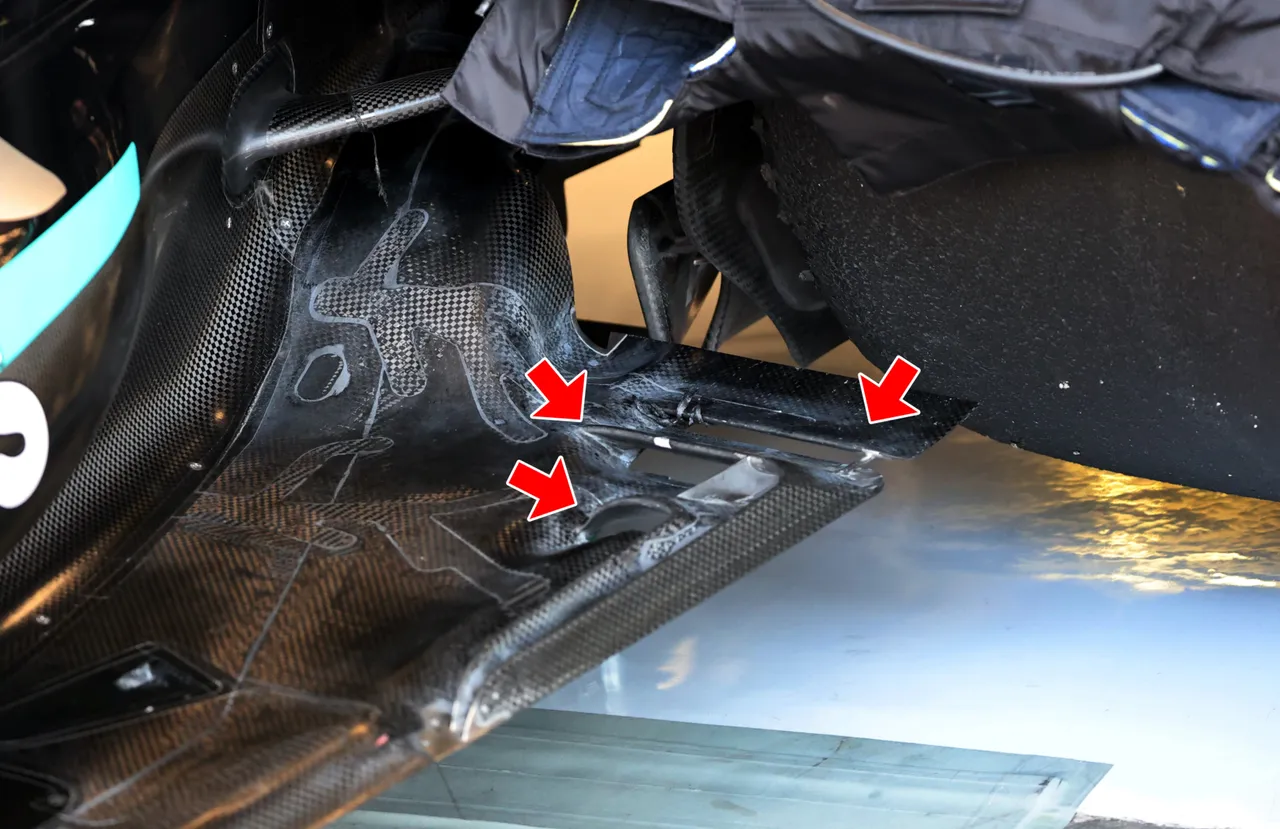
New Mercedes W17's rear end floor design - Image: Race Pictures
The mirror support is now longer and has the shape of a proper winglet, to generate some vortices and push them along the top line of the sidepods, avoiding any kind of flow detachment in that area.
Moreover, the lower portion of the floor placed under the lateral fence has been slightly modified and now shows a wavy shape compared to the more squared shape of the old version (green circle and arrow).
ADVERTISEMENT
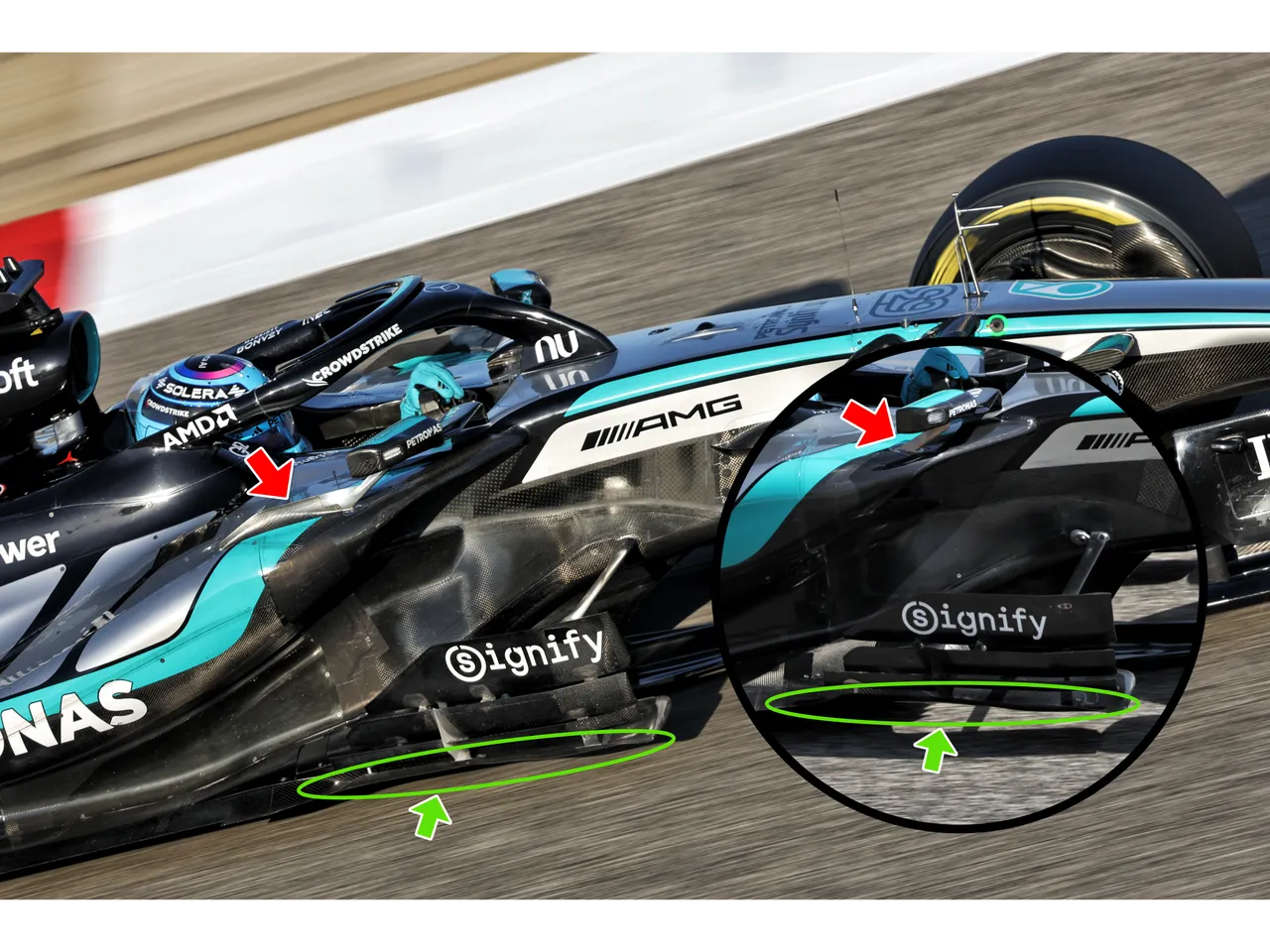
Mercedes' wing mirror support and floor changes - Image: Race Pictures
The goal of this new solution is to generate a series of vortices to seal off the floor edge, preventing airflow from being sucked under the floor and damaging the airflow directed towards the diffuser.
On Wednesday, Mercedes also tested a new front wing design on the endplate side: as shown by the picture below, the engineers decided to test a winglet in the upper portion, very similar to the solution adopted by other teams like McLaren and Williams.
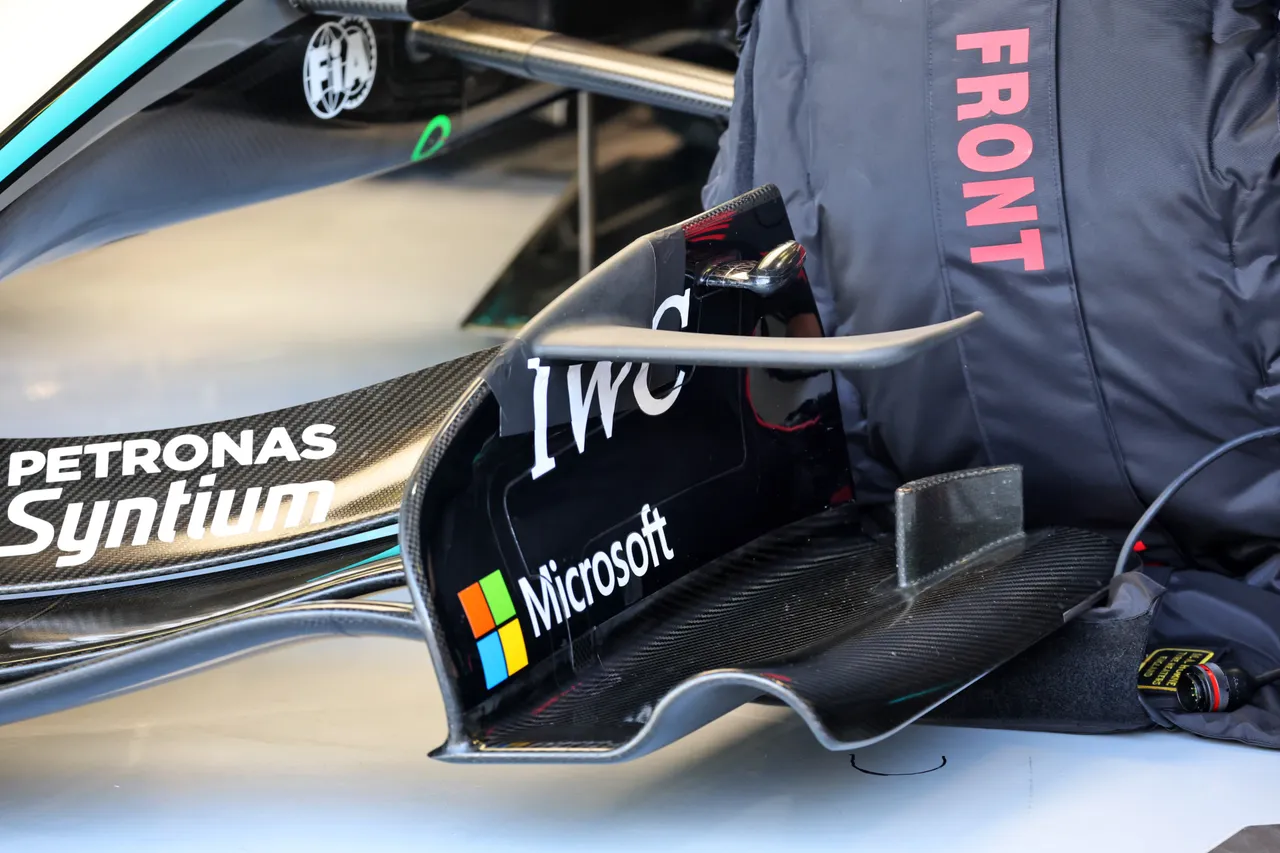
Mercedes' front wing endplate used in Bahrain - Image: Race Pictures
This component helps generate vortices and push the air outside the front wheels, improving the overall efficiency of the car. Despite this, the team made just some comparisons, as the winglet was fixed with some tape, as is visible in the picture below.
ADVERTISEMENT
Ferrari with a smart solution to the diffuser
Last but not least, Ferrari also introduced a small upgrade on their car as well: as shown in the picture below, the engineers took advantage of a very area of the regulations and placed a small winglet just behind the exhaust exit.
This small element, connected to the rear impact structure, directing the exhaust gases towards the rear wing, guaranteeing a small increment in terms of downforce generated by the rear end of the car (yellow arrow and circle).
The old version, instead, featured a simpler design, with two small winglets placed to the sides of the impact structure (green arrows).
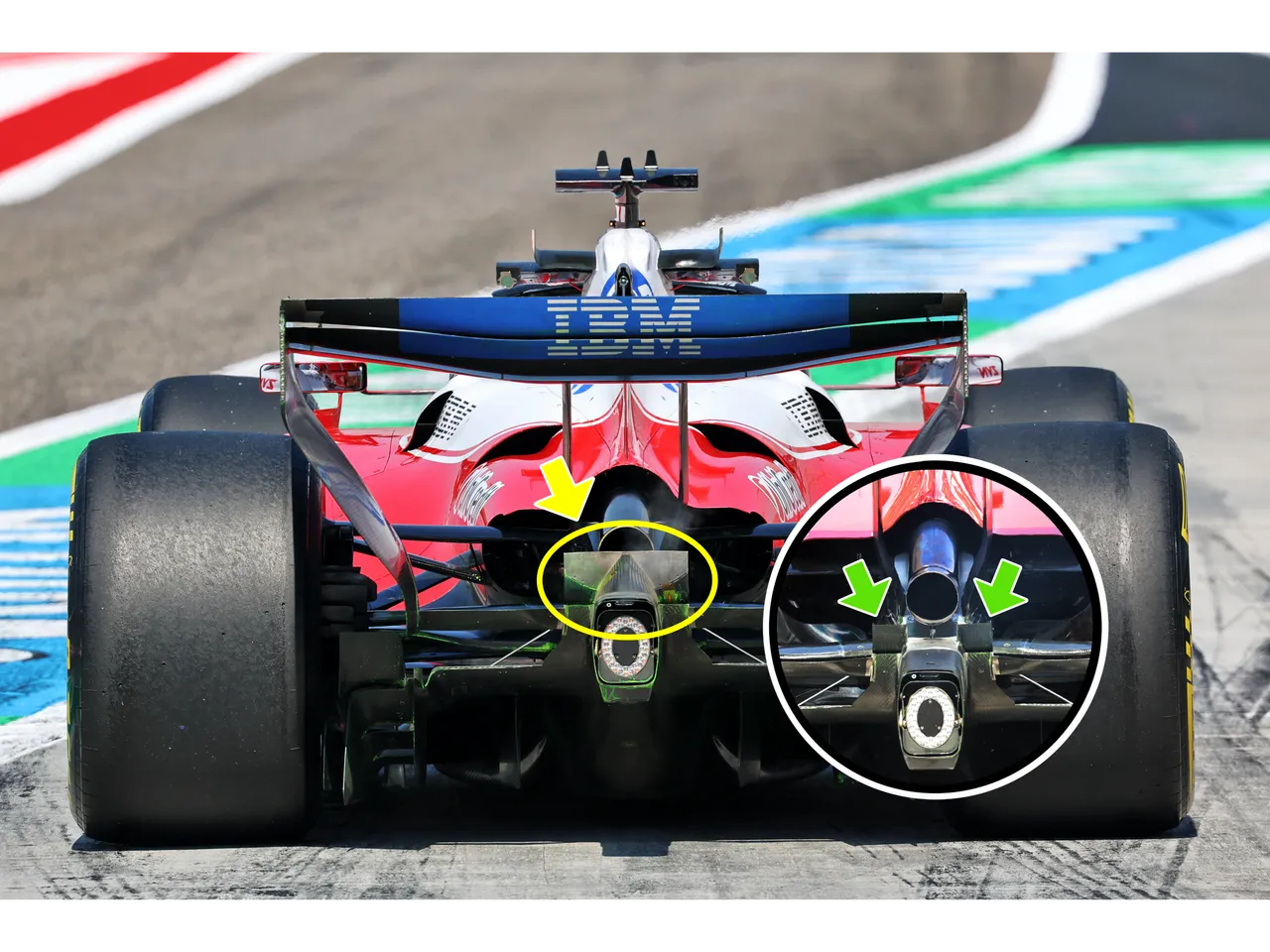
Ferrari's winglet placed just behind the exhaust exit - Image: Race Pictures
ADVERTISEMENT
In conclusion, teams probably decided to introduce a large amount of updates during the second week of testing in Bahrain to test them and gather data about their impact on performance, to confirm or discard some of these components for the first race in Melbourne.
Read also



Don’t miss GPblog in Google
Mark us as a preferred source and our articles will appear more often at the top of Top Stories.
Add as a preferred / source on Google