Hamilton’s damaged Ferrari faces a difficult recovery from Las Vegas
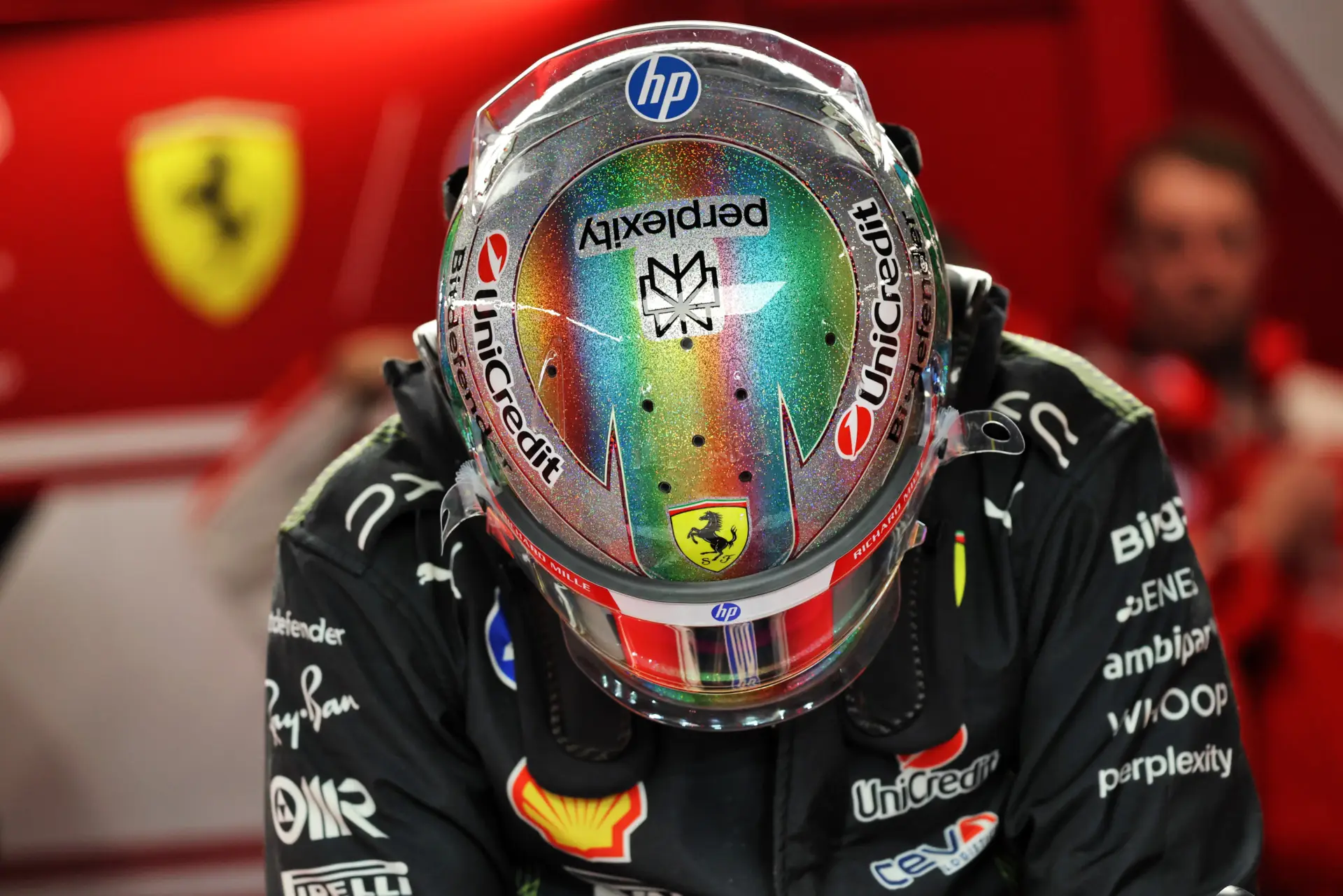
Photo: Race Pictures

Ben Hunt is an award-winning motorsport journalist with over two decades of experience in Formula 1 and international media. As a former editor-in-chief and bestselling author, he delivers in-depth analysis and strategic insight from the highest level of the sport.
Lewis Hamilton’s Las Vegas qualifying ended in Q2, with the Ferrari driver set to start 11th after penalties reshuffled the grid. He described the session as “a nightmare” and pointed to several factors that left him short of the pace needed to reach the final segment.
The most tangible problem was damage to the floor. Hamilton said Ferrari lost a piece early in the session, around his first or second lap in Q1. He estimated that the resulting change in balance cost three or four tenths of downforce, leaving him struggling with the car’s behaviour.
That was not the only issue. Hamilton also reported a deployment problem on his final lap, which he said cost further time. He still described that lap as “pretty good” and “the best I could with what I had”, a measure of how difficult it was to recover from the earlier setbacks.
The result was a 12th-place qualifying position before penalties were applied, while team-mate Charles Leclerc was eliminated in 11th. Ferrari’s struggles were not limited to Hamilton’s damaged car: both drivers also spoke about losing time on the straights and failing to find the right conditions for a competitive lap.
Hamilton’s starting position gives him a chance to move forward, but the circuit makes that easier said than done. The long straights provide overtaking opportunities, yet a car lacking speed there may struggle to complete a pass. Hamilton will also need to manage the tyres carefully in the cool conditions.
ADVERTISEMENT

Ferrari need more than a clean race
The damage offers one explanation for Hamilton’s qualifying result, but it does not account for the whole team’s performance. Leclerc was also knocked out in Q2 and described Ferrari’s session management as frustrating, while highlighting traffic and the importance of tyre preparation.
If Hamilton’s biggest deficit came from damage and a specific deployment issue, a clean run could help him recover some positions. But if Ferrari’s straight-line speed remains a broader weakness, he may find it difficult to pass rivals even when the car has enough pace in other parts of the lap.
Ferrari’s usual strength in managing tyres over a race distance may offer some encouragement, but it is not a guarantee of a strong result. The cold Las Vegas conditions make tyre warm-up a challenge for the whole field, and Hamilton’s car will have to perform consistently across a long race rather than a single qualifying lap.
ADVERTISEMENT
The damage also raises an operational question for Ferrari: how much of the problem can be addressed before the start, and what must be managed on track? The team can inspect and repair components, but it cannot simply erase the lost qualifying position. Nor should the floor issue be treated as proof that the car would otherwise have reached Q3.
GPBlog has already reported on Hamilton’s explanation of the floor damage and Leclerc’s frustration after Ferrari’s Q2 exit. Together, the accounts show a difficult session with both individual and team-wide elements.
Hamilton’s race is therefore a test of what Ferrari can recover once qualifying is over. A clean start and effective strategy could move him towards the points, but a major climb will require more than simply avoiding another problem: Ferrari must also find a way to make its pace count on the straights.

ADVERTISEMENT
Don’t miss GPblog in Google
Mark us as a preferred source and our articles will appear more often at the top of Top Stories.
Add as a preferred / source on Google