Big news for Verstappen fans: Max leaves door open to even longer F1 stay

Photo: Red Bull Content Pool

Nicole MulderManaging Editor
Nicole Mulder is Managing Editor at GPblog and a specialist in Formula 1 and MotoGP. With years of experience and permanent FIA accreditation at Grands Prix worldwide, she delivers reliable coverage and insights based on direct access to drivers and the F1 paddock.
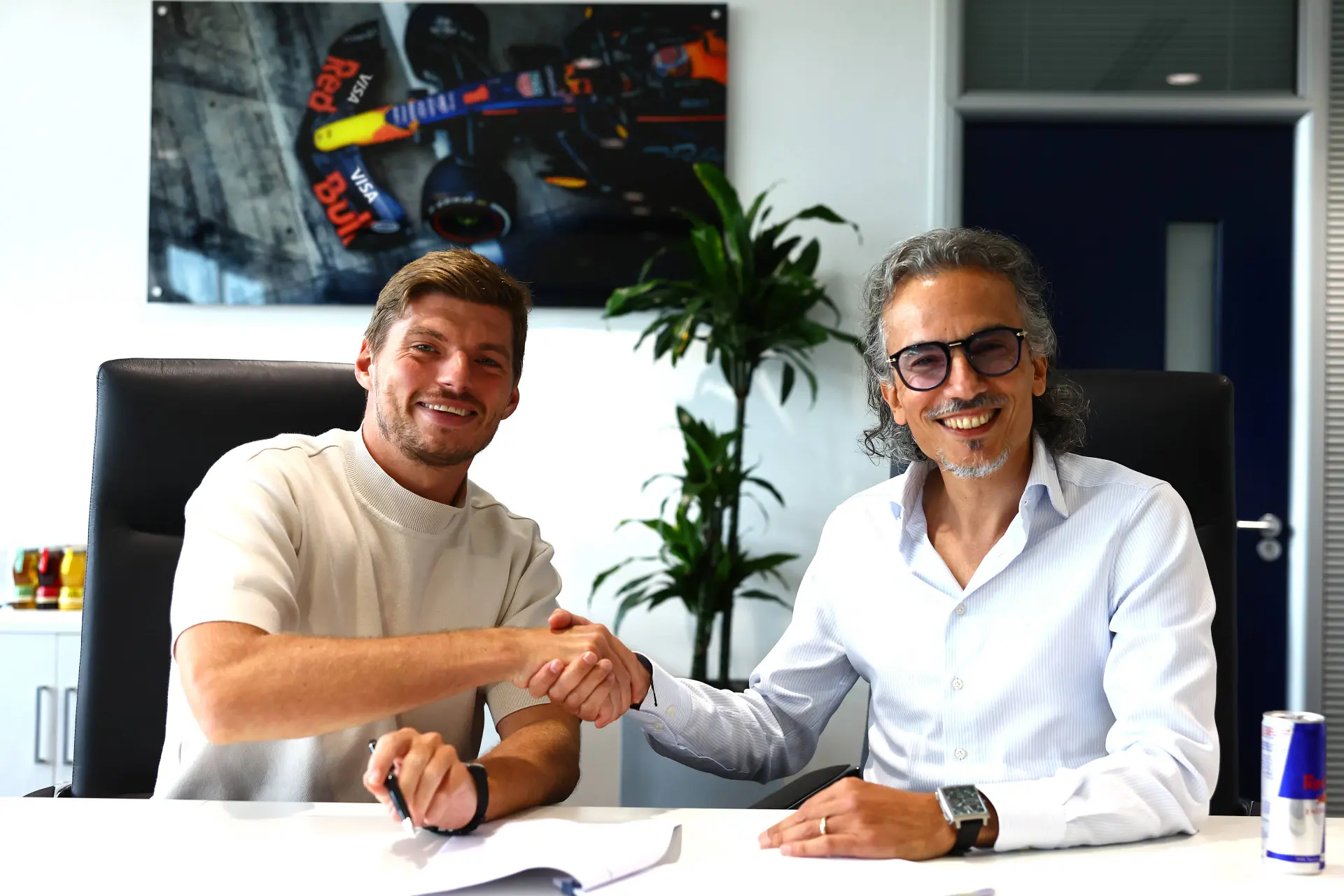
With his new contract running through 2030, Max Verstappen has explicitly left the door open for an even longer stay in Formula 1. The Dutchman still wants to end his career at Red Bull and does not rule out continuing after his current deal. A potential return of the V8 engine plays an interesting role in that.
In recent years, Verstappen often spoke about a relatively early retirement from Formula 1. He didn’t always like the direction in which the sport was developing technically. The new 2026 regulations also didn’t initially appeal to him. After the first races, the doubts went so far that Verstappen told team boss Laurent Mekies he didn’t want to answer questions about his future.
The four-time world champion now feels differently. Verstappen has extended his contract, which originally ran through 2028, by two years and repeats in conversation with, among others, GPblog a promise he made years ago to the late Red Bull founder Dietrich Mateschitz: "I always said, and I said this when Dietrich was still alive, I said, 'My goal and target is to finish my career in this team.' I think we're getting close to that."
For the time being, Verstappen is anything but planning to leave: "I feel very good in this team. I have the belief in the people that we can get back to the top. Time will tell. I mean, that's what we are targeting. I still want to win races. I'm hungry to win more."
Verstappen considered quitting at the start of 2026
ADVERTISEMENT
The fact that Verstappen is now talking about the years still ahead of him stands in stark contrast to how he felt at the beginning of the season. The new generation of Formula 1 cars places much more emphasis on electrical energy, and during winter testing and the first Grands Prix Verstappen made no secret of his dissatisfaction. The Dutchman again confirmed that at that time he seriously doubted whether he even wanted to continue.
Verstappen then hints at a possibly even longer stay in the sport, with an eye on the next major rules changes. This has everything to do with the possible return of V8 engines, something FIA president Mohammed Ben Sulayem strongly supports: “I accepted the situation that I think we're all in, and just trying to make the best of that. I think also with the year that I signed to, it again opens up the door maybe, when potentially the V8s come in, to look at that again as well."
Could the V8 keep Verstappen in F1 even longer?
That gives the year 2030 extra significance. Verstappen is now committed through the end of that season, while within Formula 1 there is talk of a next generation of engines in which a return of the V8 is among the possibilities. For someone who previously hinted multiple times that he did not want to continue indefinitely under regulations that don’t suit him, that development could be a reason to reassess his future.
Verstappen emphasizes that his objections to the current cars have not disappeared because of this. However, the conversations with Formula 1 and the FIA, and the outlook for the coming years, have given him enough confidence to commit himself again for multiple seasons: "It's what I said a bit before, where I accepted kind of the situation that we're in. Personally, of course, I'm not happy with it, but at the same time, with the discussions that I've had with F1 and FIA, already trying to make little improvements for next year, the year after."
ADVERTISEMENT
He continues: "I'm willing to accept that at the moment. It's, let's say, not fantastic, but I still love racing. I mean, it's still a Formula 1 car. Some tracks are better than others, but yeah, for sure we know that in some areas I think we can improve. So over the years it will get a little bit better."
With the new deal, Verstappen has committed to Red Bull for four full seasons after 2026, but he does not automatically consider 2030 to be the end point of his Formula 1 career. First, he wants to get back to the top with the team with which he won four world titles. By the time his new contract expires, the sport’s technical future could once again be decisive for the choice he makes: whether to continue after 2030 or not.

Don’t miss GPblog in Google
Mark us as a preferred source and our articles will appear more often at the top of Top Stories.
Add as a preferred / source on Google