Why some of the F1 media have got Christian Horner’s Ferrari comments completely backwards

12:00, 28 Sep
2 Comments

Ben Hunt is an award-winning motorsport journalist with over two decades of experience in Formula 1 and international media. As a former editor-in-chief and bestselling author, he delivers in-depth analysis and strategic insight from the highest level of the sport.
Formula 1 media loves nothing more than an Italian soap opera involving the sport's most famous and iconic team. It also laments the loss, temporarily at least, of its perennial villain, Christian Horner, the former Red Bull boss. So whenever the opportunity came to position the two subjects within the same headline, it was always going to be combustable.
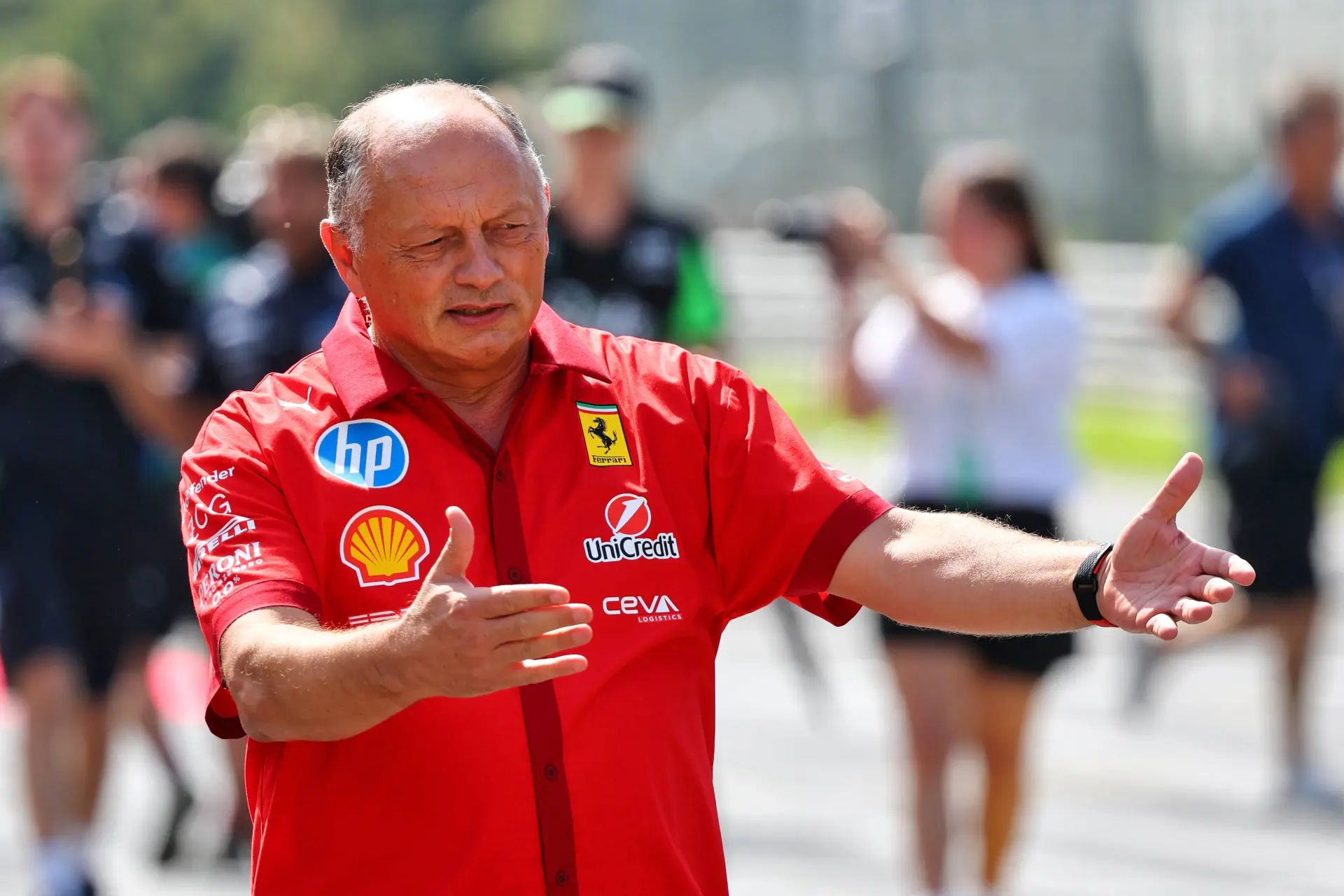
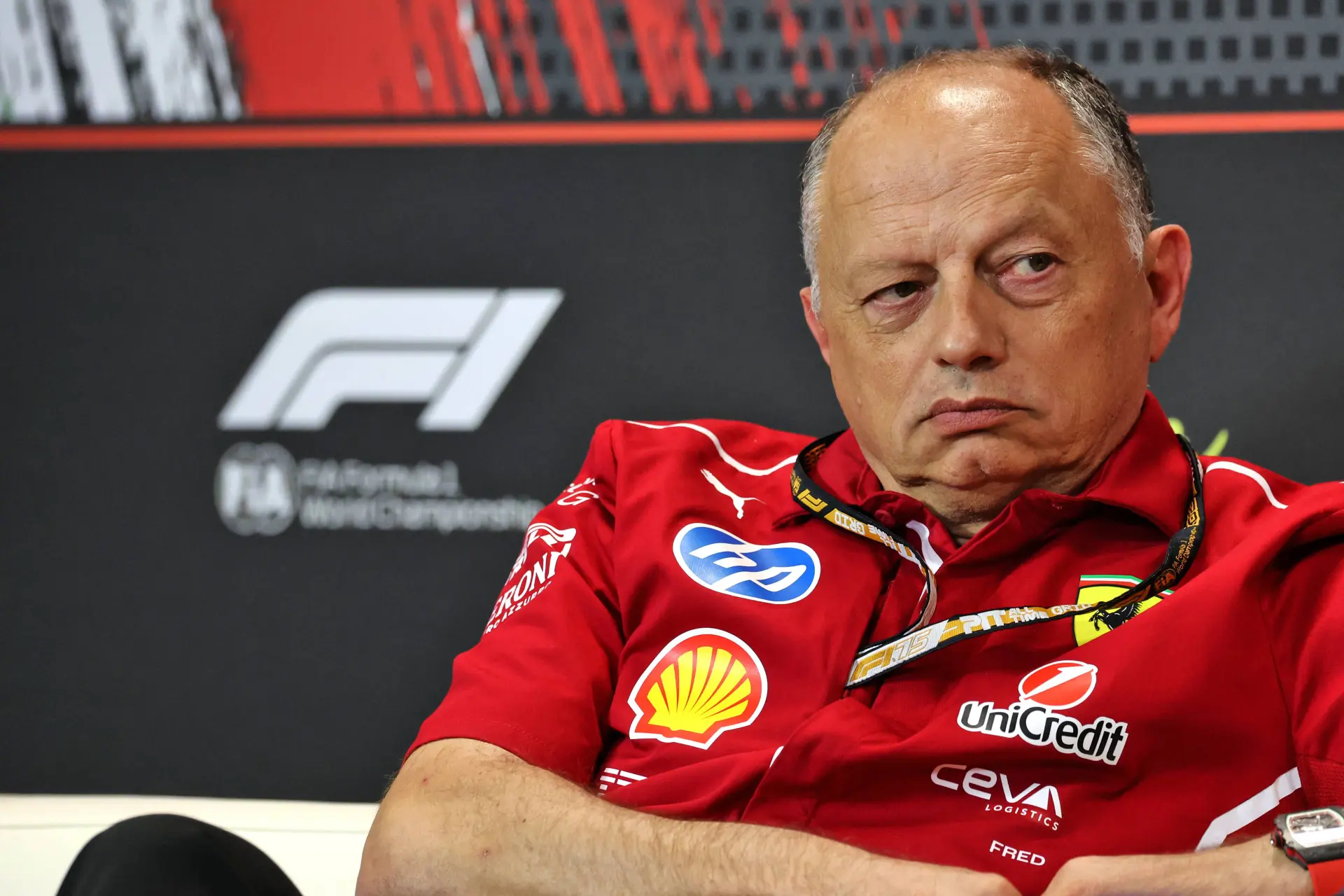
However, it is not that straightforward. See, Horner's comments to The Times, in which he described Ferrari as Formula 1’s “biggest brand”, “the dream”, and a “sleeping giant” have all been interpreted as the opening salvo in a campaign to replace Fred Vasseur. The narrative was minted within hours: Vasseur is under threat, Ferrari is once again in crisis, and Horner is actively positioning himself to take control of the Scuderia.
However, it is not that straightforward. See, Horner's comments to The Times, in which he described Ferrari as Formula 1’s “biggest brand”, “the dream”, and a “sleeping giant” have all been interpreted as the opening salvo in a campaign to replace Fred Vasseur. The narrative was minted within hours: Vasseur is under threat, Ferrari is once again in crisis, and Horner is actively positioning himself to take control of the Scuderia.
It is a compelling story, especially in the midst of a non-existent title fight where all the sport's drivers have conceded defeat to Mercedes' Kimi Antonelli. Factor in dull races in Madrid and Baku, the 2027 driver line up already confirmed - apart from three teams - and still no news from F1 on what it intends to do with the Middle Eastern races, and it becomes not only compelling, but also a story capable of getting plenty of traction.
The other element too is that while Vasseur labelled the comments attributed to Horner as unhelpful and disrupting, Horner, who is currently unemployed and doing publicity for his new book, does not yet have a forum to clarify his comments to The Times.
The other element too is that while Vasseur labelled the comments attributed to Horner as unhelpful and disrupting, Horner, who is currently unemployed and doing publicity for his new book, does not yet have a forum to clarify his comments to The Times.
Horner’s interview was conducted before the Italian Grand Prix as promotional activity for his book, arranged through its publisher rather than as a move orchestrated by Horner himself. And while the subject of Ferrari came up, the article - which appeared behind The Times paywall fails to make it clear that there have been no discussions over a role at Maranello.
This was Horner discussing Formula 1’s most romantic hypothetical, not declaring that a deal was close. Asked whether he would ever consider leading Ferrari, there are very few people in grand prix racing who would dismiss the allure of the sport’s most famous team. For someone with Horner’s profile, the answer was always likely to acknowledge the prestige of the opportunity.
Horner's return linked to an equity stake
ADVERTISEMENT
At Red Bull, Horner held no shareholding. Yet he was chief executive and team principal, with considerable influence over driver choices, senior recruitment, commercial matters and the major investment decisions shaping the racing operation.
The point was never merely about owning a piece of the team but about being able to run the project without needing every consequential decision approved by another layer of management.
That distinction is crucial in assessing whether Ferrari could realistically work for him. Ferrari’s leadership structure under chairman John Elkann and CEO Benedetto Vigna has not given its recent team principals the kind of autonomy Horner exercised at Red Bull.
Mattia Binotto did not have it. Vasseur does not have it. For Horner to arrive and operate on his preferred terms, Ferrari would have to rethink not only who runs the team, but how the company governs its racing division. That is a vastly bigger leap than the latest headlines imply.
It would also involve changing a culture that has been built over decades. Ferrari is not simply another Formula 1 team with a famous badge. It is an institution: an organisation with its own hierarchy, internal pressures and a uniquely intense relationship with the Italian media.
ADVERTISEMENT
Vasseur has openly had to confront issues inside Maranello, from encouraging staff to take responsibility rather than act defensively to attempting to reduce the flow of internal information into the press. Horner could only make Ferrari work in the mould he understands by bringing his own people, resetting decision-making structures and securing the authority to make difficult changes. That may be precisely what some observers believe Ferrari needs. It could equally create resistance, factions and a fresh cycle of instability.
This is why the idea that Horner to Ferrari is an obvious match is too simplistic. Ferrari is undoubtedly the most seductive destination available to any Formula 1 leader. But the very qualities that make it so attractive; its scale, history and scrutiny, also make it a difficult fit for a figure accustomed to operating with exceptional freedom.
Pressure remains on Vasseur
There is, of course, a reason the speculation has found fertile ground. Vasseur is facing pressure after an underwhelming season, and Lewis Hamilton’s comments following the Italian Grand Prix were interpreted by some as criticism of Ferrari’s leadership. Hamilton subsequently clarified that he had “never asked for anyone on my team to be replaced”, but in the Maranello pressure cooker, clarification rarely travels as fast as a crisis narrative.
Vasseur himself admitted after Baku that Ferrari were not working in “perfect serenity”, calling it frustrating that so many questions centred on his future. That frustration is understandable. The team is trying to fight for results while being asked repeatedly about a man who is not currently part of the organisation.
ADVERTISEMENT
Yet Vasseur has been here before. Amid similar noise during 2025, Ferrari handed him a new multi-year contract. He also remains publicly committed to the job, insisting that he will push “until the last corner” of the season. There is no public indication that Ferrari have made a decision to replace him, let alone chosen Horner as his successor.
The reality is more nuanced than the gossip cycle allows. Horner has not shut the door on Ferrari. On the contrary, he has made it clear that it is the one role capable of persuading him to soften a previously firm condition.
He has also shown self-awareness in acknowledging that he could be both “the cure and the problem” for a team that hires him. But that does not mean a move is imminent.
It means the possibility exists in theory, subject to the kind of fundamental agreement over authority, structure and culture that cannot be resolved by one eye-catching newspaper quote. Horner wanted to demonstrate that he remains relevant in Formula 1.
The media’s response has proved him right. But relevance is not the same thing as a vacancy, and a flattering answer about Ferrari cannot be dressed up as a come-and-get-me plea. Sadly, it seems that the media have got excited by the two subjects aligning in an otherwise dry news cycle.
ADVERTISEMENT
Don’t miss GPblog in Google
Mark us as a preferred source and our articles will appear more often at the top of Top Stories.
Add as a preferred / source on GoogleRead more about:
latest news
Bahrain Grand Prix
Overview
Friday 02.10.26
Practice 1
04:30 AM
Practice 2
08:00 AM
Saturday 03.10.26
Practice 3
04:30 AM
Qualification
08:00 AM
Sunday 04.10.26
Race
07:00 AM
Friday 02.10.26
Practice 1
Fri 04:30 AM
Practice 2
Fri 08:00 AM
Saturday 03.10.26
Practice 3
Sat 04:30 AM
Qualification
Sat 08:00 AM
Sunday 04.10.26
Race
Sun 07:00 AM
Times are in your local timezone
Rumors
Popular on GPBlog
1
Vasseur under pressure: they could be his replacement
3259 times read
2
Red Bull appears to have already revealed Fred Vasseur's successor at Ferrari
2806 times read
3
F1 drivers to face new challenge according to Malaysia weather forecast
2170 times read
4
Alpine issue statement condemning online abuse after Colapinto-Norris crash
1906 times read
F1-stand 2026
Season
| Pos. | Driver | Team | Points |
|---|---|---|---|
1 | MercedesMER | 302 | |
2 | MercedesMER | 236 | |
3 | FerrariFER | 199 | |
4 | McLarenMCL | 186 | |
5 | FerrariFER | 179 | |
6 | Red Bull RacingRBR | 163 | |
7 | McLarenMCL | 120 | |
8 | Red Bull RacingRBR | 86 | |
9 | Racing BullsRCB | 59 | |
10 | AlpineALP | 41 |
Loading