
Shanna is a Formula 1 journalist at GPblog, specializing in both F1 and endurance and GT racing. With a Master’s degree in Journalism and experience at international circuits, she provides in-depth, reliable coverage and insights based on her presence at Grands Prix and racing events worldwide.
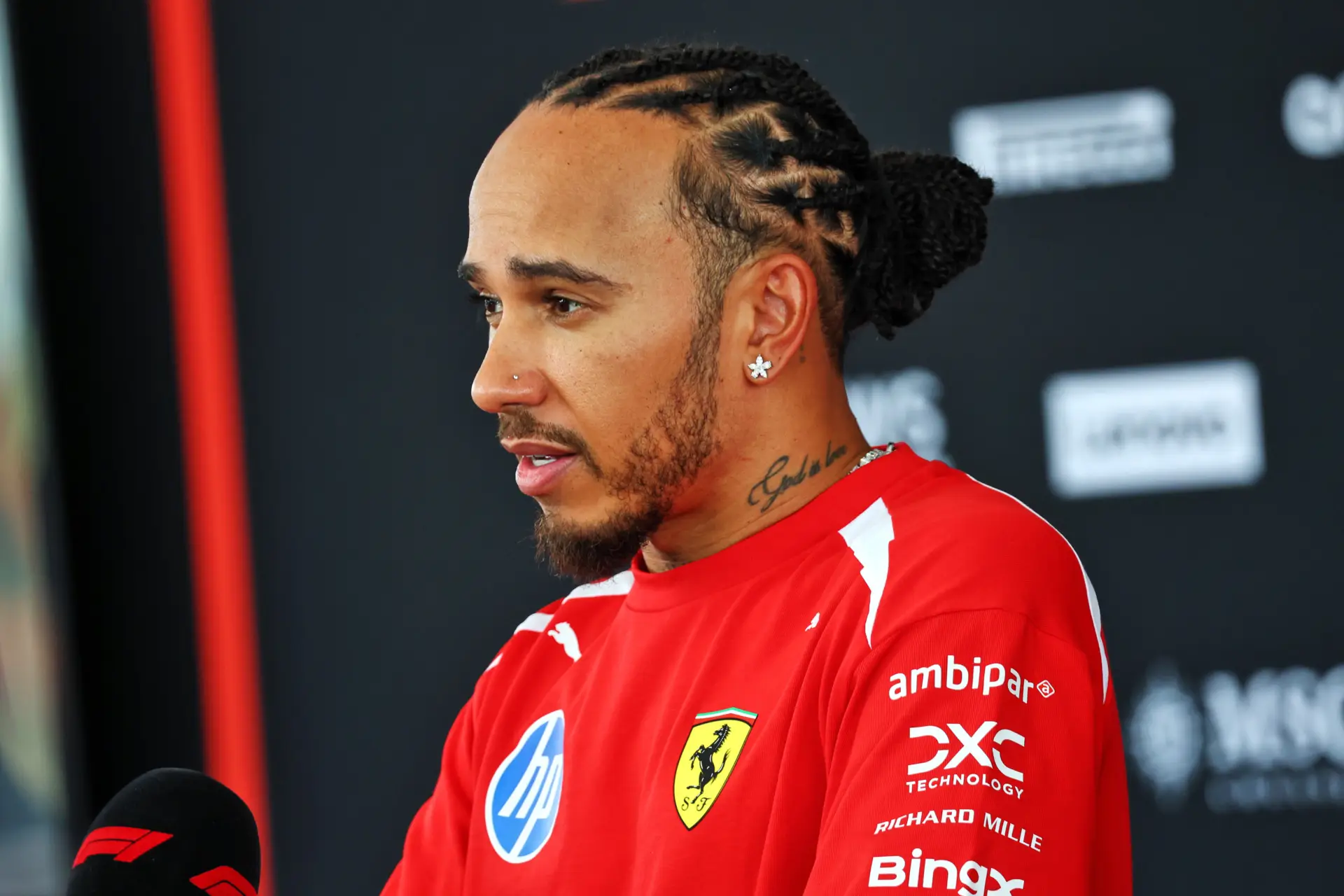
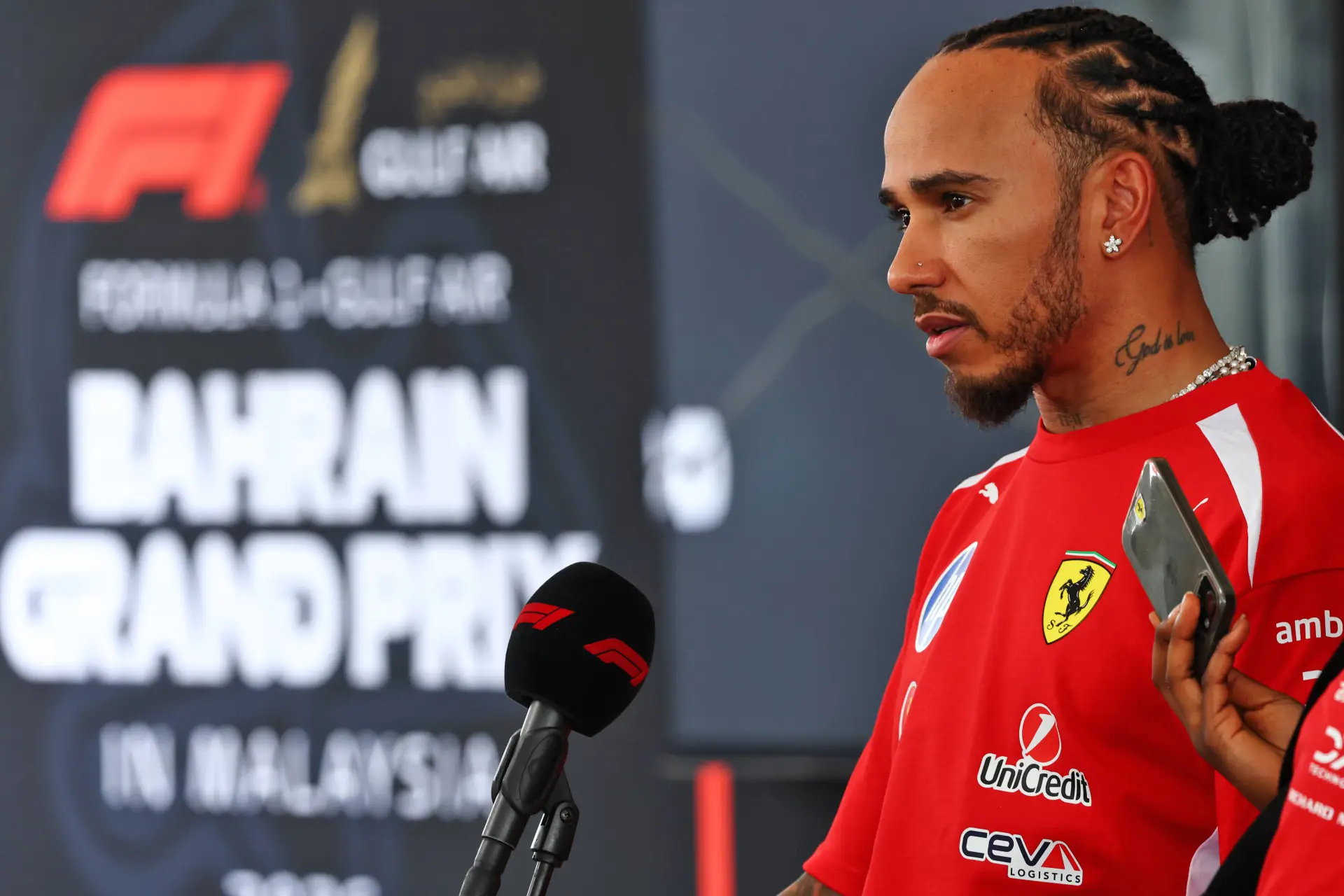
Lewis Hamilton took pole position for the sprint race at Silverstone, but the telemetry shows where Ferrari really made the difference. The data also explain why Max Verstappen immediately pointed to Red Bull’s biggest current weakness afterwards.
First, it is worth noting that the gap is an immediate two-tenth gap between the top two, after which the top five are tightly bunched. As has been the case in recent races, several drivers are separated by less than a tenth of a second, with Verstappen, Charles Leclerc and Lando Norris all firmly in the mix.
The close margins are hardly a surprise, as the drivers had already anticipated such a scenario heading into the weekend. Silverstone has become a very different challenge under the current regulations, with energy management now playing a crucial role through the circuit's high-speed sections.
For the telemetry analysis, which literally means the remote collection of data, we compared the fastest SQ3 laps from the leading driver of each of the top teams, placing their quickest efforts side by side. All four drivers completed their laps on the soft tyre.
The track map below highlights where each driver held an advantage. What stands out immediately is how evenly matched the field is, with no driver dominating any significant portion of the circuit. McLaren, however, appears particularly strong through Turns 10, 11 and 12, as well as on the straight between Turns 14 and 15.
ADVERTISEMENT
Significant deficit compared to Ferrari
Hamilton set the fastest lap, but is only dominant from Turn 8 to Turn 9 and between 15 and 16. Red Bull and Mercedes pick up small pieces of the track. If we then filter out some peak moments, we see four spots on the circuit where the differences are very large: Turn 3, Turn 6, Turn 9, and Turn 16. There, Hamilton is consistently significantly faster than his rivals.

The telemetry data of Max Verstappen, Lewis Hamilton, Lando Norris, and Kimi Antonelli from sprint qualifying at Silverstone - Source: GP Tempo/Illustration: GPblog
From the start/finish line to Turn 3, Mercedes and Red Bull were the faster cars, but under braking, Ferrari manages its battery more cleverly. Hamilton carries much more speed into the corners, entering at 371 kilometres per hour, while the other three drivers are stuck at 257–258 kilometres per hour. Surprisingly, Verstappen claims a dominant section towards Turn 6, where he reaches 291 kilometres per hour, but Hamilton is then quicker in the corner itself.
The four-time world champion said after sprint qualifying that they “still had to work on the corners and energy management”, which the telemetry and the map above clearly show. In Turns 6, 8, and 9, Red Bull is again much slower than Ferrari. Especially before Turn 9, where Hamilton enters at 321 kilometres per hour, and Verstappen is stuck at 307 kilometres per hour, a difference of fourteen kilometres per hour. Norris records a difference of sixteen kilometres per hour.
ADVERTISEMENT
Pirelli noted that Turn 9 in particular, but fast corners in general, can be tough on the tyres. “The fast corners cause a lot of abrasion, especially on the left side of the car and especially on the front left. The more severe corners, with 4.5g of lateral acceleration, are Turns 1 and 9,” said top man Dario Marrafuschi. Asked by GPblog whether the above peak differences for Ferrari are due to better tyre management, he was clear: “On a push lap, I don't think it is tyre management.”

The peaks in the telemetry are more likely caused by energy management, according to Pirelli - Photo: Racepictures
How Verstappen’s comments show up in the data
The final peak comes in the run towards the last three corners and the finish line. There, at 271 kilometres per hour, Hamilton is once again more than ten kilometres per hour faster than Verstappen, Antonelli, and Norris. Those four peaks ultimately helped him secure pole position and highlighted Ferrari's clever approach to energy management. However, tyre management also plays a role, as getting the tyres into the optimal operating window requires a significant amount of energy.
This ties back to Verstappen’s comments after sprint qualifying and his radio messages about understeer. “Yes, some teams are having a bit more trouble compared to last year with the front axle,” Pirelli told GPblog. “That’s another point of attention, but it’s actually a general phenomenon we always see. With these cars, it’s important to get enough temperature into the front tyres, while you need to pull temperature out of the rears and keep them under control.”
ADVERTISEMENT
Understeer is directly related: if the front tyres don’t come up to temperature quickly enough and therefore have less grip, the car wants to continue straight in the corner instead of turning in sharply, causing understeer. Pirelli’s findings on downforce on the straights may also be connected to this: “This is another issue, but it is also a general characteristic that we always see. These cars need to build temperature in the front tyres while removing and controlling the temperature in the rears.”

Red Bull Racing knows what needs to be done for the sprint race at Silverstone - Photo: Racepictures
Read also

Don’t miss GPblog in Google
Mark us as a preferred source and our articles will appear more often at the top of Top Stories.
Add as a preferred / source on GoogleRead more about:
latest news


Bahrain Grand Prix
Overview
... ...
Practice 1
...
Practice 2
...
... ...
Practice 3
...
Qualification
...
... ...
Race
...
... ...
Practice 1
...
Practice 2
...
... ...
Practice 3
...
Qualification
...
... ...
Race
...
Times are in your local timezone
Popular on GPBlog

1
FIA reaches verdict on Hamilton following Bortoleto impeding incident in FP2
2327 times read

2
Hamilton gives first indication of Ferrari’s true pace after Bahrain GP FP2
1401 times read
3
Verstappen sends warning to Mercedes in race simulations as Ferrari waits
1384 times read
4
FIA steps in at the last minute: Sepang pole position was on the wrong side of the track
1146 times read
F1-stand 2026
Season
| Pos. | Driver | Team | Points |
|---|---|---|---|
1 | MercedesMER | 302 | |
2 | MercedesMER | 236 | |
3 | FerrariFER | 199 | |
4 | McLarenMCL | 186 | |
5 | FerrariFER | 179 | |
6 | Red Bull RacingRBR | 163 | |
7 | McLarenMCL | 120 | |
8 | Red Bull RacingRBR | 86 | |
9 | Racing BullsRCB | 59 | |
10 | AlpineALP | 41 |
Loading