Did Las Vegas’s record overtaking figure tell the whole story?
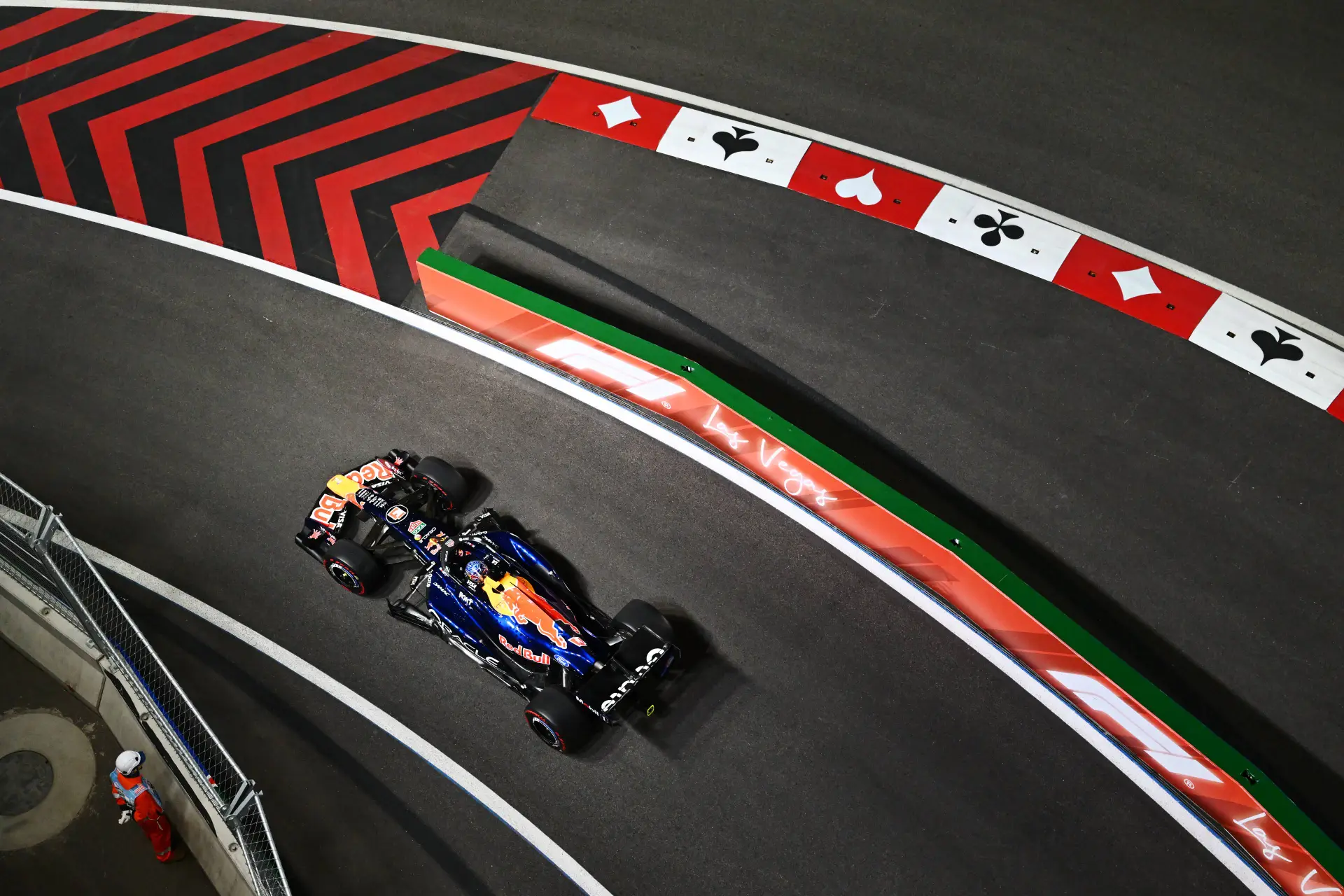
It was a battery-powered race in Las Vegas - Photo: Red Bull Contentpool

Ben Hunt is an award-winning motorsport journalist with over two decades of experience in Formula 1 and international media. As a former editor-in-chief and bestselling author, he delivers in-depth analysis and strategic insight from the highest level of the sport.
Formula 1 has been quick to slap itself on the back after the the Las Vegas Grand Prix produced a reported 352 overtakes, but does that tell the real story? In a gushing press release, the sport claimed the event was 'the 21st sold-out race in a row this season and delivered incredible racing on each of its 50 laps, with a record number of overtakes and wheel-to-wheel battles across the grid'. However, not everyone agrees.
Lando Norris questioned whether every pass represented a genuine on-track battle. The record figure captured the scale of the action, while also raising a bigger question about how energy deployment has shaping Formula 1 racing and whether overtaking can even be considered a metric anymore.
The 2026 Las Vegas Grand Prix was difficult to describe as processional. Cars repeatedly gained and lost positions, with Max Verstappen eventually winning ahead of Norris and Oscar Piastri.
The race’s reported total of 352 overtakes was striking. But Norris, who finished second, was not convinced that the headline number told the full story of what drivers experienced from the cockpit.
“Some of the overtakes weren’t overtakes: you press boost and you go past someone,” Norris said, as reported by GPBlog. He acknowledged that the race may have looked like “the best race ever in Formula 1” to spectators, while questioning how much of the passing came from a driver’s own ability to attack or defend.
That distinction does not make the spectacle unreal but it does complicate the idea that a larger overtaking count automatically means better racing - as was the case in the past.
ADVERTISEMENT

What a pass count can, and cannot, show
A total number records how often cars change places under the definition used to compile the statistic. It does not, on its own, explain why each pass happened, how long a battle lasted, or whether the driver being overtaken had a realistic chance to defend.
In Las Vegas, long straights, powerful slipstreams and the 2026 cars’ energy-deployment systems combined to create rapid changes of position. A driver could be passed, recover energy and then attack again. That produced a “yo-yo” effect: intense movement on the timing screens, but not always the conventional wheel-to-wheel contest fans might associate with an overtake.
The number should therefore be read as evidence of how much position-changing the race produced, not as a complete measure of racing quality. Norris’s point was about the mechanism behind some of those moves and not a claim that the race offered no entertainment.
ADVERTISEMENT
GPBlog’s coverage captured both sides of the debate: Norris questioned the 352-pass statistic, while Verstappen revived his “Mario Kart” criticism after the race, in what is becoming a frequent narrative in this new generation of F1 cars.
The challenge is keeping the spectacle and the skill
Of course, there is no need to choose between a quiet race and an entertaining one. Las Vegas showed that the 2026 rules can still create a dramatic sequence of position changes. The open question is whether the balance gives drivers enough agency or whether energy management sometimes decides too much of the contest. That changes the fabric of F1 and leads to a disconnect between the spectacle for fans - and the emotions of the drivers.
Norris’s comments are useful precisely because they hold both ideas together. He recognised the race’s appeal to viewers while arguing that some passes felt too dependent on a boost advantage. Verstappen’s comparison pointed to a similar concern from the winner’s perspective: that the action could look spectacular while feeling less like traditional racing from the cockpit.
ADVERTISEMENT
It would be ridiculous to say that one race could settle the debate over the regulations. But Las Vegas has made the distinction harder to ignore.
F1 can celebrate the record number of passes, the sold-out attendance and the partnerships but let's not confuse overtaking statistics as a measure of good racing.
Don’t miss GPblog in Google
Mark us as a preferred source and our articles will appear more often at the top of Top Stories.
Add as a preferred / source on Google