Aston Martin and Honda's spec 2 engine goes wrong at Dutch GP Sprint Qualifying
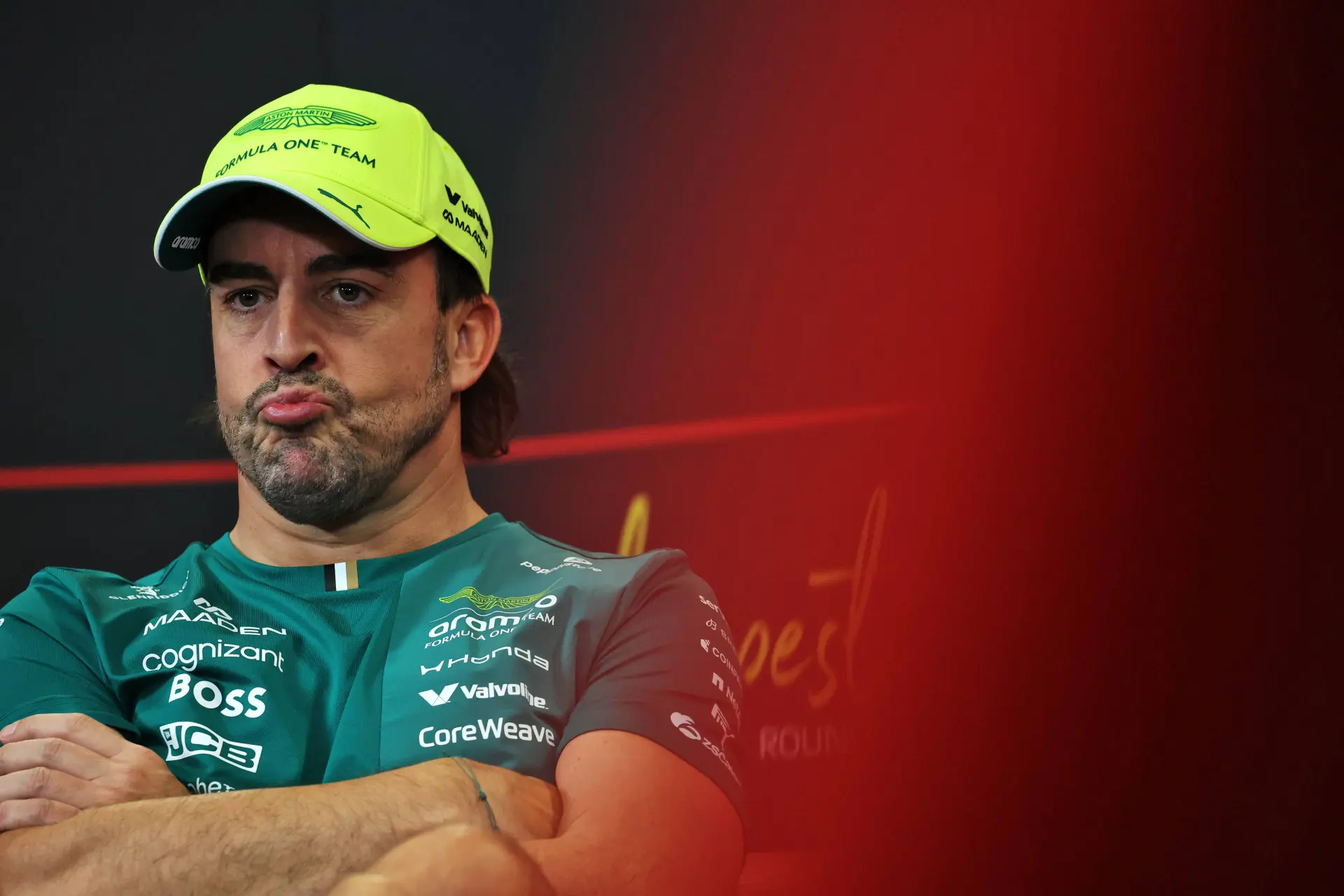
Photo: Race Pictures

Ben Hunt is an award-winning motorsport journalist with over two decades of experience in Formula 1 and international media. As a former editor-in-chief and bestselling author, he delivers in-depth analysis and strategic insight from the highest level of the sport.
Aston Martin's poor Dutch Grand Prix Sprint Qualifying result has raised more questions about Fernando Alonso's F1 future in the team after the latest engine setback.
Aston Martin had arrived at Zandvoort with reason for renewed optimism. Its substantial Hungarian Grand Prix chassis upgrade had offered encouraging signs before the break, while Honda introduced its much-anticipated Spec 2 power unit for the Dutch GP. The revised engine was expected to deliver a step forward after a difficult start to the new regulations.
Instead, Friday became a messy first proper test of the package.
Alonso finished 22nd and last in Sprint Qualifying, around three seconds away from the leading pace. He ran wide at Turn 1 during SQ1 and reported heavy vibrations over team radio. Once out of the car, the Spaniard described a more complex problem: the car’s driveability was making it difficult to slow down under braking.
“Driveability was pushing on the braking, so it was difficult to stop the car sometimes because the engine was over-delivering,” Alonso explained. “When you brake and the throttle is open, it’s difficult to stop the car.”
Alonso’s session was further compromised by a failure of the car’s straight-line mode, the lower-drag setting that allows the rear wing to open. The rear-wing issue, rather than the power unit itself, was the primary explanation for Alonso’s dramatic laptime deficit.
Alonso’s session was further compromised by a failure of the car’s straight-line mode, the lower-drag setting that allows the rear wing to open. The rear-wing issue, rather than the power unit itself, was the primary explanation for Alonso’s dramatic laptime deficit.
ADVERTISEMENT

It would be misleading to dismiss the engine concerns.
Lance Stroll’s 19th-place result, despite having a functioning straight-line mode, confirmed that the Aston Martin-Honda package still has substantial work to do. Stroll also reported driveability problems, while Honda’s F1 project leader Shintaro Orihara had already warned that the revised combustion characteristics of the new unit would require the manufacturer to revisit its calibration work.
Honda’s upgrade has been introduced through Formula 1’s Additional Development and Upgrade Opportunities system, [ADUO]. The concession mechanism offers struggling power-unit manufacturers additional scope to develop their engines during the season.
For Honda and Aston Martin, this Spec 2 unit is therefore an important opportunity to close a performance gap. Honda’s route back towards competitiveness depends on extracting usable performance and not simply producing more power on the dyno. If throttle behaviour unsettles the car on corner entry, the driver cannot exploit any performance gain. If the power unit changes the way the car harvests and deploys energy, every phase of a lap must be recalibrated.
ADVERTISEMENT
For Alonso, the clock adds another layer to the problem. Aston Martin’s project is built around long-term ambition, but the two-time world champion’s opportunity to benefit from it is finite and he has been linked with a switch to the Alpine F1 team.
Alonso acknowledged that the early feeling in practice had been more positive but the latest set back with the Spec 2 engine may cause further doubt about whether he stays with the struggling team.

Don’t miss GPblog in Google
Mark us as a preferred source and our articles will appear more often at the top of Top Stories.
Add as a preferred / source on Google