Three F1 manufacturers crack feared 2026 engine problem which could impact Verstappen
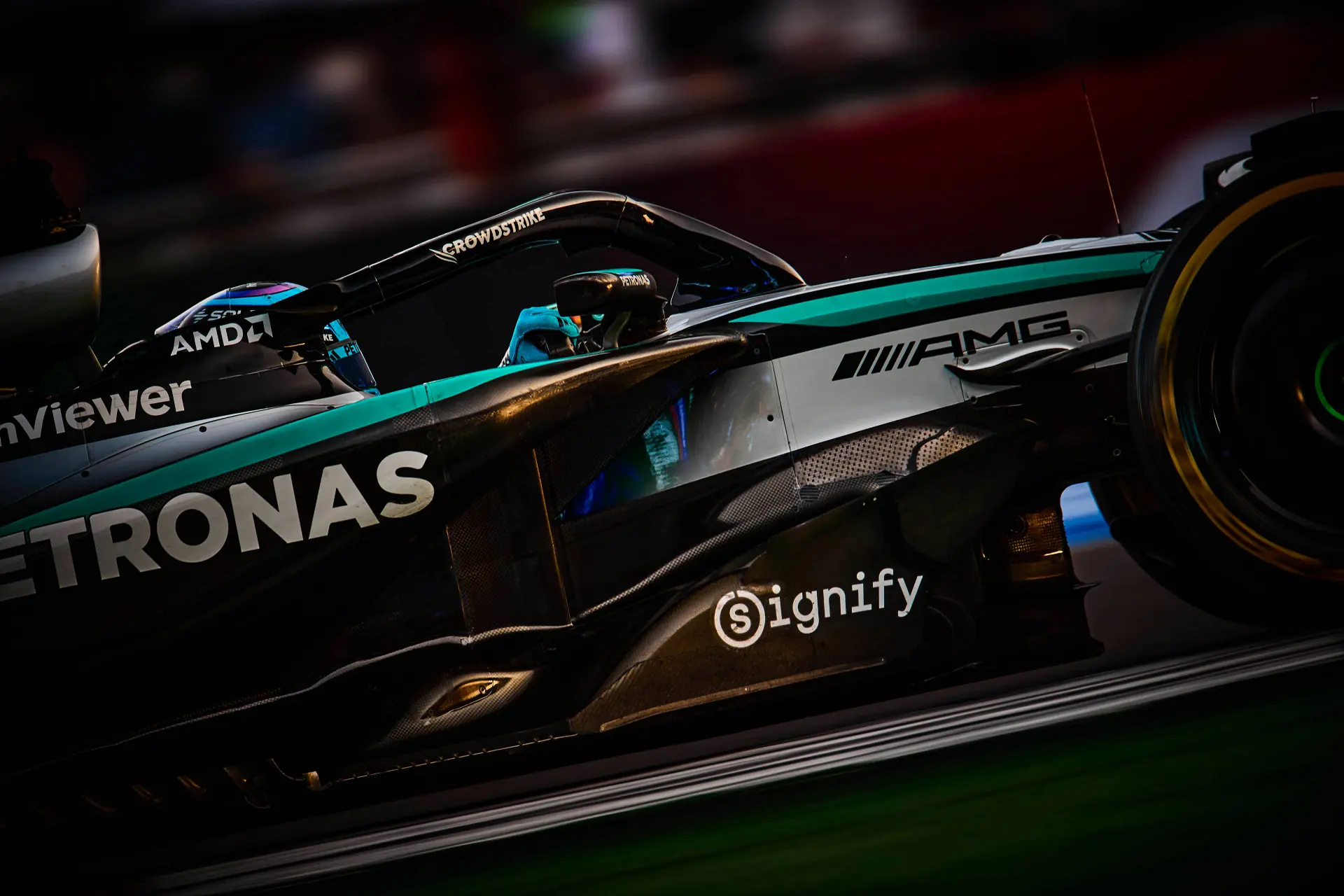
Photo: Race Pictures
Updated: 20:29, 22 Dec 2025
5 Comments

Tobia is a Formula 1 journalist at GPblog with experience at international circuits. Since 2022, he has covered Grands Prix across Europe, delivering reliable coverage and insights from the paddock.
Mercedes, among others, are rumoured to have come up with a clever solution to avoid a phenomenon that is widely feared ahead of next season.
With the MGU-H scrapped — deemed too costly and overly complex — the next-generation power units, set to debut in just over a month, will rely heavily on the MGU-K, whose output will be tripled to a staggering 350 kW.
However, abandoning the MGU-H has sparked fresh concerns among engineers. It is not just the potential return of turbo lag — a hotly debated issue during the turbo era of the 1980s — but above all the threat of clipping: the sudden loss of straight-line speed when the electrical energy harvested under braking will be no longer sufficient to sustain full power over an entire lap. The risk is particularly acute at power-sensitive venues dominated by flat-out running, such as Monza.
The million-dollar question, then, is how this can be prevented — a phenomenon that could even raise safety concerns if one car reaches the end of a straight significantly slower than another close behind.

Photo: Race Pictures
ADVERTISEMENT
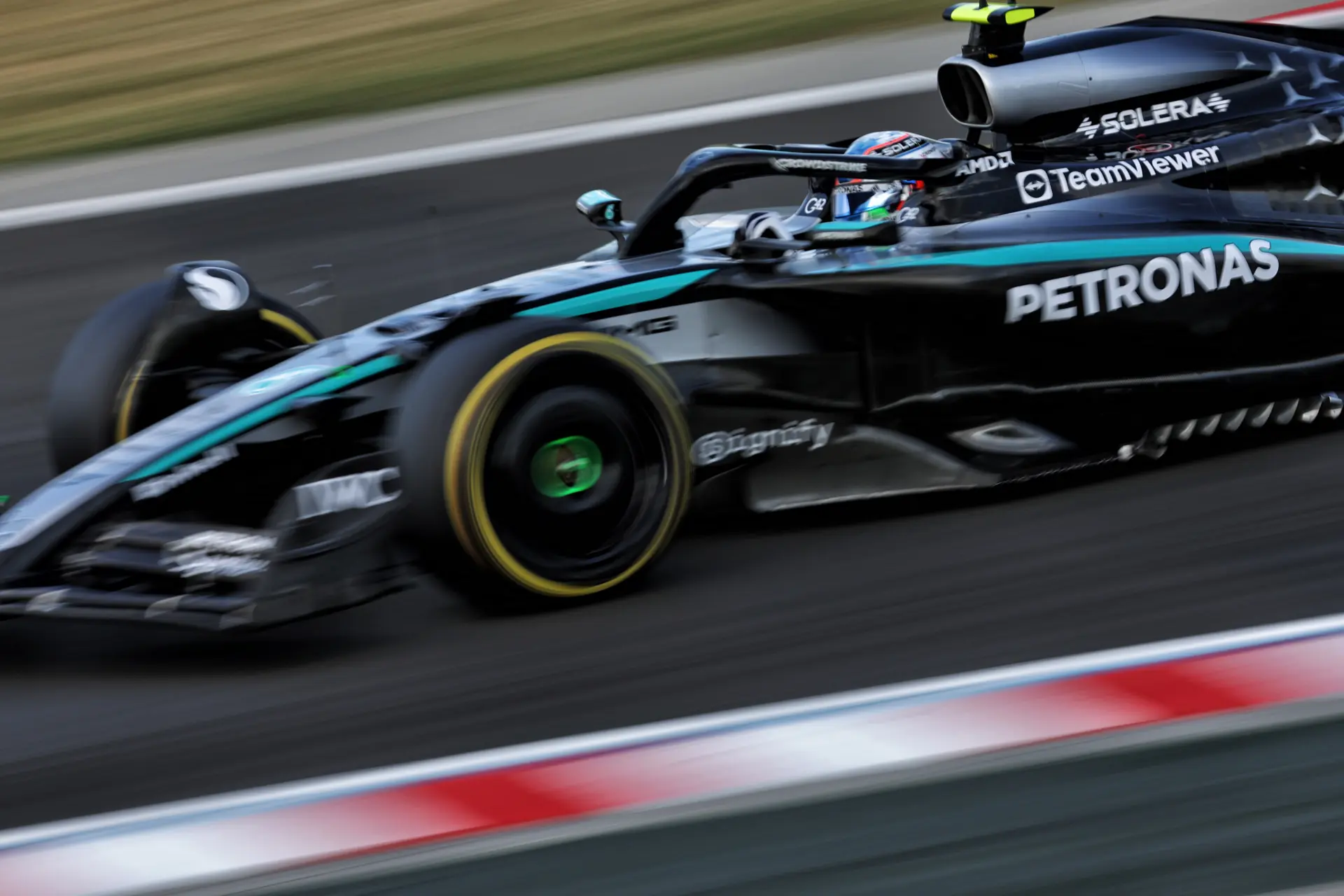
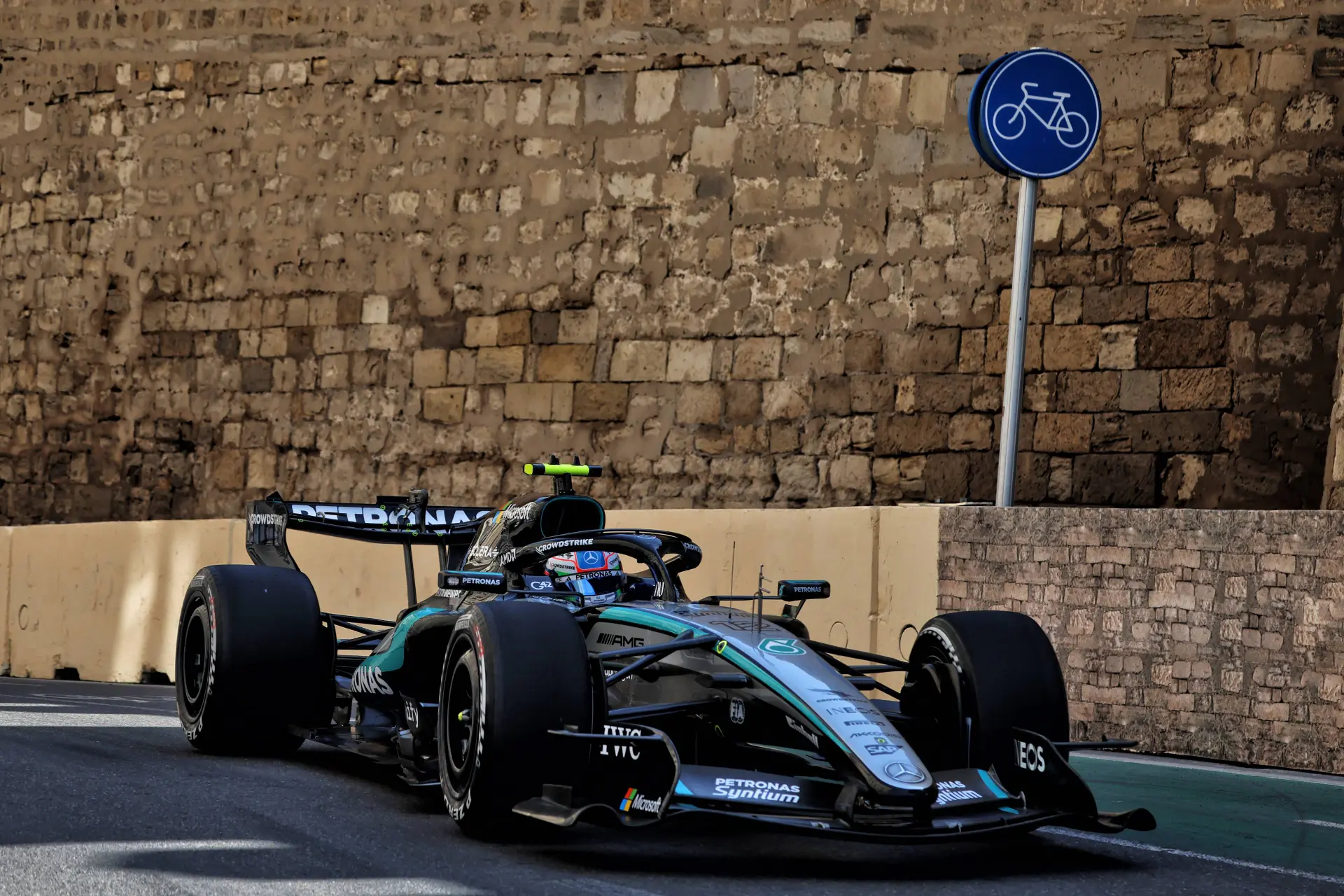
As reported by Motorsport.it, engineers at Mercedes, Red Bull Powertrains and Audi are believed to have identified an innovative workaround.
The idea centres on advanced engine mapping strategies that allow part of the fuel’s energy to be converted into electrical power. In phases where the driver is cornering or running on partial throttle, some of the V6’s output could be redirected to the MGU-K to top up the battery.
The aim is twofold: to smooth out the effects of turbo lag and, crucially, to reduce the risk of clipping by ensuring a more consistent supply of electrical power over the course of a lap.
This would suggest that next season we could be faced with two distinct philosophies: some cars running with higher fuel loads in order to exploit this approach and guard against the phenomenon described above, while others may instead accept the risk and opt to run lighter overall.
Read also

ADVERTISEMENT
Mercedes and Red Bull under the spotlight
Mercedes and Red Bull Powertrains have also landed in the FIA’s spotlight over an alleged trick linked to the compression-ratio regulations.
The theory centres on exploiting the thermal expansion of certain internal power-unit components, a solution that could allow the engine to unlock extra performance — figures of around 15 horsepower are being mentioned — while still remaining fully compliant during static FIA tests.
A familiar pattern in Formula 1 history
ADVERTISEMENT
Major regulation overhauls in Formula 1 have rarely arrived without controversy — or unintended consequences — and the 2026 engine rules appear to be following a well-established pattern.
The most striking modern parallel dates back to 2014, when the sport introduced the first generation of hybrid V6 turbo power units. At the time, teams and fans were warned of potential reliability issues, energy deployment confusion and a significant performance gap between manufacturers. Those fears materialised almost immediately, with Mercedes’ early mastery of the regulations ushering in an era of dominance that lasted nearly a decade.
Earlier still, the 1989 ban on turbocharged engines forced teams back to naturally aspirated power, reshaping car design, driving styles and competitive order almost overnight. Similarly, the 2006 switch from V10 to V8 engines was driven by cost and safety concerns, but initially drew criticism for reducing performance and altering the sport’s character.
Even aerodynamic rule changes have produced unforeseen outcomes. The 2022 ground-effect regulations, designed to improve racing and reduce dirty air, initially led to widespread porpoising issues, forcing mid-season interventions from the FIA and rapid redesigns across the grid.
In each case, teams that anticipated loopholes or invested early in innovative interpretations of the rules gained a decisive advantage, while others were left scrambling to catch up. The current fears surrounding clipping, energy deployment and thermal exploitation suggest that 2026 may once again reward those who best understand the grey areas rather than the written intent of the regulations.
ADVERTISEMENT
If history is any guide, the concern is not whether the rules will work as planned — but which manufacturer will exploit them first, and how long it will take the rest of the grid to respond.
Read also
GPblog's latest F1 Paddock Update
Want to stay up-to-date with what happens in the F1 paddock? Then GPblog's F1 Paddock Update video is the perfect way to do it. Subscribe to GPblog's YouTube channel and turn on notifications to never miss the latest episodes.
ADVERTISEMENT
Don’t miss GPblog in Google
Mark us as a preferred source and our articles will appear more often at the top of Top Stories.
Add as a preferred / source on GoogleRead more about:
latest news
Azerbaijan Grand Prix
Overview
Thursday 24.09.26
Practice 1
08:30 AM
Practice 2
12:00 PM
Friday 25.09.26
Practice 3
08:30 AM
Qualification
12:00 PM
Saturday 26.09.26
Race
11:00 AM
Thursday 24.09.26
Practice 1
Thu 08:30 AM
Practice 2
Thu 12:00 PM
Friday 25.09.26
Practice 3
Fri 08:30 AM
Qualification
Fri 12:00 PM
Saturday 26.09.26
Race
Sat 11:00 AM
Times are in your local timezone
Popular on GPBlog
1
Verstappen’s close friend decisively sidelined by Alpine
893 times read
2
F1 Today | Leclerc hits back after Hamilton incident was blown out of proportion
789 times read
3
Lewis Hamilton hits out at two major F1 changes: ‘Makes absolutely no sense’
610 times read

4
F1 drivers' group chat explodes after Monaco Sprint revealed: 'You can imagine'
599 times read
F1-stand 2026
Season
| Pos. | Driver | Team | Points |
|---|---|---|---|
1 | MercedesMER | 292 | |
2 | MercedesMER | 211 | |
3 | FerrariFER | 191 | |
4 | McLarenMCL | 186 | |
5 | FerrariFER | 167 | |
6 | Red Bull RacingRBR | 145 | |
7 | McLarenMCL | 120 | |
8 | Red Bull RacingRBR | 71 | |
9 | Racing BullsRCB | 59 | |
10 | AlpineALP | 41 |
Loading