FIA, Formula 1 and teams reach agreement on shortening Grands Prix in 2027
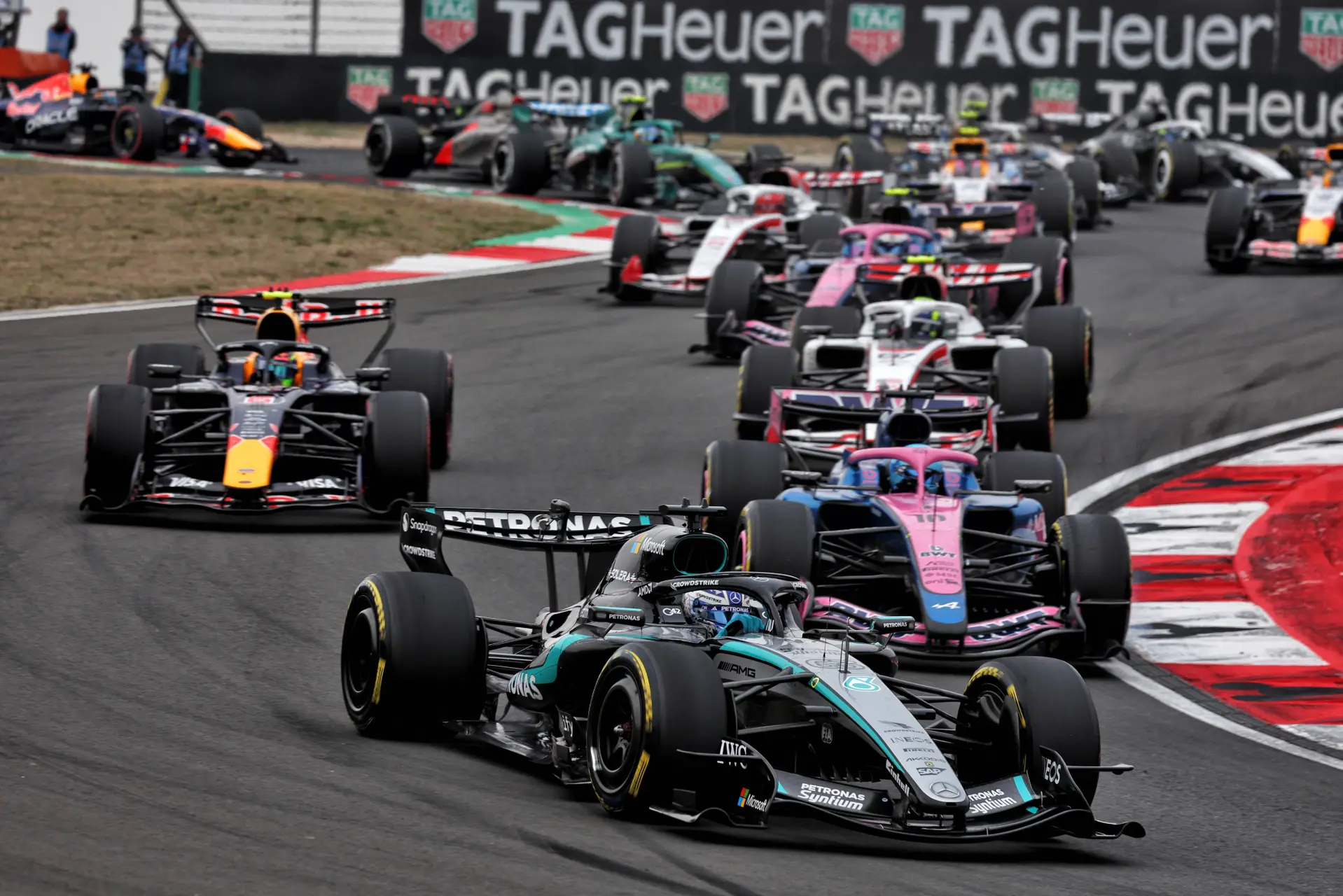
Photo: Race Pictures

Ludo van Denderen is a motorsport journalist at GPblog, specializing in Formula 1 and international racing series.
Several Grands Prix will be shorter in 2027 than this season. The FIA, the teams, and Formula 1 have agreed to this, GPblog understands. This adjustment is a first step to help secure a majority for the package of measures to modify the engines.
After the Miami Grand Prix, the teams and the FIA agreed to adjust the 50/50 split between the internal combustion engine and the battery and move toward 60/40. As a result, an increase in fuel flow rate is required. To run a Grand Prix of more than 300 kilometers, either more fuel would need to be carried in the tanks or fewer laps would need to be completed.
At circuits where fuel consumption will be high, the latter option will be chosen. This accommodates teams that, for cost-saving reasons, wanted to carry over their chassis to next year and would otherwise find their current fuel tanks not large enough. Alan Permane, the team principal of Racing Bulls, confirmed this on Friday to, among others, GPblog.
"I can start with that one. I think that’s a very straightforward one. On the chassis side, we have already spoken and come to an agreement, certainly at Team Principal level, that if anyone wanted to carry their chassis over and that wasn’t quite big enough to do the 310k race, we would look at selective races and, of course, only where absolutely necessary, by shortening them by maybe one or two laps, limiting laps to grid to one. So, of course, maximising any potential race length, but that’s already in place and ready to go," said Permane.
Stella calls on the competition
ADVERTISEMENT
McLaren team boss Andrea Stella also confirms that it will be practically possible to carry the 2026 chassis into the next season while simultaneously working on modified engines, which should ensure the internal combustion engine to battery ratio becomes 60/40. At the moment, it is still 50/50.
"From a chassis point of view, it’s absolutely possible," Stella began. "There are enablers that are part of this proposal that make this proposal achievable. It is a proposal, the 60/40, that is for the good of the sport. I think there’s a general interest that prevails over the particular interest, and this is an important opportunity for the F1 community to make sure that the sport is in a strong position. So, we do hope that this process will be successful."
When Stella speaks about the ‘good of the sport’ and ‘particular interests,’ he is referring to Ferrari and Audi. These manufacturers still appear to be opposed to the adjustment to the power units. This has to do with the high costs and the ADUO system. These manufacturers would prefer to see changes to the engines only take place in 2028.
Read also


ADVERTISEMENT
Don’t miss GPblog in Google
Mark us as a preferred source and our articles will appear more often at the top of Top Stories.
Add as a preferred / source on Google