
Ben Hunt is an award-winning motorsport journalist with over two decades of experience in Formula 1 and international media. As a former editor-in-chief and bestselling author, he delivers in-depth analysis and strategic insight from the highest level of the sport.
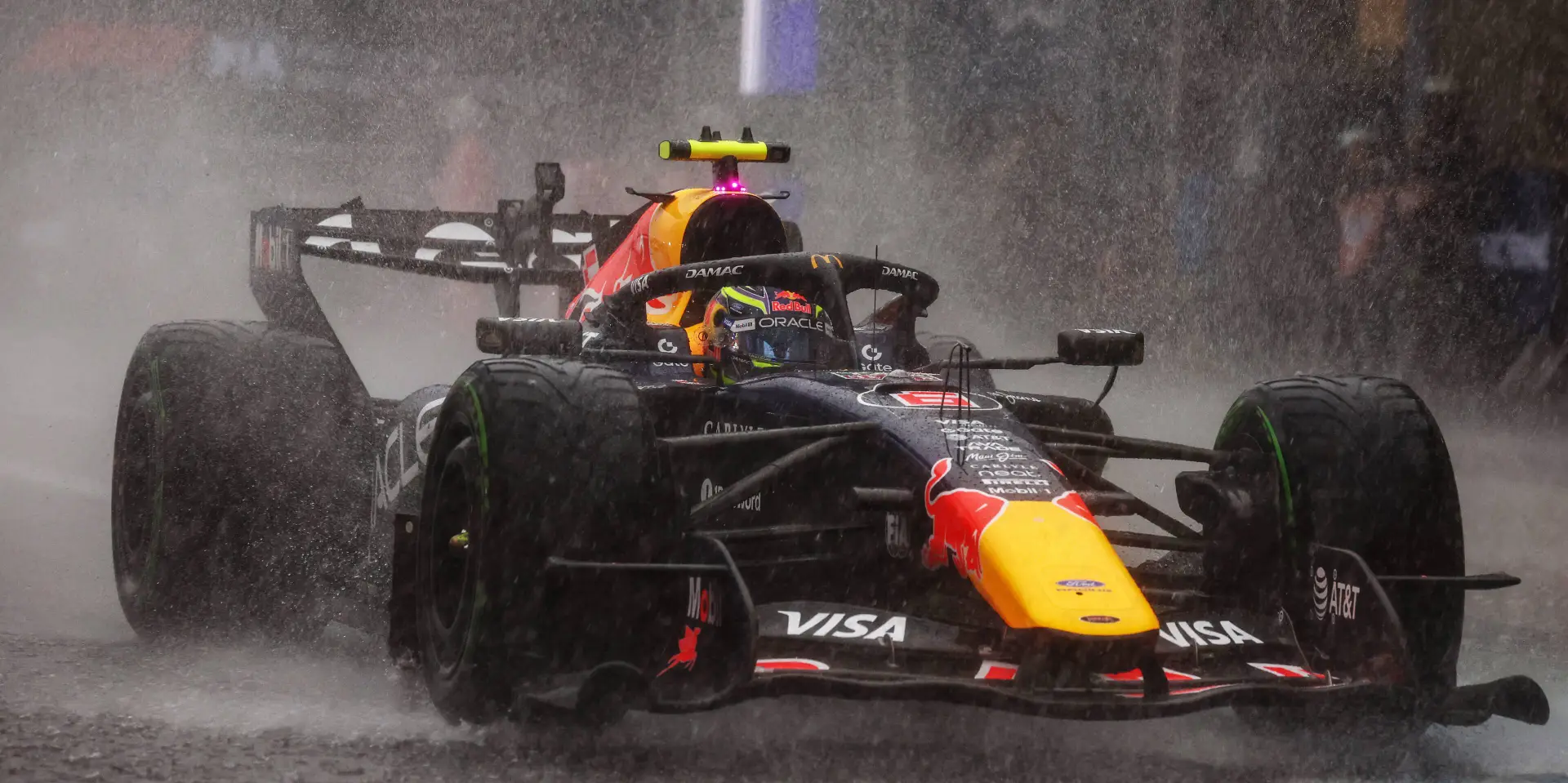
Pirelli says its tyres performed in line with expectations in Brazil but Max Verstappen, Isack Hadjar and Lando Norris have all raised concerns about what happened when grip and temperature were difficult to find. It opens up the debate about Pirelli's product and sits at the centre of Formula 1’s latest wet-weather debate.
Verstappen’s complaint concerns the edge of the window
Verstappen’s central point was about operating range. He said the tyres were acceptable when hot but felt “like a rock” when cold, and called for a wider working range on both the intermediate and extreme-wet compounds.
That is not the same as claiming they never produced grip, but it concerns the difficulty of reaching useful performance while a driver is already managing standing water, limited visibility and changing conditions.
Hadjar’s comments meanwhile, added a related but distinct concer. He felt the extreme-wet tyre allowed too much aquaplaning for the amount of water present in qualifying. He also questioned how long drivers needed to wait before the intermediate became usable.
ADVERTISEMENT
Those observations raise questions about the transition between compounds, not merely the pace of either tyre once established on track.
What Pirelli’s statement does - and does not - establish
Pirelli motorsport director Dario Marrafuschi said the intermediate and soft performed in line with expectations and offered teams several strategic options.
That is a defence of their performance across the race. It is not a detailed explanation of every concern raised about cold extreme-wet tyres during qualifying.
ADVERTISEMENT
Norris has brought the debate forward to Las Vegas, warning about the potential consequences if drivers struggle to generate temperature in wet conditions there.
Norris won at Interlagos, while Verstappen and Hadjar completed the podium, as detailed in GPblog’s report on the race winner. Their concerns therefore cannot simply be dismissed as reactions to unsuccessful results.
The useful next question is not whether drivers or supplier should win the argument. It is whether further explanation and development can address the conditions in which drivers say the tyres become hardest to trust.
The wet weather tyre was not used in race conditions until the last few races, so until now its performance was unknown. Now however, after being used in Malaysia, Singapore and Brazil, there is an issue that needs resolving.
ADVERTISEMENT
Don’t miss GPblog in Google
Mark us as a preferred source and our articles will appear more often at the top of Top Stories.
Add as a preferred / source on Google