'If you hire people who only say yes, you will inevitably finish last'
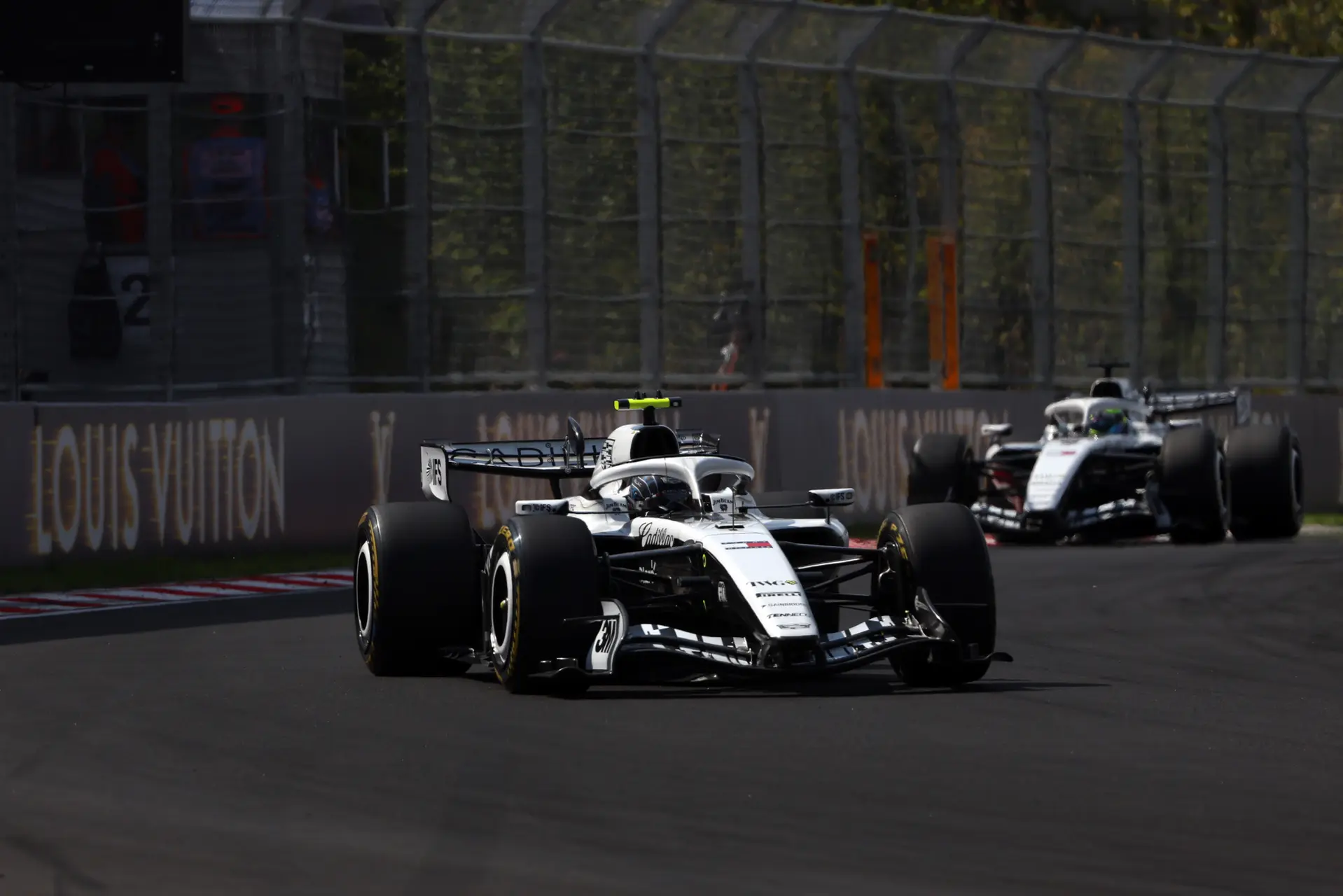
Photo: Race Pictures
Updated: 18:52, 09 Aug
0 Comments

Ludo van Denderen is a motorsport journalist at GPblog, specializing in Formula 1 and international racing series.
Cadillac began the 2026 season by taking on one of the biggest challenges in modern F1 history: building a completely new team from scratch. Team principal Graeme Lowdon had the task of turning hundreds of new employees into a functioning team. Speaking to GPblog, the Briton explains his approach and why he deliberately kept himself in a limited role.
Once the interview is essentially over, Lowdon still has one final remark. Cadillac's team principal points to the recording device, waits for it to be turned back on, and sums up how he wants to lead the ambitious group of people at Formula 1's newest team.
“When I'm talking to people within our team, I make it abundantly clear to them that they don't work for me, I work for them,” Lowdon says during an exclusive interview with GPblog.
“Because my job is to help solve the things that they can't do, which tends to be the small percentage but very important and difficult bits.
“They do the rest that I can't do. I've found it one of the easiest ways to explain it is to make it very clear to them that they don't work for me, I work for them. And that's how high-performing teams, in my view, progress.”
ADVERTISEMENT
As Cadillac’s team principal, Lowdon has already pulled off a small miracle. In record time, under the leadership of the Briton, who was previously at the helm of the small Virgin and Marussia teams, a Formula 1 outfit has been built from the ground up. Moreover, the team has been anything but embarrassing in its first season so far.
Lowdon’s three principles
Lowdon, however, is not one to boast about what he has achieved. Putting things into perspective, he says: “All management's difficult at the end of the day. Managers are not paid to let the inevitable happen. We’re paid to make a difference. When it's a new team, you're literally starting from scratch. There's nothing you can rely on. There's no ways of working, there's no processes, no people, no infrastructure, no assets, no nothing. You have to do everything from scratch.”
During the conversation, Lowdon says several times that it’s 'all about the people.' He sees himself as just one cog in a much bigger machine. “My approach to management is, as a leader, you provide only three things, which is some structure so that people understand how they operate within the team. Some focus so that people understand what it is that they need to spend their time on, because we have a limited resource. And then some energy as well, because this is a really, really demanding sport and nobody else is going to provide the energy as well. So those three things I think are really important in any part of management.”

Photo: RacePictures
ADVERTISEMENT
In building its staff, Cadillac has made a point of recruiting the best possible people in every area. “As a team principal I expect to be challenged by those people. There's no point just hiring people who think the same way and say ‘yes, yes’. Because all that happens is everyone has a nice time and then they realize their last,” says Lowdon.
“So we look to get the very best people, give them the facilities that they need and the support that they need and everything. And then those three key things; structure, focus, energy, and let them get on with it as well. And the other thing, this is maybe more my particular approach to management, is there's no point in just being at the top, telling people what to do, because these businesses are too complicated.”
Lowdon tells no one what to do
Lowdon was highly successful as a businessman, but his background is in mechanical engineering. He holds both a bachelor's and a master's degree in the field. Still, the team principal won't tell an engineer how to do their job. “I don't tell anyone actually what to do, that's why they're hired. They're hired because they know that they're really, really good at their discipline. My job is to provide those other things.”
Lowdon explicitly avoids a ‘military approach’ in his leadership style. He opts for the ‘mission control concept’ instead. “That means you rely really heavily on the core values that you build the business on, and if people understand the mission and they're good at what they do, then everyone's heading in that right direction. I've seen significantly better results from that than just trying to tell a thousand people what to do.”
ADVERTISEMENT
When the team was created, Cadillac first established four core values on which everything is based. The first one is ‘bold ambition.’
“That is very much a reflection of Cadillac and TWG’s ownership,” Lowdon explains. “That doesn't mean arrogance. It means, it's good to have an ambition and you can embrace that ambition. There's nothing wrong with that.”
The second value is ‘excellence in execution’, which means that whenever you do something, you strive to do it as well as possible. Then there is 'leadership and innovation.' “That again is something that's a reflection of Cadillac’s 120-odd years of innovation. And Formula 1 is a sport that really rewards innovation as well. So we try and create an environment where that leadership and innovation is seen as a good thing.
“Then fourthly, and most importantly, it's all one team. Everyone's working together. Nobody is bigger than the team. John Wooden, the basketball coach, who comes out with all of the best quotes on management, and I'll probably get this wrong, but I'll paraphrase it. He said, it's better to have a player that makes the team great than it is to have a great player. And so we capture that with this concept of all one team. Nobody's bigger than the team and this is a team game.”
As a Formula 1 team principal, an enormous amount of pressure rests on Lowdon’s shoulders. Ultimately, everything comes down to performance, leaving little time to unwind and spend time with family. “It's true, but there are significantly worse jobs where you don't see your family. I think anyone who's in Formula 1 in one of these positions, actually their family tend to be really proud of what they're doing.
ADVERTISEMENT
“It is hectic and everyone in the team has to sacrifice a lot. You notice it in particular with, children grow up. They tend to do it incredibly fast and you blink and then kind of almost miss it. But equally, you have a lot of really special moments as well, so you can balance that out.”
The foundation of a high-performing team
Lowdon stays mentally fresh by making sure he never gets ahead of himself. “I think it's about the proper understanding of what makes a high-performance team, and it's all about the foundations. We try and hire people based on their fit with our values, not necessarily their technical ability or achievement.
“Again, there's that old saying, it's better to have a thousand enemies outside the tent than one enemy inside the tent kind of thing, and it's like that. You've got to build a team where everyone understands the values and share them, and everyone works for each other as well. Then got foundations of a high-performance team.”
Based on personal experience, Lowdon says success depends on personal responsibility and integrity. “Everything is built on that, to get the right people and get the best people you possibly can. Get some really simple stuff and they'll fly, they'll absolutely fly. Or you can cage people in and tell them what to do. That tends not to work.”
ADVERTISEMENT
Don’t miss GPblog in Google
Mark us as a preferred source and our articles will appear more often at the top of Top Stories.
Add as a preferred / source on GoogleRead more about:
latest news
Azerbaijan Grand Prix
Overview
Thursday 24.09.26
Practice 1
08:30 AM
Practice 2
12:00 PM
Friday 25.09.26
Practice 3
08:30 AM
Qualification
12:00 PM
Saturday 26.09.26
Race
11:00 AM
Thursday 24.09.26
Practice 1
Thu 08:30 AM
Practice 2
Thu 12:00 PM
Friday 25.09.26
Practice 3
Fri 08:30 AM
Qualification
Fri 12:00 PM
Saturday 26.09.26
Race
Sat 11:00 AM
Times are in your local timezone
Rumors
Popular on GPBlog
1
Hamilton learns stewards’ verdict after ‘dangerous’ Azerbaijan FP2 incident with Lawson
4276 times read
2
Audi reaches final decision over its 2027 F1 driver line-up
1580 times read
3
Verstappen receives the confirmation he wanted from Red Bull in Baku
1097 times read
4
Cadillac hires former Red Bull key figure, but Alpine blocks the move for now
1059 times read
F1-stand 2026
Season
| Pos. | Driver | Team | Points |
|---|---|---|---|
1 | MercedesMER | 292 | |
2 | MercedesMER | 211 | |
3 | FerrariFER | 191 | |
4 | McLarenMCL | 186 | |
5 | FerrariFER | 167 | |
6 | Red Bull RacingRBR | 145 | |
7 | McLarenMCL | 120 | |
8 | Red Bull RacingRBR | 71 | |
9 | Racing BullsRCB | 59 | |
10 | AlpineALP | 41 |
Loading