Why Red Bull is required to change the 'Macarena wing' while Ferrari is not
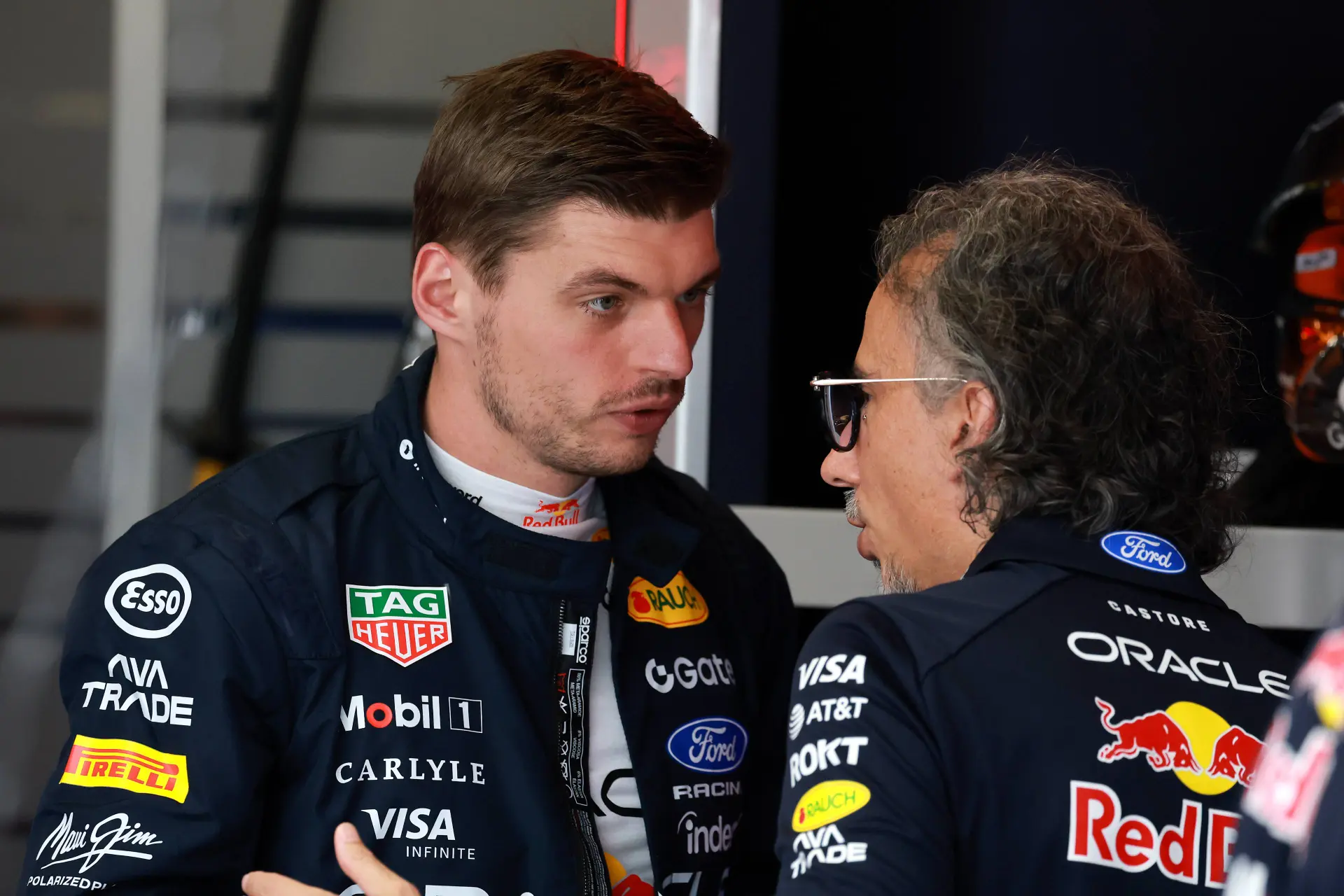
Photo: Race Pictures

Nicole MulderManaging Editor
Nicole Mulder is Managing Editor at GPblog and a specialist in Formula 1 and MotoGP. With years of experience and permanent FIA accreditation at Grands Prix worldwide, she delivers reliable coverage and insights based on direct access to drivers and the F1 paddock.
During the Belgian Grand Prix, Red Bull Racing decided to temporarily revert to the old rear wing after the issues that struck Max Verstappen two race weekends in a row. Ferrari, on the other hand, continued without changes using a similar concept. Although both teams are using a so-called Macarena wing, the technology behind it turns out to be fundamentally different.
After Red Bull’s problems, the FIA asked questions to both Red Bull and Ferrari about the operation of the so-called Macarena rear wing. GPblog has learned that the motorsport governing body mainly wanted to understand how both systems handle a potential malfunction and how the teams can ensure the wing continues to operate safely under all conditions.
It was explicitly not an investigation into the legality of the concept or a request to modify the wings. The FIA wanted insight into possible scenarios in which the component could fail and wanted to know how the Formula 1 teams prevent this from leading to a dangerous situation on track.
Ferrari uses a different construction than Red Bull
ADVERTISEMENT
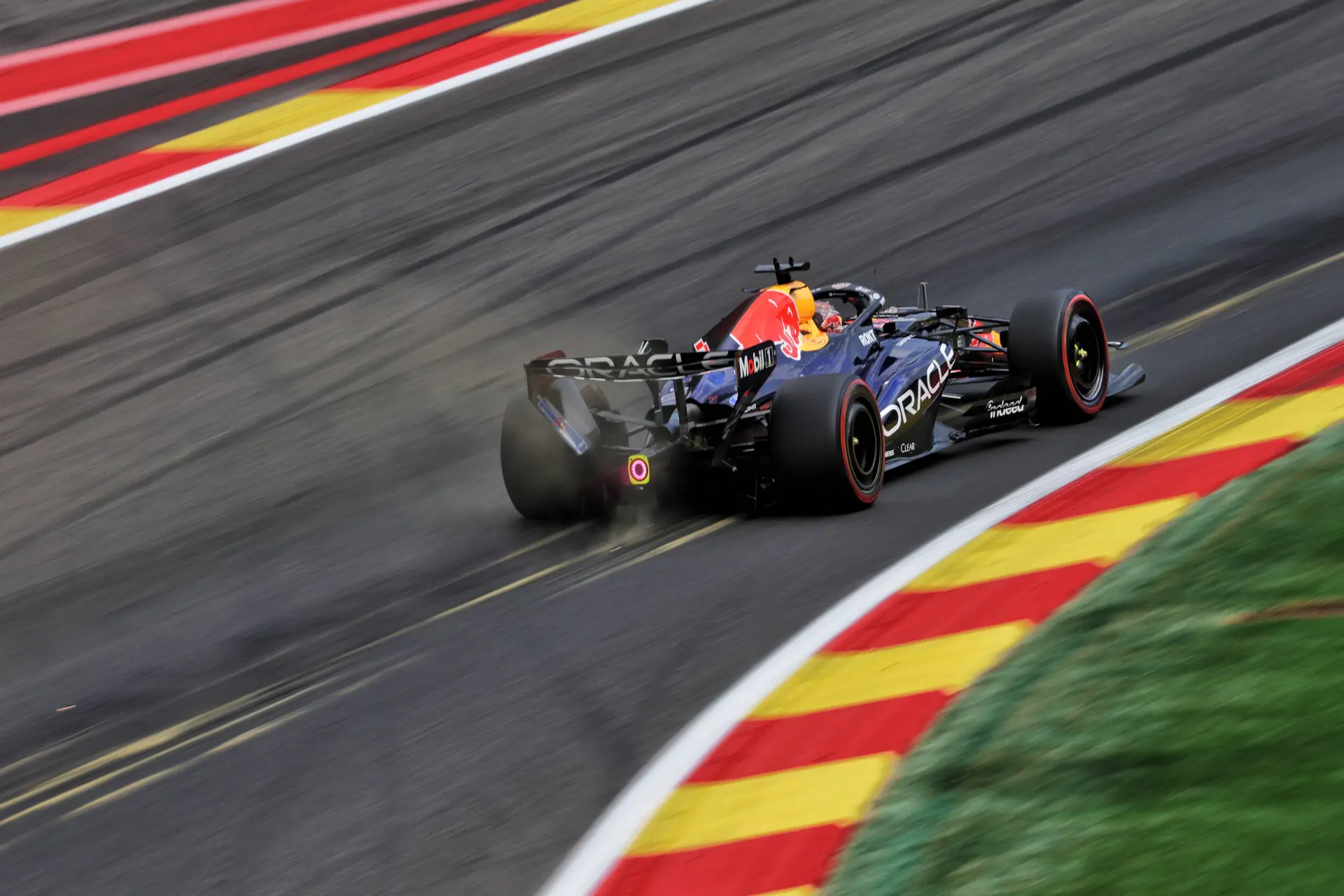
Although both rear wings have the same goal — further reducing drag on the straights — the technical solutions prove to be fundamentally different. Ferrari uses a construction in which physical contact remains between the main plane of the rear wing and the movable element. As a result, the wing cannot rotate beyond the end position for which it was designed.
That is precisely what happened at Red Bull. During Verstappen’s crashes, the rear wing did not fully close, causing the Dutchman to suddenly lose a large portion of rear downforce in fast corners. Such a scenario cannot occur with Ferrari’s construction.

Photo: Race Pictures
Ferrari had more time for development
The fact that Ferrari did not need to make changes is also related to the development phase of the system. The Italian team began designing the rear wing as early as the autumn of 2025 and took ample time to test the construction before it was actually deployed.
ADVERTISEMENT
For that reason, the Macarena wing only appeared on the car from the Miami Grand Prix onwards. At that time, it had already been demonstrated to the FIA that the construction was safe and functioning properly. Since then, Ferrari has covered thousands of kilometers with it without reliability issues.
Red Bull opts for certainty and works on a solution
Development took a different course at Red Bull. After Verstappen crashed in Austria and Great Britain due to rear wing problems, the F1 team discovered a mechanical issue with the system during a test at Silverstone.
Technical director Pierre Waché confirmed at Spa that the cause has now been found and that Red Bull has implemented the necessary modifications. However, the team only wants to use the modified wing again once it has been fully proven that the issue has been definitively resolved, although the expectation is that this will already be the case before the next race weekend in Hungary.
ADVERTISEMENT
"No, it's a mechanical problem that we spotted after the accident in Silverstone. We fixed it. We are trying to prove that we are bulletproof before putting it on the car, and it should be ready for Budapest," said Waché. He also emphasised that the decision to temporarily remove the wing from the car was made entirely by Red Bull itself: "We don't want to take any risk, and we want to be 100% sure."
FIA asked questions, but did not impose a ban
While Red Bull parked the Macarena wing for the time being and reverted to an earlier specification during the Belgian Grand Prix, Ferrari continued to use the concept — even after new questions from the FIA — without changes.
GPblog has learned that Ferrari’s explanation of how the system operates was sufficient for the FIA to remain convinced of the construction’s safety. As a result, the governing body saw no reason to ask the Italian team for modifications. Nor did it do so with Red Bull: the team decided on its own initiative, after Verstappen’s crashes and discussions with the FIA, to temporarily revert to a previous specification.
Don’t miss GPblog in Google
Mark us as a preferred source and our articles will appear more often at the top of Top Stories.
Add as a preferred / source on Google