F1's ground effect era done: This is the future for open wheels
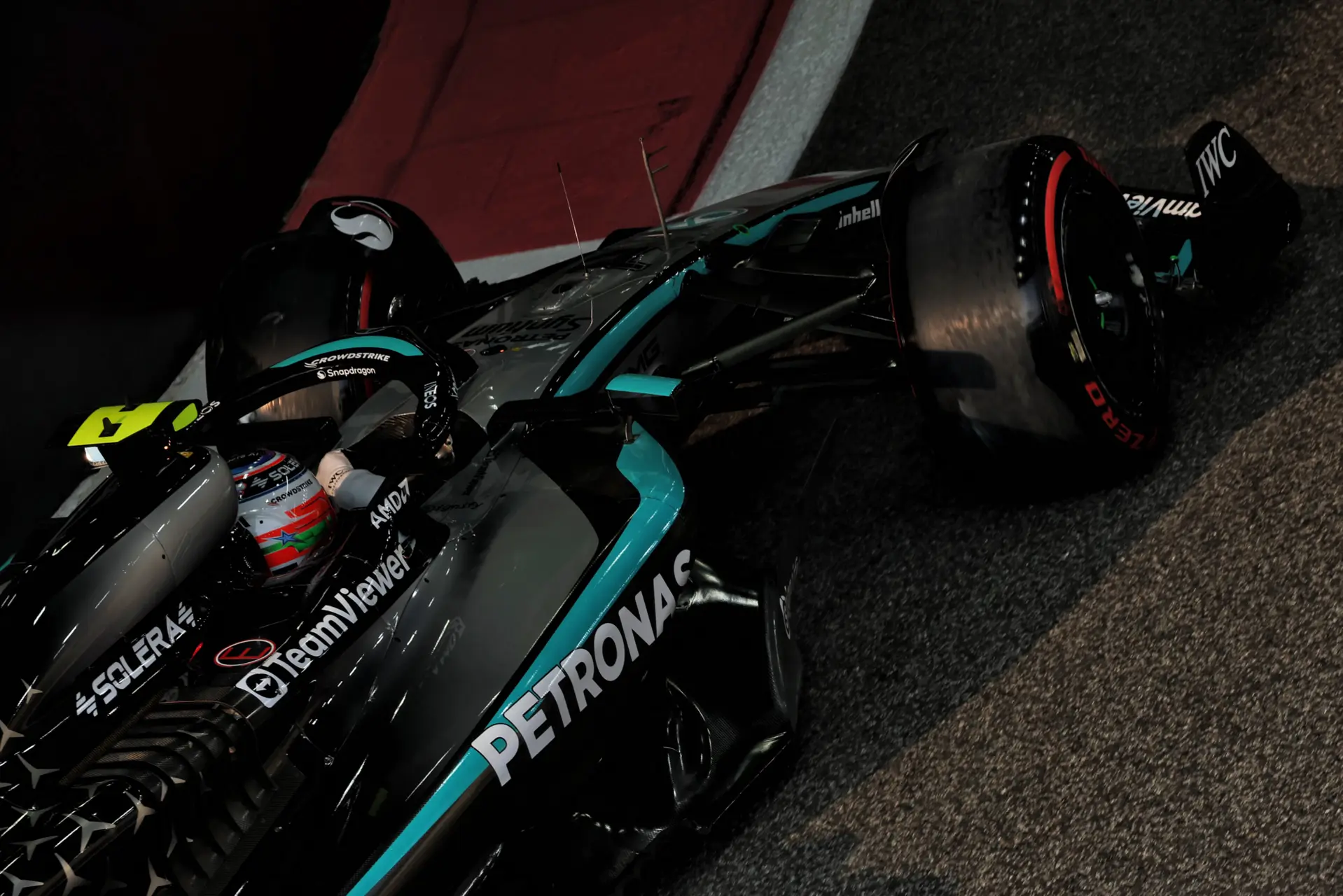
Photo: Race Pictures
Updated:
0 Comments

A filmmaker with a soft spot for Ronnie Peterson, Gilles Villeneuve, Mika Hakkinen and above all, Tazio Nuvolari and Ayrton Senna, is also a diehard Formula One fan since the age of 4 (mid-90's). An avid researcher of the past of Grand Prix Racing since before it was even named F1, and with a thirst for knowledge of the ins and outs of the actuality of the sport, as well as for the technical aspects that define it, is a member of GPblog since 2023, where he has put his love of racing to good use.
After four years, F1 is closing the door on its revisit of the ground effect concept. Here's what to expect from the next generation of Formula One cars.
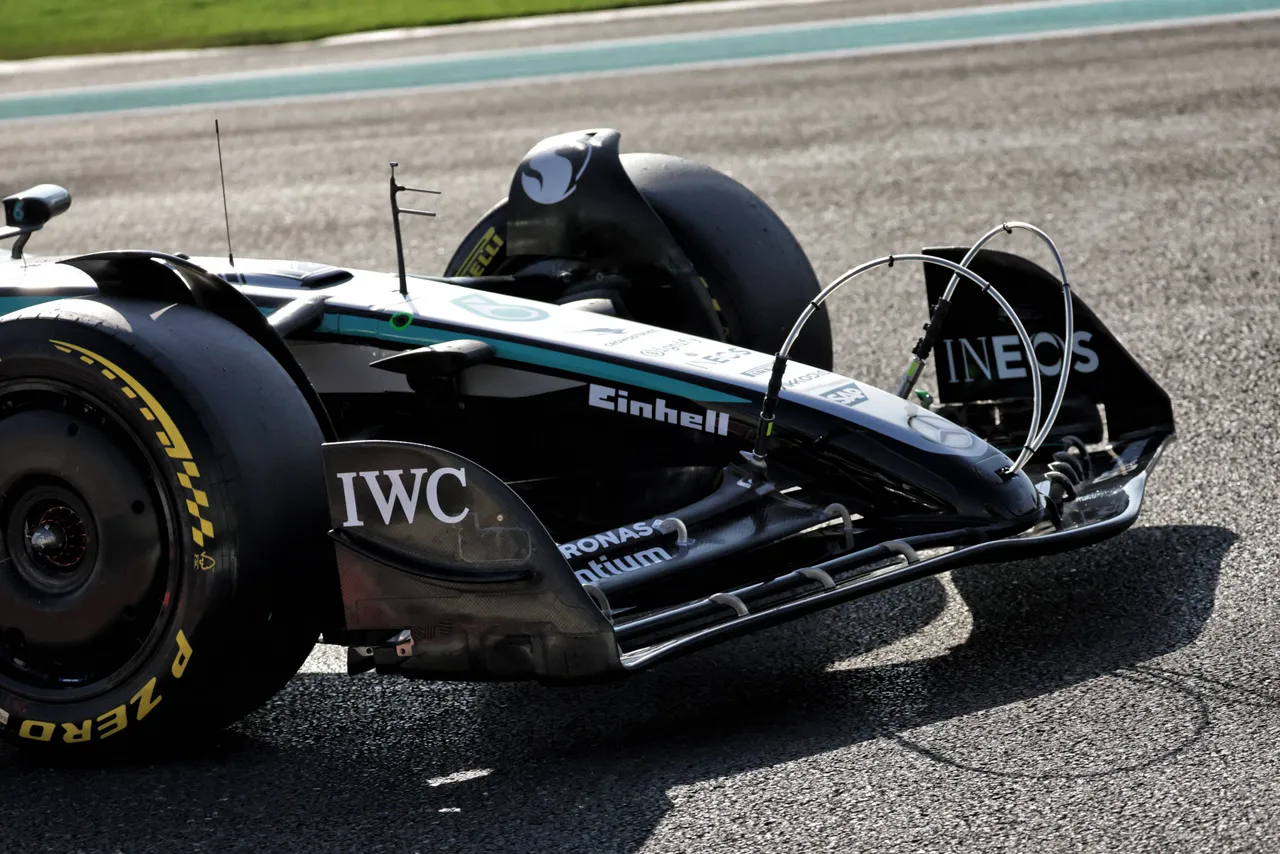
Active aerodynamic rudimentary prototype used by Mercedes during the F1 2025 post-season tests in Abu Dhabi. Photo: RacePictures
When the ground effect regulations were implemented in 2022, the FIA and F1's promise of closer, better and more exciting racing was true for about half a season, and for the remaining 3 and a half years F1 often yielded procession races which ultimately became defined largely by whoever was ahead at the first corner at the start.
Teams found loopholes in the aerodynamic regulations which allowed them to seal the underfloor's airflow through the venturi channels to the rear diffuser, and by way of vortices to implement an outwash effect to provide better and cleaner structure to the airflow at the rear of the car.
However, this principle, used in the front wings too, generated loads of dirty unmanageable air that would make it impossible for the cars behind to follow closely due to the turbulence they generated, which resulted in the trailing cars experiencing understeer to oversteer snaps, higher brake and tyre temperatures and an overall decrease in performance.
ADVERTISEMENT
F1 ditches ground effect era for simpler floor designs
For F1 2026 the FIA has simplified the underfloor's design and will introduce a more nimble car concept dropping 30 kg of weight and nuancing the amount of the downforce that will come from the underbody.
The upcoming regulations will scrap the underfloor's complex venturi tunnels for a flatter surface to counter the side-effects - porpoising, mid-corner balance shifts, overreactiveness to bumpy surfaces, etc - of the highly effective yet difficult to balance downforce levels of the ground effect cars.
Further restrictions in the aerodynamic regulations have been put in place to prevent teams from integrating bits and pieces that increase the dirty air levels in an F1 car's wake.
The re-introduction of active aerodynamics should help the cars maintain consistent levels of downforce through the corners - when the rear and front wing flaps are up - and optimise straightline speed - when the rear and front wing flaps are down - without hindering the following cars.
ADVERTISEMENT
Although these initiatives look great on paper, as always there will be obstacles that arise that catch teams, F1 and the FIA off guard, much like porpoising did, an issue that continued to afflict teams from the start of 2022 to the end of 2025.
'Mercedes and Red Bull have massive edge after FIA-approved trick'
Mercedes has introduced a cylinder compression method - which Red Bull Ford is also implementing - that increases the engine’s compression ratio, reportedly worth up to 0.4 seconds per lap. Read the story here.
Read also
GPblog's latest F1 Paddock Update
ADVERTISEMENT
Want to stay up-to-date with what happens in the F1 paddock? Then GPblog's F1 Paddock Update video is the perfect way to do it. Subscribe to GPblog's YouTube channel and turn on notifications to never miss the latest episodes.
Don’t miss GPblog in Google
Mark us as a preferred source and our articles will appear more often at the top of Top Stories.
Add as a preferred / source on GoogleRead more about:
latest news
Bahrain Grand Prix
Overview
... ...
Practice 1
...
Practice 2
...
... ...
Practice 3
...
Qualification
...
... ...
Race
...
... ...
Practice 1
...
Practice 2
...
... ...
Practice 3
...
Qualification
...
... ...
Race
...
Times are in your local timezone
Rumors
Popular on GPBlog

1
F1 Today | Russell tops timesheet in 'first session' in Malaysia as Verstappen turns 29
6593 times read
2
George Russell tops the 'first session' of the week in Malaysia
1734 times read
3
Lance Stroll’s salary revealed: how many millions Aston Martin pays
1207 times read
4
Max Verstappen turns 29: Kelly Piquet shares birthday photos with special cake
927 times read
F1-stand 2026
Season
| Pos. | Driver | Team | Points |
|---|---|---|---|
1 | MercedesMER | 302 | |
2 | MercedesMER | 236 | |
3 | FerrariFER | 199 | |
4 | McLarenMCL | 186 | |
5 | FerrariFER | 179 | |
6 | Red Bull RacingRBR | 163 | |
7 | McLarenMCL | 120 | |
8 | Red Bull RacingRBR | 86 | |
9 | Racing BullsRCB | 59 | |
10 | AlpineALP | 41 |
Loading