
Ben Hunt is an award-winning motorsport journalist with over two decades of experience in Formula 1 and international media. As a former editor-in-chief and bestselling author, he delivers in-depth analysis and strategic insight from the highest level of the sport.
Formula 1’s final visit to Zandvoort could be a strategic outlier. The 2026 Dutch Grand Prix, scheduled for August 21–23, is set to be the circuit’s farewell on the calendar and its first Sprint weekend. That combination - a narrow, banked and weather-exposed track in the North Sea dunes - could leave teams making tyre decisions with less certainty than at almost any other event.
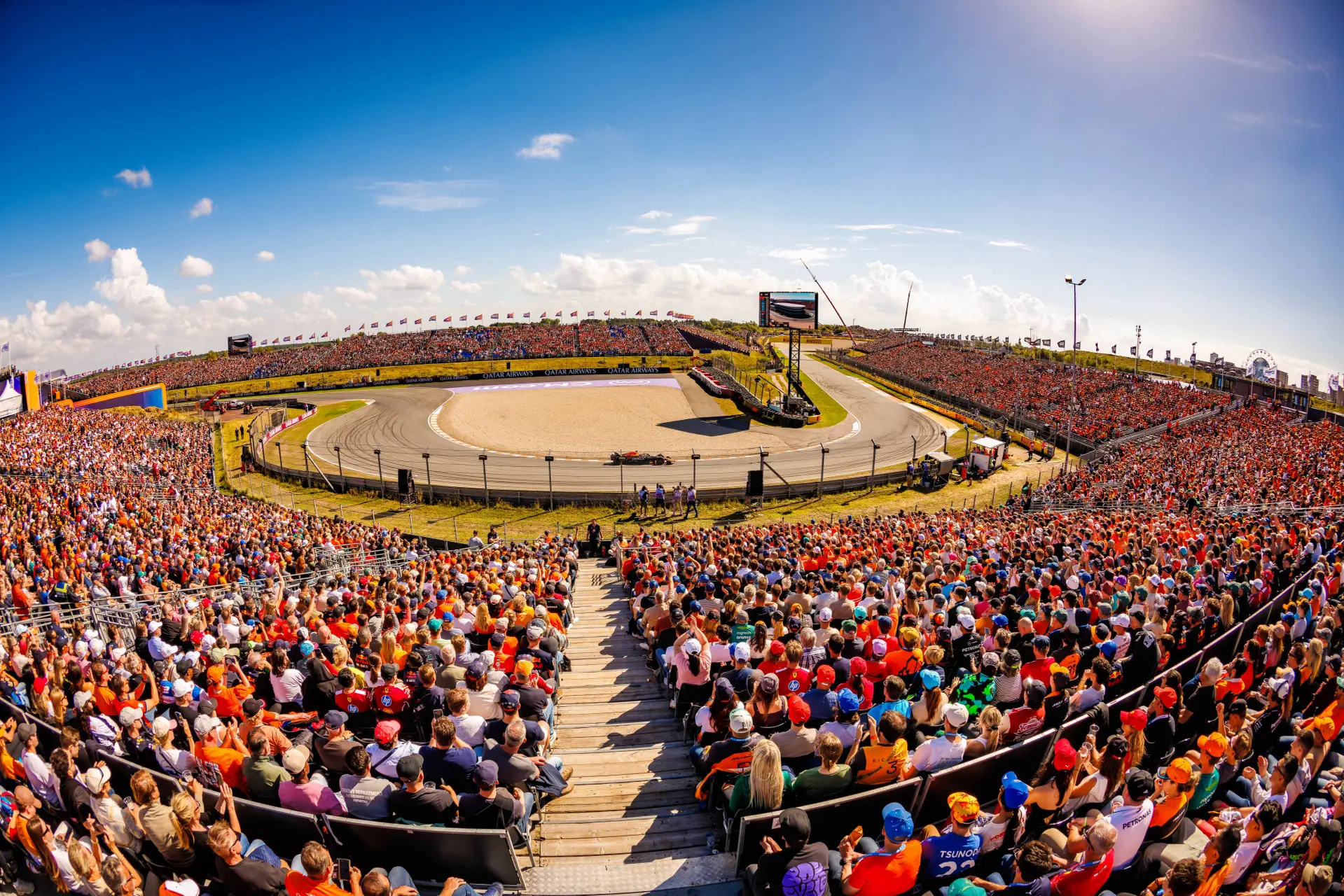
Zandvoort is only 4.259km long, but it is relentless. Its 14 corners flow rapidly into one another, meaning the tyres rarely enjoy a recovery phase. The banking at Turn 3 and the final corner adds another variable. Drivers can use alternative lines, but sustained lateral load increases the energy passing through the tyres. Teams will be particularly alert to the front-left tyre, heavily worked through the circuit’s long, loaded corners.
The exact 2026 tyre allocation will determine the final calculations. Recent Pirelli selections show the balance teams face: enough grip for a demanding qualifying schedule, against compounds capable of delivering a race stint in high-energy corners. In a dry race, medium-to-hard is the baseline, although a soft-tyre opening stint could appeal to cars starting further back and seeking an undercut window.
The Sprint format makes that analysis more complicated. Teams have only one practice session before Sprint Qualifying, then a short race, Grand Prix qualifying and the 72-lap main event. There is less time to establish degradation trends, pressure targets and the effect of an evolving track. Sprint Qualifying also requires fresh medium tyres in its first two phases and fresh softs in the final phase, reducing flexibility in how teams preserve useful sets.
Track evolution will be central. Zandvoort begins a weekend with low grip after periods of limited running, while wind can blow sand and debris across the asphalt. As more cars run, rubber normally builds on the racing line and lap time improves. But a shower can partly reset that process, while changes in wind direction or temperature can alter tyre warm-up and degradation. In 2026, that uncertainty comes with the pressure of collecting crucial data on Friday rather than across three conventional practice sessions.
The North Sea is the final strategic wildcard. Cool ambient conditions can make it harder to switch tyres on; warmer sunshine can cause the surface to come alive quickly. Rain would create a completely different contest, and the tight layout, gravel traps and gusting wind raise the prospect of Safety Cars. A timely neutralisation could turn a marginal one-stop into an easy two-stop, or reward a driver who has already made an early gamble.
That is why Zandvoort’s Formula 1 weekend could offer more than a sentimental farewell. Its banking, evolving grip and coastal climate already demand precision. Add Sprint-format time pressure and a limited tyre-data picture, and the Dutch Grand Prix may be decided not by the theoretically fastest strategy, but by the team that responds quickest when the circuit changes.
Zandvoort is only 4.259km long, but it is relentless. Its 14 corners flow rapidly into one another, meaning the tyres rarely enjoy a recovery phase. The banking at Turn 3 and the final corner adds another variable. Drivers can use alternative lines, but sustained lateral load increases the energy passing through the tyres. Teams will be particularly alert to the front-left tyre, heavily worked through the circuit’s long, loaded corners.
The exact 2026 tyre allocation will determine the final calculations. Recent Pirelli selections show the balance teams face: enough grip for a demanding qualifying schedule, against compounds capable of delivering a race stint in high-energy corners. In a dry race, medium-to-hard is the baseline, although a soft-tyre opening stint could appeal to cars starting further back and seeking an undercut window.
The Sprint format makes that analysis more complicated. Teams have only one practice session before Sprint Qualifying, then a short race, Grand Prix qualifying and the 72-lap main event. There is less time to establish degradation trends, pressure targets and the effect of an evolving track. Sprint Qualifying also requires fresh medium tyres in its first two phases and fresh softs in the final phase, reducing flexibility in how teams preserve useful sets.
Track evolution will be central. Zandvoort begins a weekend with low grip after periods of limited running, while wind can blow sand and debris across the asphalt. As more cars run, rubber normally builds on the racing line and lap time improves. But a shower can partly reset that process, while changes in wind direction or temperature can alter tyre warm-up and degradation. In 2026, that uncertainty comes with the pressure of collecting crucial data on Friday rather than across three conventional practice sessions.
The North Sea is the final strategic wildcard. Cool ambient conditions can make it harder to switch tyres on; warmer sunshine can cause the surface to come alive quickly. Rain would create a completely different contest, and the tight layout, gravel traps and gusting wind raise the prospect of Safety Cars. A timely neutralisation could turn a marginal one-stop into an easy two-stop, or reward a driver who has already made an early gamble.
That is why Zandvoort’s Formula 1 weekend could offer more than a sentimental farewell. Its banking, evolving grip and coastal climate already demand precision. Add Sprint-format time pressure and a limited tyre-data picture, and the Dutch Grand Prix may be decided not by the theoretically fastest strategy, but by the team that responds quickest when the circuit changes.

Don’t miss GPblog in Google
Mark us as a preferred source and our articles will appear more often at the top of Top Stories.
Add as a preferred / source on GoogleRead more about:
latest news



Azerbaijan Grand Prix
Overview
Thursday 24.09.26
Practice 1
08:30 AM
Practice 2
12:00 PM
Friday 25.09.26
Practice 3
08:30 AM
Qualification
12:00 PM
Saturday 26.09.26
Race
11:00 AM
Thursday 24.09.26
Practice 1
Thu 08:30 AM
Practice 2
Thu 12:00 PM
Friday 25.09.26
Practice 3
Fri 08:30 AM
Qualification
Fri 12:00 PM
Saturday 26.09.26
Race
Sat 11:00 AM
Times are in your local timezone
Rumors
Popular on GPBlog

1
Hamilton learns stewards’ verdict after ‘dangerous’ Azerbaijan FP2 incident with Lawson
4966 times read

2
Audi reaches final decision over its 2027 F1 driver line-up
1607 times read
3
Verstappen receives the confirmation he wanted from Red Bull in Baku
1122 times read

4
Cadillac hires former Red Bull key figure, but Alpine blocks the move for now
1098 times read
F1-stand 2026
Season
| Pos. | Driver | Team | Points |
|---|---|---|---|
1 | MercedesMER | 292 | |
2 | MercedesMER | 211 | |
3 | FerrariFER | 191 | |
4 | McLarenMCL | 186 | |
5 | FerrariFER | 167 | |
6 | Red Bull RacingRBR | 145 | |
7 | McLarenMCL | 120 | |
8 | Red Bull RacingRBR | 71 | |
9 | Racing BullsRCB | 59 | |
10 | AlpineALP | 41 |
Loading