
Shanna is a Formula 1 journalist at GPblog, specializing in both F1 and endurance and GT racing. With a Master’s degree in Journalism and experience at international circuits, she provides in-depth, reliable coverage and insights based on her presence at Grands Prix and racing events worldwide.
Max Verstappen heads to Las Vegas with a second-place finish in Brazil under his belt, where low temperatures are once again expected. An analysis of race pace at Interlagos shows that Red Bull Racing was able to match McLaren and Mercedes in a range of conditions. One particular statistic from the dry phase offers hope for the Dutchman.
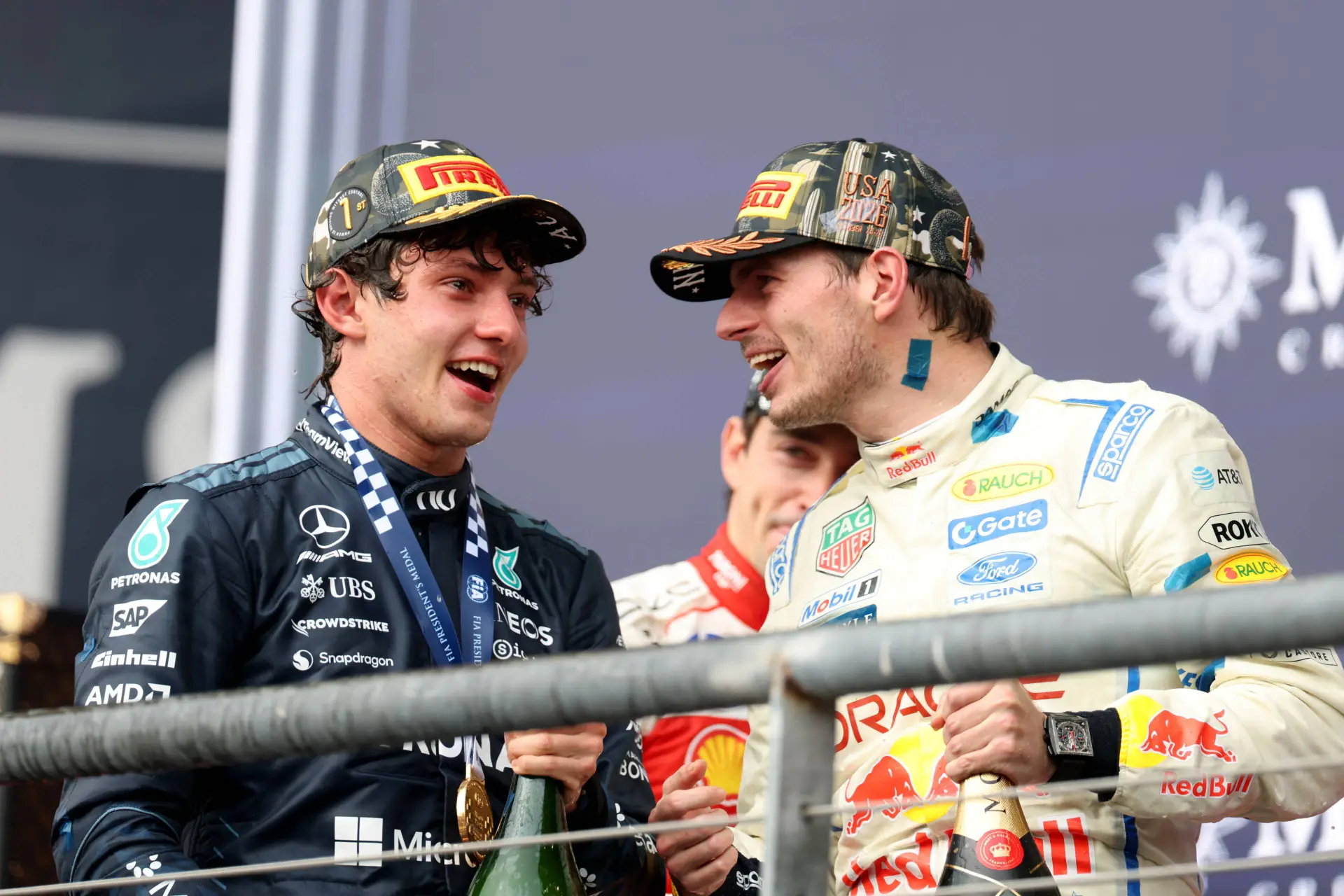
Verstappen started the Brazilian Grand Prix from 21st on the grid and fought his way up to second place in changeable conditions. Teammate Isack Hadjar finished third, giving Red Bull its second double podium of the year. Conditions played an important role in the result.
The race began on a wet track, after which the drivers switched to slicks. Rain returned in the closing stages. These different phases make it possible to compare Red Bull’s performance in wet and dry conditions. The pace on the soft tyres is particularly interesting ahead of Las Vegas, where qualifying and the race are expected to take place in temperatures of around ten degrees.
Verstappen faster than McLaren on slicks in Brazil
The gaps between Red Bull, McLaren and Mercedes were particularly small during the wet phases. The five fastest drivers on intermediates were separated by just over a tenth of a second. Norris recorded the lowest median lap time, but Hadjar and Verstappen were close behind. Hadjar, in particular, showed that he was comfortable in the changing conditions. Over the entire race on intermediates, the French-Algerian driver was slightly faster than Verstappen and even recorded the best median lap time among the drivers studied during the final spell of rain.
ADVERTISEMENT
| Driver | Team | Average lap time (intermediate) |
| Lando Norris | McLaren | 1:26.167 |
| Kimi Antonelli | Mercedes | 1:26.181 |
| Isack Hadjar | Red Bull | 1:26.213 |
| Max Verstappen | Red Bull | 1:26.233 |
| George Russell | Mercedes | 1:26.269 |
| Oscar Piastri | McLaren | 1:26.550 |
| Lewis Hamilton | Ferrari | 1:27.189 |
| Charles Leclerc | Ferrari | 1:27.203 |
The picture changed as the track dried out. Verstappen was the fastest of the eight drivers studied on the soft tyre, with a narrow advantage over Norris and Oscar Piastri. Antonelli was also a few tenths off the pace. Hadjar dropped to fifth in this comparison, more than three tenths behind his teammate.
| Driver | Team | Average lap time (soft) |
| Max Verstappen | Red Bull | 1:14.658 |
| Lando Norris | McLaren | 1:14.695 |
| Oscar Piastri | McLaren | 1:14.719 |
| Kimi Antonelli | Mercedes | 1:14.803 |
| Isack Hadjar | Red Bull | 1:15.041 |
| George Russell | Mercedes | 1:15.084 |
| Lewis Hamilton | Ferrari | 1:15.550 |
| Charles Leclerc | Ferrari | 1:15.892 |
The gaps are small, but they suggest that Verstappen’s performance during the dry phase was not solely down to his charge through the field in the rain. He also had enough pace on slicks to take the fight to the McLarens. One caveat is that tyre age and any delays or difficulties caused by traffic are not factored into the averages, as that data is unavailable.
No signs of a major Red Bull disadvantage in tyre degradation
ADVERTISEMENT
The progression of the dry stints also offers some interesting insights. Verstappen completed his first 28 laps on the soft tyre before receiving a fresh set. His median lap time in the second stint was around 1.7 seconds lower. Hadjar gained almost a second and a half on new rubber, while Norris and Piastri also became significantly faster. These improvements cannot be attributed solely to tyre wear. The cars were lighter later in the race, and track conditions changed as well. It is, however, worth noting that these figures do not suggest an exceptionally large drop-off for Red Bull compared with McLaren.
This is relevant to Verstappen’s prospects. At Interlagos, he was able to maintain a competitive pace for an extended period, without tyre performance visibly putting him at a major disadvantage. The data therefore offers no indication that the RB22 struggled more than the McLaren to maintain its speed in the rainy conditions in Brazil. That is an interesting observation ahead of Las Vegas, although a different challenge awaits there. Whereas tyre wear was an important factor in Brazil, the key on the American street circuit is getting the tyres up to and keeping them at the right temperature.
Why Brazil’s pace does not tell the whole story about Las Vegas
There is a considerable difference between the two circuits. Interlagos features several fast corners that put the tyres under constant load. This generates heat, making it relatively easy for drivers to build up grip even when the ambient temperatures are low. In Las Vegas, the tyres are subjected to much less energy. Long straights are interspersed with slow corners and heavy braking zones. The front tyres in particular can cool down on the straights, resulting in a lack of grip on corner entry.

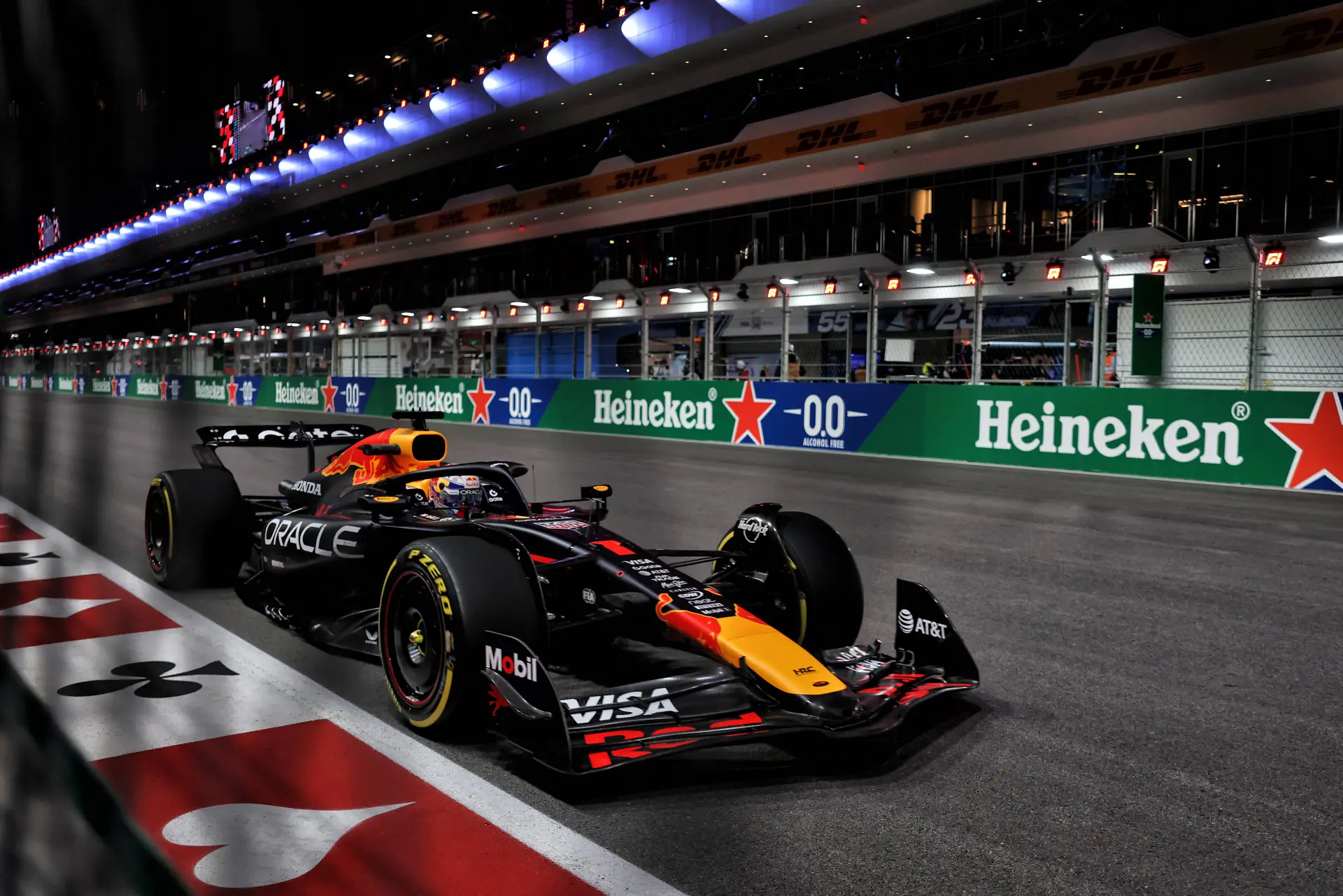
The long straight of the Las Vegas Strip Circuit presents a tyre dilemma every year - Photo: Red Bull Content Pool
ADVERTISEMENT
This makes the switch from Brazil to Las Vegas more complicated than the weather forecast might suggest. Both races are held in relatively cold conditions, but that does not mean the tyres behave in the same way. The strong race pace at Interlagos mainly proves that Verstappen has enough speed when he gets his tyres into the right operating window.
The question for Las Vegas is whether Red Bull can reach that operating window on a circuit where the tyres are subjected to significantly less stress. This could become a particular problem in qualifying. Drivers need to get their tyres warm enough without putting too much strain on the rubber during the out-lap.
Where are Verstappen's opportunities?
In any case, the results from Brazil give Red Bull a better starting point than if Verstappen had been competitive only on intermediates. The Dutchman was able to match McLaren's pace during the dry phase and was even marginally quicker based on median lap times. This suggests that the RB22 has enough speed to compete at the front in Las Vegas too, provided the team can get the tyres working.
Verstappen also knows the conditions at the American street circuit well. He won the Grand Prix in 2023 and 2025, with temperatures last year also being particularly low. The cars and tyres have changed significantly since then, so those results say little about the relative balance of power this season.
ADVERTISEMENT
The first free practice sessions will therefore be crucial in showing how Red Bull can strike a balance between warming the tyres and limiting their wear. In Brazil, Verstappen had the pace to put McLaren under pressure. If the RB22 also operates within the right temperature window in Las Vegas, that race pace gives Verstappen and Hadjar ample reason to target another victory.
Don’t miss GPblog in Google
Mark us as a preferred source and our articles will appear more often at the top of Top Stories.
Add as a preferred / source on Google