Oscar Piastri was supposed to dethrone Verstappen, not bow to Norris
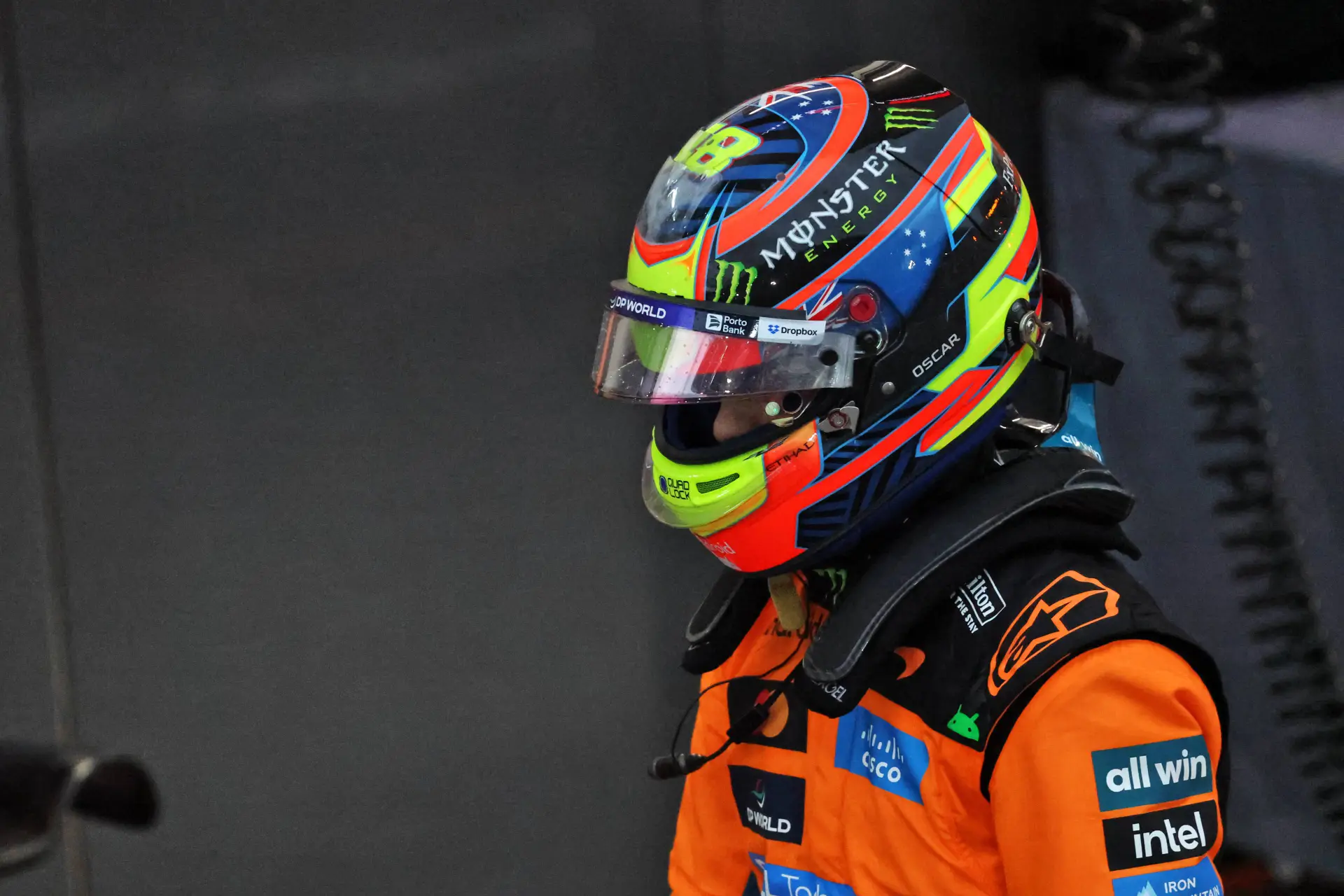
Photo: Race Pictures

Tobia is a Formula 1 journalist at GPblog with experience at international circuits. Since 2022, he has covered Grands Prix across Europe, delivering reliable coverage and insights from the paddock.
Not so long ago, Oscar Piastri looked like the future of Formula 1. Not just another talented youngster, not simply a potential world champion, but the driver who might finally bring Max Verstappen's dominance to an end. He had the junior career, the composure, the speed and, perhaps most importantly, the ability to make extraordinarily difficult things look almost routine.
Now, just over a year after appearing to have the Formula 1 world championship within his grasp, Piastri finds himself in a very different position. Lando Norris is a world champion. McLaren have their established superstar. And the Australian, once regarded as one of the most exciting prospects of his generation, is increasingly becoming an afterthought.
So how did a driver who seemed destined to dominate Formula 1 end up playing a supporting role in his own team?

Piastri was never supposed to be an ordinary F1 driver
ADVERTISEMENT
There is a reason the excitement surrounding Piastri was so enormous before he even made his Formula 1 debut. Winning Formula 3 is impressive. Winning Formula 2 is even more impressive. Winning both championships in consecutive seasons, as a rookie in each category, puts a driver in exceptionally rare company. Charles Leclerc did it. George Russell did it. And then Piastri did it.
These were not isolated flashes of brilliance. They were evidence of a driver capable of adapting to increasingly demanding machinery, understanding new tyres, managing races and delivering results almost immediately. And then there was the Alpine saga.
In August 2022, Alpine announced Piastri as their driver for the following season. Within hours, the Australian publicly rejected the announcement in a tweet that would become one of Formula 1's most memorable social media moments. It was almost comically brutal. A rookie who had never started a Grand Prix had effectively told a Formula 1 team that they had announced the wrong driver. And he was right.
McLaren eventually secured his services, and Piastri arrived with something very few newcomers possess: the reputation of someone who was not prepared to settle for whatever opportunity Formula 1 happened to offer him. That reputation made what followed even more fascinating.

Foto: RacePictures
ADVERTISEMENT
The moment Piastri looked ready to take over Formula 1
By the middle of 2025, Piastri appeared to be delivering on almost every expectation. McLaren had emerged as a championship force, Verstappen was no longer untouchable, and the Australian was increasingly looking like the driver best equipped to exploit the changing competitive order.
What made Piastri particularly impressive was not simply his speed. It was how he produced it. Norris had long been regarded as one of the quickest drivers on the grid, particularly over a single lap. But Piastri seemed to offer something different: an ability to remain composed, manage difficult situations and extract results without appearing to be operating at the absolute limit.
Of course, appearances can be misleading. A driver who looks calm is not necessarily under less pressure, just as a driver who sounds frustrated over the radio is not necessarily performing worse. But Piastri's results reinforced the impression.
He looked increasingly comfortable at the front, and the idea of him becoming world champion no longer seemed like a prediction about the distant future. It looked like the natural conclusion to the season. Except that conclusion never arrived.
ADVERTISEMENT
Norris didn't just beat Piastri, he changed the entire narrative
The significance of Norris winning the 2025 championship goes well beyond the final standings. For much of the season, Piastri had appeared to be the McLaren driver with the clearer path towards the title. Yet when the championship was decided, it was Norris who had completed the job.
That distinction matters enormously in Formula 1. When two drivers share the same machinery, their performances are compared relentlessly. Different setups, driving styles and individual circumstances can complicate those comparisons, but the championship result remains impossible to ignore. Norris had done what Piastri could not.
And suddenly, the qualities that had made the Australian so highly regarded were being viewed differently. His calmness was no longer automatically interpreted as evidence of superior mental strength. His consistency was no longer enough to make him the obvious championship favourite. His remarkable junior record was becoming less relevant than the opportunity he had failed to convert.
Meanwhile, Norris had answered perhaps the biggest question surrounding his career. Could he actually win a world championship? Yes. Piastri, despite everything he had achieved, was still searching for that answer.
ADVERTISEMENT
The biggest problem isn't Piastri's speed
It would be far too simplistic to suggest that Piastri has suddenly become a worse driver. Formula 1 performance is rarely that straightforward. Confidence in the front axle, tyre temperature management, braking stability and the ability to adapt to changing car characteristics can all influence the gap between two teammates. A relatively small difference in how comfortably a driver can operate the car can translate into a significant difference in lap time.
And when that happens, the consequences extend beyond qualifying. Starting further back exposes a driver to traffic, compromises tyre strategy and makes race management considerably more difficult. A small performance deficit can therefore become a much larger deficit by Sunday afternoon.
None of this proves that Piastri's difficulties are exclusively technical. But it does demonstrate why a driver's apparent decline cannot simply be explained by a sudden loss of talent. The more interesting question is whether Piastri can still establish himself as McLaren's leading driver.
Because that is where the situation becomes uncomfortable. Norris is no longer merely the experienced teammate Piastri was brought in to challenge. He is the man who delivered the championship. That changes the dynamics, even without any explicit preference from the team.
ADVERTISEMENT
When one driver has already demonstrated that he can deliver a world title, the other has to do more than match him occasionally. He has to produce sustained evidence that he can do the same. And right now, Piastri's reputation is increasingly being defined by what Norris has achieved.

Photo: Race Pictures
Could leaving McLaren actually make sense?
There is an obvious argument against Piastri leaving McLaren. Why would a driver abandon a team capable of fighting for championships simply because his teammate has become world champion? It would be an enormous gamble.
A move to a less competitive team could leave Piastri spending several seasons fighting for occasional podiums rather than victories. And there is no guarantee that a different environment would immediately resolve the issues preventing him from consistently beating Norris.
ADVERTISEMENT
But there is another side to that argument. Remaining at McLaren means continuing to fight a driver who has already established himself as a championship winner within the same organisation. Every qualifying session becomes another comparison. Every victory by Norris reinforces the existing hierarchy. Every difficult weekend for Piastri raises the same questions about whether he really possesses the qualities required to become world champion.
Elsewhere, he could potentially become the central figure around whom a team builds its future. That would not automatically make him faster. But it could change the circumstances in which his career develops.
And there is something particularly ironic about the possibility. Piastri's entire arrival in Formula 1 was defined by his refusal to accept a career path that did not suit his ambitions. He walked away from Alpine's plans because he believed McLaren offered a better future. Four years later, he may eventually have to ask himself whether the same logic still applies.
Formula 1 doesn't wait for yesterday's next big thing
Perhaps the harshest aspect of Piastri's situation is how quickly expectations have changed. In 2025, he appeared to be the man who would inherit Formula 1 from Verstappen. By 2026, he is fighting to avoid being permanently defined as Norris' number two.
ADVERTISEMENT
That is an extraordinary reversal for a driver whose rise through the junior categories had been almost flawless. But Formula 1 has never rewarded potential indefinitely.
Piastri's talent remains undeniable. His record suggests he possesses the technical ability, adaptability and racecraft required to compete at the highest level. What it does not guarantee is that he will ever become world champion.
And that is ultimately what makes his current position so intriguing. Leaving McLaren might be the wrong decision. Staying might eventually allow him to overturn Norris' advantage and establish himself as the team's leading driver. But doing nothing while the same narrative continues to develop carries its own risks.
The Australian once became famous for publicly rejecting a Formula 1 seat because he believed he deserved something better. The question now is whether he still has the same conviction. Because Piastri was supposed to be the driver who ended Max Verstappen's era. Instead, he is in danger of spending the next chapter of his career watching Lando Norris build one of his own.
Read also

ADVERTISEMENT
Don’t miss GPblog in Google
Mark us as a preferred source and our articles will appear more often at the top of Top Stories.
Add as a preferred / source on Google